
As an Amazon Associate, I earn from qualifying purchases at no extra cost to you.
How to Clean a Dishwasher Filter Fast (Quick Fix)

A dirty filter causes more trouble than most people ever guess, and honestly, it’s an easy job once you know where to look. Food scraps and grease pile up down there every single week, quietly choking off water flow without anyone noticing. Grab a few minutes, roll up your sleeves, and by the end, you’ll know exactly how to clean a dishwasher filter, no guesswork needed.
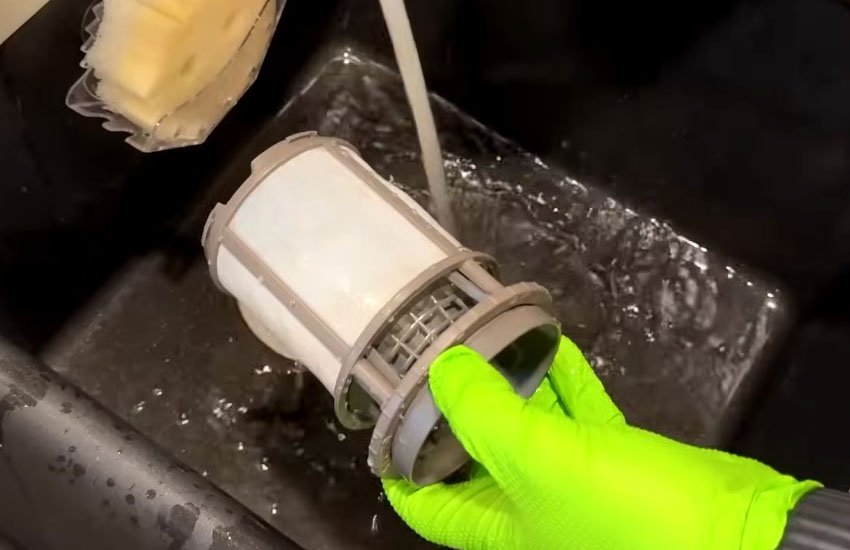
You can clean a dishwasher filter in about ten minutes, using warm water, a bit of dish soap, and an old toothbrush. Pull the filter out from the bottom of the tub, give it a twist to unlock it, then rinse off the loose food bits under running water. Got stuck-on grime? Scrub it, soak it if the mess is heavy, then lock it back in before the next cycle runs.
Why Does a Dishwasher Filter Get Dirty So Fast?
Food scraps, grease, and hard water minerals all land in one tiny spot, and that spot fills up way faster than anyone expects.
Food Scraps and Grease
Every wash cycle pushes leftover rice, sauce, and grease straight toward the filter, since that’s the whole point of it being there. Over time, though, this buildup gets thick, and it starts blocking water from draining the way it should.
Hard Water and Mineral Buildup
Got hard water at home? That’s extra trouble right there, because minerals like calcium settle deep into the filter mesh. That crust hardens fast, and pretty soon, a plain rinse just isn’t enough to clear it back out.
Skipped Cleaning Schedules
Most people forget the filter even exists, tucked away at the bottom like that. Weeks turn into months without a second thought, and by then, grime has packed in tight, making the job way harder than it needed to be.
Wrong Detergent Type
Cheap or watered-down detergent leaves behind a greasy film instead of actually breaking it down. That film sticks right to the filter, and it starts pulling in even more food particles with every load after that.
Overloaded Dish Racks
Packing too many dishes in at once blocks the spray and pushes more scraps toward the bottom. Those scraps overwhelm the filter fast, and dishes come out cloudy, or still a little grimy, no matter how good the detergent is.
Old or Damaged Filters
A cracked or worn filter lets bigger chunks of food slip right through into the pump. That’s a much bigger repair waiting to happen, so a damaged filter needs swapping out, not just cleaning up.
Most of these problems trace back to one simple fix, and it starts with building a regular habit. Keep the filter clean, and everything else in the machine runs smoother too.
- Rinse the filter every week if the kitchen sees heavy use
- Watch for a sour or musty smell, that’s an early warning sign
- Don’t overload the racks, water needs room to spray freely
- Try a quality rinse aid, it cuts down on greasy film
- Cloudy dishes usually mean trouble is already starting
- Keep a small brush near the dishwasher for quick touch-ups
How to Clean a Dishwasher Filter Step by Step
Six simple steps get this done, and none of them need fancy tools or pricey cleaners. Just grab a brush, some soap, and warm water, that’s really it.
Turn Off and Open the Dishwasher
Safety first, always. Switch the dishwasher off, then let it cool down completely before touching anything inside it. A warm or still-running machine makes the whole job messier, and honestly, it’s not worth risking scalded fingers.
Once it’s off, swing the door open and pull the bottom rack all the way out. That gives clear access to the tub floor, right where the filter sits waiting.
Take a look around the base while you’re in there, since food bits or standing water tend to collect nearby. Wipe up anything loose first, so the next steps go a lot smoother.
Find and Remove the Filter
Look near the bottom of the tub, close to the spray arm, for a round or cylinder-shaped piece. Most filters sit dead center or off to one side, depending on the brand you’ve got.
Twist it counterclockwise to unlock, then lift it straight up and out. Some models come with two parts, a fine mesh screen plus a coarser outer piece, so check for both before assuming it’s done.
Set everything on a towel nearby, since the pieces will likely be wet or a bit greasy. Go easy handling them, that mesh can bend or tear if it’s forced too hard.
Rinse Away Loose Food Bits
Hold the filter under warm running water first, and just let the water push out the loose scraps on its own. This clears the easy stuff before any real scrubbing even starts.
Turn it slowly as the water runs, so every angle gets a fair rinse. Grease loves hiding in corners, so don’t rush through this part.
Hold the mesh up against a light afterward to check for leftover buildup. Still looking cloudy or dark? More cleaning is needed before it goes back in.
Scrub Stuck-On Grime
Dip a soft brush, an old toothbrush works great, into warm soapy water, then scrub the mesh in small circles. This lifts the grease that plain rinsing missed completely.
Pay extra attention to the tight mesh sections, since grime loves hiding deep in those tiny holes. A gentle back-and-forth motion beats pressing hard, every time.
Rinse once more after scrubbing, and check for any leftover film. Still dirty? Give it one more round of brushing before moving on.
Soak for Tough Buildup
Sometimes stubborn grime needs more than a scrub, especially with hard water stains involved. Fill a bowl with warm water, add a splash of white vinegar, and set the filter in.
Let it sit for about fifteen minutes, giving the vinegar time to break down that mineral crust. This softens buildup that a brush alone just can’t reach on its own.
After soaking, scrub it one last time and rinse thoroughly. The filter should look noticeably lighter now, with no cloudy film left clinging to the mesh.
Lock the Filter Back in Place
Once it’s clean and dry, line the filter up the way it came out originally. Most have small arrows or notches showing which way it goes.
Twist clockwise until it clicks, or locks firmly into place. A loose filter can rattle during cycles, or worse, let food bits slip past unfiltered.
Slide the bottom rack back in, close the door, and run a quick rinse cycle. That way, everything’s confirmed working before a full load goes through.
A clean filter only pays off if the habit actually sticks, so build it into a regular routine. A little effort now beats a big repair bill later.
- Clean the filter every two to four weeks for the best results
- Skip harsh chemicals, they can wreck the plastic mesh over time
- Dry the filter fully before locking it back in place
- Run an empty rinse cycle right after any deep clean
- Check the spray arm holes while the filter’s already out
- Keep one brush dedicated just to this job, nothing else
How Often Should You Clean a Dishwasher Filter?
Most homes do fine cleaning the filter once a month, though busier kitchens might need it more. Cooking greasy meals often? Running the dishwasher daily? Noticing a weird smell? All three point toward a shorter schedule.
Hard water areas usually need extra attention too, since mineral buildup happens faster than grease alone ever could. Smaller households running fewer loads each week, on the other hand, can often stretch things out a bit longer without any trouble at all.
Watching for warning signs matters way more than sticking to some strict calendar date anyway. Cloudy glasses, standing water, a musty smell, any of those mean it’s time, no matter how many weeks have technically passed. Once the rhythm sets in, the whole task starts feeling less like a chore and more like just part of the routine.
- Monthly cleaning works fine for most average households
- Daily use calls for a two to three week schedule instead
- Hard water homes should check in every two weeks
- A sour smell means it’s overdue, regardless of the calendar
- Cloudy dishes are a clear sign to check things now
- Light households can often stretch to six weeks safely
What Happens if You Never Clean the Filter?
Skipping filter cleaning for months doesn’t just mean dirtier dishes, it slowly wears the whole machine down. A clogged filter forces the pump to work harder, straining a part that’s genuinely expensive to replace later on.
Grease and food that can’t squeeze through the filter often end up in the spray arm instead, blocking water jets bit by bit. That blockage leads straight to spots, film, and cloudy glasses, and no amount of detergent fixes that on its own.
Bad smells show up too, since trapped food scraps rot away inside a warm, damp space over time. Left long enough, standing water can even back up into the tub after each cycle, leaving dishes sitting in dirty water they don’t deserve. None of this happens overnight, sure, but it builds slowly, until a simple filter clean turns into a real repair bill.
- More strain on the drain pump, little by little
- Clogged spray arms causing weak or uneven washing
- Bad smells sticking around even after finished cycles
- Cloudy or spotty dishes no matter how much detergent gets used
- Standing water left sitting in the tub after cycles
- A higher chance of needing a professional out for repairs
Can You Clean a Dishwasher Filter Without Removing It?
A quick surface rinse does work without pulling the filter out, though it never replaces a proper deep clean. Running a hot cycle with a dishwasher-safe cleaner loosens some surface grease, and it helps fill the gap between real cleanings. Pouring vinegar into an empty machine helps too, cutting down on mild buildup here and there.
Still, mesh screens trap food particles that a rinse cycle simply can’t touch, since water just flows around the mesh instead of through those tight little gaps. Deep grime and hardened grease need direct scrubbing to actually clear out for good.
Skipping the removal step feels easier in the moment, sure, but it only delays the real work, and the problem tends to creep back within a few weeks anyway. For results that actually last, pulling the filter out stays the more reliable move, every time.
- Hot rinse cycles help with light surface grease only
- Vinegar rinses cut down mild mineral buildup between cleans
- Trapped food particles still need direct scrubbing to clear
- Surface methods work best as a between-clean maintenance step
- Full removal reaches spots that a rinse cycle always misses
- Combining both methods gives the most consistent results overall
Why Does Your Dishwasher Smell Even With a Clean Filter?
A clean filter helps a lot, no doubt, but it isn’t always the only source of bad smells. Grease and food bits often hide in the door gasket, that rubber seal running around the edge, where moisture just sits for hours after each cycle ends. Spray arm holes trap tiny food bits too, and those bits rot slowly away in a warm, closed-up space.
Standing water at the very bottom of the tub, sometimes caused by a partial drain issue, adds even more to musty odors. Running an empty hot cycle with a bowl of vinegar on the top rack usually clears mild smells within one single wash. Worth checking the drain hose for kinks too, since trapped water anywhere in the system tends to smell after a while. A real smell fix often means checking more than just one spot at a time.
- Wipe the door gasket down weekly with a damp cloth
- Check the spray arm holes for trapped bits of food
- Run an empty hot cycle with vinegar once a month
- Inspect the drain hose for kinks or blockages regularly
- Leave the door cracked open between uses so it can air out
- Clean the tub’s bottom edges, not just the filter itself
Final Thoughts
I hope this made cleaning a dishwasher filter feel a lot less scary than it seemed at first. It’s a small job, done every few weeks, and it saves a much bigger headache down the road. Grab a brush, set a reminder somewhere obvious, and dishes will come out cleaner from here on.
| Cleaning Task | How Often | What It Prevents |
|---|---|---|
| Rinse filter under water | Weekly | Loose food buildup |
| Deep scrub with soap | Every 2-4 weeks | Grease and grime crust |
| Vinegar soak | Monthly | Hard water mineral buildup |
| Wipe door gasket | Weekly | Musty smells and mold |
| Check spray arm holes | Monthly | Weak or uneven washing |
| Run empty hot cycle | Monthly | Leftover odors and film |
| Inspect drain hose | Every 3 months | Standing water and clogs |
| Check for filter cracks | Every 6 months | Debris reaching the pump |
| Clean tub bottom edges | Every 2 weeks | Trapped food residue |
| Replace worn filter | As needed | Pump damage and leaks |
Frequently Asked Questions
Is It Safe to Clean a Dishwasher Filter With Vinegar?
Yes, vinegar’s safe for most filters, since it’s a mild acid that breaks down mineral buildup without hurting the plastic. Just don’t soak metal parts in it too long, since that can dull the finish over repeated use.
Can You Run the Dishwasher Without a Filter in Place?
Running it without a filter really isn’t a good idea, since food particles flow straight into the pump and spray arms unchecked. That causes clogs and damage pretty fast, so always double-check the filter’s locked in before starting a cycle.
Are All Dishwasher Filters Removable?
Most modern dishwashers have a removable filter, though some older models use a self-cleaning type that grinds food particles automatically instead. Checking the manual clears up which type is installed, since the cleaning steps differ a bit between the two.
Do Dishwasher Tablets Clean the Filter Automatically?
Tablets help cut grease during each cycle, sure, but they don’t reach the tight mesh gaps where food particles get stuck. Hands-on cleaning every few weeks still matters, even with a high-quality detergent tablet doing its part.
Does a Dirty Filter Affect Dish Cleanliness?
Yes, a clogged filter blocks proper water flow and pressure, and that leads to spots, film, and leftover residue on dishes. Plenty of people blame the detergent or hard water first, when the real culprit’s sitting unnoticed at the bottom of the tub.
Should You Clean the Filter Before or After Loading Dishes?
Cleaning it before loading works best, since it stops loose debris from falling right back into the tub while dishes go in. It also gives a clear view of the tub bottom, making other issues easier to spot early on.
Will a Dishwasher Work With a Slightly Cracked Filter?
It might still run, technically, but a cracked filter lets bigger food particles slip through into the pump and spray arms. Replacing it sooner rather than later saves on bigger repair costs, since pump damage gets expensive fast.
Do You Need Gloves to Clean a Dishwasher Filter?
Gloves aren’t required, honestly, but plenty of people like them for avoiding grease, old food bits, and any sharp edges on the filter housing. Mostly it comes down to comfort, and an easier cleanup once the job’s finished.
