
As an Amazon Associate, I earn from qualifying purchases at no extra cost to you.
How to Remove Rust from Kitchen Shears the Easy Way

I realized the other day that my favorite shears were looking pretty orange and crusty, which felt like a total kitchen betrayal. It is so frustrating when you go to snip some herbs and realize your go-to tool is stuck or dirty. Today, you are going to learn exactly how to remove rust from kitchen shears using simple stuff you already have in your pantry.
First you should soak the metal parts in white vinegar for several hours to loosen up that stubborn orange gunk. After that, grab a scrubby sponge or some crumpled aluminum foil to rub away the softened spots with a bit of elbow grease. Rinse everything under cool water and dry the blades immediately with a soft towel so new spots do not form. Finally, rub a tiny drop of cooking oil onto the hinge to keep things moving smoothly.
Why Do My Favorite Kitchen Scissors Get Rusty so Fast?
It actually happens to the best of us because kitchens are naturally damp places. Even if you bought a pair that said stainless steel on the package, they can still develop spots if they stay wet for too long in the sink. Most of the time, the culprit is simply leaving them to air dry in the dish rack instead of wiping them down right away.
The salt in our food and the harsh chemicals in dishwasher pods also play a huge role in breaking down the protective layer of the metal. When you toss your shears into the dishwasher, the high heat and trapped moisture create a perfect storm for corrosion. It is a bummer, but it is also a very common mistake that almost every home cook makes at least once.
Once that first little speck of orange appears, it tends to spread if you do not catch it early. You might notice the blades starting to crunch or feel gritty when you try to cut through chicken or packaging. This is just the iron in the steel reacting with oxygen and water, which is basically just nature doing its thing on your tools.
The good news is that most surface rust is not permanent and can be wiped away with the right trick. You do not need to throw them in the trash or buy a brand new pair just yet. Taking a few minutes to clean them up will save you money and keep your kitchen running like a well oiled machine.
- Leaving tools soaking in soapy dishwater for too long.
- Putting high carbon steel in the dishwasher cycle.
- Cutting acidic foods like lemons without rinsing the blades.
- Storing shears in a damp or crowded utensil drawer.
- Forgeting to dry the tiny space inside the hinge.
- Using abrasive bleach cleaners that strip the metal finish.
Simple Steps to Get Your Shears Looking Brand New Again
Try the Magic of a Vinegar Soak
Vinegar is basically a superpower in the kitchen when it comes to cleaning metal. The mild acid works slowly to eat away at the rust without hurting the actual steel underneath. I usually just grab a tall glass or a shallow tray and submerge the blades completely for a few hours.
If you are in a rush, even thirty minutes can make a big difference for light spotting. You will see little bubbles forming on the surface, which means the reaction is actually working. It is a totally safe and cheap way to handle the problem without using nasty chemicals near your food.
When the time is up, the rust should look darker or even start to flake off on its own. I love this method because it does most of the hard work for me while I go about my day. Just make sure you use white distilled vinegar rather than the cider kind for the best results.
- Fill a container with enough white vinegar to cover blades.
- Let the shears sit for at least two to four hours.
- Check periodically to see if the orange spots are loosening.
- Avoid soaking plastic handles if they seem flimsy or old.
Scrub Away the Grime with Baking Soda
If the vinegar soak did not get everything, a thick baking soda paste is your next best friend. I mix a little bit of powder with just enough water to make it look like toothpaste. Slather that right onto the rusty spots and let it sit for about fifteen minutes to work its magic.
Baking soda is slightly gritty, so it acts like a very fine sandpaper that won’t leave deep scratches. I use an old toothbrush or a firm sponge to scrub in circular motions over the stubborn areas. You will start to see the white paste turn a muddy brown color as it lifts the rust away.
This method is great because it also neutralizes the acid from the vinegar you used earlier. It leaves the metal looking bright and feeling very smooth to the touch. It is honestly quite satisfying to see the shiny steel peeking through the gunk after a little bit of scrubbing.
- Mix three parts baking soda with one part water.
- Apply the paste heavily to the rusted hinge and edges.
- Use a scrubbing pad to reach into the tight corners.
- Rinse with warm water to clear away all the grit.
Use a Potato to Rub it Out
This sounds like a total myth, but using a potato actually works wonders for light rust. Potatoes contain something called oxalic acid, which is a natural cleaner for metal. I just cut a potato in half and rub the fleshy side directly onto the scissors.
For extra scrubbing power, you can dip the cut end of the potato into a little dish soap or salt. The combination of the natural acid and the salt creates a gentle abrasive that cleans as you rub. It is a fantastic trick if you only have one or two small spots to deal with.
I usually keep rubbing until the orange color disappears and the blade looks clear. Since potatoes are cheap and always in my pantry, this is my favorite quick fix. Plus, it is a fun science experiment to show anyone else in the house who likes to cook.
- Slice a fresh potato in half to expose the moisture.
- Add a dash of salt to the potato for extra grit.
- Rub firmly along the length of the metal blades.
- Wash the shears thoroughly with soap after you finish.
Scouring with Scrunched up Aluminum Foil
Sometimes you need something a bit tougher than a sponge but softer than steel wool. Aluminum foil is the perfect middle ground for this task. I just tear off a small piece, crumble it into a ball, and start scrubbing the rusty sections.
The foil works through a chemical reaction that helps pull the rust off the steel. It is surprisingly effective at getting into the little pits and grooves where rust likes to hide. You do not have to press super hard to see the results start happening almost immediately.
I like this trick because it also helps hone the edge of the shears just a tiny bit. It is a great way to reuse a piece of foil that might have covered your leftovers earlier. Just be careful not to poke your fingers while you are working near the sharp parts.
- Crumple a small square of foil into a tight ball.
- Dip the foil in water or vinegar before you scrub.
- Focus on the flat sides of the blades for shine.
- Dispose of the used foil once it turns dark grey.
Lubricate the Hinge for Smooth Action
Once the rust is gone, you have to make sure the scissors actually open and close easily. I always put a single drop of mineral oil or vegetable oil right on the screw in the middle. This keeps the metal from rubbing together and prevents new rust from starting in that tight spot.
Move the blades back and forth several times to let the oil work its way deep into the joint. You will probably notice they feel much lighter and smoother than they have in months. Wiping away any extra oil is important so your hands do not slip during your next prep session.
This little bit of maintenance goes a long way in protecting your investment. It creates a barrier that keeps moisture out of the most vulnerable part of the tool. It only takes ten seconds but it makes a massive difference in how the shears perform.
- Choose a food safe oil like mineral or grapeseed oil.
- Apply just one drop to the center pivot point.
- Open and close the shears to distribute the liquid.
- Wipe off the excess with a clean paper towel.
Store Your Shears the Right Way
Prevention is honestly the most important part of keeping your kitchen tools in top shape. I stopped putting my shears in the big utensil drawer where they can get banged up. Instead, I keep them on a magnetic strip or in a specific slot in my wooden knife block.
The biggest rule I follow now is never letting them sit wet for even a minute. As soon as I wash them, I grab a dry cloth and make sure every bit of moisture is gone. This simple habit has saved me from ever having to deal with a big rust project again.
If you live in a really humid area, you might even want to give them a quick wipe with a dry cloth before putting them away. Keeping them out in the open air rather than tucked in a dark, damp drawer helps too. Your shears will stay sharp and shiny for years if you just keep them dry.
- Hand wash only and avoid the harsh dishwasher cycle.
- Dry with a towel immediately after every single use.
- Store in a dry place with plenty of air circulation.
- Check the hinge every few weeks for any new spots.
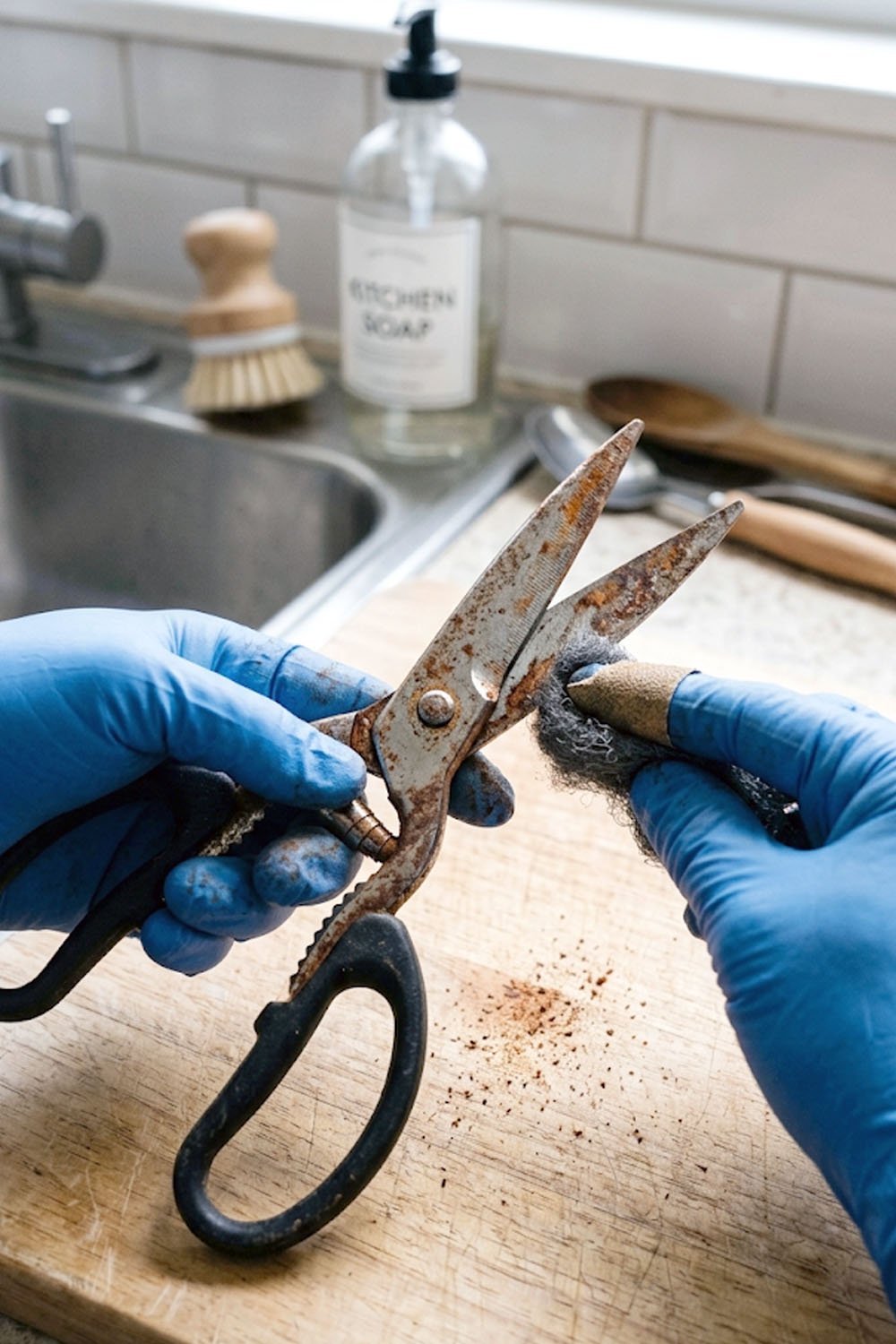
Can I Save Shears That Are Completely Covered in Orange Rust?
You would be surprised at what a little patience and the right tools can fix. Even if the scissors look like they belonged on a shipwreck, they are often still solid underneath that layer of crust. The key is to start with a very long soak in a strong vinegar solution to loosen the heavy scales.
If the rust is very deep and leaving pits in the metal, you might need to use a bit of fine sandpaper. I usually start with a medium grit to get the big chunks off and then switch to a fine grit to polish the surface. It takes more work than a simple wipe, but it is totally possible to bring them back from the dead.
Sometimes the screw in the middle is the hardest part to clean because it gets seized up. You can try tapping it gently or using a specialized penetrating oil if the food safe options do not work at first. Once you get them moving again, the rest of the cleaning process is much easier to manage.
However, if the metal has actually rusted all the way through or the blades are crumbling, it might be time for a new pair. Safety is the most important thing, and you do not want metal flakes getting into your food. Most of the time, though, a good afternoon of cleaning will solve the issue and make them usable again.
- Start with an overnight soak for very heavy rust.
- Use a wire brush for the most stubborn crusty areas.
- Check if the blades are still straight and meeting correctly.
- Apply a bit of heat if the hinge is completely stuck.
- Sand the edges lightly to remove any rough burrs.
- Keep your expectations realistic for very old or cheap tools.
Frequently Asked Questions (FAQs)
Is it safe to use rusty scissors on food?
It is not a great idea because rust can harbor bacteria and leave a metallic taste. You should definitely clean them thoroughly using the steps above before you use them for cutting any ingredients for your meals.
Can I use lemon juice instead of vinegar?
Yes, you absolutely can use lemon juice because it is also acidic. It works very similarly to vinegar, and it actually smells a bit better while you are working. Just make sure to rinse the sticky juice off completely.
Do I need to take the shears apart to clean them?
If your shears have a take apart design, it makes the job much easier. If they are held together by a permanent screw, just do your best to scrub around the hinge and get the cleaning liquid inside the joint.
Is it okay to use steel wool on my scissors?
Steel wool works great for removing rust, but it can leave tiny scratches on the surface. If you do not mind how they look, go for it. For a prettier finish, stick to baking soda or aluminum foil for scrubbing.
Can I use cola to remove the rust?
Cola actually contains phosphoric acid which can break down rust quite well. It is a bit sticky to work with, but a long soak in a bowl of soda can help loosen up the orange gunk if you have nothing else.
Do I have to sharpen them after removing rust?
Removing rust does not automatically sharpen the blades, but it clears the path for a better cut. If the rust was on the cutting edge, you might want to give them a quick sharpen once they are clean and dry.
Is it possible to prevent rust in the dishwasher?
The dishwasher is the main cause of rust for most kitchen tools. The best way to prevent it is to simply stop putting them in there. Hand washing and immediate drying is the only way to keep them perfect.
Can I use WD-40 on my kitchen shears?
You should avoid using industrial oils like WD-40 on anything that touches food. It is not safe to eat, even in small amounts. Always stick to food grade mineral oil or common cooking oils to keep things safe.
| Cleaning Method | Best for This | Time Needed | Kitchen Items Used | Difficulty Level | Expected Result |
| Vinegar Soak | Deep overall rust | 4 hours | White vinegar, bowl | Very easy | Loose rust flakes |
| Baking Soda | Stubborn spots | 20 minutes | Baking soda, water | Medium | Bright shiny steel |
| Potato Rub | Light surface rust | 5 minutes | Potato, salt | Very easy | Instant spot removal |
| Aluminum Foil | Scrubbing pits | 10 minutes | Foil ball, water | Easy | Smooth metal finish |
| Mineral Oil | Hinge protection | 2 minutes | Food safe oil | Very easy | Smooth blade motion |
| Hand Drying | Future prevention | 1 minute | Dry towel, cloth | Very easy | No new rust spots |
Final Thoughts
I hope this guide helps you get those trusty tools back in action without any stress. Dealing with a bit of orange crust is just a normal part of life in a busy kitchen, but now you have all the secrets to fix it fast. Once you know how to remove rust from kitchen shears, you will never have to struggle with a dull or stuck pair again. You have got this, so go grab those scissors and give them some love!
