
As an Amazon Associate, I earn from qualifying purchases at no extra cost to you.
How to Use a Curved Paring Knife the Right Way (Expert Guide)

I used to think my tiny bird’s beak knife was just a weirdly shaped mistake in my cutlery set. Many home cooks feel intimidated by that hook-like blade and end up letting it gather dust in the drawer. Today, you will finally learn how to use a curved paring knife to master those tricky, delicate tasks that a big chef knife simply cannot handle.
First, you need to grip the handle firmly while placing your thumb on the side of the blade for better control. Hold the fruit or vegetable in your non-dominant hand and pull the curved edge toward you in a smooth motion. Always keep your movements small and steady to follow the natural round shape of the food. Since the blade is short, you can easily guide it around seeds or skins without wasting any of the good stuff inside.
Why Should You Choose a Curved Paring Knife for Small Tasks?
Most people reach for a standard straight blade because it feels familiar and safe for daily chopping. However, a straight edge often struggles when you try to follow the natural curves of a round apple or a small potato. The curved blade, often called a bird’s beak, is designed specifically to hug those rounded surfaces perfectly. It makes peeling feel like a natural extension of your hand rather than a struggle against the tool.
Precision is the main reason pros love this little tool for their most detailed work. When you are trimming tiny sprouts or removing the eyes from a potato, a big knife feels clunky and dangerous. This small, hooked shape allows you to get into tight spots without accidentally cutting too deep into the flesh. It saves you money because you stop throwing away edible parts of your expensive produce.
Safety also improves when you use the right tool for the job at hand. Trying to peel a small garlic clove with a heavy knife is a recipe for a nasty nick on your finger. Because this knife is lightweight and fits in your palm, you have much more stability during tricky movements. You will feel more confident in the kitchen once you stop fighting with tools that are too large for the task.
Lastly, using this knife adds a touch of professional flair to your home cooking routine. There is something incredibly satisfying about peeling an entire piece of fruit in one long, beautiful spiral. It turns a boring chore into a bit of a craft project that you can actually enjoy. Once you get the rhythm down, you might find yourself reaching for this little hook more often than anything else.
- The curved shape fits the roundness of fruits perfectly.
- It provides much better control for small, intricate movements.
- You waste less food because the blade trims very closely.
- Small handles fit comfortably in the palm for better grip.
- The pointed tip is ideal for removing blemishes or seeds.
- It reduces wrist strain during long sessions of peeling.
Master the Best Ways to Handle Your New Curved Blade
Getting the Perfect Grip for Better Control
Holding this knife correctly is the first step to success in the kitchen. You should wrap your fingers around the handle but keep your grip relaxed so your wrist can move freely. This is not like holding a sword, but more like holding a heavy pen that you want to guide with precision.
Place your thumb directly on the side of the blade or on the top of the fruit you are cutting. This creates a pivot point that allows the knife to swing in a controlled arc. Having that extra point of contact ensures the blade does not slip when you apply a little bit of pressure.
Try practicing your grip without any food first to get a feel for the weight. Since these knives are usually very light, they can feel a bit jumpy if you are too tense. Relax your shoulders and let the sharp edge do the work instead of trying to force it through the skin.
- Wrap your palm around the handle for a steady base.
- Use your thumb as a guide against the vegetable.
- Keep your index finger away from the sharp edge.
- Maintain a loose but firm hold to prevent hand fatigue.
Peeling Round Fruits with Total Ease
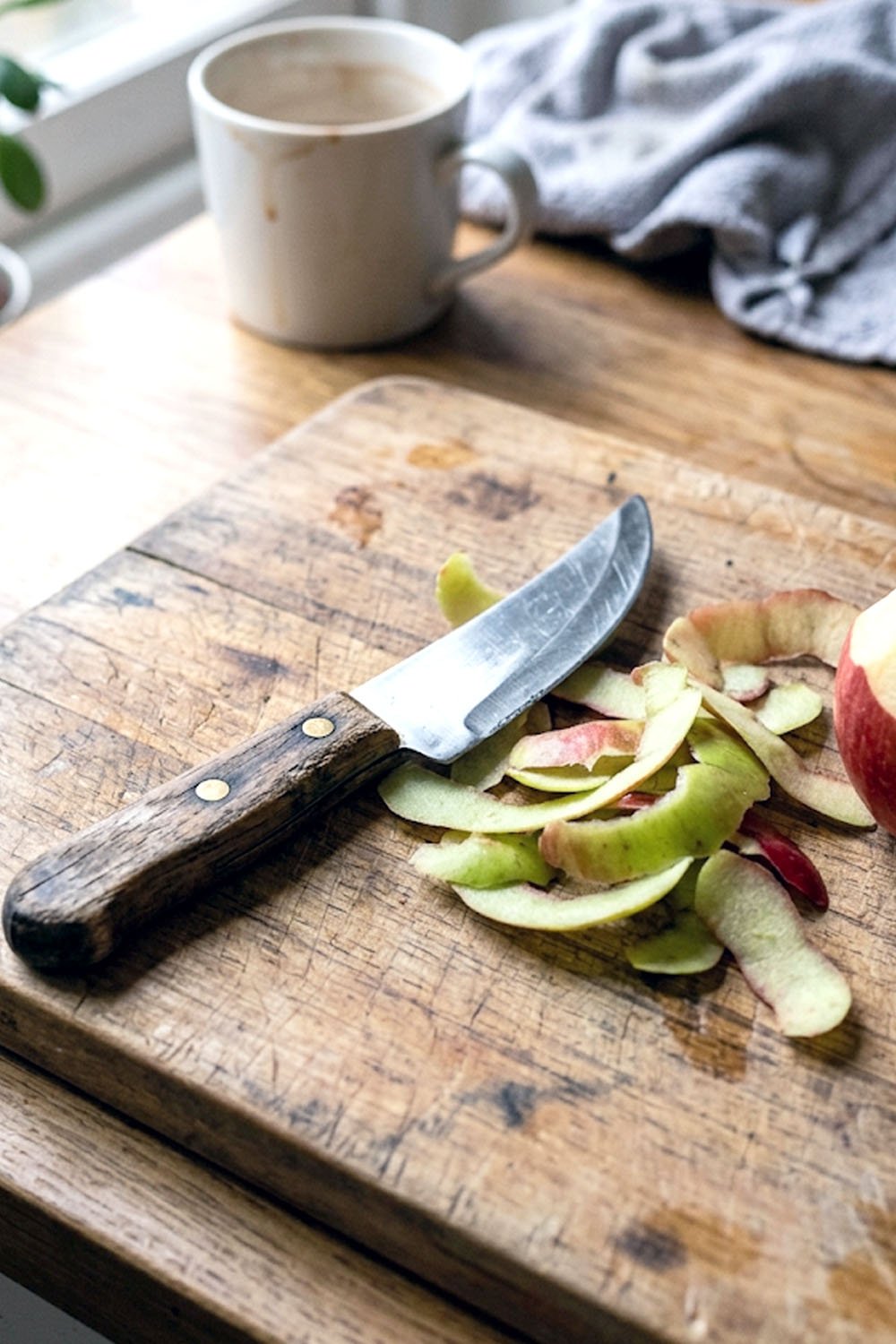
Peeling is where this tool truly shines compared to any other piece of cutlery. Start at the top of an apple or a peach and gently tuck the hook under the skin. Because the blade is curved, it stays flush against the fruit as you rotate it in your hand.
Move the knife in a slow, circular motion while you turn the fruit with your other hand. You will notice that the skin comes off in a clean strip without taking huge chunks of the fruit with it. This method is much faster than using a straight peeler once you get the hang of it.
If you are working with slippery fruits like plums, make sure your hands are dry. The hook shape helps grab the skin, but you still need a steady hand to keep the cut even. Take your time and enjoy the process of seeing the smooth fruit emerge from under the peel.
- Start at the stem and work toward the base.
- Rotate the fruit instead of moving your entire arm.
- Keep the blade flat against the surface for thin peels.
- Watch your thumb to ensure it stays clear of the path.
Trimming and Cleaning Small Vegetables Perfectly
Trimming tiny veggies like radishes or Brussels sprouts can be a real pain with a large knife. With the curved tip, you can easily lop off the ends and remove any brown spots with one quick flick. It is much more efficient than trying to line up a straight blade on a tiny, rolling object.
When you need to remove the woody core from a strawberry, the hooked tip is your best friend. Just insert the point near the green leaves and rotate the berry to pop the center right out. This leaves the rest of the fruit intact and looking beautiful for your dessert plates.
You can also use the sharp point to dig out the eyes of potatoes or bruised spots on pears. The curve allows you to scoop out the bad bits without creating a huge hole in the vegetable. It keeps your ingredients looking professional and ready for the pot or the pan.
- Use the very tip for small holes or blemishes.
- Flick the wrist to remove stems or tough ends.
- Guide the curve around the base of green tops.
- Hold the vegetable close to your body for more power.
Creating Beautiful Garnishes for Your Guests
If you want to impress your friends, use this knife to make fancy citrus twists. The curve is perfect for cutting thin strips of orange or lemon zest without catching the bitter white pith underneath. You can create long ribbons that curl naturally because of the shape of the blade.
Making decorative radishes or carved mushrooms is also much easier with this specific tool. Since the blade is so short, you can make tiny, controlled cuts to create petals or patterns. It feels more like carving a sculpture than just preparing a meal for the family.
Try making a simple tomato rose by peeling the skin in one long, continuous strip. After you have the long piece of skin, just roll it up tightly to create a flower shape. The curved paring knife makes getting that long, unbroken strip of skin a very simple task for anyone.
- Cut thin ribbons of citrus for fancy drinks.
- Carve small notches into mushrooms for a rustic look.
- Create floral shapes from hard vegetables like carrots.
- Use the curve to follow the natural lines of the food.
Detailed Work Like Deveining Shrimp Safely
Cleaning seafood is a delicate job that requires a very sharp and nimble tool. The curved blade fits perfectly into the back of a shrimp to unzip the shell and remove the vein. It follows the natural arch of the shrimp body so you do not cut the meat in half.
Instead of struggling with a straight knife that might slip, the hook stays locked in the groove. You can finish a whole pound of shrimp in half the time it usually takes you. This makes preparing a big seafood dinner feel much less like a daunting mountain of work.
Always remember to keep the blade pointed away from your palm while you are doing this. Even though the knife is small, it is incredibly sharp and deserves plenty of respect. Working over a bowl of ice helps keep everything fresh while you focus on your precision cuts.
- Slide the tip under the shell at the head.
- Follow the curve of the back down to the tail.
- Lift the vein out with the very point of the knife.
- Keep the meat intact for a better presentation.
Keeping Your Specialized Knife Sharp and Ready
A dull curved knife is actually more dangerous than a sharp one because it requires more force. Since sharpening a curved edge is a bit different, you should use a ceramic honing rod. Simply follow the curve of the blade along the rod to keep that edge crisp and effective.
Never throw this knife into the dishwasher where it can bang against other metal objects. The heat and harsh soaps will ruin the handle and dull the blade very quickly. Always wash it by hand with warm soapy water and dry it immediately with a soft cloth.
Store your knife in a wooden block or use a plastic blade guard to protect the edge. If it sits loose in a drawer, the tip can get chipped or bent, which ruins its precision. Taking care of your tools means they will take care of you for many years to come.
- Hone the edge frequently with a small ceramic rod.
- Hand wash only to preserve the sharpness and handle.
- Store it safely so the tip does not get damaged.
- Dry it quickly to prevent any tiny spots of rust.
Is a Curved Paring Knife Better Than a Straight One?
Choosing between these two styles depends entirely on what you plan to do in the kitchen today. A straight paring knife is great for slicing things against a cutting board, like garlic or small shallots. However, if you are holding the food in your hand while you cut, the curved version is much more comfortable. It is designed for “in the air” tasks rather than board work.
Professional chefs almost always have both because they know each one has a specific strength. You will find that the curved blade feels like a natural part of your hand when you are peeling a round onion. The straight blade can feel awkward and stiff when you try to move it around those same circular shapes. Having both options in your kit makes you a much more versatile cook.
Think about how often you peel apples, potatoes, or pears for your family. If you do these tasks daily, the curved blade will save you a lot of time and effort over the weeks. It also makes the job feel more artistic and less like a boring repetitive motion. You might even find that you start enjoying the prep work more than the actual cooking.
- Curved blades are superior for hand-held peeling tasks.
- Straight blades work better for small slicing on boards.
- The hook shape provides extra safety for intricate cuts.
- Standard blades are more common but less specialized.
- Bird’s beak knives waste less food during the peeling.
- Both tools together create a complete set for any task.
Final Thoughts
I hope this little guide helps you feel excited about using that unique tool in your drawer. Learning how to use a curved paring knife is a simple way to make your kitchen time much more fun. Just take it slow, keep your fingers safe, and enjoy the amazing precision this blade offers. You have totally got this, so go grab an apple and start practicing your new skills today.
| Task | Knife Style | Best Motion | Benefit | Difficulty |
| Peeling Apples | Curved | Circular Pull | Very Thin Skin | Easy |
| Slicing Garlic | Straight | Downward Press | Even Slices | Medium |
| Removing Eyes | Curved | Scooping Tip | Saves Food | Easy |
| Trimming Meat | Straight | Long Strokes | Clean Edges | Hard |
| Shrimp Cleaning | Curved | Arching Glide | Fast Results | Medium |
| Citrus Twists | Curved | Shallow Peel | Great Look | Easy |
Frequently Asked Questions (FAQs)
Is it hard to sharpen a curved blade?
It takes a little practice with a honing rod, but it is not difficult. You just need to follow the natural curve of the metal slowly.
Can I use this knife on a cutting board?
It is not ideal for boards because the tip hits first. This knife is designed to be used while holding the food in your hand.
Do I need a curved knife for everyday cooking?
You do not strictly need it, but it makes peeling and trimming much easier. It is a fantastic luxury tool for any home cook.
Is it safe for beginners to use?
Yes, it is very safe if you keep your movements small. The short blade actually gives you more control than a standard long knife.
Can I peel a potato with this knife?
Absolutely, it is one of the best tools for potatoes. The curve follows the bumps of the potato much better than a straight peeler.
Do I have to use a specific grip?
Using your thumb as a pivot is the best way to stay safe. This grip gives you the most stability while you are moving.
Is a bird’s beak knife the same thing?
Yes, “bird’s beak” is just a common nickname for the curved paring knife. They are the exact same tool with a different name.
Can I cut large vegetables with it?
It is too small for big items like cabbage or squash. Stick to small fruits and veggies to keep things safe and efficient.
