
As an Amazon Associate, I earn from qualifying purchases at no extra cost to you.
How to Use a Mandoline Slicer for Potatoes: A Beginner’s Guide

Potatoes seem simple until you are standing over a cutting board, trying to get even slices and failing every single time. Some go thick, some go paper thin, and none of them cook at the same rate. That is the real problem. A mandoline slicer fixes all of that, but only if you know how to use it right. This guide shows you exactly what to do, step by step, so you get perfect potato slices every single time.
Pick the right blade setting before you start, usually 3mm for gratins or thinner for chips, then secure your mandoline on a stable surface with a damp towel underneath. Always use the hand guard, no exceptions. Run the potato in smooth, even strokes from top to bottom, applying light pressure. Keep your fingers curled back, stay focused, and slice at a steady pace for clean, uniform cuts every time.
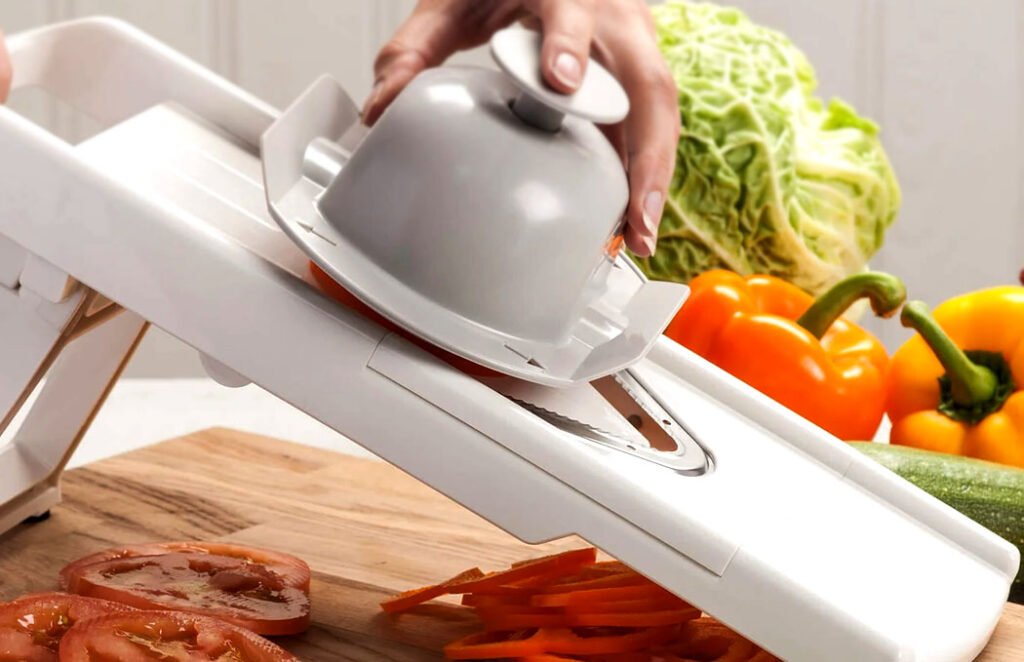
What Makes a Mandoline Slicer Good for Potatoes?
A mandoline slicer works so well for potatoes because it gives you control. Regular knives, even sharp ones, leave you guessing. Your hand gets tired, your angle shifts, and suddenly your slices are all different thicknesses. That matters a lot with potatoes because thick and thin slices cook at totally different speeds.
A mandoline keeps the blade at a fixed angle and a fixed depth. Every single pass gives you the same result. Whether you are making scalloped potatoes, homemade chips, or a potato gratin, that consistency is what makes the dish cook evenly and look clean on the plate.
The other big thing is speed. Once you get comfortable with it, a mandoline lets you slice a whole potato in about 30 seconds. No more spending 10 minutes at the cutting board trying to be careful. You just set it up, lock in your thickness, and go.
Not all mandolines are built the same, though. Cheap plastic ones can flex under pressure and mess up your slices. A solid one with a stable frame makes a real difference, especially for firmer vegetables like potatoes.
- Mandoline slicers keep every slice exactly the same thickness
- That consistency means your potatoes cook evenly, no raw spots, no burnt edges
- They work much faster than hand cutting, especially for large batches
- Fixed blade angle removes the guesswork from slicing
- Good for chips, gratins, au gratin potatoes, and potato stackers
- A stable, non-flexing frame gives you cleaner cuts on firm potatoes
How to Use a Mandoline Slicer for Potatoes: Step by Step
Gather Your Tools Before You Start
Before you even touch the potato, get everything ready. You need the mandoline, a cutting board or bowl to catch the slices, a hand guard or cut-resistant glove, and your potato. Wash the potato and dry it off. A wet potato can slip, and slipping on a mandoline blade is not something you want to experience.
Set the mandoline on a flat, stable surface. Put a damp kitchen towel underneath it. This stops it from sliding around while you slice, which is one of the most common reasons people cut themselves. The towel trick is simple but it works really well.
Check your blade before starting. Make sure it is seated correctly and not loose. If you have a mandoline with multiple blade options, pick the flat blade for straight slices. That is the one you want for potatoes.
Choose the Right Thickness Setting
Thickness makes a huge difference depending on what you are cooking. For potato chip thickness, you want very thin, around 1 to 2mm. For scalloped potatoes or potato gratin, go with 3mm. For things like a potato bake or layered potato dishes, 4 to 5mm works better.
Most mandolines have a dial or an adjustable plate you turn to set the thickness. Do a test slice first. Run the potato once, look at the slice, and hold it up to the light. If it feels right for what you are making, keep going. If not, adjust before slicing the whole potato.
Getting this step right saves you from a whole batch of uneven cooking. Thin chips that are supposed to be thick turn soggy, and thick gratin slices that should be thin stay undercooked in the middle. A quick check before you commit takes about five seconds.
Use the Hand Guard Every Single Time
This is non-negotiable. The hand guard is that plastic piece that grips the potato and lets you push it across the blade without putting your fingers near it. A lot of people skip it because it feels awkward at first. That is how people end up in the emergency room.
The blade on a mandoline is extremely sharp. Sharper than most kitchen knives. And because you are moving fast, a small slip sends the blade right into your fingertips. The hand guard keeps that from happening. Use it from the very first slice, not just near the end of the potato.
If your mandoline did not come with a hand guard, use a cut-resistant kitchen glove instead. They are cheap and they work. Either way, always have something protecting your hand. Never rely on just being careful. Everyone thinks they are careful until they are not.
Slice With Smooth, Even Strokes
Once your potato is in the hand guard and your mandoline is steady, start slicing. Push the potato forward in one smooth motion from the top of the board to the bottom. Let the blade do the work. You do not need to press hard.
Keep your strokes at a steady pace. Not too fast, not too slow. A rhythm helps. Think of it like spreading butter on toast, controlled and even. If you rush, the slice can catch or tear. If you go too slow, you can lose your angle and the slice comes out uneven.
Watch where the slices fall. Have a bowl or a tray right there to catch them. If slices are flying everywhere, you will spend more time picking them up than actually slicing. A wide bowl works best, especially for thin potato slices that can curl or break easily.
Handle the End Piece Safely
When the potato gets small, it gets dangerous. The last inch or two is where most cuts happen because your fingers are suddenly very close to the blade. Do not try to slice the very last piece through the hand guard if it is too small to grip properly.
Stop when the potato is about the size of a large strawberry. That last stub is not worth risking a cut. You can either toss it, throw it into a soup, or use it as a taste-test while your main dish cooks. Restaurants do this all the time. There is no shame in stopping early.
If you want to get more use out of that end piece, cut it with a knife instead. A few hand-cut slices mixed in will not ruin your dish. Your safety matters way more than getting every last slice out of one potato.
Clean the Mandoline Right Away
Cleaning a mandoline is where accidents happen most often. People grab a sponge and scrub across the blade without thinking. That is how you cut yourself during cleanup, not even during cooking.
After you are done slicing, rinse the mandoline under running water right away. Do not let starchy potato residue dry on the blade because it becomes harder to remove. Use a long-handled brush, not a sponge or a cloth, to clean around the blade. Brush away from the edge, not toward it.
Some mandolines are dishwasher safe. Check the manual. If yours is, take the blade out carefully, using a towel to grip it, and place it in the dishwasher blade-side down, away from where hands will reach in. After cleaning, store it somewhere safe, ideally with a blade guard or wrapped in a cloth so it does not cut anyone reaching into a drawer.
Quick Summary:
- Always set up on a stable surface with a damp towel underneath
- Pick your thickness based on the dish, thin for chips, medium for gratin
- Use the hand guard or a cut-resistant glove without fail
- Slice in smooth, controlled strokes and let the blade do the work
- Stop slicing when the potato gets too small to hold safely
- Clean with a brush, never a sponge, and always brush away from the blade
What Potatoes Work Best With a Mandoline Slicer?
Not every potato behaves the same way on a mandoline. Starchy potatoes like Russets are firm and slice cleanly. They hold their shape well, which makes them great for thin-sliced potato chips or layered dishes like a classic gratin. They do not fall apart mid-slice, which is exactly what you want.
Waxy potatoes like Yukon Gold or red potatoes are a bit different. They are denser and hold their shape after cooking, so they work really well for dishes like potato stackers or sliced potato bakes where you want the slices to stay intact even after they hit the oven. They slice smoothly and do not crumble.
New potatoes or very small ones can be tricky. They are hard to grip with the hand guard because of their size. If you are working with small potatoes, cut them in half first. That gives you a flat side to press against the mandoline plate, and the hand guard can grip them much more easily.
Avoid potatoes with deep eyes or very irregular shapes when possible. They can catch on the blade or give you uneven slices. A mostly round, smooth potato is always easier to work with. Pick your best ones for mandoline slicing, and use the odd-shaped ones for mash or soup instead.
- Russet potatoes slice cleanly and work great for chips and gratins
- Yukon Gold holds shape after cooking, perfect for bakes and stackers
- Red potatoes are dense and waxy, good for dishes where slices need to stay firm
- Small potatoes should be halved first for safer, easier slicing
- Smooth, evenly shaped potatoes are always easier to slice than bumpy ones
- Avoid deep-eyed or very lumpy potatoes, they can catch and cause uneven cuts
Final Thoughts
I hope this guide takes the worry out of using a mandoline slicer for potatoes. It looks intimidating at first, but once you do it a few times, it becomes one of the fastest tools in your kitchen. Just set up safely, use your hand guard, and keep those strokes smooth. Your gratins, chips, and bakes are going to look like they came out of a proper kitchen. You have got this.
| Potato Type | Best Use | Ideal Thickness | Texture After Cooking | Grip Difficulty | Extra Tips |
|---|---|---|---|---|---|
| Russet | Potato chips, gratin | 1-3mm | Crispy or tender | Easy | Peel first for chips |
| Yukon Gold | Potato bakes, stackers | 3-5mm | Creamy, holds shape | Easy | Great with skin on |
| Red Potato | Layered salads, roasts | 3-4mm | Firm, waxy | Medium | Do not overcook |
| New Potato | Quick roasts | 2-3mm | Soft inside | Hard, halve first | Cut in half before slicing |
| Sweet Potato | Chips, casseroles | 2-4mm | Soft or crispy | Medium | Peel before slicing |
| Fingerling | Salads, snacks | 2-3mm | Firm, waxy | Hard, halve lengthwise | Slice lengthwise for best results |
| Purple Potato | Visual dishes, salads | 3mm | Similar to Yukon | Easy | Great for color contrast |
| Baby Potato | Roasts, bakes | 2-3mm | Tender | Hard, halve first | Always halve before slicing |
Frequently Asked Questions
Is a mandoline slicer safe for beginners?
Yes, it is safe as long as you use the hand guard or a cut-resistant glove from the very first slice. Start slow, use a stable surface, and never rush. Beginners do fine once they understand the basic setup.
Can you slice potatoes with the skin on?
Yes, you can. The skin slices right through on most mandolines. For chips, many people prefer to peel first. For gratins or bakes, leaving the skin on adds texture and saves time.
Are all mandoline slicers the same thickness range?
No, they vary. Most cover 1mm to 9mm, but cheaper models may have fewer settings. Always check the product specs before buying, especially if you need very thin slices for potato chips.
Do you need to soak potato slices after using a mandoline?
For chips, soaking in cold water for 30 minutes removes excess starch and makes them crispier. For gratins or bakes, you can skip this step. It depends entirely on what you are making.
Can a mandoline slicer handle sweet potatoes too?
Yes, sweet potatoes work well on a mandoline. They are firm and slice cleanly. Peel them first since the skin is tougher. Use a slightly wider thickness setting, around 3 to 4mm, for best results.
Is it okay to use a mandoline without a hand guard if I am careful?
No. Being careful is not enough protection. The blade is extremely sharp and moves fast. Even experienced cooks cut themselves this way. Always use a hand guard or a cut-resistant glove, every single time.
Do mandoline slicers work for frozen potatoes?
Frozen potatoes are too hard and can damage the blade or cause dangerous slipping. Always slice potatoes at room temperature. If your potato has been refrigerated, let it sit out for a few minutes first.
Are expensive mandolines worth it over cheap ones?
Often, yes. Cheap plastic mandolines can flex under pressure, which leads to uneven slices. A well-built mandoline with a stable frame gives you cleaner cuts, lasts much longer, and feels safer to use overall.
