
As an Amazon Associate, I earn from qualifying purchases at no extra cost to you.
How to Use Knife Sharpener Rod the Right Way

Having a dull knife is actually more dangerous than a sharp one. Most people struggle with squashing their tomatoes instead of slicing them because their blades have lost that factory edge. Today, you will learn exactly how to use knife sharpener rod to bring your tools back to life without any stress or fancy gear.
To start the process, hold your rod firmly in one hand with the tip resting on a stable cutting board to prevent any slipping. You need to angle your blade at about twenty degrees against the steel before sliding it down from the heel to the tip. Repeat this motion several times on one side using light pressure so you do not damage the metal edge. Switch to the other side of the blade and perform the same number of strokes to ensure the edge remains perfectly centered and balanced. Finally, wipe the blade with a clean towel to remove any tiny metal flakes before you start prepping your next delicious meal.
Why Do You Need to Use a Honing Steel Regularly?
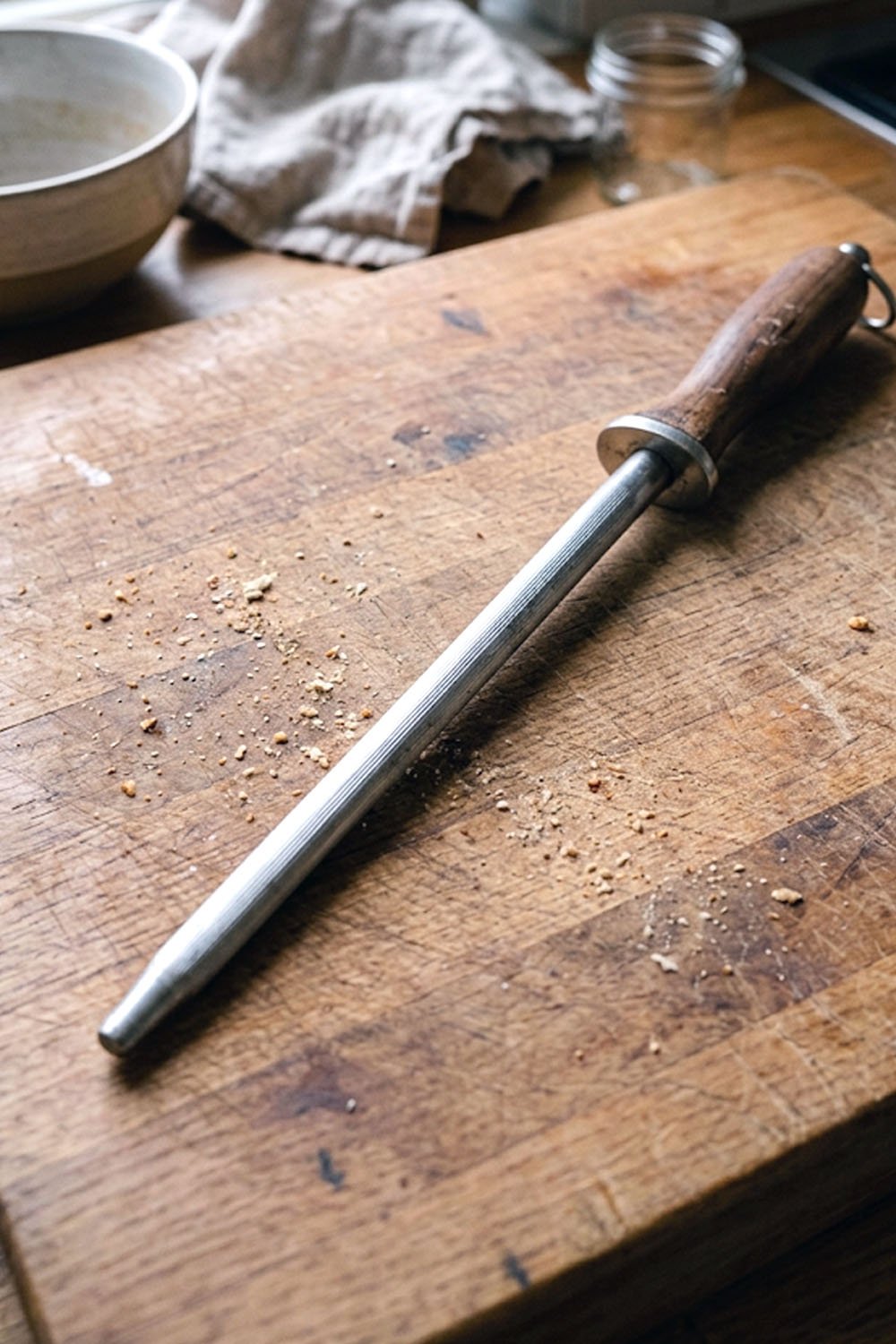
Most people think a rod actually grinds away metal to make a knife sharp. In reality, these tools are mostly for straightening the edge rather than removing material. When you use your knife, the microscopic edge eventually folds over or curls to one side. This makes the blade feel dull even if the metal is still relatively thin.
A honing rod pushes that curled edge back into a straight line so it can cut through food again. If you skip this step, your knife will feel like a butter knife within a few weeks of heavy use. It is a simple habit that saves you a lot of money on professional sharpening services. You should think of it like brushing your teeth for your kitchen tools.
Using a rod consistently keeps the blade in peak condition for much longer periods. It also makes your time in the kitchen much faster and more enjoyable. When your tools work correctly, you do not have to fight with your ingredients. Safety is the biggest benefit because a straight edge will not slip off a hard onion skin.
- Straightens the microscopic edge of the blade.
- Extends the time between professional stone sharpenings.
- Improves safety by preventing the blade from slipping.
- Makes slicing through soft vegetables effortless and clean.
- Saves money on replacing expensive kitchen cutlery.
- Provides a professional feel to your home cooking routine.
How to Use Knife Sharpener Rod Like a Professional Chef
Pick the Best Grip for Your Hand
Safety starts with how you hold the tools. You should grab the handle of the sharpening rod with a firm, full grip like you are holding a flashlight. Make sure your fingers are behind the guard to keep them away from the moving blade.
The other hand should hold the knife handle comfortably but securely. Do not put your pointer finger on the spine of the knife because it can mess up your control. Relax your shoulders so you are not too stiff while you work.
Using a comfortable grip helps you stay consistent with every single stroke. If you feel tense, your angles will probably be off. Take a deep breath and find a steady rhythm that feels natural to your body.
- Place fingers behind the safety guard.
- Hold the knife by the handle only.
- Keep your wrist straight and firm.
- Stand in a comfortable and balanced position.
Set the Correct Angle for the Blade
Finding the right angle is the most important part of this whole process. For most standard kitchen knives, you want to aim for about twenty degrees. A good trick is to hold the knife at ninety degrees, then half that to forty five, and half again.
If the angle is too flat, you will not touch the edge at all. If the angle is too steep, you might actually dull the blade further. It takes a little bit of practice to feel the sweet spot where the metal meets the rod.
Try to maintain this exact slope for every swipe you take. Consistency matters much more than speed when you are first starting out. Once you lock in that angle, the rest of the movement becomes much easier to repeat.
- Aim for a twenty degree angle for Western knives.
- Use a shallower angle for Japanese style blades.
- Start slow to ensure the angle stays the same.
- Practice the motion without a blade first if nervous.
Secure the Rod on the Countertop
I always recommend beginners start by placing the tip of the rod down on a surface. You can use a damp paper towel or a wooden cutting board to keep the tip from moving around. This vertical position gives you way more stability than holding it in mid air.
When the rod is anchored, you only have to worry about moving the knife. This setup reduces the chance of the blade slipping and hitting your hand. It also makes it much easier to see the angle you are using.
Hold the rod straight up and down while you work. Pressing the tip into the board ensures that the steel does not wobble. As you get better, you might try other styles, but this is the safest way to learn.
- Use a non slip surface for the tip.
- Keep the rod perfectly vertical for better sight lines.
- Apply gentle downward pressure to stay steady.
- Keep the workspace clear of any messy distractions.
Start the Stroke from the Heel
Begin the motion by placing the heel of the knife at the top of the sharpening rod. The heel is the part of the blade closest to the handle. You want to make sure the entire length of the knife gets some love.
Pull the knife toward your body while simultaneously moving it downward toward the table. This diagonal motion ensures that every inch of the metal touches the steel. It should feel like a smooth and sweeping arc.
Do not rush this part of the technique. A slow and steady stroke is better for the metal than a fast and jerky one. You want the blade to glide across the surface like it is on ice.
- Place the heel at the very top.
- Move the knife in a slight curve.
- Ensure the tip finishes at the bottom.
- Listen for a consistent ringing sound.
Repeat the Process on the Other Side
Balance is key when you are working on your kitchen tools. If you do five strokes on the left side, you must do five strokes on the right side. This keeps the edge perfectly centered so the knife does not pull to one side.
Switching sides can be a little tricky at first for your hand coordination. Just take your time and reset your angle before you start the new side. You can alternate sides with every stroke if that feels more comfortable for you.
Check the sharpness of the blade after about ten total passes. Usually, that is all it takes to bring the life back to a quality steel blade. If it still feels a bit sluggish, give it a few more gentle turns.
- Maintain equal pressure for both sides.
- Count your strokes out loud to stay balanced.
- Reset your grip if your hand gets tired.
- Focus on the middle of the rod for best results.
Clean the Blade Before Cooking
Never skip the cleaning step after you finish with the sharpening rod. During the process, tiny bits of metal dust can gather on the surface of the knife. You definitely do not want those tiny shavings getting into your salad or steak.
Wipe the blade from the handle toward the tip using a thick cloth. Be very careful not to cut yourself since the edge should be much sharper now. A quick rinse under warm water also works well to clear away any debris.
Store your rod in a dry place so it does not get dusty or greasy. Keeping your tools clean ensures they are always ready for the next time you need to cook. A clean blade is a happy blade in any kitchen.
- Wipe away metal dust with a damp cloth.
- Dry the blade thoroughly to prevent any rust.
- Clean the honing rod with a dry towel.
- Store tools in a safe and dry drawer.
How Often Should You Sharpen Your Knives?
You should honestly use your rod almost every time you take your knife out to cook. It only takes a few seconds to give the blade a quick tune up before you start chopping. If you wait until the knife is completely dull, the rod might not be enough to fix the problem.
Professional chefs often hone their blades multiple times throughout a single shift. For a home cook, doing it once a day or even once a week is usually plenty. It depends on how much cutting you are doing and what kind of surfaces you use.
Hard surfaces like glass or marble cutting boards will dull your knives much faster than wood or plastic. If you notice the knife sliding off an onion skin, that is your signal to grab the rod. Regular maintenance prevents the need for heavy grinding later on.
Think of it as a quick oil change for your car. Small and frequent bits of care keep everything running smoothly for years. Your knives will stay in great shape, and your hands will stay safe from accidents.
- Hone the blade before every major cooking session.
- Check the edge if you notice any resistance.
- Avoid cutting on very hard or abrasive surfaces.
- Store knives in a block to protect the edges.
- Use a stone for deep sharpening once a year.
- Keep the rod handy on your kitchen counter.
Final Thoughts
I hope this guide makes you feel much more confident about using your tools. Learning how to use knife sharpener rod is a total game changer for any home cook. Just remember to stay slow, keep your angles steady, and practice whenever you can. You have got this, and your delicious home cooked meals will definitely show the difference soon.
| Tool Type | Main Purpose | Usage Frequency | Surface Material | Best For | Skill Level |
| Steel Rod | Straighten edge | Every use | Carbon steel | Chef knives | Beginner |
| Ceramic Rod | Light sharpening | Weekly | Ceramic | Harder steels | Intermediate |
| Diamond Rod | Faster honing | Monthly | Diamond grit | Dull blades | Intermediate |
| Whetstone | Major repair | Yearly | Stone or water | Total refresh | Advanced |
| Pull Through | Quick fix | Occasional | Carbide | Cheap knives | Very Easy |
| Leather Strop | Polishing | Daily | Leather | Razor edges | Expert |
Frequently Asked Questions (FAQs)
Is it necessary to use oil on a rod?
No, you should never use oil on a standard honing rod. These tools are designed to be used dry to effectively catch the edge of the metal. Just keep the surface clean and free of any grease.
Can I use a rod on serrated bread knives?
It is usually not a good idea to use a standard rod on serrated edges. Those teeth require a special smaller rod that fits into the individual grooves. Stick to using your steel rod for smooth blades only.
Is it better to hold the rod in the air?
Holding it in the air is fine for pros, but beginners should use a table. Resting the tip on a flat surface gives you much better control over the angle. This method is significantly safer for your fingers too.
Do I need to push hard while sharpening?
You only need to use very light pressure during the process. Let the weight of the knife and the texture of the rod do the work for you. Pushing too hard can actually bend or damage the delicate edge.
Can a rod fix a chipped blade?
A honing rod is not designed to fix chips or large nicks in the metal. For those types of repairs, you will need a coarse whetstone or a professional. The rod is only meant for regular edge maintenance and straightening.
Is it okay to wash my sharpening rod?
You can wipe it with a damp cloth, but avoid soaking it in water. Most rods are made of steel and can rust if they stay wet for too long. Always dry it completely before putting it back in storage.
Do I always need to swipe toward my body?
It is generally safer to move the knife away from your body or downward toward a board. Swiping toward yourself increases the risk of a slip causing an injury. Always prioritize safety over speed when you are working with sharp tools.
Can I over sharpen my knife with a rod?
It is very difficult to over do it with a honing steel since it removes almost no metal. However, doing too many passes might eventually fatigue the metal at the very edge. Ten to fifteen total strokes are usually more than enough.
