
As an Amazon Associate, I earn from qualifying purchases at no extra cost to you.
LG Refrigerator Error Code EF1: Fix it the Easy Way at Home

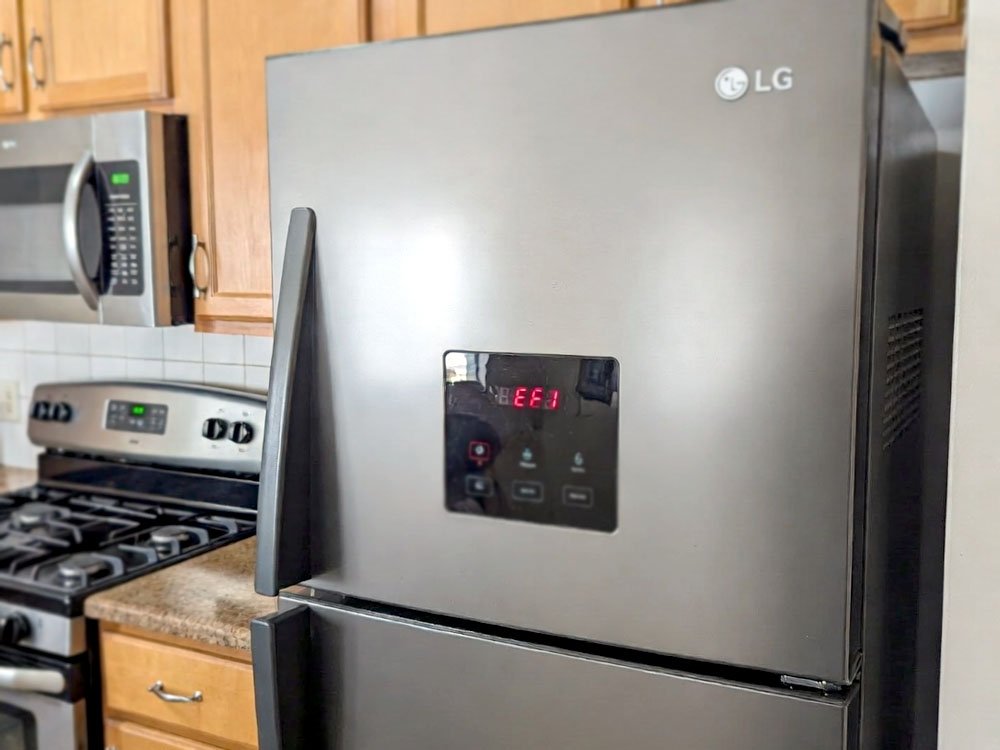
Every fridge has a personality but it gets weird when yours starts talking in codes. Most people freak out when they see a blinking screen and think they need a new appliance. Actually, I have seen the LG refrigerator error code EF1 pop up just because a tiny bit of ice got stuck in the wrong place.
You should first unplug the fridge for ten minutes to see if a simple reset clears the error from the control board. If the code stays you must check the back of the freezer for ice buildup that might block the flow of cold air. You then need to look at the evaporator fan to ensure it spins freely without hitting any frost. You can use a hair dryer on a low setting to melt any stubborn ice away from the fan blades carefully. Lastly you should check the wire connections to the fan motor to make sure nothing came loose during a move.
Why Does My Fridge Show the LG Refrigerator Error Code EF1?
This code usually tells you that the flow sensor or the fan inside the freezer has a problem. It’s like your fridge is trying to breathe but something is blocking its throat. Your food won’t spoil in five minutes but you shouldn’t ignore it for a whole day. If the fan stops then the cold air can’t move and your milk will get warm fast.
I always tell my clients to keep the door shut while they figure this out. Every time you open the door you let the cold out and make the motor work harder. The code is basically a warning light telling you that the internal temperature is rising. It’s a common glitch that often points to the freezer area specifically.
You don’t need to be a rocket scientist to handle this situation. Most of the time it is just a bit of frost or a sensor that got confused. Stay calm and follow the steps to see if it is a quick fix. If the fridge stays quiet and the code stays on then you know it is time to look deeper inside.
- Check if the freezer door was left open by accident.
- Listen for any grinding noises coming from the back wall.
- Feel the air vents to see if any cold air is moving.
- Look for a thick layer of frost on the back panel.
- Verify that your fridge has enough space from the wall.
- Make sure the temperature settings haven’t been changed recently.
Steps to Fix Your LG Refrigerator Error Code EF1 and Save Your Food
Unplug Your Fridge for a Hard Reset
The very first thing you should do is turn the power off. Sometimes the computer inside the fridge just gets a little confused and needs a nap. I call this the “tech support special” because it fixes about half of the calls I get. Pull the plug from the wall and wait at least ten full minutes.
While the power is off the electronics in the control board will fully drain. This clears out any temporary errors that might be stuck in the memory. It is a great way to see if you have a real part failure or just a one-time glitch. If the code comes back right away after you plug it in then you know you have a physical part to check.
I often see people plug it back in after only thirty seconds. That is not enough time for the system to reset itself properly. Give it a real break so the sensors can start fresh. This is the easiest way to save yourself a big repair bill for no reason.
- Pull the plug directly from the wall outlet.
- Wait exactly ten minutes by your watch.
- Plug it back in and listen for the fan.
- Check the display to see if the code is gone.
Check the Flow Sensor and Water Line
The EF1 code often points to a flow sensor issue in the water system. If you recently changed your water filter then air might be trapped in the line. This air makes the sensor think something is wrong with the flow of water. You can usually fix this by running a few gallons of water through the dispenser.
I have seen many people install a cheap off-brand filter that causes this exact error. The fridge is picky about how much pressure it feels from the water line. If the filter is clogged or poorly made then the sensor will trigger a warning. Always try to use the official brand filters to keep the system happy.
You should also check the back of the fridge to make sure the water line is not pinched. If you pushed the fridge too close to the wall then the plastic tube might be flat. A flat tube means no water can get through and the sensor will freak out. Straighten the line and see if the code disappears.
- Run two gallons of water through the dispenser.
- Check the water filter for a proper fit.
- Look at the water line for kinks or folds.
- Ensure your home water pressure is high enough.
Inspect the Freezer Fan for Ice
The evaporator fan is the heart of your cooling system. If ice builds up around the fan blades then they cannot spin. When the motor tries to turn but fails it sends a signal that creates an error. You can usually hear a buzzing or clicking sound if this is happening in your freezer.
You might need to take the back panel off the inside of your freezer to see the fan. Don’t be scared because it is usually just a few screws holding it on. Once you see the fan look for any white frost or hard ice. You can use a hair dryer to melt it but keep the heat low so you don’t melt the plastic.
A sneaky trick I use is checking the door seals while I am at it. If the rubber seal is torn then warm air leaks inside and creates that ice buildup. Cleaning the seals with warm soapy water can stop the ice from coming back. This keeps your fan spinning smoothly all year long.
- Remove the screws from the back freezer panel.
- Use a hair dryer to melt any visible ice.
- Spin the fan blade with your finger to check it.
- Wipe away any excess water after the ice melts.
Examine the Wire Harness Connections
Sometimes the wires that talk to the sensors just come loose. Over time the vibration of the fridge can jiggle a plastic plug until it barely touches. I have gone to many houses where I just pushed a wire back in and the fridge worked perfectly. It is a very common issue that people often miss.
You should look at the wires near the top of the door hinge. There is usually a plastic cover you can pop off with a screwdriver. Check all the colored wires to see if any are pinched or broken. If a wire is cut then the sensor can’t send its message to the main brain.
Also check the connections near the fan motor you looked at earlier. Give the plugs a gentle tug to make sure they are snapped in tight. If you see any green or white crust on the metal then that is corrosion. You can clean that off with a dry toothbrush to help the electricity flow better.
- Pop off the hinge cover on top of the fridge.
- Look for wires that might be pinched by the door.
- Ensure all plastic connectors are snapped together tightly.
- Check for any signs of burnt or frayed wires.
Defrost the Entire Unit Manually
If the quick fixes don’t work then you might need a deep defrost. This means taking all your food out and putting it in a cooler for a few hours. Sometimes ice builds up deep inside the hidden vents where a hair dryer can’t reach. A full manual defrost is the only way to clear those blocks.
I suggest leaving the doors open for at least twelve hours during this process. Put some old towels on the floor because water might leak out as the ice melts. This is like a spa day for your refrigerator. It gives the whole system a chance to dry out and start over from scratch.
While the fridge is empty you should clean the coils on the back or bottom. Dust on the coils makes the fridge run hot and causes more ice to grow inside. A clean fridge is a happy fridge that won’t show you scary codes. Once it is dry and clean you can turn it back on.
- Empty all food into a separate cooler.
- Leave both doors wide open for twelve hours.
- Place towels on the floor to catch any drips.
- Vacuum the dust off the bottom condenser coils.
Check the Main Control Board
If everything else looks perfect then the problem might be the main brain. The control board is the computer that runs the whole show. Sometimes a power surge can damage a tiny part on the board. If the board is bad then it might show the EF1 code even if the fan is fine.
You can find the board in a metal box on the back of the fridge. Look for any black marks or a smell like burnt toast. If you see a burnt spot then the board definitely needs to be replaced. Replacing a board is usually just unplugging the old one and plugging in the new one.
Before you buy a new board though make sure your wall outlet is grounded. I once spent an hour fixing a fridge that only had a bad outlet. Plug a lamp into the same outlet to see if the light flickers. If the power is steady then you can focus back on the fridge parts.
- Locate the control board panel on the back.
- Look for visible burn marks on the green board.
- Check the outlet with another small appliance.
- Smirch for any “electronic” burning smells near the back.
Can I Still Use My Ice Maker with This Code?
You probably shouldn’t use the ice maker until you fix the issue. Since this code is often about water flow or freezing fans your ice maker might struggle. If the water flow is weak your ice cubes will be tiny or hollow. This can lead to a big frozen mess inside the ice tray that is hard to clean.
Also if the fan is the problem then the ice won’t stay frozen. You will end up with a bucket of water that leaks all over your freezer floor. It is much better to turn the ice maker off using the switch for now. Wait until the display is clear before you start making ice again.
I always suggest buying a bag of ice from the store while you fix the fridge. This keeps your drinks cold and takes the pressure off your appliance. Once you fix the LG refrigerator error code EF1 you can turn the system back on. Your fridge will thank you for giving it a break while it was struggling.
- Turn off the ice maker switch inside the freezer.
- Avoid using the water dispenser for a few hours.
- Watch for any leaks coming from the ice bucket.
- Check the size of the ice cubes already in the bin.
- Clean any slush out of the ice tray immediately.
- Wait for the error code to disappear before restarting.
Final Thoughts
Fixing your own appliance makes you feel like a total boss. You don’t always need to call a pro when you see the LG refrigerator error code EF1 on your screen. Most of the time a little bit of cleaning and a quick reset will do the trick. Just take your time and follow the steps carefully. You have got this under control and your kitchen will be back to normal soon.
| Problem Area | Likely Cause | Quick Fix |
| Water System | Clogged Filter | Replace with new OEM filter |
| Freezer Area | Ice on Fan | Use hair dryer to melt frost |
| Power Supply | Computer Glitch | Unplug for ten full minutes |
| Water Line | Kinked Tubing | Pull fridge out and straighten |
| Wire Harness | Loose Plug | Press connectors together firmly |
| Air Flow | Blocked Vents | Move food away from back wall |
Frequently Asked Questions (FAQs)
Is it safe to leave my fridge plugged in with this code?
It is generally safe for a short time but you should not leave it for days. The error means a part is not working right which can cause the motor to overheat. If you hear a loud buzzing sound you should unplug it right away. It is always best to fix it fast.
Can I fix the EF1 code without any tools?
Yes you can often fix it just by unplugging the unit or moving some food. Sometimes food blocks the air vents and causes the fan to stop. If a reset doesn’t work you might need a simple screwdriver to look at the fan. Most people can handle this without buying special tools.
Do I need to buy a new water filter?
If you haven’t changed your filter in six months you should definitely try a new one. A dirty filter blocks the water flow and triggers the sensor. Make sure you buy the right model for your LG fridge. A fresh filter often makes the error code go away instantly.
Is the EF1 code common for LG fridges?
It is a fairly common code for many modern refrigerators with smart sensors. These sensors are very sensitive to any changes in water pressure or air flow. It does not mean your fridge is a lemon or poorly made. It just means the system is doing its job by warning you early.
Can a power outage cause this error code?
A power surge or a quick outage can definitely scramble the brains of your fridge. When the power comes back on the sensors might send a wrong signal. This is why a hard reset is the best first step. It lets the electronics start over and check everything again.
Do I have to take all the food out?
You only need to remove the food if you are doing a full manual defrost. For a simple reset or a quick fan check you can leave most things inside. Just keep the doors closed as much as you can. You want to keep that cold air trapped inside while you work.
Is there a reset button on the fridge?
Most LG fridges do not have a single “reset” button for error codes. The best way to reset it is to pull the power cord from the wall. Some models let you press the “Ice Plus” and “Refrigerator” buttons together. Check your specific manual to see if your model has a special button combo.
Can I use a hair dryer to melt the ice?
You can use a hair dryer but you must be very careful. Never hold the heat in one spot for too long or you will melt the plastic walls. Keep the dryer moving and use the medium or low setting. It is a great way to speed up the repair process.
