
As an Amazon Associate, I earn from qualifying purchases at no extra cost to you.
Whirlpool Fridge Sounds Like a Helicopter: Fix It the Easy Way

I've spent years fixing kitchens, and I’ve seen it all. Did you know a fridge can actually make over twenty different sounds just by being moody? When your Whirlpool fridge sounds like a helicopter, it's usually just a fan begging for a little bit of help. It sounds scary, like a plane is taking off in your kitchen, but most of the time, it is just a simple fix you can do yourself.
First, you should unplug your fridge to stay safe while you work. Then, pull it out and clean the back fan because dust makes it wobble and get loud. Next, check the freezer fan for ice buildup and melt it with a hair dryer if you see any. Also, make sure the fridge sits flat on the floor so it does not shake. Then, look for loose screws or panels that might be rattling against the frame. Lastly, if the noise stays, you might need a simple new fan motor.
Why Does My Fridge Make a Scary Flying Sound?
Your fridge has parts that spin very fast to keep things cold. When a fan blade hits a piece of ice or a thick layer of dust, it creates a rhythmic thumping. This fast thumping is exactly why your Whirlpool fridge sounds like a helicopter. It is just physics. A spinning part that is off-balance will always make a racket.
Usually, this happens in two spots: the back of the unit or inside the freezer. If the sound stops when you open the freezer door, the inside fan is the problem. If it keeps going, the noise is likely coming from the bottom or the back. It is rarely a “death sentence” for your appliance. Most of the time, it is just a part that needs a good cleaning or a tight screw.
Think of it like a deck of cards in bicycle spokes. The faster the fan spins, the more it sounds like an engine. You don’t need to be a pro to find where that “playing card” is hiding. You just need to look in the right places and stay patient.
- Ice hits the spinning fan blades.
- Dust makes the motor work too hard.
- A fan blade might be cracked or bent.
- The fridge is touching the wall too closely.
- Internal wires are vibrating against the plastic.
- The compressor mounts have worn down.
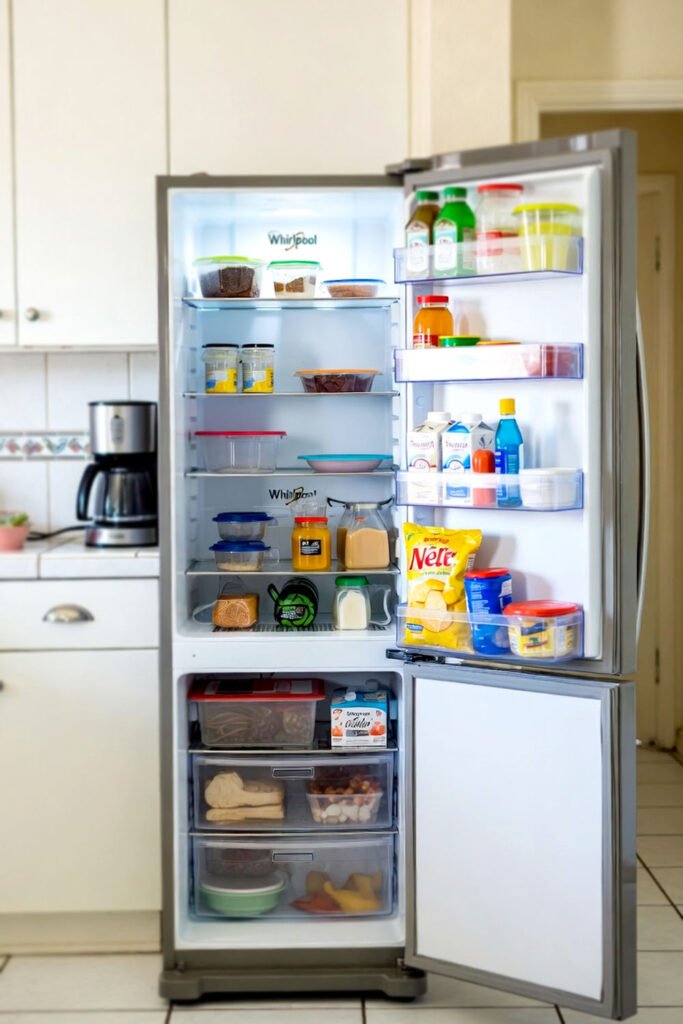
Whirlpool Fridge Sounds Like a Helicopter: Steps to Quiet It Down
Let’s get that kitchen quiet again so you can hear yourself think. I will show you exactly how to find the noise. These steps are simple, and you probably already have the tools you need in a kitchen drawer.
Clean the Condenser Fan
The condenser fan lives at the very bottom on the back side. Since it’s so close to the floor, it acts like a vacuum cleaner for pet hair and dust. When enough junk builds up on the blades, the fan loses its balance. This makes it shake and roar like a chopper. It is the most common reason for a loud Whirlpool fridge.
Pull the fridge away from the wall so you can see the back. Take off the thin metal or cardboard panel at the bottom. You will see a fan near a large black tank. Use a soft brush or a vacuum to suck away all the gray lint. Be very gentle so you don’t bend the metal fins nearby.
Once it is clean, give the fan a little push with your finger. It should spin smoothly without any wobbling. If it feels stiff or grinds, the motor is tired and needs a swap. But usually, a good cleaning is all it takes to stop the noise. You'll be shocked at how much dirt hides back there.
- Unplug the power cord first.
- Use a vacuum hose for big dust.
- Wipe blades with a damp cloth.
- Keep the fridge 4 inches from walls.
Defrost the Evaporator Fan
If the noise is coming from inside the freezer, ice is likely the villain. The evaporator fan pulls cold air across the cooling coils. If your door was left open or a seal is leaky, frost builds up. The fan blades start hitting that ice, creating a loud, fast clicking sound. It sounds exactly like a helicopter hovering in your kitchen.
To fix this, you have to get behind the back wall inside the freezer. You might need to take out the ice bin and a few screws. If you see white frost covering the fan, you found your culprit. Don’t use a knife to scrape the ice, or you might poke a hole in the coils. That would be a very expensive mistake.
Use a hair dryer on a low, warm setting to melt the ice away. Keep a towel handy to soak up the water so it doesn’t freeze again later. Once the ice is gone, the fan should spin quietly. If the ice comes back in a week, you might have a bad defrost heater. But for now, melting it will give you peace and quiet.
- Empty the freezer food into a cooler.
- Remove the back plastic panel carefully.
- Melt all visible ice with warm air.
- Check the rubber door seals for gaps.
Check the Compressor Mounts
The compressor is that big black “football” at the bottom back. It sits on rubber feet called mounts. Over time, these rubber pieces get hard or crack. When they fail, the compressor vibrates directly against the metal frame of the fridge. This creates a deep, heavy thrumming that can shake the whole floor.
While the fridge is running, safely look at the compressor. If it looks like it is jumping around, the mounts are the issue. You can sometimes tighten the bolts that hold it down. If the rubber is totally gone, you can even slide a piece of heavy rubber padding under it as a temporary fix. This acts like a shock absorber for your fridge.
Be careful because the compressor gets very hot while it’s working. Don’t touch it with your bare hands if it has been running for a while. Just looking at it will tell you if it’s dancing around. A steady compressor is a quiet one. If the noise is inside the compressor itself, then it might be time for a new fridge.
- Look for cracked or missing rubber.
- Tighten any loose mounting bolts.
- Ensure no copper pipes are touching.
- Avoid touching the hot compressor tank.
Level the Fridge Feet
Sometimes the “helicopter” is just the whole fridge shaking. If your floor is uneven, the fridge will rock back and forth. This makes every little vibration feel ten times louder. It can even make the shelves inside rattle against the door. It's a simple fix that people often forget to check.
Look at the very bottom front of your Whirlpool. You will see two round feet that can be twisted. Use a pair of pliers or your hand to turn them until they hit the floor firmly. You want the front of the fridge to be just a tiny bit higher than the back. This helps the doors swing shut on their own, too.
Try to rock the fridge from corner to corner with your hands. If it moves at all, keep adjusting those feet. Once it is solid and level, a lot of those weird buzzing sounds will just disappear. It's like magic for your ears. Plus, it keeps your eggs from rolling around inside!
- Twist feet clockwise to go down.
- Use a bubble level if you have one.
- Check that all four corners touch.
- Make the front slightly higher than back.
Secure the Back Panel
That thin panel on the back of your fridge can be a real noisemaker. If the screws are loose, the wind from the fan makes the panel vibrate. It acts like a drum, turning a small hum into a loud “chopper” sound. I’ve fixed many “broken” fridges just by turning a screwdriver for thirty seconds.
Go to the back and touch the panel while the noise is happening. If the sound stops when you press your hand against it, you found the problem. Tighten every single screw you see on that back cover. If a screw hole is stripped, you can use a slightly larger screw or a piece of tape to hold it still.
Also, check the drain pan at the bottom. It is a plastic tray that catches water. If it's not sitting in its clips correctly, it will rattle against the motor. Make sure it is snapped in tight. These little plastic rattles are annoying, but they are the easiest things in the world to fix.
- Tighten all exterior panel screws.
- Snap the plastic drain pan into place.
- Use foam tape to stop metal rattles.
- Check for loose wire harnesses.
Inspect the Fan Blades
Sometimes a fan blade actually gets a crack in it. Even a tiny crack can make the blade flex while it spins. This makes the fan hit the plastic shroud around it over and over. Since it happens hundreds of times a minute, it sounds like a constant drone or a helicopter blade cutting the air.
Look closely at the blades of both fans. If you see a white line or a visible crack, the blade is toast. You can’t really glue these because they spin too fast and the glue will fly off. You’ll need to buy a new fan blade or a whole motor assembly. They are usually cheap and easy to find online.
Also, make sure the fan isn’t sliding off the motor shaft. There is usually a small clip holding it on. If that clip is loose, the fan will move back and forth and hit things. Push the fan on tight and make sure the clip is secure. A snug fit is a silent fit.
- Look for tiny cracks in the plastic.
- Ensure the fan clip is tight.
- Check if the blade hits the housing.
- Replace blades that look warped or bent.
Why is My Fridge Making a Loud Popping Noise?
A popping noise in your fridge is usually just the sound of plastic expanding and shrinking. Inside the walls, there is insulation and plastic lining. When the fridge gets cold, these materials shrink. When the defrost heater turns on to melt ice, they get warm and expand again. This “push and pull” makes a loud pop or crack.
It can be startling, especially at night when the house is quiet. It sounds like someone is dropping a heavy book or even a small firecracker. Most Whirlpool manuals will tell you this is totally normal. It doesn’t mean anything is broken. It just means your fridge is doing its job of changing temperatures.
However, if the popping is followed by the fridge not getting cold, that’s a different story. That could be a relay on the start-up part of the compressor. But 90% of the time, popping and cracking is just the house “breathing.” You don’t need to worry about it unless the temperature starts to climb.
- Normal expansion of plastic liners.
- Defrost heater warming up the freezer.
- Contraction of internal foam insulation.
- Ice cubes falling into the plastic bin.
- A clicking start relay (if cooling fails).
- Water dripping onto the hot defrost heater.
Final Thoughts
You really can handle this repair yourself. If your Whirlpool fridge sounds like a helicopter, just take it one step at a time. Clean the dust, melt the ice, and tighten those screws. You will save a lot of money on a repairman and feel like a hero. You’ve got this, so go get that screwdriver and bring back the quiet!
| Part Name | Why it Noises | How to Fix | Easy Level |
| Back Fan | Dust and hair | Vacuum it clean | Very Easy |
| Freezer Fan | Ice buildup | Melt with hair dryer | Easy |
| Fridge Feet | Uneven floor | Twist to level | Very Easy |
| Back Panel | Loose screws | Tighten them up | Super Easy |
| Compressor | Old rubber feet | Tighten or pad them | Medium |
| Drain Pan | Not in clips | Snap it back in | Very Easy |
Frequently Asked Questions
Is it safe to leave a noisy fridge running?
It depends on the sound. If it’s just a rattle or a dusty fan, it’s usually safe for a little while. But if the sound is a heavy grinding or smells like burning, you should unplug it right away. A loud fan can eventually burn out the motor, which might cause the fridge to stop cooling. It’s best to fix the noise before your food spoils.
Can I use a vacuum on the back of my fridge?
Yes, using a vacuum is the best way to clean the back of your fridge. Use the soft brush attachment to gently pull dust away from the coils and the fan. Be careful not to pull on any wires or bend the thin metal fins. Keeping this area clean helps your fridge run better and stay much quieter.
Do I need to turn off the water to fix the fan?
No, you don’t need to turn off the water to check the fans. The water line is only for your ice maker and water dispenser. As long as you aren’t moving the fridge so far that you pull the hose, the water can stay on. Just make sure to unplug the power cord before you touch any wires or fans.
Why does the noise stop when I open the door?
If the noise stops when you open the freezer door, the evaporator fan is the problem. Your fridge is programmed to turn that fan off when the door opens so it doesn’t blow cold air out at you. This is a great “secret” trick to figure out exactly which fan is making the helicopter sound.
How often should I clean my fridge fans?
You should try to clean the back of your fridge at least once a year. If you have pets that shed a lot, you might want to do it every six months. Dust and fur build up fast near the floor. Keeping it clean prevents the “helicopter” sound and helps your fridge last many years longer.
Can a noisy fan make my electric bill higher?
Yes, a noisy or dirty fan makes the fridge work much harder. If the fan is slow because of dust, the compressor has to run longer to keep the food cold. This uses more electricity and wears out the expensive parts faster. Fixing a loud fan actually saves you money on your power bill every month.
Do I need a professional to replace a fan?
Most people can replace a fridge fan with just a screwdriver and a YouTube video. It is usually just a few screws and one plug for the wires. However, if you feel nervous about touching electrical parts, there is no shame in calling a pro. But for a noisy Whirlpool, it is a great “beginner” repair to try yourself.
Is my compressor dying if it’s loud?
Not necessarily. A loud compressor might just have loose mounting hardware or be touching a copper pipe. Before you assume the compressor is dying, check the rubber feet and make sure nothing is rattling against it. If the noise is a very loud internal clunking, then it might be time to shop for a new fridge.
