
As an Amazon Associate, I earn from qualifying purchases at no extra cost to you.
How Long for Two Baked Potatoes in Air Fryer (Fix It Now)

Steam rises from a damp towel while a fork scrapes against cold, hard skin. Dinner is thirty minutes late. The oven takes forever to preheat just for a couple of spuds. Stomachs growl in the quiet kitchen. A microwave leaves them soggy and sad. You want that specific crunch outside and a cloud-like center. Finding the right timing feels like a guessing game. It stops being a chore when the heat is dialed in perfectly. The solution sits right on your counter.
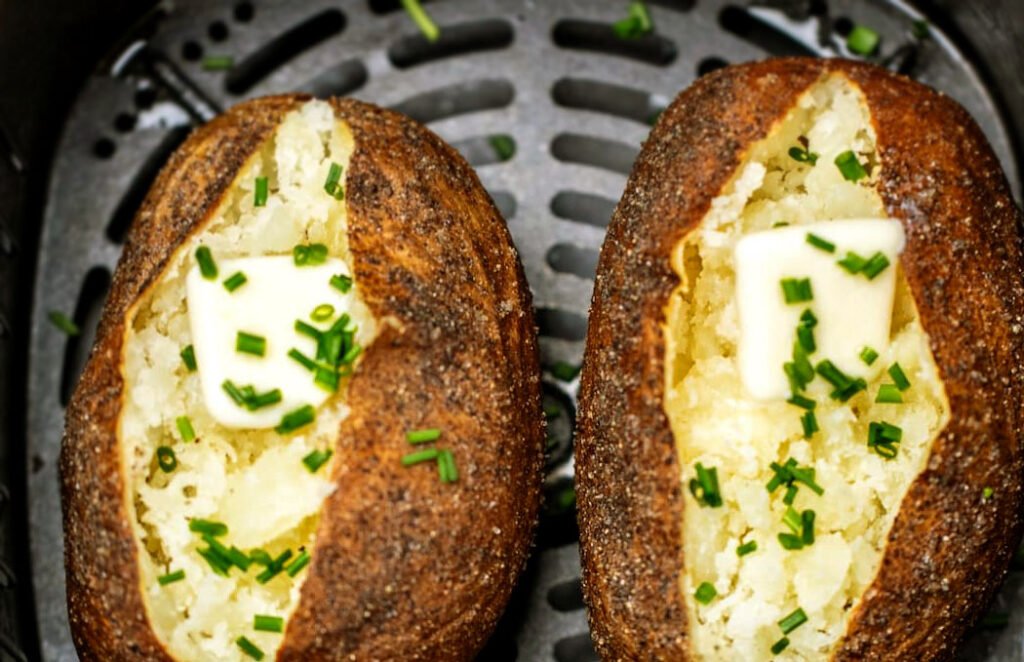
Set your air fryer to 400 degrees Fahrenheit. Scrub two medium russets and poke them with a fork. Rub with oil and salt. Place them in the basket for 40 to 50 minutes. Flip them halfway through for even cooking. They are done when a knife slides into the center with zero resistance.
Why Does The Timing Vary For Two Spuds?
I remember standing over my counter wondering why my timer lied to me. One day the potatoes were perfect. The next day they were hard as rocks. Understanding the variables changed my kitchen game forever.
Different Machine Sizes
My first air fryer was a small bucket style. It struggled to move air when I crammed two large potatoes inside. I noticed the heat could not circulate around the bottom of the vegetables. Larger toaster oven styles have more room for air to flow. This extra space often means a slightly faster cook time for you.
Potato Weight Matters
I used to grab any two potatoes from the bag without looking. A six ounce potato cooks much faster than a twelve ounce monster. I learned to weigh them or pick two that looked like twins. If one is bigger, it stays hard while the other turns to mush. Consistency is your best friend here.
Room Temperature Starts
I often pulled my potatoes straight from a cold pantry or even the fridge. That was a mistake. Starting with a cold potato adds five to ten minutes to your wait. I now leave mine on the counter for an hour before cooking. It ensures the heat penetrates the center much faster.
Airflow Obstructions
I once tried to cook my potatoes on a bed of herbs. Those leaves blocked the holes in my basket. The bottom of my potato stayed wet and gross. Your air fryer needs those holes clear to push heat upward. Keep the basket clear of anything that stops the wind.
Moisture Content Issues
I found that older potatoes have less water inside than fresh ones. Fresh potatoes sometimes take longer because the air fryer has to cook off that extra liquid first. You might see more steam coming out of the vents. This is normal but it does slow down the browning process.
- Check the wattage of your specific machine.
- Avoid overlapping the potatoes in the basket.
- Select potatoes with a similar thickness.
- Let the air fryer preheat for three minutes.
- Use a digital scale for exact timing.
- Store your potatoes in a cool dark place.
How to Cook Two Baked Potatoes: A Step-By-Step Guide
I spent months failing at this before I found the rhythm. It is a simple process but every small detail counts toward that final crunch. Follow these steps for a perfect result.
Scrubbing The Skin Clean
I spent years thinking a quick rinse was enough for a potato. Dirt hides in those tiny eyes and crevices. If you leave it there, you taste the earth in a bad way. I realized that a stiff brush is the only way to get a truly clean surface for the oil to grab onto.
Using cool water is better than hot water because it keeps the potato firm. I dry them with a lint-free towel until they are bone dry. Any water left on the skin turns into steam during the cook. Steam is the enemy of a crispy shell. I want that crunch.
The goal is a surface that feels like parchment paper before the oil touches it. I never skip this step anymore. It takes two minutes but changes the whole result. You will notice the difference in the first bite.
- Use a dedicated vegetable brush
- Dry thoroughly with paper towels
- Focus on the deep eye spots
- Rinse under cold running water
Piercing For Steam Release
I once had a potato literally pop inside my basket. It made a huge mess and ruined my dinner plans. I learned that the internal pressure needs an escape route. I use a sharp fork to poke holes all over the surface of both potatoes.
You do not need to go deep into the core. Just a few shallow pricks every inch or so will do the job. This prevents the skin from stretching and eventually bursting. It also helps the heat reach the middle faster.
I found that six to eight fork stabs per side is the magic number. This simple act prevents an undercooked potato center by letting the hot air do its job. It is a safety step that also improves the texture.
- Use a fork with sharp tines
- Space the holes evenly
- Avoid deep gashes
- Pierce both sides of the potato
Applying The Oil Base
I used to just spray the potatoes and hope for the best. Now I pour a little avocado oil into my hands and rub it on manually. This ensures every single millimeter of the skin is coated. Oil is the conductor that makes the skin crispy.
I prefer oil with a high smoke point to avoid a burnt oil smell in my kitchen. Avocado or grapeseed oil works much better than extra virgin olive oil. The oil helps the salt stick to the skin rather than falling to the bottom of the basket.
The skin should look shiny but not be dripping. If you use too much oil, you end up with a greasy potato exterior that feels heavy. A thin, even coat is the secret to that restaurant quality finish you crave.
- Apply oil by hand for even coverage
- Choose high smoke point oils
- Wait until after oiling to add salt
- Avoid aerosol sprays with additives
Setting The Right Temperature
I experimented with 350 degrees and 425 degrees before landing on 400. Lower temperatures take too long and the skin stays leathery. Higher temperatures burn the outside before the inside is soft. I found that 400 degrees is the perfect balance for a standard russet.
My slow heating air fryer taught me that preheating is not optional. I always run the machine empty for five minutes first. This hits the potato with high heat immediately. It sears the outside and starts the crisping process right away.
You might need to drop to 375 if your potatoes are very small. However, for a standard medium spud, 400 is the gold standard. I never change this setting now. It gives me the most consistent results week after week.
- Preheat for five minutes
- Stick to 400 degrees Fahrenheit
- Adjust slightly for very small spuds
- Monitor for smoke at high temps
Flipping For Even Heat
I used to leave them alone for the whole forty minutes. I would end up with a soggy potato skin on the side touching the basket. Now I use tongs to flip them exactly halfway through the timer. This exposes the bottom to the direct fan blast.
The air fryer works by blowing heat down. The bottom side is usually shielded by the potato itself. By turning them, you ensure the entire circumference gets that direct heat. It makes the skin equally crunchy all the way around.
I also swap their positions if one side of my basket seems hotter than the other. This prevents unevenly browned skin on one of the potatoes. It only takes five seconds but makes a massive difference in the final look.
- Flip at the 20 or 25 minute mark
- Use silicone tipped tongs
- Swap positions in the basket
- Keep the potatoes from touching
Testing For Perfect Doneness
I no longer trust the timer as the final word. I use a thin knife or a toothpick to check the center. It should slide in like it is hitting a stick of soft butter. If there is any tug or resistance, they need five more minutes.
I once pulled them out too early and ended up with a crunchy, raw middle. It was heartbreaking after waiting forty minutes. Now I am patient. I also check the internal temperature with a probe sometimes.
The ideal internal temperature is about 205 to 210 degrees Fahrenheit. At this point, the starches have fully broken down into fluff. You will see steam puff out when you finally crack them open. That is the sign of success!
- Check with a sharp knife
- Feel for zero resistance
- Aim for 205 degrees internal
- Add time in five minute chunks
What Size Potato Works Best For Air Frying?
I found that the size of the potato dictates your entire evening schedule. If you pick ones that are too large, they won’t fit well. If they are too small, they turn into rocks. I prefer a medium russet that weighs about eight to ten ounces.
This size fits perfectly in almost any basket without touching the heating element. It also cooks through in a reasonable amount of time. You don’t want to be waiting an hour for a side dish. Smaller potatoes are great for snacks but lack that fluffy meal feel.
Russet Is King
I tried waxy potato varieties like red or gold potatoes for baking. They just don’t work the same way. The russet has the high starch content needed for a light interior. Others stay dense and wet inside.
Avoid The Monsters
I once bought those massive pound-plus potatoes. They took over sixty minutes and the skin got too thick. Stick to the bags labeled medium. They are more predictable and fit the air fryer logic better.
Matching The Pairs
I always make sure my two potatoes are nearly identical. If one is round and one is long, they cook differently. I look for two that have the same thickness. Thickness matters more than length for heat penetration.
Skin Quality Checks
I look for potatoes with clear, smooth skin. If the skin is already wrinkled, the potato is dehydrating. These will result in a tough, chewy exterior. I want a fresh spud for the best crunch possible.
Organic Versus Conventional
I have noticed organic potatoes sometimes have thinner skins. This can be a benefit because they crisp up faster. However, they also bruise easier. I handle them with care so they don’t develop dark spots during the cook.
Final Thoughts
I hope you feel ready to master the art of the air fried potato. It took me a lot of trials to get that perfect balance of crunch and fluff. You have the tools and the timing now. Go grab two russets and get that air fryer humming. You will never go back to the oven again.
| Potato Size | Temperature | Total Time |
|---|---|---|
| Small (5-6 oz) | 400°F | 30-35 Minutes |
| Medium (8-10 oz) | 400°F | 40-45 Minutes |
| Large (12-14 oz) | 400°F | 50-55 Minutes |
| Extra Large (16 oz+) | 400°F | 60+ Minutes |
| Two Medium Spuds | 400°F | 45 Minutes |
| Cold Start Spuds | 400°F | Add 5 Minutes |
| Room Temp Spuds | 400°F | Standard Time |
| Waxy Potatoes | 375°F | 35-40 Minutes |
| Sweet Potatoes | 390°F | 35-45 Minutes |
| Reheating Spuds | 350°F | 10-15 Minutes |
Frequently Asked Questions
Is it necessary to soak potatoes before air frying?
No, you do not need to soak them for a whole baked potato. Soaking is mainly for French fries to remove surface starch. For a baked potato, just scrub and dry the skin thoroughly.
Can I cook more than two potatoes at once?
Yes, you can cook as many as will fit in a single layer. Do not stack them on top of each other. If the basket is crowded, you may need to add five to ten minutes to the time.
Are air fried potatoes healthier than oven baked?
They are essentially the same in terms of nutrition. However, the air fryer uses less energy and doesn’t heat up your whole house. You also get a crispier skin with less oil than traditional roasting.
Do I have to use a specific type of oil?
Use an oil with a high smoke point like avocado or vegetable oil. Avoid butter on the outside as it will burn at 400 degrees. Save the butter for the inside after it is done.
Does the brand of air fryer change the cooking time?
Yes, different brands have different fan speeds and heating strengths. Always check your potatoes five minutes before the timer ends. Smaller basket units often cook faster than large oven-style units.
Should I wrap the potatoes in parchment paper?
Do not wrap them in anything if you want crispy skin. Parchment paper will block the airflow just like foil does. Let the air hit the skin directly for the best results.
Will the potatoes be soft if I don’t poke holes?
No, the holes are mostly to prevent the potato from bursting due to steam pressure. The texture of the flesh is determined by the heat and time, not the holes. Still, poking holes is a vital safety step.
How do I store leftovers for the best texture?
Store them in the fridge in an airtight container for up to three days. To reheat, put them back in the air fryer at 350 degrees for ten minutes. This will bring the crunch back to the skin.
