
As an Amazon Associate, I earn from qualifying purchases at no extra cost to you.
Bathroom Door Keeps Closing by Itself? 4 Causes and Fixes

It’s annoying when your bathroom door won’t stay open. You might blame the house, but the fix is usually quick. A door that swings shut just needs a little attention at the hinges. It’s a simple project that you can tackle in an hour.
Yes, you can fix this in about 15 minutes. Most of the time, your hinges aren’t perfectly plumb, which makes the door lean. Grab a screwdriver, and tighten the screws. If the door still moves, you just need to bend the hinge pins to add a bit of friction.
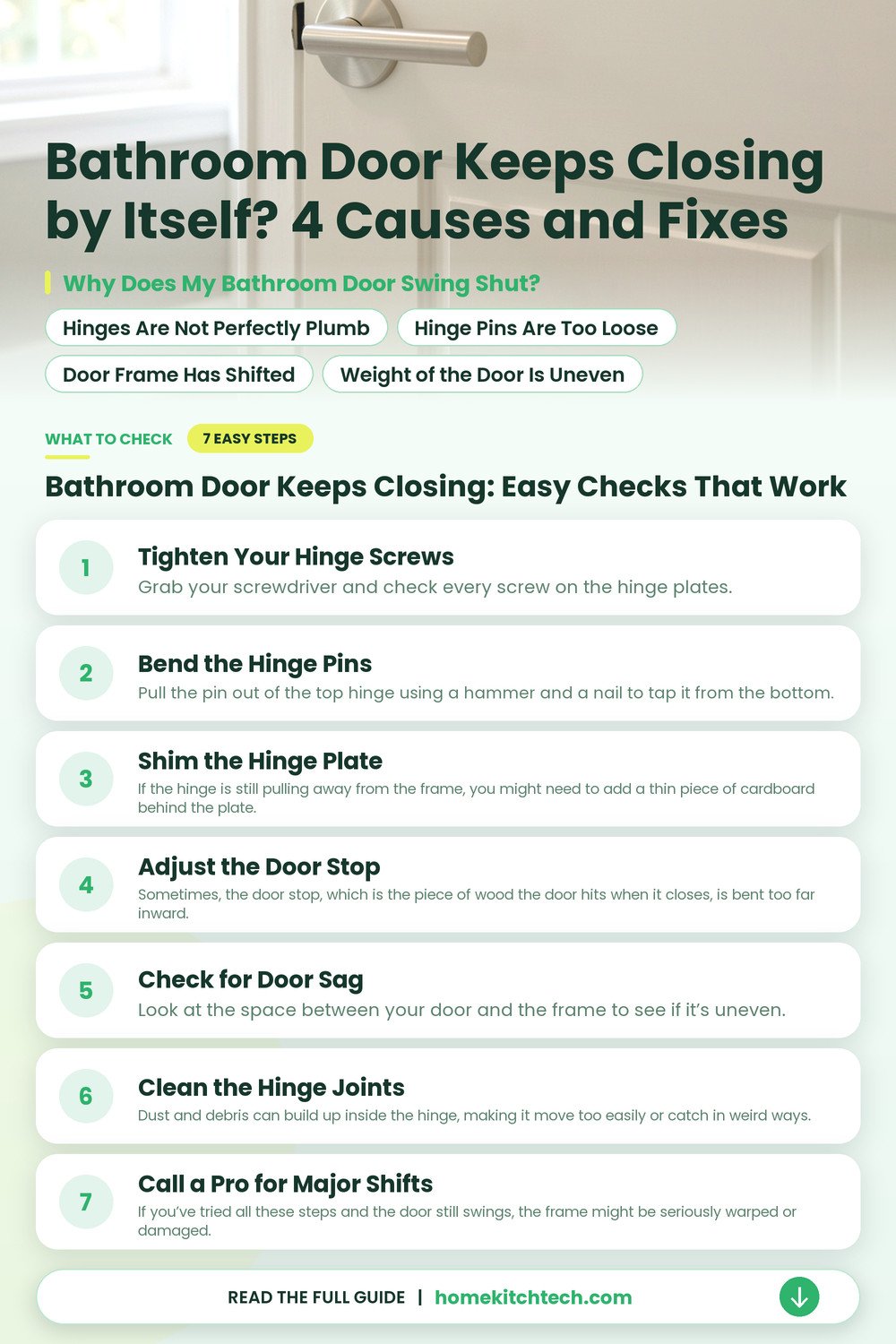
Why Does My Bathroom Door Swing Shut?
Your door frame or the door itself may be slightly tilted, which causes gravity to pull the door toward the floor. This happens because the weight of the door isn’t centered over the hinges, so it starts to move the moment you let go.
- Most door adjustments cost you nothing, but a little time.
- Older homes often have frames that sag over many years.
- Check your floor to see if it's level near the door.
Hinges Are Not Perfectly Plumb
When your hinge plates aren’t set straight on the door frame, the door will naturally swing open or closed. You can see this if the gap between the door and the frame is wider at the top than at the bottom. It's a subtle shift, but it's enough to make the door move on its own. Use your screwdriver to tighten the hinge mounting screws, which usually pulls the frame back into the right spot.
Hinge Pins Are Too Loose
If your pins slide out too easily, they might not be holding the weight of the door firmly enough. These pins wear down over time, creating a bit of wiggle room that lets the door tilt. Take the pin out, then tap it with a hammer to give it a slight bend. This simple hinge fix creates more friction, which keeps the pin from sliding and stops the door from moving.
Door Frame Has Shifted
Your house moves as the seasons change, and that can cause the wood in your door frame to warp. You might find that the door sticks in one spot but swings freely in another. If the frame is no longer square, the hinges won’t sit at the right angle to keep the door steady. Use a shim if the frame needs help to get it back into place.
Weight of the Door is Uneven
Sometimes, the door is just too heavy for the hinges, causing it to sag over the years. You’ll notice the bottom corner of the door dragging on your floor or carpet. This sag puts extra pressure on the top hinge, which pulls the door off balance. Fixing the sagging door hinge helps distribute the weight evenly so the door stays exactly where you put it.
Bathroom Door Keeps Closing: Easy Checks That Work
You'll start by checking the easiest things first, like tightening your screws before you try anything more complex. Most of the time, a quick turn of your screwdriver solves the problem without you needing to take the door off its frame. Have a helper hold the door steady while you work so you don’t have to balance it yourself.
- A standard screwdriver works for almost every hinge adjustment.
- Don’t over-tighten the screws or you might strip the wood.
- You can use a small level to check your door frame.
Tighten Your Hinge Screws
Grab your screwdriver and check every screw on the hinge plates. If they feel loose, tighten them until they sit flush against the wood. A loose screw lets the hinge pull away from the frame, which causes the door to lean. You'll find that a tight hinge is much better at holding the door in place.
Bend the Hinge Pins
Pull the pin out of the top hinge using a hammer and a nail to tap it from the bottom. Put the pin on a hard surface and give it a very light tap with your hammer to create a slight curve. Slide the pin back into the hinge, which will now have more resistance. This added friction stops the door from swinging shut on its own.
Shim the Hinge Plate
If the hinge is still pulling away from the frame, you might need to add a thin piece of cardboard behind the plate. Unscrew the hinge, slide your piece of cardboard into the gap, and screw the plate back on. This pushes the hinge out just enough to straighten the door. Test the door to see if it stays put before you add more thickness.
Adjust the Door Stop
Sometimes, the door stop, which is the piece of wood the door hits when it closes, is bent too far inward. You can carefully pry it off and move it slightly to give the door more room. This prevents the door from catching and pulling itself shut. Just make sure you don’t leave a gap that lets light shine through when the door is closed.
Check for Door Sag
Look at the space between your door and the frame to see if it's uneven. If the door touches the frame on the latch side, it's sagging under its own weight. Tighten the screws on the top hinge to pull it tighter against the frame. This simple step often lifts the door enough to stop it from swinging.
Clean the Hinge Joints
Dust and debris can build up inside the hinge, making it move too easily or catch in weird ways. Use a damp cloth to wipe away any old grease or grime from the metal parts. Apply a tiny drop of household oil to the joint so it moves smoothly. A clean hinge is much easier to adjust and keep in place.
Call a Pro for Major Shifts
If you've tried all these steps and the door still swings, the frame might be seriously warped or damaged. A professional carpenter can reach what your tools can’t, like fixing a frame that has moved deep inside your wall. Call someone if the door frame is cracked or if you feel like you're doing more harm than good. They'll get your door working smoothly again.
Does Humidity Cause Your Bathroom Door to Swing Shut?
High humidity levels often make your wooden door frame swell, which changes the way your door sits in the opening. When the wood grows, it can create a slight angle that pulls your door toward the latch side. You’ll notice this more in the summer, or after a hot shower when your bathroom air is thick with moisture.
Grab a level to see if the jamb is still square. You might find that the wood has warped, so let gravity do the work for you. Run your exhaust fan during and after a shower, which helps dry out the space and keeps the wood from soaking up extra water.
- Paint or seal your door to stop moisture from soaking in.
- Run your bathroom fan for thirty minutes after every long shower.
- Check if the door moves more on humid days than dry days.
Can a Pro Fix Your Binding Bathroom Door?
A professional carpenter can reach what your tools can’t, especially if the door frame studs have twisted over the years. They have special planes to shave down the wood where it rubs against the jamb. You might reach a point where your own adjustments don’t last, and that’s when a pro offers a permanent fix.
Ask a local carpenter to check your door, if it makes a grinding sound against the floor or frame. They can reset the entire unit, or install new hinges that hold the weight better than your current ones. It’s a faster solution if you’ve already tried shimming the hinges, and nothing changed.
Don’t ignore a door that rubs hard, as it can damage your floor finish or ruin the paint on your trim. If you’ve tried shifting the plates, and the door still swings, you’re likely dealing with a structural shift. A pro can tell you if your home has settled, in a way that requires a new frame.
Save yourself the frustration of repeated fixes, by calling someone who knows how to square up a stubborn opening. They’ll bring the right tools to shave the wood precisely, without leaving a jagged mess. You’ll get a door that stays exactly where you leave it.
- A carpenter usually charges $150 to $300 for a door adjustment.
- Ask a friend for a referral to a local, trusted door installer.
- Use a sharp plane and a very steady hand for shaving wood.
Is It Dangerous to Force a Misaligned Door?
Pushing your door shut when it's binding can put too much stress on your sturdy hinge screws, eventually stripping the wood inside your frame. You'll find that the holes get wider, and the hinges start to pull away from the wall. It's an easy mistake, and it makes the problem worse every time you use the room.
Keep your fingers clear of the latch side, when you’re forcing a door that doesn’t want to close. If the door suddenly swings shut, you risk pinching your skin between the door and the trim. It’s much safer to leave the door slightly ajar, until you have time to fix the alignment.
Don’t use excessive force to make the latch click, if you feel resistance. You might break the handle mechanism or bend the strike plate, which adds a new repair to your list. Take a moment to look at where the door touches the frame, so you know exactly which part needs your attention.
- Striped screw holes need wood glue and toothpicks for a fix.
- Watch your fingers when you pull on a door that sticks.
- Tighten your hinges gently so you don’t crack the door frame.
What Does It Cost to Fix Your Closing Door?
Fix a door that won’t stay put for less than $20 if you have basic tools like a screwdriver and a hammer. You’ll mostly spend money on a few shims or longer screws to pull the loose hinge plates tight against the stud. It’s a project you can handle in about an hour on a Saturday morning.
Buy a new hinge or a better strike plate if the old ones are damaged, but expect to pay a bit more at the hardware store. Most of these parts are cheap, but buying a full set of quality hinges can run you $40 to $60. You’ll find that doing the work yourself saves you a lot of money.
- Buy a pack of assorted wood shims for under ten dollars.
- Longer screws help your hinge bite into the wall stud better.
- Set aside two hours if you need to remove and reset.
Does the Age of Your Home Affect the Door Swing?
Older homes often have settling foundations, which means your door frame edges aren’t perfectly square anymore. You’ll see this in houses that are fifty years old or more, as the wood has had plenty of time to shift and sag. It’s common to find that your doors don’t close right, because the wall itself has moved a fraction of an inch.
The type of wood in your home matters, as soft pine frames move much faster than hard oak. If your house was built with lighter materials, your door frame might flex every time the house temperature changes. You’ll notice your door swinging shut in the winter when the air is dry and the wood shrinks.
Modern doors often come with better hardware, but even they can fall out of alignment if the house settles. Check your hinges every season to see if they’ve loosened up from the weight of the door. A quick turn of the screwdriver is enough to stop the movement of your unstable bathroom door.
Final Thoughts
The main reason your bathroom door swings shut is usually gravity pulling on a hinge that isn’t perfectly plumb. You can stop this by checking your hinge pins and making sure the frame is still square. Spend a little time looking at where the door rubs, and you’ll find the specific spot that needs a quick nudge. Don’t wait until the wood gets damaged, as a fix today saves you a bigger job later.
| Symptom | Likely Cause | Easy Fix |
|---|---|---|
| Door swings open | Hinge pin lean | Tap pin with hammer |
| Door rubs frame | Settled house | Shave wood edge |
| Latch won’t click | Misaligned plate | Move strike plate |
| Door sags down | Loose hinge screws | Use longer screws |
| Hinges squeak | Dry metal parts | Apply thin oil |
| Frame gap uneven | Swollen wood frame | Sand wood edge |
| Door feels heavy | Weak hinge mount | Add wood shims |
| Handle sticks | Misaligned latch | Adjust strike plate |
Frequently Asked Questions
Is It Normal for a New Door to Move?
It’s common for a new door to settle, as the house adjusts to the weight and climate. You’ll often need to tighten the screws again after a few months, to make sure everything stays in place. Don’t worry, as this is a normal part of the settling process.
Can I Use a Door Wedge to Keep It Open?
Yes, you can use a rubber wedge to hold your door in place while you work on it. It’s a temporary fix, that keeps the door from swinging while you’re busy with other things. You’ll still need to address the hinge issue, if you want a permanent solution.
Are My Hinges Worn Out If the Door Moves?
It’s possible, but usually your hinges just need a simple adjustment. You’ll see if the hinge is worn, by checking for side to side play when you lift the door. If the hinge pins feel loose, try replacing them with a new set from your local store.
Do I Need to Take the Door Off to Fix It?
No, you don’t have to remove the whole door for most simple hinge adjustments. You’ll find that you can often reach the screws, or bend the pins while the door stays on the frame. It’s much faster to work on it, while it’s hanging in place.
Should I Paint My Door If It’s Swelling?
Yes, a good coat of paint or primer seals the wood and keeps moisture out. You’ll find that your door stays more stable, when the finish is in good shape. Don’t leave raw wood exposed in your bathroom, as it will soak up the steam every time.
How Do I Know If My Frame is Square?
You can use a bubble level to check the sides of your door frame. If the bubble isn’t centered, you’ll know your frame has shifted over time. It’s a quick way to see, if your problem is the door or the wall itself.
What If My Door Only Moves When the Fan is On?
It’s likely the air pressure from your exhaust fan is pulling the door toward the frame. You can try adjusting the door latch, so it holds more firmly when the door is closed. You’ll find that a stronger latch stops the door, when the fan runs.
