
As an Amazon Associate, I earn from qualifying purchases at no extra cost to you.
Bathroom Ceiling Condensation: 6 Causes and Ways to Stop It

Sometimes, you walk into your bathroom after a hot shower and see beads of water dripping right off the ceiling. It's an annoying sight that makes your paint peel, and it creates a perfect home for unwanted mold. You want to stop that moisture before it causes real damage to your drywall. Grab a ladder and look up, because you need to fix this now.
Bathroom ceiling condensation happens when warm, wet air hits your cold ceiling surface. Check your exhaust fan first, since a weak or clogged unit is the most common culprit. If the fan runs well, you'll need to adjust your bathroom habits or improve your home’s airflow. These quick checks help you find the source of your problem.
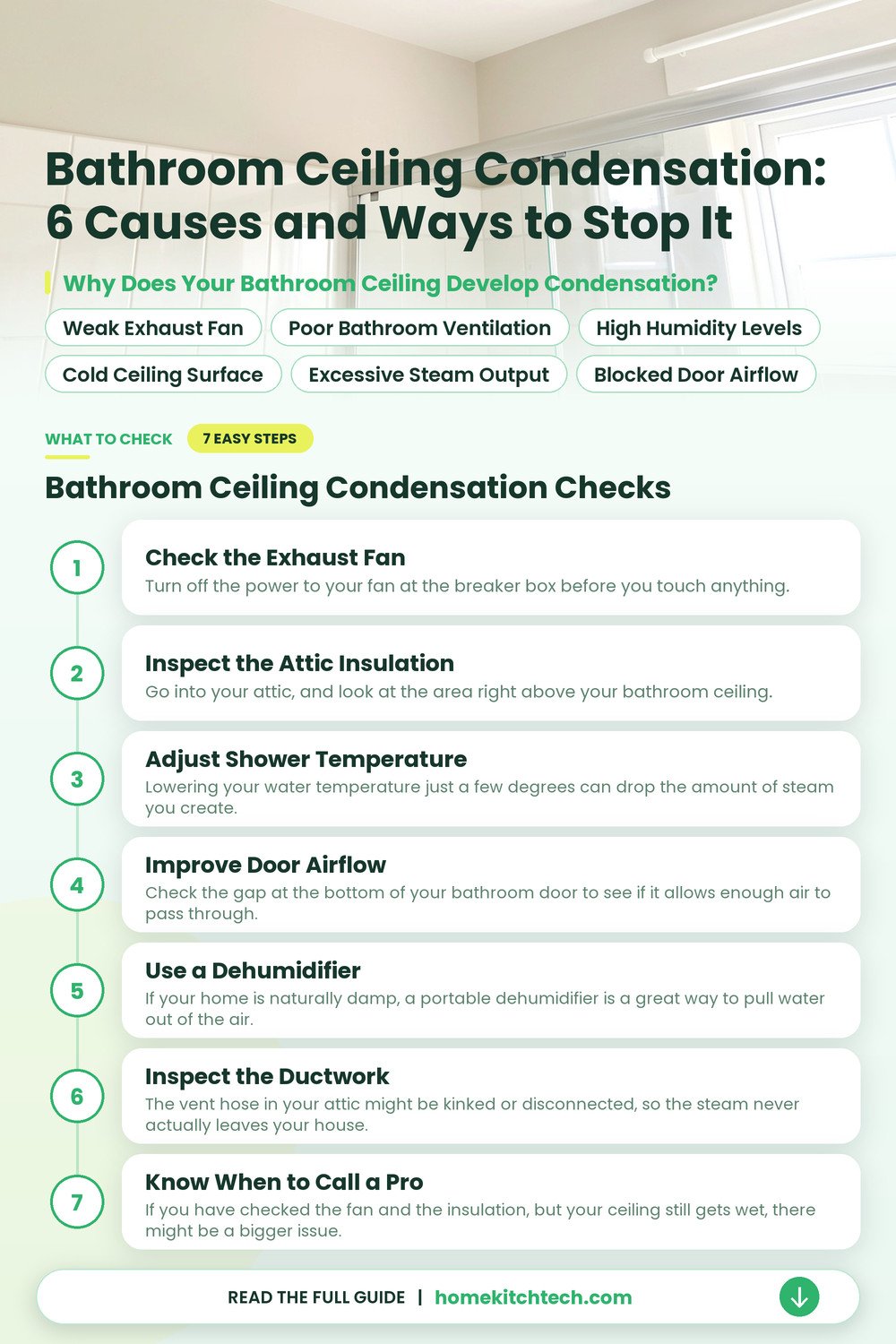
Why Does Your Bathroom Ceiling Develop Condensation?
Your ceiling acts just like a cold glass of soda on a humid day. When steam from your shower hits the chilly surface, it turns back into liquid water and clings to your paint.
Weak Exhaust Fan
Your fan is meant to pull steam out of the room, but it often fails. If it isn’t moving enough air, the moisture stays inside your bathroom and turns into heavy drops. You’ll notice the fan sounds weak, or it fails to hold a piece of toilet paper against the vent. A dirty cover often slows down the exhaust fan performance quite a bit.
Poor Bathroom Ventilation
Air needs a clear path to escape, or it will just cycle through your room until it hits a cold surface. If your door stays closed or your window is shut, the steam has nowhere to go. You’ll notice the mirror fogs up instantly, and it stays that way for a long time. Crack the door, and you’ll help move that damp air out.
High Humidity Levels
Sometimes, the air in your house is already too wet, which makes it hard for your bathroom to dry out. When the humidity is high, your ceiling won’t have a chance to release the moisture it collected during your shower. You see damp spots in other rooms, or you feel a heavy, sticky air throughout your home. A portable dehumidifier unit can help you manage these levels during the wetter months.
Cold Ceiling Surface
Your ceiling might be colder than the rest of the room because of poor insulation in the attic above. When the surface temperature is low, it makes it much easier for steam to condense the moment it touches the drywall. You feel a chill if you touch the ceiling on a cold day. Better attic insulation keeps the surface warmer, and it stops the water from forming.
Excessive Steam Output
Long, hot showers create a massive amount of water vapor in a very short time. If you like your water very hot, you are pushing more steam into the air than a standard fan can handle. You see the steam rising quickly, and it fills the upper corners of the room. Turn the temperature down a few degrees, and you might see a difference.
Blocked Door Airflow
Even with a working fan, the air needs a way to enter the room to replace what is being pulled out. If your door fits too tightly against the floor, the fan can’t pull air in from the rest of the house. You’ll notice the fan struggles to work, or the bathroom stays steamy. A small gap under the door allows fresh air circulation to move through your space.
Bathroom Ceiling Condensation Checks
You can usually solve this by making small changes to how you run your bathroom during and after your shower. Expect to spend a few minutes checking your vent and testing your airflow to see what works.
- Clean your fan cover once a month to keep air moving.
- Run the fan for 20 minutes after you finish your shower.
- Keep the door open to help fresh air circulate through the room.
Check the Exhaust Fan
Turn off the power to your fan at the breaker box before you touch anything. Take the cover off, and look for heavy dust or lint buildup on the blades and the motor housing. Use a vacuum attachment to clear out the debris, so the fan can spin freely again. If the motor sounds like it's grinding, or if it doesn’t spin at all, you may need a new fan motor to get the power back.
Always test the fan after you put the cover back on to make sure it pulls air properly. Hold a small piece of tissue paper up to the vent while the fan is running. If the fan holds the paper against the grate, it's working well. If the paper falls, you might have a blocked duct that needs professional help.
Inspect the Attic Insulation
Go into your attic, and look at the area right above your bathroom ceiling. If the insulation is thin or missing, the drywall will stay cold enough to cause condensation every time you shower. Add more insulation to keep the ceiling surface temperature closer to the room temperature. This simple change stops the water from forming on the paint.
Be careful when you walk in the attic, so you don’t step through the ceiling. Wear a mask and gloves, because old insulation can be dusty and irritating to your skin. If you aren’t comfortable moving around up there, a contractor can check the depth for you.
Adjust Shower Temperature
Lowering your water temperature just a few degrees can drop the amount of steam you create. You'll still get a nice shower, but you won’t fill the room with as much thick, hot vapor. This is the easiest step to try tonight, and it costs you nothing at all. See if your ceiling stays drier after a few days of cooler showers.
If you have a large family taking showers back to back, the room stays wet for a long time. Add an extra break between showers, so the air has time to clear out. This gives your fan enough time to push the damp air out of your home.
Improve Door Airflow
Check the gap at the bottom of your bathroom door to see if it allows enough air to pass through. If the door sits flush against the floor, the fan is fighting to pull air into the room. Trim a half-inch off the bottom to create a better path, and you’ll see a change. This helps the fan pull in dry air from the hallway.
Many modern doors have a small space already, but it might get blocked by a thick bath rug. Move any rugs away from the door, so you don’t accidentally stop the airflow. You'll notice a difference in how quickly the mirror clears off once the air can move.
Use a Dehumidifier
If your home is naturally damp, a portable dehumidifier is a great way to pull water out of the air. Set it up just outside your bathroom door, or inside the room if you have space. It helps dry out the whole area much faster than a fan can do on its own. Empty the water collection tank whenever it gets full.
Keep the unit away from the water in your tub or sink for safety. It's a good way to supplement your fan during the humid summer months. You’ll find that your paint stays in much better shape when the air isn’t so heavy.
Inspect the Ductwork
The vent hose in your attic might be kinked or disconnected, so the steam never actually leaves your house. Follow the hose from the fan to the outside vent, and make sure it's straight and free of holes. If the hose sags, water can pool inside it and block the airflow. Replace any damaged or crushed sections with new, smooth pipe.
Know When to Call a Pro
If you have checked the fan and the insulation, but your ceiling still gets wet, there might be a bigger issue. You could have a hidden leak, or a major problem with your home’s ventilation system. A licensed plumber or an HVAC pro can look at your setup and find what you might be missing. They have the tools to measure the moisture and airflow in your home accurately.
Don’t wait if you see signs of mold, or if the ceiling drywall feels soft. Soft spots mean the water has already soaked into the material, which can lead to expensive repairs. A pro can give you a clear plan to stop the damage before it gets worse.
Why Does Moisture Collect on Your Bathroom Ceiling?
Condensation often builds up because your room lacks a path for hot air to escape. When steam from your shower hits a cold surface, it turns back into liquid water. This happens quickly if your fan doesn’t pull enough air out, or if the vent path is blocked. You see dark spots forming where that water sits too long.
Old homes often struggle because the bathroom exhaust fan was never sized for modern, hot showers. If the motor is weak or the blades are coated in dust, it can’t move the air fast enough. That extra moisture lingers in your room until it finds a place to land. It’s a slow process, but you rarely see it until the paint starts to bubble.
Does your ceiling feel colder than the rest of the room? Poor insulation above the drywall lets the cold air from the attic freeze the surface of your ceiling. This makes a perfect spot for water to gather, especially in the winter months. Check this by feeling the ceiling after a long run of the shower, but keep your hands away from any light fixtures.
Habits like taking extra-long showers make things worse. Try to use the fan, so you keep the air moving. You’ll find that keeping the surfaces dry limits the growth of mold and mildew spots. It's a simple fix that saves your paint from peeling or cracking over time.
- Clean your fan blades with a soft brush every few months.
- Leave the fan running for ten minutes after you finish showering.
- Open a window slightly to help the air cycle through faster.
How Do Ceiling Materials Affect Condensation Problems?
Flat, matte paint hides moisture issues better than glossy finishes, but it doesn’t stop the damage. Glossy paint shows beads of water clearly, so you spot the problem before the drywall gets soft. Check the finish on your ceiling to see if it’s holding moisture against the surface. If you see water pooling, your paint might need a switch to something meant for wet rooms.
Older homes often have plaster ceilings that are hard to dry. Modern drywall usually comes with a moisture-resistant core, but it still suffers if the bathroom ceiling condensation stays for hours. Press gently to see if it feels firm or spongy. If it gives under your fingers, you’re looking at a drywall repair job that is deeper than just a quick wipe.
What Does It Cost to Fix Wet Ceilings?
Most DIY fixes for this issue cost under $50 for a new vent cover, or a can of mold-killing spray. Save a lot of money by cleaning the ducts yourself, instead of hiring someone. If you need a new fan, expect to spend about $100 to $300 for a quiet model that moves plenty of air. It's a job you can handle if you’re comfortable on a sturdy step ladder.
The time you spend depends on what you find inside the vent. A simple cleaning takes about 30 minutes, while replacing a fan might take a full Saturday afternoon. Turn off the breaker for the light and fan before you start any work. Don’t rush the electrical part, and call a pro if you’re not sure about the electrical wiring safety.
- Buy a high-quality fan with a built-in humidity sensor for convenience.
- Use a shop vacuum to clear dust from your exhaust ductwork.
- Check the exterior vent hood to see that the flaps open freely.
Are There Dangers When Cleaning a Wet Ceiling?
Use a stable base and a second person to hold the ladder while you work. Never reach too far to the side, because you might lose your balance and fall. Move the ladder instead of stretching for that hard water stain in the corner. You’ll be safer if you keep your body centered on the rungs.
Keep the door open for fresh air, and stick to one product at a time. Mixing cleaners is a major mistake, because it creates dangerous fumes in a small room. Turn off the main power to the bathroom before you poke around any light fixtures. Water and electricity don’t mix, and a wet ceiling is a high-risk zone for a shock.
- Wear safety glasses to protect your eyes from falling dust.
- Use a sturdy ladder placed on a level, dry floor surface.
- Keep the room well ventilated while you scrub the ceiling surface.
When Should You Call a Pro for Help?
If you notice a wet spot that keeps growing even after you run the fan, you might have a roof leak. Water from the outside looks just like condensation, but it won’t go away when you dry the room. Call a roofer to inspect your shingles and flashing for damage. Catch a roof leak early, before it rots your floor joists.
Sometimes, the problem is hidden in the attic where you can’t reach. If you see signs of mold or wet insulation, a pro can fix the ventilation path properly. They have the tools to check the airflow, and they can ensure that the bathroom exhaust duct isn’t pinched or disconnected. You'll find that a small service fee is worth the effort to fix it right.
A pro can also install a stronger fan if your current one is too small for your room. They know how to cut the drywall and wire the unit so it meets local building codes. You’ll save yourself the headache of a botched electrical job. This is the right move if you’re worried about the home electrical safety of your wiring.
- Consult a roofer if you suspect water enters from outside.
- Hire an electrician to upgrade your fan to a larger model.
- Seek out a contractor if you find mold in the attic.
Final Thoughts
Dry the air in your bathroom as soon as you finish your shower, and check your vents for blockages. It takes very little time to maintain your fan, but it protects your ceiling from expensive repairs later. Keep the air moving, and you’ll stop the water before it starts.
| Symptom | Likely Cause | Easy Fix |
|---|---|---|
| Water beads | High humidity | Run the fan |
| Dark spots | Mold growth | Scrub with cleaner |
| Peeling paint | Poor ventilation | Install better fan |
| Wet insulation | Roof leak | Call a roofer |
| Damp walls | Cold surfaces | Add insulation |
| Weak suction | Clogged duct | Vacuum the hose |
| Loud fan noise | Worn motor | Replace the unit |
| Musty smell | Trapped moisture | Open the door |
Frequently Asked Questions
Can I Paint Over Ceiling Mold?
No, don’t do that. You’ll trap the mold underneath the paint, and it will just grow back through the new layer. Clean the mold with a proper spray first, and let the room dry out completely.
Is It Safe to Use a Hair Dryer on the Ceiling?
Better not, because you could overheat the wiring or melt the finish on your light fixtures. It’s also a fire risk if you get too close to the drywall or insulation. Use a dehumidifier or a fan instead to move the air.
Do I Need to Insulate My Bathroom Ceiling?
Yes, you should check your attic insulation. If it’s thin or missing, the cold ceiling surface will pull moisture right out of the air. Add extra insulation to keep the surface warm and stop the water from forming.
Will a Dehumidifier Help My Bathroom?
Yes, it’s a great way to pull extra moisture out of the air. You’ll find that it works well if your fan is weak or if you don’t have a window. Empty the tank regularly so it keeps running.
How Often Should I Clean My Exhaust Fan?
Check it every six months. If you see a thick layer of dust on the cover or blades, it’s time to clean it. A clear fan moves much more air and keeps your ceiling dry.
Can I Vent My Fan Into the Attic?
No, skip that. You'll just dump all that wet air into your attic, which causes mold on your roof wood and insulation. Run the duct all the way to the outside of your home.
Should I Replace My Fan If It Doesn’t Stop Condensation?
It depends, but a new, stronger fan is often the answer. If your current one is old or too small, it won’t keep up with your steam. Install a modern fan with a humidity sensor that runs until the room is actually dry.
