
As an Amazon Associate, I earn from qualifying purchases at no extra cost to you.
Bathroom Outlet Keeps Tripping? 5 Causes You Can Check

The light in your bathroom flickers, the fan stops, and suddenly your power vanishes. You walk to the outlet, press the reset button, and nothing happens. It’s frustrating when your morning routine comes to a halt because of a dead plug. This happens because your outlet works hard to keep your home safe from electrical hazards. Let’s look at why your power keeps cutting out.
A faulty ground fault circuit interrupter is the most likely cause, as this device cuts power when it senses a ground fault. Try pressing the reset button firmly to see if it clicks. If the button feels loose or won’t stay in, your internal mechanism is likely worn out.
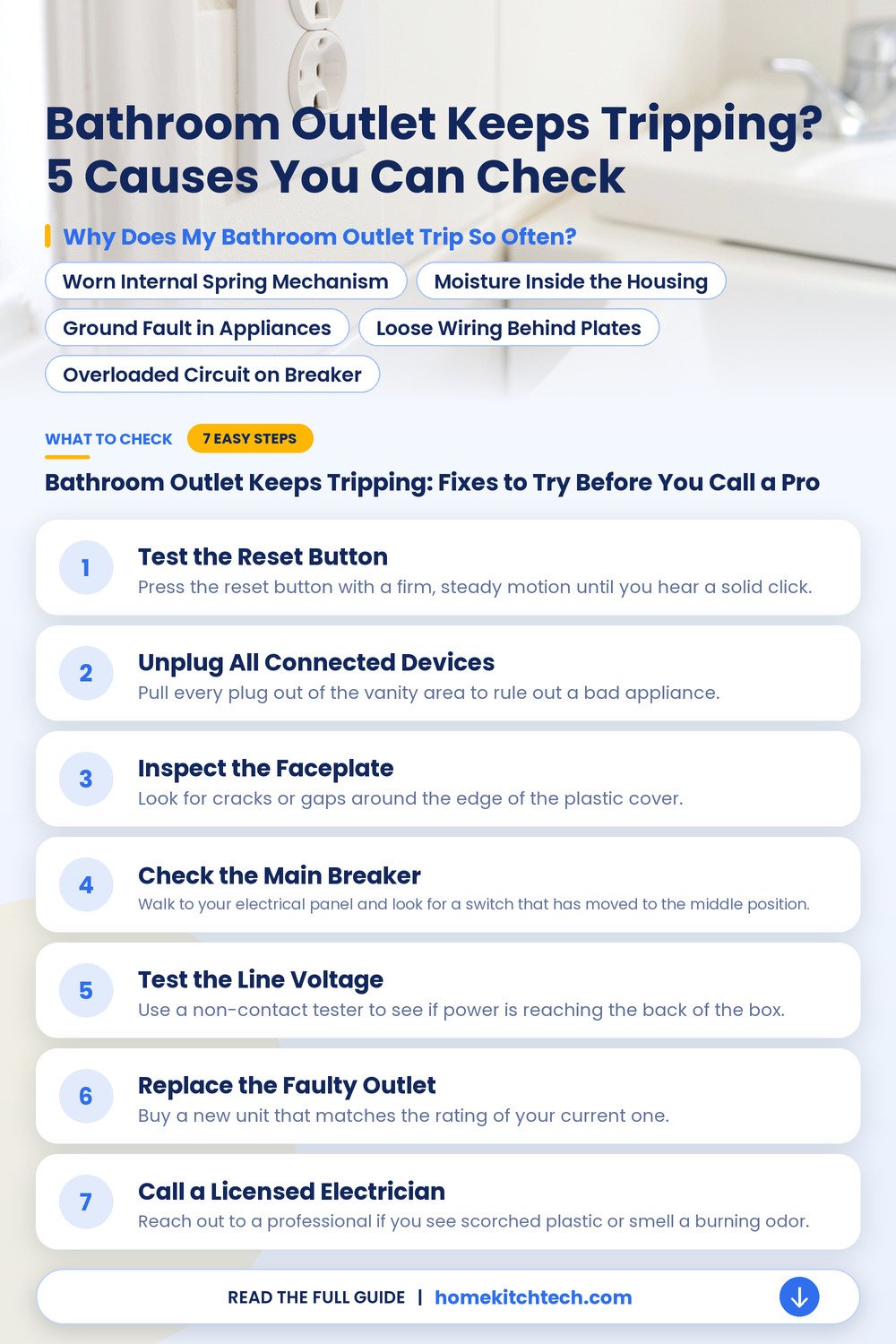
Why Does My Bathroom Outlet Trip So Often?
Your bathroom outlet serves as a gatekeeper for electricity near water sources. It’s built to detect tiny leaks in current, which protects you from shocks, but it can get twitchy if something isn’t quite right in your electrical wiring system.
Worn Internal Spring Mechanism
The outlet has a set of tiny parts that hold the circuit closed when you press reset. Over time, these parts weaken, and they struggle to stay locked in position. You’ll notice the button feels mushy, or it pops back out immediately after you push it. It’s just simple wear and tear from years of everyday use, so it’s time for a replacement.
Moisture Inside the Housing
Steam from your shower creates a damp environment that can seep behind your wall plate. This moisture acts like a bridge for electricity, which tricks the sensor into thinking there’s a dangerous leak. You might see a faint haze on the face of the outlet, or notice the issue happens most often after a long, hot shower.
Ground Fault in Appliances
Your hair dryer or curling iron might have a frayed cord that leaks a tiny bit of power to the outside casing. The outlet senses this imbalance, and it shuts down to keep you safe from a shock. Test your theory by unplugging everything, then see if the outlet holds a reset without anything attached.
Loose Wiring Behind Plates
Wires can wiggle loose inside the box when you plug things in and pull them out repeatedly. These loose wires touch the metal box, and they create a short that trips the device instantly. Check the connections behind your wall plate cover if the outlet looks perfectly fine from the outside.
Overloaded Circuit on Breaker
Sometimes, the problem isn’t the outlet itself, but the electrical circuit breaker in your main panel. High-power items draw too much, so the line cuts the flow. Check if the lights in the room also go dim when you try to use your heater or hairdryer.
Bathroom Outlet Keeps Tripping: Fixes to Try Before You Call a Pro
You can usually handle this task with just a few minutes of time and a basic tool. Keep a non-contact voltage tester handy to ensure you’re working safely before you touch any wires.
Test the Reset Button
Press the reset button with a firm, steady motion until you hear a solid click. If the button stays down, plug in a lamp to verify the power is flowing. You should feel a distinct mechanical snap when the internal contacts engage. If the button feels soft, the unit is likely broken.
Unplug All Connected Devices
Pull every plug out of the vanity area to rule out a bad appliance. Sometimes, a faulty hair straightener or a shaver with a damaged power cord is the real culprit. Once everything is disconnected, try the reset button again to see if it holds power. If it stays on, you know one of your tools is the problem.
Inspect the Faceplate
Look for cracks or gaps around the edge of the plastic cover. Water can sneak through these small openings and cause an internal short. Tighten the screws if the plate feels loose against the wall. If you see signs of water damage, you must replace the unit right away.
- Turn off the main breaker before you touch any electrical wires.
- Use a voltage tester to verify the power is truly off.
- Match the wire colors to the correct terminals on the device.
- Wrap electrical tape around the outlet sides to prevent accidental shorts.
Check the Main Breaker
Walk to your electrical panel and look for a switch that has moved to the middle position. Flip it all the way to off and then back to on to reset the connection. If it trips again immediately, you have a deeper issue that needs an electrician. Don’t force the switch if it feels stuck.
Test the Line Voltage
Use a non-contact tester to see if power is reaching the back of the box. Turn the power off at the main breaker before you remove the screws. You’ll see two sets of wires, one labeled line and one labeled load. If you don’t see power on the line side, the problem is in the wall.
Replace the Faulty Outlet
Buy a new unit that matches the rating of your current one. Turn off the breaker, verify the power is dead, and swap the wires to the matching terminals. Never leave bare wires exposed inside the box. Make sure you tighten the terminal screws so the wires don’t slip out later.
Call a Licensed Electrician
Reach out to a professional if you see scorched plastic or smell a burning odor. You should also stop working if the wires look brittle or if you aren’t comfortable with the connections. A pro can safely trace the line through the walls to find hidden damage. Don’t risk a fire by trying to force a bad outlet to work.
Can I Fix a Bathroom Outlet That Keeps Tripping Without Help?
You can certainly handle a simple reset or a basic appliance check yourself in just a few minutes. If you’ve already tried the reset button and checked your devices, don’t keep pushing it because that creates a heat hazard. A licensed electrical contractor has the tools to see if your wiring is truly damaged behind the plate. Call one if you see black marks or smell burning plastic.
Sometimes, the fault lies in the circuit itself rather than the outlet. Your home might have too many high-wattage tools running on one line, which triggers the sensor to protect your wiring. Turn off the breaker for that room to safely inspect the connections for any loose screws. If the non-contact voltage tester shows no power, you can tighten those wires with a screwdriver.
Loose connections cause intermittent power drops. These gaps make the outlet trip because the electricity isn’t flowing smoothly to your devices. Tighten the screws on the side of the outlet to restore a firm connection. A solid contact point is the key to stopping those annoying and sudden power cuts.
Check the main service panel if tightening the wires doesn’t work. A breaker that trips repeatedly might be overloaded by too many appliances. Move your heavy tools to a different room to reduce the strain on that specific line. If the power stays on after that, you’ve found the root of your trouble.
- A simple reset takes less than five minutes of your time.
- Stop using the outlet if it trips for a third time.
- Always check that the power is off before touching any wires.
- Professionals charge about $100 to $200 for a quick service visit.
Why Does My Older Bathroom Outlet Fail So Often?
Old age eventually wears out the sensitive internal parts of your GFCI wall outlet. Heat from your daily hair dryer use can cause the metal contacts to lose their grip, which triggers the safety sensor. You'll notice the plug feeling loose when you insert your cord, or the reset button might feel mushy instead of snappy. It's usually time for a swap when the device can no longer hold onto a plug firmly.
Humidity in your bathroom also plays a major role by creating tiny corrosion spots on the internal metal components. Even if you keep the area dry, the air itself carries enough moisture to degrade the metal over several years. This buildup interferes with the electrical flow, causing the device to trip as a precaution. Once the internal sensor mechanism gets dirty or oxidized, you won’t be able to keep it running reliably.
- Replace outlets that are older than ten years for better safety.
- Keep your bathroom fan running to pull humidity out of the air.
- Tight connections prevent the extra heat that ruins your outlet parts.
- Check the date stamp on the back if you open the box.
Are There Safety Risks When My Bathroom Outlet Keeps Tripping?
Stop using the outlet if it trips, as this is a warning that something is wrong with the path of the electricity. Every time the device clicks off, it’s telling you that a fault exists in your electrical wiring path. If you force it to stay on by holding the button or swapping the breaker, you’re bypassing a necessary safety feature. Don’t risk your property just to keep your tools running.
Check the faceplate for gaps, because water finding its way into the housing creates a risk when the seal isn’t tight. If your cover has a gap, steam or splashes can reach the live terminal contacts and cause a dangerous short. You should check that the cover sits flush against the wall to keep your family safe. If you see moisture behind the plastic, turn off the power at the main panel to avoid a dangerous electrical shock.
- Fire risks increase whenever you ignore a repeating electrical fault.
- Use a plastic cover to prevent water from splashing inside outlets.
- Never use an extension cord to bypass a tripped bathroom outlet.
- Call for help if the outlet feels warm to the touch.
What Does It Cost to Fix a Persistent Outlet Issue?
You can expect to spend about $10 to $25 for a high-quality replacement outlet if you do the work yourself. A professional will charge more, usually between $150 and $300, because they include their travel time and insurance in the final bill. These costs vary by city, but it’s a small price to pay for a working system. You’ll spend about 30 to 60 minutes on the job if you have the right electrical tools ready.
Gather your supplies before you start to keep the process moving along. You’ll need a new outlet, a screwdriver, and that voltage tester to confirm the lines are dead. Don’t try to save money by buying the cheapest part on the shelf, as those often fail faster in humid rooms. If you’re not comfortable with wiring, don’t push your luck and just hire a pro to handle the outlet replacement work.
Ask the pro about local code changes, as they might suggest an upgrade to a modern GFCI model. This often prevents future issues, and it keeps your bathroom up to date. You’ll get a safer home if you choose to fix the root cause right away.
How Does the Outlet Brand or Material Change the Fix?
Different brands use unique designs for their reset buttons, so always check the manual for your specific model. Some high-end outlets feature a status light that tells you exactly why the device tripped, which saves you a lot of guessing. You’ll find that replacing a faulty unit with the same brand makes it easier to match your existing wall plate. Look for the rating on the back to see if it meets your local codes.
Materials also matter when you’re dealing with the constant moisture in your bathroom. Look for a unit labeled for wet locations, which usually includes a protective rubber seal around the buttons. If you have an older home with thin wiring, you might need a different style of connector to keep the wires tight. Don’t assume every outlet in the store is built to handle the same level of humidity as your current bathroom outlet.
Check the materials list on the package, before you buy the new unit. A high-quality finish on the faceplate and buttons lasts longer, and it resists the humid air. You’ll save yourself from doing this job again, if you pick the right part the first time.
Final Thoughts
Your outlet trips because it's doing its job to protect you from a dangerous electrical fault. Check your appliances first to rule out a simple cord issue, but don’t ignore a device that resets poorly or feels warm. If you can’t find a clear cause, turn off the power and call a pro before you face a bigger problem. A few minutes of caution now keeps your home safe and your circuits running smoothly.
| Symptom | Likely Cause | Easy Fix |
|---|---|---|
| Frequent tripping | Overloaded circuit | Unplug unused tools |
| Loose plug | Worn metal contacts | Replace the outlet |
| Warm faceplate | Loose wiring | Tighten screw terminals |
| Clicking sound | Internal moisture | Install new gasket |
| No reset | Failed sensor | Buy a new unit |
| Burning smell | Burnt wire | Call an electrician |
Frequently Asked Questions
Is It Safe to Use an Extension Cord in the Bathroom?
It isn’t safe because extension cords lack the protection of your wall outlet. Keep your devices plugged directly into the wall, because water can cause a short circuit if it touches the cord.
Can I Use a Regular Outlet Instead of a GFCI?
You shouldn’t, because your bathroom requires a special safety device by law. Stick with a GFCI outlet to protect your family from shocks near your sink.
Are My Lights Supposed to Flicker When the Outlet Trips?
They aren’t, and that’s a sign of a loose neutral wire in your electrical box. Have an electrician look at your wiring to prevent a fire.
Do I Need to Turn Off the Whole House Power?
You don’t, but you must turn off the specific breaker for that bathroom. Find the right switch in your main panel, and test for power before you start.
Will a New Outlet Fix a Constant Tripping Problem?
It depends, as the issue might be a ground fault in your hair dryer or curling iron. Test the outlet with a lamp after you replace the unit to know for sure.
Can Humidity Alone Cause an Outlet to Trip?
It can, especially if your exhaust fan isn’t moving enough air. A better fan or a tighter faceplate helps stop the moisture from getting inside your outlet.
What Does a Flashing Red Light Mean on My Outlet?
It means your outlet has reached the end of its life, and it can’t protect you anymore. Replace it immediately, so your bathroom stays safe for your daily routine.
