
As an Amazon Associate, I earn from qualifying purchases at no extra cost to you.
Why Does My Bathroom Fan Run All the Time? 5 Causes

A bathroom fan that runs without stopping is a nuisance that wastes energy and creates a constant, annoying hum. You might notice it right after you finish a shower, or perhaps it stays on all day for no reason at all. It's a common issue that prevents your home from staying quiet. Let's look at why your fan won't shut off so you can stop the noise.
The most likely cause is a faulty timer or a stuck switch, so check those first. You can usually flip the switch off and on to see if it resets the internal mechanism. If the fan keeps spinning, the problem is often in the wall control or the motor itself.
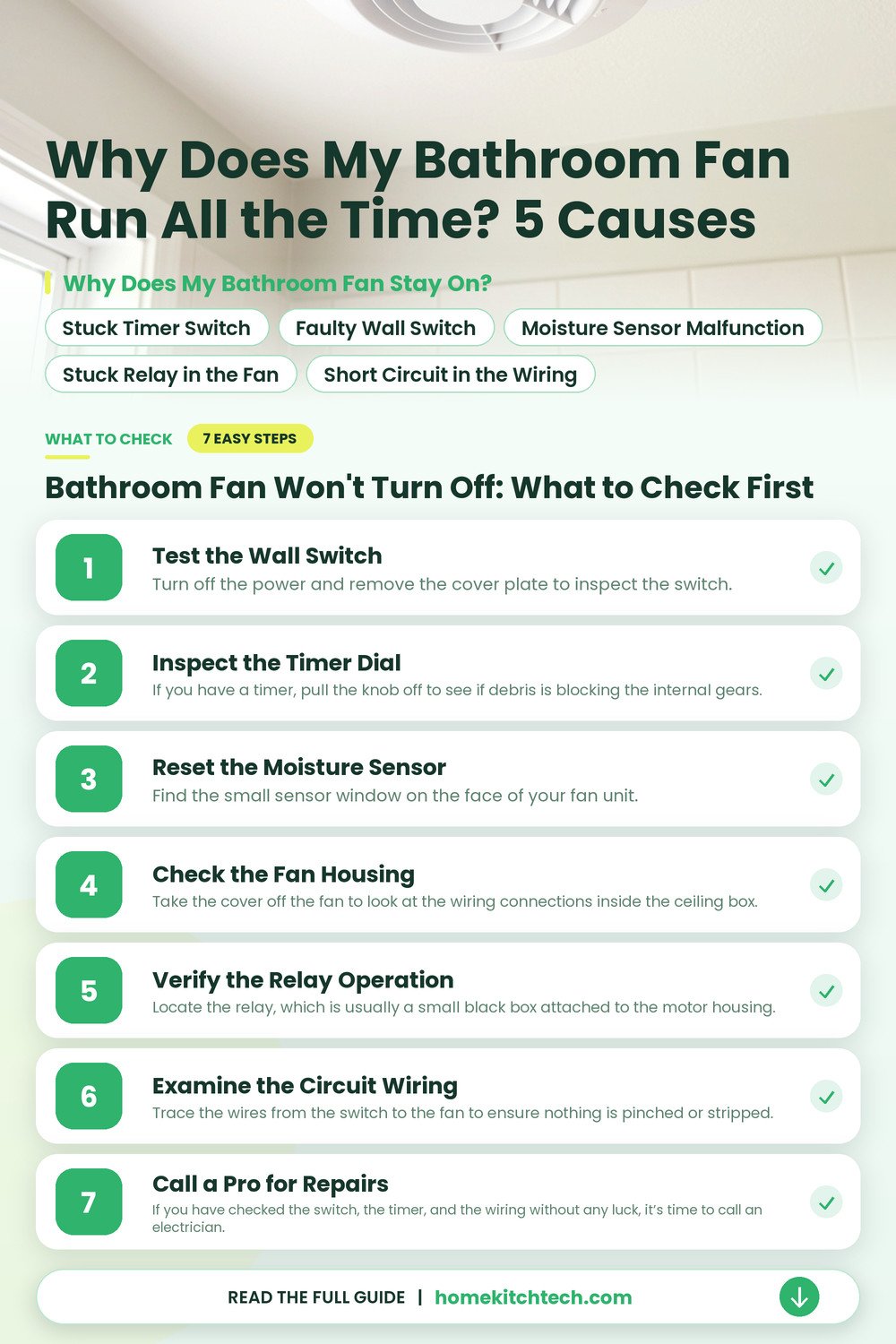
Why Does My Bathroom Fan Stay On?
Your fan relies on a signal to know when to start and when to stop. When that signal gets stuck, the motor keeps turning until you cut the power. You'll find that a small internal failure often keeps the circuit closed, which makes the fan think you still want it to run.
- Most fans cost about $50 to $200 for a new unit.
- Expect to spend 30 to 60 minutes on basic troubleshooting steps.
- Always turn off the power at the main breaker before touching wires.
- A non-contact voltage tester ensures the lines are dead before you start.
Stuck Timer Switch
Many bathrooms use a timer to keep the air moving after you leave. If the gears inside get jammed, the switch stays in the closed position, which keeps your bathroom exhaust fan running. You'll notice the knob or button doesn’t click or return to the off position as it should.
Faulty Wall Switch
A basic toggle switch can wear out over time, leaving the contacts stuck together inside the plastic housing. When this happens, the electricity flows to the motor even if the handle looks like it's in the off spot. You'll need to replace the switch if it feels loose or doesn’t snap back firmly.
Moisture Sensor Malfunction
Some modern units have a sensor that detects high humidity and triggers the fan automatically. If the sensor gets covered in dust or simply fails, it sends a constant signal to the motor to keep working. You can usually clear the dust with a soft brush, but a broken sensor often needs a full swap.
Stuck Relay in the Fan
The relay acts as a gatekeeper that controls the flow of power to the motor. If the relay welds shut, the fan has no way to stop until you pull the power at the breaker. You'll hear the motor humming, but you won’t have any control from the wall switch.
Short Circuit in the Wiring
Loose or damaged wires can sometimes touch, creating a path for electricity that bypasses your control switch. This is a serious issue that often happens behind the wall or inside the fan housing. You'll need to inspect the connections for signs of burning or melting to find the source.
Bathroom Fan Won’t Turn Off: What to Check First
You'll start by cutting power at the breaker to stay safe while you work. Grab your screwdriver and a flashlight, as you'll need to peek behind the wall plate to see how things are wired. Don't rush the process, because checking each part one by one saves you from guessing.
- A simple voltage tester costs about $15 at most home stores.
- Always wear rubber gloves if you are working near any electrical box.
- Never force a switch that feels stuck, as this might break the plastic.
- Keep a spare wire nut handy in case you drop the old one.
Test the Wall Switch
Turn off the power and remove the cover plate to inspect the switch. Use your voltage tester to ensure the power is truly off before you touch any screws. If the switch feels crunchy or doesn’t move smoothly, it's likely the part causing your constant fan noise.
Inspect the Timer Dial
If you have a timer, pull the knob off to see if debris is blocking the internal gears. Sometimes, a bit of dust is all that keeps the timer from clicking off. If it's clean but still runs, the internal motor of the timer has likely failed.
Reset the Moisture Sensor
Find the small sensor window on the face of your fan unit. Wipe it gently with a dry cloth to clear away any soap scum or dust that might be tricking it. If the fan continues to run after a quick wipe, the sensor board itself is likely faulty.
Check the Fan Housing
Take the cover off the fan to look at the wiring connections inside the ceiling box. Look for any wires that might have vibrated loose or show signs of heat damage. If you see melted plastic or charred wires, stop what you are doing and call a pro.
Verify the Relay Operation
Locate the relay, which is usually a small black box attached to the motor housing. Tap it lightly with a screwdriver handle to see if it clicks and stops the fan. If the fan cuts out when you tap it, the relay is definitely stuck and needs a replacement.
Examine the Circuit Wiring
Trace the wires from the switch to the fan to ensure nothing is pinched or stripped. You'll want to make sure the electrical power lines aren’t touching any metal parts of the ceiling joists. If the wiring looks good, but the fan persists, the problem is likely internal to the motor.
Call a Pro for Repairs
If you have checked the switch, the timer, and the wiring without any luck, it's time to call an electrician. They have the tools to trace hidden shorts that you can't see. A pro can replace the entire fan unit if the motor assembly is beyond a simple fix.
Why Does Your Bathroom Exhaust Fan Run Without Stopping?
Mechanical parts inside your bathroom exhaust fan eventually wear out after years of steady use. Dust builds up on the internal sensors, or the tiny springs inside your wall switch lose their snap and fail to disconnect the power. You’ll notice the fan hums along even when you aren’t in the room, which wastes energy.
Heat from the motor can also warp plastic gears, keeping the mechanism engaged long after it should have turned off. If you live in a home with high humidity, the sensor might stay triggered because the air never fully dries out. Try to clean the vent cover with a vacuum attachment to see if better airflow helps the sensor reset.
- Old fans often need a complete replacement after ten years.
- Dust buildup prevents internal sensors from reading the humidity level.
- High room temperatures cause plastic parts to bind and stick.
- Worn internal springs prevent the switch from snapping back open.
How Can You Tell If You Need a Pro?
You should call a licensed electrician if you notice a burning smell, which is coming from the wall or the ceiling. That odor often means wires have melted or a connection has become loose, which creates a fire hazard behind your drywall. Don’t touch the switch, but leave the area if you see any signs of heat damage or discoloration.
A pro can also handle the job if your fan is wired into a complex circuit that controls other lights or outlets. They have the right tools to trace a nasty short circuit without opening up your entire ceiling. You’ll save yourself from a headache, so let someone with experience handle the electrical troubleshooting when the fix isn’t obvious.
Does the Brand of Your Fan Change the Fix?
Different brands use unique internal boards, which manage the timing and sensors of your unit. You’ll find that some modern models require a specific reset sequence on the wall controller to stop a continuous run. Check the owner’s manual for your brand, as it lists the steps to clear the memory of your digital switch board.
Older, basic fans rely on a simple mechanical timer, which you might be able to repair with a quick spray of contact cleaner. You’ll need to turn off the power at the main breaker, before you peek inside the switch box. A simple fan without fancy sensors is usually much easier to fix.
Cheap fans often use plastic parts, which break down faster than the metal components in expensive units. You’ll find that replacing a low quality unit is often cheaper than trying to source a single replacement gear or board. If the motor is loud and the housing is brittle, upgrade to a better model.
- Digital switches often have a tiny reset hole for paperclips.
- Contact cleaner removes debris from inside a standard toggle switch.
- Plastic housings crack easily when you try to pry them open.
- Heavy duty motors last longer than the ones in budget models.
Is It Safe to Leave a Fan Running?
You shouldn’t let it run for days at a time, even if it seems safe. The motor will eventually overheat and burn out, which forces you to replace the whole assembly sooner than you’d like. You’ll also notice your energy bill creeping up since the fan pulls your heated or cooled air right out of your home.
You’ll find that the biggest risk is the hidden wiring inside your ceiling. If the fan runs because of a bad connection or a failing switch, that electrical heat can damage the insulation on your wires. Don’t ignore a fan that won’t turn off, as it’s a sign of a failing component that needs attention.
Clean the unit with a dry cloth, but skip the water. A common mistake involves spraying water or liquid cleaners directly into the fan housing to stop a noise or a stick. That liquid can reach the live wires and cause a shock, so keep the power off while you work.
Always use a non-contact voltage tester to check that the power is off before you touch any wires. You might think the switch is off, but a faulty circuit can still carry a charge that surprises you. If you don’t feel sure about your skills, just call an electrician to handle the wiring for your bathroom exhaust fan.
What Does the Repair Cost and Take to Finish?
You can usually fix a simple switch problem for under $30 in parts. A new timer or a basic toggle switch is easy to find at any hardware store. You’ll spend about 30 to 60 minutes on the whole job, so make sure you have the right screwdriver and a voltage tester on hand.
A professional will charge more, usually around $100 to $250, depending on the complexity of the wiring in your ceiling. They’ll arrive with the right parts and can finish the work in under two hours. You’ll get the work done to code, which is a big relief.
You’ll find that replacing the entire bathroom fan unit is a bigger project that takes a few hours. It’s a great time to upgrade to a quieter, more efficient model that clears moisture faster. If you’re comfortable with basic home repairs, you can definitely handle this swap.
- Standard toggle switches cost less than ten dollars at stores.
- Electricians charge more for work on a weekend or holiday.
- New fan units range from fifty to two hundred dollars.
- A voltage tester is a cheap tool for your kit.
Final Thoughts
Most fans that run constantly have a simple switch or sensor issue that you can fix with a little patience. Start by checking your wall control before you assume the motor is broken. If you can’t find the cause, don’t let it run for long, as it will only lead to a burnt motor or higher energy bills. Keep the power off when you tinker, and you’ll stay safe while you work.
| Symptom | Likely Cause | Easy Fix |
|---|---|---|
| Fan hums constantly | Stuck relay | Replace switch |
| Switch feels loose | Broken spring | Install new toggle |
| Humidity sensor stays on | Dust buildup | Clean with vacuum |
| Fan won’t stop | Faulty timer | Reset the dial |
| Burning smell | Short circuit | Call electrician |
| Motor stays warm | Old age | Replace unit |
| Clicking noise | Worn gear | Swap the motor |
| Switch is hot | Bad wiring | Turn off breaker |
Frequently Asked Questions
Can I Just Cut the Power to the Fan?
Yes, you can turn off the breaker to stop the fan. It’s a smart way to prevent the motor from burning out while you decide how to fix the switch.
Will a Bad Humidity Sensor Keep the Fan Running?
Yes, a broken sensor often sends a signal that the room is still wet. You can try to clean it, but you’ll likely need a new module.
Is It Okay to Replace the Fan Myself?
Yes, you can do it if you’re comfortable with basic electrical steps. Just turn off the power and test the wires before you start the job.
Does a Loose Wire Cause the Fan to Stay On?
It depends, but a loose wire can definitely interfere with the signal to your switch. Check the connections in your switch box for any damage.
Should I Use a Spray Cleaner on the Switch?
No, skip that because it can damage the internal contacts of your switch. It’s usually better to just swap the switch for a new one.
Can a Stuck Relay Make the Fan Run Forever?
Yes, the internal relay often welds itself in the closed position after many years. You’ll need to replace the entire switch or the fan unit.
Will My Fan Still Work If I Bypass the Timer?
Yes, you can wire the fan to a standard switch if you don’t need the timer. You’ll lose the automatic feature, but the fan will work.
