
As an Amazon Associate, I earn from qualifying purchases at no extra cost to you.
How Long to Cook Eggs in Air Fryer: Perfectly Every Time (Expert Tips)

That morning rush can feel like a marathon, right? You just want a quick, easy breakfast, but juggling pots and watching timers for eggs can add unnecessary stress. Maybe you’ve tried the air fryer for eggs before, only to end up with a cracked eggshell or a texture that’s just not quite what you hoped for. The good news is, getting perfect eggs from your air fryer isn’t a pipe dream.
For perfectly hard-boiled eggs, aim for 13-17 minutes at 270°F (132°C). Soft-boiled eggs need less time, usually 10-12 minutes at the same temperature. Fried eggs in a ramekin cook in 5-8 minutes at 350°F (175°C), while scrambled eggs require 8-10 minutes at 300°F (149°C), also in a ramekin. Always adjust for egg size and desired doneness.
Why Are Eggs Tricky in the Air Fryer?
Eggs seem simple enough, but getting them just right can sometimes feel like a culinary mystery. Many folks grab their air fryer expecting instant magic, but then face disappointment when eggs come out wrong. This often happens because they treat eggs like any other frozen item, just tossing them in.
The truth is, eggs are delicate, and their internal structure reacts uniquely to the dry, circulating heat of an air fryer. Understanding this difference is key. Otherwise, you might face issues like unevenly cooked eggs or shells that cling stubbornly to the white. It’s not just about cooking them; it’s about cooking them well.
The Mystery of the Cracking Shell
Have you ever put an egg in the air fryer and heard a little pop? Then you open the basket to find a tiny crack or even a big mess. This happens more often than you’d think. It’s frustrating when you just want a simple breakfast.
The rapid, intense heat can cause a sudden pressure build-up inside the shell. This pressure has nowhere to go but out. That’s why sometimes your perfect egg turns into a small explosion.
Air Fryer's Unique Heat Distribution
Unlike boiling water, an air fryer uses super-hot, circulating air. This dry heat cooks differently than moist heat. It can quickly cook the outside of an egg, but getting the inside just right, especially for soft yolks, takes a specific approach.
This difference in heat transfer can lead to overcooked whites and undercooked yolks if you’re not careful. It's a common pitfall. Many people struggle with finding the right balance.
Egg Size and Temperature Matter More Here
Not all eggs are created equal, right? A jumbo egg will cook slower than a small one. This seems obvious, but people often forget to adjust their air fryer times based on egg size.
Also, starting with cold eggs straight from the fridge versus room temperature eggs makes a big difference. Cold eggs need a bit longer to heat through. This impacts the final result quite a bit.
The Quest for Perfect Doneness
Some like their yolks firm, others prefer them jammy, and a few want them perfectly runny. Achieving these distinct textures in an air fryer without a visual check can be challenging. It’s hard to know what’s happening inside that shell.
Guessing usually leads to either undercooked runny whites or fully hard, chalky yolks. Nobody wants that for breakfast. Finding that sweet spot for your preferred doneness is crucial.
Why Preheating Is Often Skipped
Many of us just throw food into the air fryer and hit start, skipping the preheat step. With eggs, this can be a mistake. A cold air fryer basket means the eggs start cooking at a lower temperature.
This adds inconsistency to your cooking time and can make it harder to get those results you want. Consistent heat from the start truly matters for delicate items like eggs.
To get started right:
- Always use eggs that are close to room temperature if possible.
- Preheat your air fryer for at least 5 minutes before adding eggs.
- Don’t overcrowd the basket; give each egg space to breathe.
- Consider using a small ramekin for fried or scrambled eggs.
- An immediate ice bath helps stop the cooking process for boiled eggs.
- Adjust cooking times based on your specific air fryer model.
How to Cook Perfect Air Fryer Eggs: A Step-by-Step Guide
Cooking eggs in the air fryer truly offers a new level of convenience once you know the ropes. Forget the days of monitoring boiling water or scrubbing pans after frying. With a few simple steps, you can achieve delicious results, whether you crave jammy yolks or firm, breakfast-ready whites. Let's walk through exactly how to do it.
This method works for a variety of egg preparations, giving you control over texture and taste. You’ll quickly find that air frying eggs is a game-changer for busy mornings or meal prep. It frees up stovetop space, which is a huge plus in my kitchen.
Plus, you can achieve that lovely crispy edge on fried eggs without excessive oil. This guide covers everything from a classic hard boil to fluffy scrambled eggs. Get ready to enjoy perfectly cooked eggs, every single time.
For Perfectly Hard-Boiled Eggs
Achieving perfect hard-boiled eggs in the air fryer is surprisingly simple, especially once you get your timing down. First, make sure your eggs are at room temperature; this helps prevent cracking and ensures more even cooking. I usually take them out of the fridge about 30 minutes before I plan to cook. Next, preheat your air fryer to 270°F (132°C). A consistent starting temperature is super important for predictable results, so don’t skip this step.
Once preheated, carefully place your eggs directly into the air fryer basket in a single layer. Make sure they aren't touching each other to allow for proper air circulation. For a firm, fully cooked yolk, I typically cook large eggs for 15-17 minutes. If you prefer a slightly softer, jammy yolk, try 13-14 minutes instead.
When the timer goes off, use tongs to immediately transfer the eggs to an ice bath. This crucial step stops the cooking process and makes the eggs much easier to peel. Let them sit in the ice bath for at least 5 minutes before peeling and enjoying. If you notice hard-to-peel eggs, the ice bath duration or temperature might be off.
- Bring eggs to room temperature first.
- Preheat air fryer to 270°F (132°C).
- Cook large eggs for 13-17 minutes based on desired doneness.
- Immediately transfer to an ice bath for 5+ minutes.
Getting Your Soft-Boiled Eggs Just Right
Soft-boiled eggs, with their wonderfully runny yolks and set whites, are a breakfast treat that the air fryer handles beautifully. Just like hard-boiled, starting with room temperature eggs is important to avoid shell cracking during cooking. Preheat your air fryer to 270°F (132°C), ensuring it’s nice and hot before the eggs go in. This stable initial temperature is key for precision.
Carefully place your room temperature eggs in a single layer in the preheated air fryer basket. Give them enough space so the hot air can circulate freely around each one. For a perfectly soft-boiled egg with a runny yolk, I find that 10-12 minutes is usually the sweet spot for large eggs. You might need to experiment a little, as every air fryer is slightly different.
Once the cooking time is up, use tongs to transfer the eggs straight into an ice bath. This shock of cold water immediately halts the cooking, preserving that coveted runny yolk. Leave them in the ice bath for at least 2-3 minutes. Serve them right away with a sprinkle of salt and pepper, maybe on some toast.
- Use room temperature eggs for best results.
- Preheat your air fryer to 270°F (132°C).
- Cook large eggs for 10-12 minutes for a runny yolk.
- Chill immediately in an ice bath for 2-3 minutes.
Crafting Easy Air Fryer Fried Eggs
Yes, you can make fried eggs in your air fryer, and they turn out wonderfully with minimal fuss! You’ll need a small oven-safe ramekin or a metal pan that fits inside your air fryer basket. Give it a light spray with cooking oil or a tiny pat of butter to prevent sticking. This makes clean-up a breeze later on.
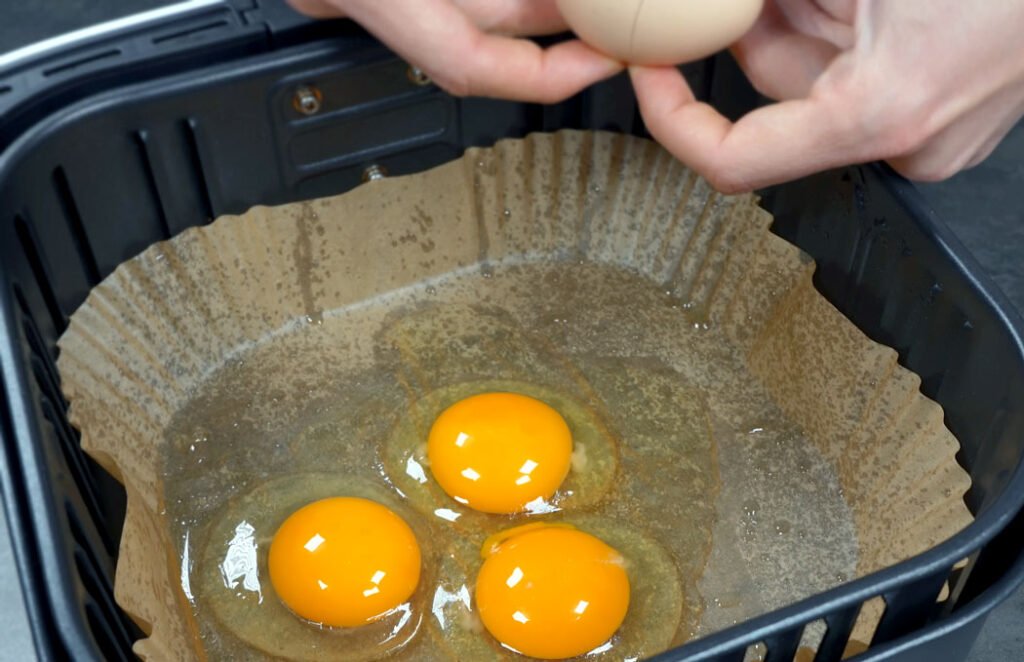
Crack an egg directly into the prepared ramekin or pan. If you like, sprinkle with a pinch of salt and pepper now. Preheat your air fryer to 350°F (175°C). The slightly higher temperature here helps cook the whites quickly and set the yolk without overcooking the entire egg. A hot air fryer ensures the cooking process starts immediately when you place the egg inside.
Carefully place the ramekin with the egg into the preheated air fryer basket. For a runny yolk, cook for 5-6 minutes. If you prefer a firmer, set yolk, go for 7-8 minutes. The whites should be fully set, and the edges might even get a lovely crispy texture. Use oven mitts to remove the hot ramekin, then gently slide your fried egg onto your plate.
- Lightly grease an oven-safe ramekin or small pan.
- Crack egg into ramekin; season as desired.
- Preheat air fryer to 350°F (175°C).
- Cook for 5-8 minutes, depending on yolk preference.
Whipping Up Fluffy Air Fryer Scrambled Eggs
For fluffy scrambled eggs without the constant stirring on the stovetop, your air fryer is a surprisingly great tool. You’ll need an oven-safe ramekin, just like for fried eggs. Crack 2-3 eggs into the ramekin, add a splash of milk or cream if you like, and whisk them vigorously with a fork until thoroughly combined. Season with salt and pepper now, and maybe a little shredded cheese.
Preheat your air fryer to a slightly lower temperature of 300°F (149°C). The gentler heat helps the eggs cook through without becoming rubbery or over-browning too quickly. A preheated air fryer helps achieve an even cook. This prevents the outside from setting before the inside has a chance to cook.
Carefully place the ramekin into the preheated air fryer basket. Cook for 8-10 minutes. Around the 5-minute mark, take the ramekin out and give the eggs a quick stir with a fork to help create that scrambled texture. Pop it back in to finish cooking until the eggs are set but still moist. Serve immediately for the best texture. If your scrambled eggs are rubbery, you’re likely overcooking them or using too high a temp.
- Whisk 2-3 eggs with milk/cream in a greased ramekin.
- Preheat air fryer to 300°F (149°C).
- Cook for 8-10 minutes, stirring halfway through.
- Remove when set but still moist, serve immediately.
The Secrets to Great Air Fryer Poached Eggs (Yes, Really!)
Poached eggs in an air fryer might sound a bit unconventional, but it absolutely works if you know the trick! You’ll need two small, oven-safe ramekins. In each ramekin, add about 1/4 to 1/3 cup of hot tap water, then a tiny splash of white vinegar. The vinegar helps the egg whites set quickly. This little detail makes a big difference.
Carefully crack one egg into each ramekin, making sure it settles gently into the water. Preheat your air fryer to 300°F (149°C). The moderate temperature is important for gently poaching the eggs without boiling the water too aggressively. A consistent preheat ensures the cooking begins uniformly across both eggs.
Place the ramekins carefully into your preheated air fryer basket. Cook for 10-13 minutes, depending on how runny you like your yolk. The whites should be set, and the edges firm, but the yolk should still be beautifully soft. Use a slotted spoon to gently lift the poached eggs out of the water, draining any excess, and serve immediately on avocado toast or eggs Benedict. If you notice broken yolks, you’re probably being too rough when adding the egg.
- Fill ramekins with hot water and a splash of vinegar.
- Gently crack one egg into each ramekin.
- Preheat air fryer to 300°F (149°C).
- Cook for 10-13 minutes for runny to jammy yolks.
Troubleshooting Common Egg Problems
Even with the best instructions, sometimes things go sideways. If your eggs are cracking in the air fryer, it’s usually because they went in cold from the fridge, or the air fryer wasn’t preheated, causing a rapid temperature change. To fix this, always bring eggs to room temperature first. This simple step alleviates a lot of the internal pressure that builds up.
Another common complaint is uneven cooking or undercooked yolks when the whites are done. This often points to an overcrowded basket or inconsistent air fryer temperature. Try cooking fewer eggs at a time, ensuring they have plenty of space for air to circulate. Always preheat your air fryer fully to ensure even heat from the start.
Sometimes, despite the ice bath, you still end up with stubbornly sticky eggshells. This often happens with very fresh eggs, which are notoriously harder to peel. Using eggs that are a week or two old can make peeling much easier. Also, ensure your ice bath is truly cold and the eggs sit in it for a full 5-10 minutes to properly cool and shrink away from the shell.
- Use room temperature eggs to prevent cracking.
- Don’t overcrowd the air fryer basket for even cooking.
- Always preheat your air fryer for consistent results.
- For easy peeling, use slightly older eggs and a full ice bath.
Does Egg Size Change Air Fryer Cook Times?
Absolutely, egg size makes a real difference when air frying. Just like in traditional boiling or frying, a larger egg needs more time for the heat to penetrate and cook through. Ignoring this can lead to undercooked yolks in jumbo eggs or overcooked, rubbery whites in smaller ones. It's a common cooking mistake with eggs.
My experience tells me this is one of the biggest reasons for varied results. If you typically use large eggs but suddenly switch to extra-large without adjusting, your usual timing will be off. This small detail truly impacts the final doneness of your egg.
This is why understanding your egg’s size is just as important as knowing your air fryer’s temperature settings. A one-size-fits-all approach just doesn’t work perfectly here. Take an extra moment to check the carton for the egg size you're working with.
Small Eggs (e.g., Pee Wee or Small)
When working with smaller eggs, you’ll need to trim down the cooking time from standard large egg recipes. For a soft-boiled egg, you might look at 8-9 minutes at 270°F. Hard-boiled will be closer to 11-12 minutes. The quicker heat penetration means less time in the basket.
Medium Eggs
Medium eggs are a good middle ground and often cook just a minute or two less than large eggs. If a large hard-boiled egg takes 15 minutes, a medium might be perfectly done in 13-14 minutes. Adjust accordingly, especially for fried or scrambled.
Large Eggs (Standard)
Most recipes, including this one, base their times on large eggs, as they are the most common size found in stores. My recommended times for hard-boiled (13-17 mins) and soft-boiled (10-12 mins) at 270°F are for this size. Think of this as your baseline for comparison.
Extra-Large Eggs
For extra-large eggs, you'll typically need to add an extra 1-2 minutes to the cooking time compared to large eggs. A hard-boiled extra-large egg might require 16-18 minutes at 270°F. For soft-boiled, push it to 12-14 minutes. This slight increase ensures the larger volume of yolk and white cooks thoroughly.
Jumbo Eggs
Jumbo eggs are the biggest, and they demand the longest cooking times. Add 2-3 minutes to the large egg recommendations. Expect a hard-boiled jumbo egg to need 17-20 minutes, possibly even a bit more, for a fully set yolk. Soft-boiled jumbo eggs will land in the 14-16 minute range.
My Eggs Always Stick! How to Get Easy Peeling?
Ah, the dreaded sticky eggshell – it’s a common problem that can ruin the joy of a perfectly cooked egg. Nothing is more frustrating than losing half your egg white to a stubborn shell. This isn’t just an air fryer issue; it can happen with any cooking method. But there are specific steps you can take to make air-fried eggs peel like a dream.
The key often lies in understanding how the egg white adheres to the membrane just inside the shell. Fresh eggs have a stronger bond, which makes them harder to peel. You might even find that some air fryer models have a slight advantage due to the steam effect they create. However, even if your air fryer isn’t particularly steamy, there are still plenty of tricks to ensure smooth peeling.
Don’t let peeling frustration ruin your breakfast. With a bit of know-how, you can consistently achieve eggs that practically shed their shells. It just takes a combination of proper cooling and selecting the right eggs.
The Immediate Ice Bath
This step is truly non-negotiable for easy peeling. As soon as your eggs come out of the air fryer, plunge them into a bowl of ice water. The rapid temperature change causes the egg white to contract, pulling away from the shell membrane. Leave them in for at least 5-10 minutes.
Use Slightly Older Eggs
Very fresh eggs are notoriously difficult to peel because their inner membrane is strongly bonded to the albumin (egg white). Eggs that are about a week to 10 days old have a slightly weaker bond, making them peel much more easily. If you struggle with fresh eggs, try using some that have been in your fridge for a little while.
The Steaming Effect
Some air fryers create a slightly humid environment, which can mimic a steaming effect that helps with peeling. While most don’t explicitly steam, the hot, circulating air still cooks the egg through the shell. This can sometimes contribute to easier peeling than, say, dry baking in an oven.
Roll and Peel Under Water
Once your eggs are chilled, gently crack and roll them on a hard surface to create a network of small cracks all over the shell. Then, peel them under running cold water or submerged in a bowl of water. The water helps to get under the membrane, easing the shell away without tearing the white.
Consider a Touch of Baking Soda
For stubborn shells, some folks swear by adding about 1/2 teaspoon of baking soda to the ice bath. The alkalinity is thought to help the egg white separate more easily from the membrane. While not universally proven, it’s a simple trick worth trying if you’re really struggling.
Why Bother Air Frying Eggs Instead of Boiling?
You might wonder, with all the specific instructions, why even bother air frying eggs when boiling seems so straightforward? The truth is, the air fryer offers some distinct advantages that make it a compelling choice for egg lovers. It's not just about cooking; it's about making your life easier.
For me, the biggest win is the hands-off convenience. No more watching a pot of boiling water, no worries about water boiling over. Once the eggs are in the air fryer, you’re free to do other things, like get ready for work or make coffee. It's a set-it-and-forget-it kind of cooking, which is invaluable on busy mornings.
Beyond convenience, there's also the matter of consistency and less mess. You get a perfectly cooked egg every time, and cleanup is minimal. This method really shines when you want great eggs without the usual fuss.
Unbeatable Hands-Off Convenience
The air fryer allows you to cook multiple eggs at once without needing to stand over a stove. You simply place them in the basket, set the timer, and walk away. This frees up your attention for other breakfast prep or morning tasks, a major plus for anyone with a busy schedule.
Consistent Results, Every Time
Once you dial in the perfect time and temperature for your air fryer and egg size, you’ll get incredibly consistent results. The dry, circulating heat cooks the eggs evenly, reducing the chances of an undercooked center or rubbery whites. It’s much easier to replicate than stovetop methods.
No Pot Watching or Water Splashing
Say goodbye to bubbling pots and potential stovetop water spills. The air fryer keeps everything contained within its basket. This means a cleaner cooking experience and one less pot to wash, which is always a win in my book.
Energy Efficiency for Small Batches
For cooking a small batch of eggs (say, 2-6), an air fryer can often be more energy-efficient than heating a large pot of water on a stovetop. It heats up quickly and cooks efficiently in a smaller enclosed space. This might not seem like much, but it adds up over time.
Versatility for Different Egg Styles
As you’ve seen, the air fryer isn’t just for “boiling.” You can achieve hard-boiled, soft-boiled, fried, scrambled, and even poached eggs using different techniques and accessories. This versatility makes it a powerful tool for all your egg cravings, giving you options beyond just boiling.
Less Mess to Clean Up
Since eggs are cooked directly in the basket or in a small ramekin, there’s usually less mess than frying eggs in a pan or cleaning a sticky pot after boiling. A quick wipe down of the basket is often all that’s needed, saving you precious cleanup time.
Smart Tips for Consistent Air Fryer Egg Success
Even with a detailed guide, a few extra tips can truly elevate your air fryer egg game from good to consistently great. These aren’t just minor tweaks; they’re habits that ensure you get the results you want, every single time. It’s about being proactive to avoid any unexpected cooking issues.
Think of these as the little secrets that seasoned air fryer users discover over time. They help you compensate for slight variations in egg batches or even different air fryer models. Knowing these nuances helps you maintain control over the cooking process. You won’t face any surprises when the timer goes off.
Applying these smart practices minimizes common air fryer cooking mistakes and ensures your eggs come out exactly as planned. Consistency is the name of the game here. It’s all about making your life easier in the kitchen.
Always Preheat Your Air Fryer
Preheating is not just a suggestion; it’s a critical step for consistent egg cooking. A preheated air fryer means the eggs start cooking at the intended temperature immediately. This prevents a gradual heat-up that can lead to unevenly cooked whites or yolks. Give it at least 5 minutes to come up to temperature.
Lay Eggs in a Single Layer
Overcrowding the air fryer basket is a common pitfall. For optimal cooking, arrange your eggs in a single layer, ensuring there’s space between each one. This allows the hot air to circulate freely around every egg, promoting even cooking. Stacked eggs will cook inconsistently.
Know Your Air Fryer’s Actual Temperature
Every air fryer can run a little differently. Some might run hotter or cooler than their display suggests. If your eggs are consistently over or undercooked despite following recommended times, consider investing in an oven thermometer to check your air fryer’s actual internal temperature. This helps adjust your settings precisely.
Don’t Overcrowd the Basket
As mentioned, proper air circulation is vital. If you try to cram too many eggs into the basket, the airflow is restricted. This leads to hot spots and cold spots, resulting in some eggs being perfectly cooked while others are still runny or completely overdone. Cook in batches if necessary.
Consider the Basket Material and Type
Different air fryer baskets (mesh, solid, non-stick coated) can affect heat transfer slightly. A perforated basket allows more direct air circulation. While this usually isn’t a huge factor, if you notice significant variance, it might be something to consider in your adjustments. Get to know how your specific basket performs.
Give Eggs a Resting Time (for Boiled)
After the ice bath, if you’re not eating them immediately, let your “boiled” eggs rest in the fridge for a bit. This allows the internal temperature to fully stabilize. It can also slightly firm up the yolk for those who like it just a touch less jammy.
Bring Eggs to Room Temperature
I can’t stress this enough. Cold eggs going into a hot air fryer are a recipe for cracking due to thermal shock. Take them out of the fridge at least 30 minutes before cooking. Room temperature eggs also cook more evenly, preventing raw spots in eggs or too-firm edges.
Adjust for Altitude If Necessary
If you live at a high altitude, you might find that water boils at a lower temperature and things cook differently. While less pronounced with air frying, it can still affect cook times. You might need to add a minute or two to your usual times if you’re in a high-altitude area.
Final Thoughts
I hope these tips and tricks help you conquer air fryer eggs, making your mornings just a little bit smoother. It took me a bit of experimenting to find my perfect timings, but now, cooking eggs this way is a true kitchen staple. You’ll quickly see how simple and convenient it can be.
Don’t be afraid to try different timings for your specific air fryer and egg size. Once you find that sweet spot, you’ll wonder how you ever managed without it. Go ahead, give it a shot, and enjoy those perfectly cooked eggs!
Quick Guide Table
| Egg Style | Temperature | Time (Large Eggs) |
|---|---|---|
| Hard-Boiled (Firm Yolk) | 270°F (132°C) | 15-17 minutes |
| Hard-Boiled (Jammy Yolk) | 270°F (132°C) | 13-14 minutes |
| Soft-Boiled (Runny Yolk) | 270°F (132°C) | 10-12 minutes |
| Fried Egg (Runny Yolk) | 350°F (175°C) | 5-6 minutes |
| Fried Egg (Set Yolk) | 350°F (175°C) | 7-8 minutes |
| Scrambled Eggs | 300°F (149°C) | 8-10 minutes (with mid-cook stir) |
| Poached Eggs | 300°F (149°C) | 10-13 minutes |
| Small Eggs (General) | Varies by style | Subtract 1-2 minutes from Large |
| Extra-Large Eggs (General) | Varies by style | Add 1-2 minutes to Large |
| Jumbo Eggs (General) | Varies by style | Add 2-3 minutes to Large |
Frequently Asked Questions
Is it safe to cook raw eggs in an air fryer?
Yes, it is perfectly safe to cook raw eggs in an air fryer. The circulating hot air cooks them thoroughly, similar to how an oven would.
Can I cook more than one egg at a time?
Yes, you can cook multiple eggs at once, but always ensure they are in a single layer with space for air to circulate. Don’t overcrowd the basket.
Are air fryer eggs harder to peel than boiled eggs?
Not if done correctly. An immediate ice bath after cooking is crucial for easy peeling. Older eggs also tend to peel more easily than very fresh ones.
Do I need to preheat my air fryer for eggs?
Yes, preheating is highly recommended for consistent results. It ensures the eggs start cooking at the correct temperature from the very beginning.
How do I prevent eggs from cracking in the air fryer?
Using room temperature eggs helps prevent cracking caused by thermal shock. Also, avoid extremely high temperatures for delicate items like eggs.
Should I spray the eggs with oil before cooking?
For “boiled” eggs, no oil is needed. For fried or scrambled eggs, lightly oiling the ramekin or pan you cook them in will prevent sticking.
Will eggs explode in the air fryer?
If eggs are very cold and placed into a very hot air fryer, they can sometimes crack or pop due to rapid pressure buildup. Using room temperature eggs prevents this.
How do I know if my air fryer eggs are fully cooked?
For boiled eggs, follow the recommended times and use an ice bath. For fried or scrambled, visually check that the whites are set and yolks are at your desired firmness.
