
As an Amazon Associate, I earn from qualifying purchases at no extra cost to you.
How to Use Air Fryer for the First Time (Not Mess It Up)

Most people overcook their first batch of fries and blame the machine. It’s not the machine.
New air fryer owners often set the wrong temperature, skip preheating, or stuff the basket too full, and then wonder why the food came out soggy or burnt. It’s a very common problem, and it’s totally fixable.
This guide walks you through everything, from taking the air fryer out of the box to cooking your first proper meal, step by step, without the guesswork.
Before using your air fryer, wash the basket and tray with warm soapy water, then dry them well. Always preheat the machine for 3 to 5 minutes before adding food. Never fill the basket more than halfway, because hot air needs room to move around the food. Set the right temperature for what you’re cooking, usually between 350°F and 400°F for most foods. Shake or flip food halfway through cooking for even results every time.
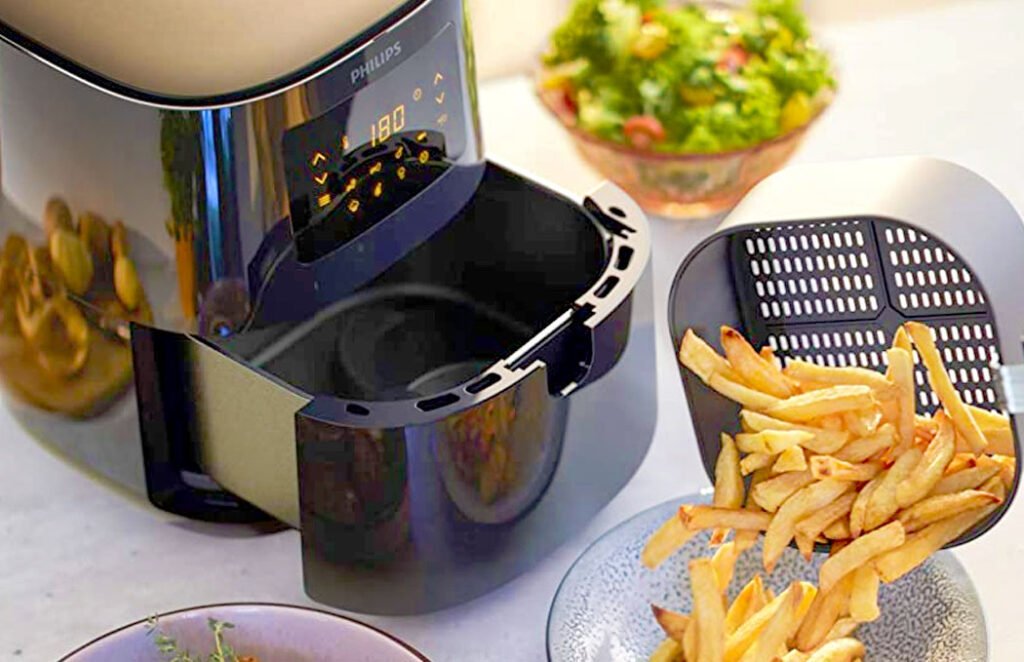
What Should You Do Before Using an Air Fryer for the First Time?
Before you cook anything, you need to prep the machine. This step takes about 10 minutes, but skipping it is a mistake most beginners make.
Pull the air fryer out of the box and remove all the plastic wraps, stickers, and packaging from inside the basket. Some models have a cardboard insert sitting inside the basket. Check carefully, because leaving any packaging inside during cooking is a fire risk.
Wash the basket, the tray, and the crisper plate with warm soapy water. These parts come from the factory with a light coating or residue. A quick wash removes that, so your first meal doesn’t taste like plastic or factory chemicals. Dry everything completely before putting it back.
Run the air fryer empty for about 5 minutes at 400°F. This burns off any manufacturing residue and gets rid of that “new appliance” smell. Open a window if you can. It’s normal for it to smell a little on the first run.
- Remove all packaging from inside the basket before anything else
- Wash the basket and tray with warm soapy water, then dry completely
- Check the bottom of the unit for any stickers or protective films
- Run the machine empty at 400°F for 5 minutes before first use
- Open a window during the first run to let the smell out
- Read the manual for your specific model to check wattage and max temperature
How to Use Air Fryer for the First Time: A Step-by-Step Guide
Understand How Your Air Fryer Actually Works
An air fryer is basically a small convection oven. It has a heating element at the top and a powerful fan that blows hot air around the food at high speed. That moving hot air is what crisps the outside of food without submerging it in oil.
This matters because it changes how you cook. You can use little to no oil and still get a crispy texture, but only if you don’t block the airflow. That means not overcrowding the basket, not covering the vents, and not wrapping food tightly in foil.
Most air fryers have a digital or dial control with temperature and time settings. Some have presets for chicken, fries, or fish. Those presets are a decent starting point, but learning to set your own temperature gives you way more control.
- Hot air circulates around food, so spacing matters more than you think
- Most models have a temperature range of 180°F to 400°F
- Presets are helpful but not always accurate for every brand of food
- You can use a small amount of oil spray for better crispiness
- Never block the air vents on the back or sides of the unit
- The basket and the tray work together, so always use both
Preheat the Air Fryer Before Adding Food
Skipping preheat is probably the biggest first-timer mistake. People put cold chicken into a cold machine, set a timer, and then wonder why the inside is cooked but the outside is pale and soft.
Preheat for 3 to 5 minutes at the temperature your recipe calls for. Think of it like warming up a pan before frying. When the food hits a hot surface and hot air immediately, it starts crisping right away. That’s what gives you that golden color and satisfying crunch.
Some newer models have a preheat button. If yours doesn’t, just set the temperature and time, press start, and let it run empty for 3 to 5 minutes before sliding the basket in.
- Always preheat for at least 3 minutes before adding food
- Use the same temperature for preheating that you’ll cook at
- Preheating reduces total cooking time by a few minutes
- Your food will brown more evenly when it starts in a hot basket
- If your model has a preheat button, use it every time
- Don’t add oil to the basket during preheat, add it to the food instead
Load the Basket the Right Way
This is where most people go wrong on their first few uses. They fill the basket completely, thinking more food means a more efficient cook. It does the opposite.
Hot air needs space to move around every piece of food. When you pile things on top of each other, the air can’t reach the middle layers, and those pieces come out steamed instead of crispy. Think of it like a fan blowing over a pile of papers versus a single sheet. One works, one doesn’t.
Keep food in a single layer whenever possible. For things like fries or small pieces of chicken, fill the basket halfway at most. If you’re cooking a bigger batch, do it in two rounds. It takes longer, but the results are much better.
- Never fill the basket more than halfway for best airflow
- Single layer cooking gives the crispiest, most even results
- Don’t stack food directly on top of each other
- For thick cuts of meat, leave at least half an inch of space around each piece
- Cook large batches in two rounds rather than cramming everything in
- Smaller, uniform pieces cook more evenly than big uneven chunks
Set the Right Temperature and Time
Different foods need different temperatures. This sounds obvious, but it trips people up because air fryers cook faster than regular ovens. A recipe that says 25 minutes in a conventional oven might only need 15 minutes in an air fryer.
A good rule of thumb: lower the oven temperature by about 25°F and reduce the cooking time by 20 to 25 percent when converting a regular recipe. So if a recipe says 375°F for 20 minutes in the oven, try 350°F for 15 minutes in the air fryer first.
For most everyday foods, these temps work well. Fries and chips do best at 380 to 400°F. Chicken pieces are good at 370 to 380°F. Fish and delicate foods work better at 350°F. Vegetables are usually fine at 360 to 375°F.
- Reduce oven temperatures by 25°F when cooking in an air fryer
- Cut cooking time by about 20 to 25 percent compared to oven recipes
- Use a meat thermometer to check chicken and beef for doneness
- Start checking food a few minutes early to avoid overcooking
- Every air fryer brand runs slightly different, so adjust as you learn yours
- When in doubt, cook at a lower temp and add more time if needed
Shake or Flip Food Halfway Through Cooking
This is a small step, but it makes a real difference. Halfway through the cooking time, pull the basket out and shake it or flip the food with tongs. This exposes the other side to direct heat and airflow.
For things like fries, nuggets, or cut vegetables, a good shake is enough. For bigger pieces like chicken thighs, fish fillets, or pork chops, flip them individually with tongs. This gives you even browning on both sides instead of one side crispy and the other pale.
Pulling the basket out doesn’t ruin the cook. Most air fryers pause automatically when you pull the basket. The timer stops, you shake or flip, you slide it back in, and cooking resumes. Takes about 10 seconds.
- Shake small foods like fries and nuggets at the halfway mark
- Flip larger pieces like chicken or fish with tongs for even browning
- The timer pauses on most models when you pull the basket out
- Don’t skip this step for anything thicker than half an inch
- Use silicone tongs to avoid scratching the basket coating
- If food looks pale halfway through, a light spray of oil helps it brown faster
Clean the Air Fryer After Every Use
Cleaning after every use sounds annoying, but it takes less than 5 minutes and keeps the machine working well. Old grease and food bits stuck to the basket will smoke and burn during the next cook, which affects taste and can set off smoke alarms.
Let the basket cool for about 10 minutes after cooking. Then wash it with warm soapy water and a soft sponge. Most baskets are non-stick, so avoid steel wool or rough scrubbing pads. Those scratch the coating, and once it’s scratched, food sticks more and the coating can degrade faster.
Wipe the inside of the main unit with a damp cloth. Don’t submerge the main unit in water. The heating element and fan are up top, so just wipe it down gently. Check if your basket is dishwasher-safe, because many are, and that makes cleanup even easier.
- Clean the basket and tray after every single use
- Use a soft sponge and warm soapy water, not rough scrubbers
- Let it cool for 10 minutes before washing
- Wipe the inside of the main unit with a damp cloth only
- Check if your specific basket is dishwasher-safe before tossing it in
- A clean machine runs better, smells better, and lasts much longer
What Can You Cook in an Air Fryer as a Beginner?
Starting with the right foods makes a big difference. Some things come out amazing in an air fryer on the very first try. Others need a bit of practice or are just not great in this machine.
The easiest foods for beginners are frozen foods. Frozen fries, frozen chicken nuggets, frozen mozzarella sticks, and frozen spring rolls all come out incredibly well, usually better than the oven version. These are already portioned right, and the packaging often gives you air fryer instructions.
Fresh chicken is another great beginner food. Chicken thighs with the skin on come out crispy outside and juicy inside, and they’re hard to mess up. Season with salt, pepper, garlic powder, and a little oil spray, then cook at 375°F for about 20 to 25 minutes, flipping halfway through.
Vegetables are fast and easy too. Broccoli, zucchini, bell peppers, and asparagus all roast beautifully at 360 to 375°F in about 10 to 12 minutes. Toss them in a little oil and salt first. They come out slightly charred on the edges, which tastes great.
- Frozen fries and nuggets are the easiest first foods to try
- Fresh chicken thighs come out crispy outside and juicy inside
- Vegetables like broccoli and zucchini roast fast and taste great
- Eggs, reheated pizza, and salmon fillets are also beginner-friendly
- Avoid wet batters like tempura, they drip and make a mess
- Very delicate foods like leafy greens can fly around from the fan
What Are the Most Common Air Fryer Mistakes Beginners Make?
The most common mistake is overcrowding the basket. Food piled on top of each other doesn’t get crispy. It steams. The air fryer needs space to do its job, and when you block the airflow, you lose the whole point of the machine.
Not preheating is the second biggest one. Putting cold food into a cold air fryer means the food sits in slowly warming air instead of hitting a blast of hot air from the start. The texture suffers, and browning is uneven. Always preheat.
Using too much oil is also a thing. People come from deep-frying habits and drown their food in oil. In an air fryer, a light spray or a light toss in a teaspoon of oil is usually enough. Too much oil makes food greasy and can drip into the bottom of the machine and smoke.
Forgetting to flip or shake food is another one. The heating element is at the top, so the surface facing up gets more heat. If you never flip or shake, you get one crispy side and one soft side. Set a halfway reminder until it becomes habit.
- Don’t overcrowd the basket, cook in batches if needed
- Always preheat for 3 to 5 minutes before adding food
- Use only a light spray or small amount of oil, not a heavy pour
- Flip or shake food halfway through every cook
- Don’t skip the first cleaning run before using a new machine
- Check food a few minutes early, air fryers cook faster than ovens
Final Thoughts
I hope this takes away the guessing and gives you the confidence to actually use that machine sitting on your counter. The first cook might not be perfect, and that’s fine. Every batch teaches you something about how your specific model runs. Adjust the temperature, try different foods, and keep notes on what worked. You’ll get the hang of it fast, and once you do, you’ll wonder how you cooked without it. You’ve got this.
| Step | What to Do | Temperature | Time | Why It Matters | Beginner Tip |
|---|---|---|---|---|---|
| Unbox and Prep | Remove all packaging, stickers, and inserts from basket | No heat | 5 min | Leftover packaging can catch fire | Check inside the basket thoroughly |
| First Wash | Wash basket, tray, and crisper plate with soapy water | No heat | 10 min | Removes factory residue and chemicals | Dry completely before reassembling |
| First Run (Empty) | Run machine empty to burn off factory coating smell | 400°F | 5 min | Gets rid of plastic or chemical smell | Open a window during this step |
| Preheat Before Cooking | Run empty at cooking temperature before adding food | Same as recipe | 3 to 5 min | Food crisps immediately in a hot basket | Do this every single cook |
| Load the Basket | Place food in a single layer, fill halfway at most | Same as recipe | Varies | Airflow needs space to reach all surfaces | Cook in batches for bigger portions |
| Set Temperature | Use 25°F lower than oven recipe temperature | 350°F to 400°F | Varies | Air fryers run hotter than conventional ovens | Start low, adjust up next time if needed |
| Set Time | Reduce oven recipe time by 20 to 25 percent | Same as above | Varies | Air fryers cook faster than regular ovens | Check food a few minutes early always |
| Shake or Flip Halfway | Pull basket out, shake small foods or flip large pieces | Same as above | At halfway | Even browning on all sides of food | Use silicone tongs to avoid scratching |
| Check Doneness | Use a meat thermometer for chicken and beef | Internal temp check | Last 2 min | Ensures food is safe and not overcooked | Chicken should reach 165°F inside |
| Cool and Clean | Let cool 10 min, wash basket with soft sponge and soapy water | No heat | 10 min | Prevents grease buildup, smoke, and bad smells | Check if basket is dishwasher-safe |
| Store Properly | Keep clean and dry, store in a stable spot with vents clear | No heat | Ongoing | Blocked vents cause overheating over time | Don’t store anything on top of it |
| Try Easy Foods First | Start with frozen fries, nuggets, or chicken thighs | 375 to 400°F | 10 to 25 min | Builds confidence and helps you learn the machine | Frozen foods often have air fryer instructions on the box |
Frequently Asked Questions (FAQs)
Is it safe to use an air fryer for the first time without reading the manual?
Technically you can, but the manual tells you the max capacity, specific wattage, and what parts are dishwasher-safe for your exact model. Skipping it often leads to small but avoidable mistakes.
Can I put aluminum foil in the air fryer basket?
Yes, but don’t cover the whole basket floor. Foil blocks airflow. Use small pieces under food only, and make sure it doesn’t touch the heating element above.
Are air fryer baskets non-stick?
Most are, yes. That’s why you should use soft sponges and avoid metal utensils. Once the coating is scratched, food starts sticking more, and the coating degrades faster over time.
Do I need to add oil every time I use the air fryer?
Not always. Fatty foods like chicken thighs or sausages release their own oils during cooking. For lean foods like shrimp or vegetables, a light spray of oil helps with browning and texture.
Is it normal for the air fryer to smoke the first few times?
A small amount of smoke on the very first run is normal from the manufacturing residue burning off. After that, smoking usually means there’s grease buildup or too much oil in the basket.
Can I cook frozen food directly from the freezer?
Yes, and air fryers handle frozen food really well. No thawing needed. Just add a few extra minutes to the cooking time and check doneness before serving.
Are there foods I should never cook in an air fryer?
Wet batters like beer batter or tempura drip and make a mess. Leafy greens fly around from the fan. Large whole roasts may not cook evenly. These are better done another way.
Do air fryers use a lot of electricity?
They use less energy than a full-size oven for most tasks, because they heat up faster and cook in less time. For small meals, they’re one of the more energy-efficient options in the kitchen.
