
As an Amazon Associate, I earn from qualifying purchases at no extra cost to you.
Bathroom Faucet Making Noise? 5 Causes and Quick Fixes

While you’re getting ready for your day, a screeching or rattling sound from your faucet is the last thing you want to hear. It usually starts as a faint hum, but it often turns into a loud, vibrating noise that travels through your pipes. You might notice it happens only when you move the handle to a certain spot. Don’t worry, because you can often quiet your tap with a few simple steps.
You can fix most faucet noises by tightening loose parts or replacing a worn seal. Start by turning off the water under your sink, so you don’t end up with a wet floor. It’s a quick job, and you’ll likely finish in about 30 to 45 minutes.
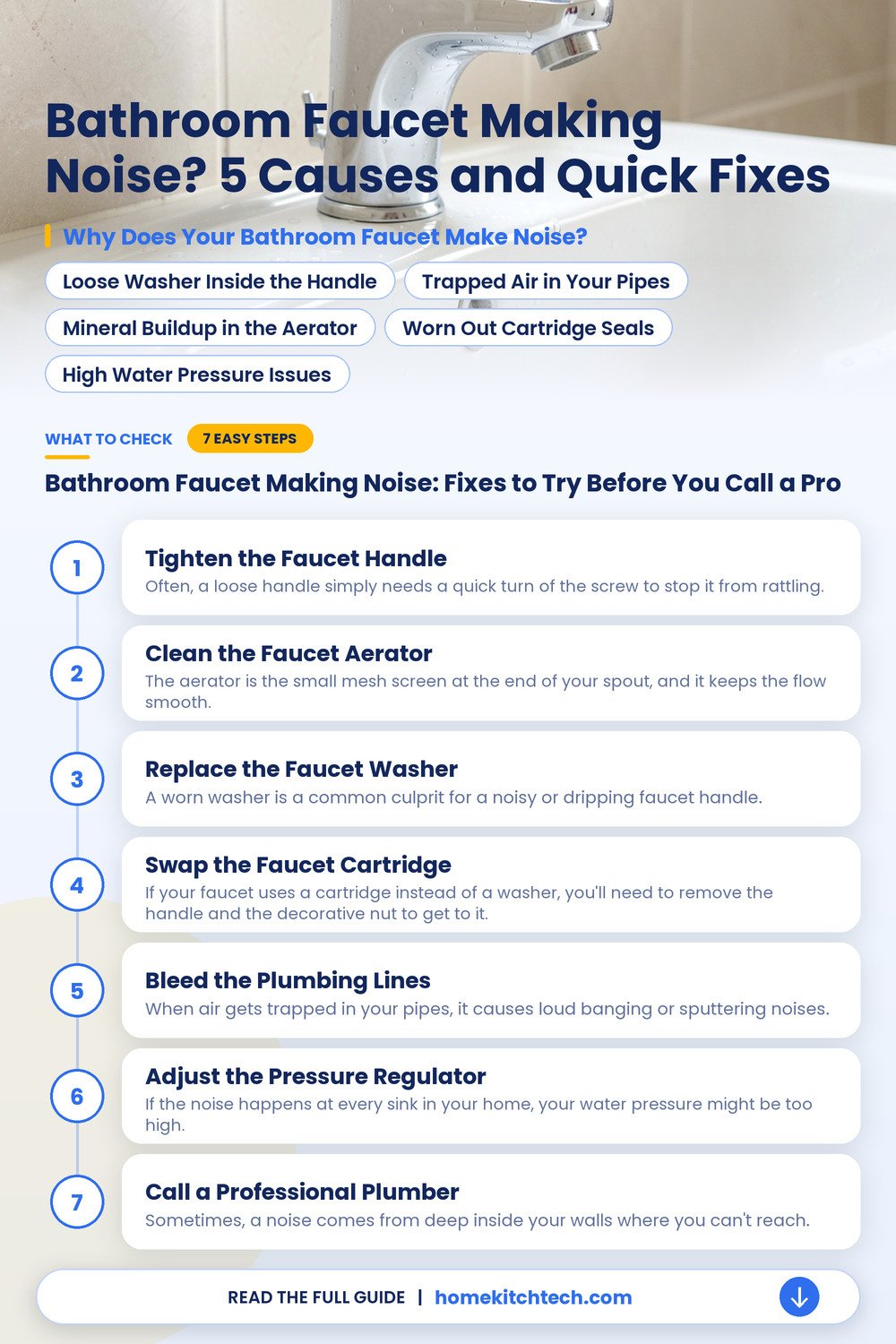
Why Does Your Bathroom Faucet Make Noise?
Your faucet relies on a delicate balance of pressure and seals to keep water flowing, but parts eventually wear down. When a seal fails, the water vibrates as it passes through, creating that annoying sound you hear in your bathroom.
Loose Washer Inside the Handle
A loose or worn rubber washer is the most common reason your faucet starts to rattle. As water pushes past a damaged seal, it makes the metal components vibrate against each other. You’ll hear this as a steady clatter, or a persistent buzz, when the water is running. Replace the damaged faucet washer to stop the movement and silence the noise for good.
Trapped Air in Your Pipes
Air bubbles sometimes get stuck in your plumbing lines after you turn the water back on following a repair. These pockets move through your pipes, and they cause a loud banging sound, which is known as water hammer. You’ll notice it most when you first open the tap after a long break. Open all your faucets at once, and let the air escape through the system.
Mineral Buildup in the Aerator
Hard water leaves behind crusty deposits that restrict the flow of water through your faucet tip. This blockage creates extra pressure, which forces the water to hiss or whistle as it exits. You’ll see white, chalky flakes if you unscrew the end of the spout. Soak the clogged aerator screen in vinegar to dissolve the gunk and restore a quiet, steady stream.
Worn Out Cartridge Seals
The cartridge inside your handle controls how much water comes out, and it regulates the temperature. Over time, the rubber rings on this part dry out or crack, leading to leaks and noisy vibrations. You’ll feel the handle get stiff, or hear a grinding sound, when you try to turn it. Replace the worn cartridge seal if the rings look brittle.
High Water Pressure Issues
If your home water pressure is set too high, it puts unnecessary stress on your internal plumbing valves. This excess force makes the water move faster than the pipes were meant to handle, causing whistling. You can check your pressure with a gauge, or listen to see if the noise happens at every sink. A pressure regulator can help keep your system running smoothly.
Bathroom Faucet Making Noise: Fixes to Try Before You Call a Pro
You’ll need a few basic tools like an adjustable wrench, a screwdriver, and some replacement parts from the hardware store. Keep a bucket and old towels handy to catch any water that spills when you open the line. It’s a straightforward job, but stay calm and work slowly to avoid stripping any screws.
- Expect to spend about $5 to $20 on new washers or cartridges.
- Keep the drain plugged with a rag so small screws don’t vanish.
- Test your repair by turning the water on slowly to check leaks.
- Call a plumber if you see water dripping from inside the wall.
Tighten the Faucet Handle
Often, a loose handle simply needs a quick turn of the screw to stop it from rattling. Use a small screwdriver to pop off the decorative cap on top of your handle. You’ll find a screw underneath that holds the handle to the stem. Tighten it firmly, but don’t force it too hard or you might crack the metal.
If the rattling continues after you tighten the screw, the handle itself might be worn out. Check the connection point for signs of damage. Look for stripped metal threads. If it still wobbles, you’ll need to find a matching replacement handle at the store.
Clean the Faucet Aerator
The aerator is the small mesh screen at the end of your spout, and it keeps the flow smooth. Unscrew the dirty aerator screen by turning it counterclockwise with your hands, or use a cloth-covered wrench. You’ll see bits of sand or white mineral crust trapped in the tiny holes. Rinse the mesh under running water, and scrub it with an old toothbrush.
If the minerals are really stubborn, soak the whole piece in a cup of white vinegar for an hour. Vinegar is great at breaking down those tough deposits that cause whistling. Screw it back on tightly, and enjoy a quiet stream.
Replace the Faucet Washer
A worn washer is a common culprit for a noisy or dripping faucet handle. Shut off the water valves under your sink, then use your wrench to remove the handle and the valve stem. You’ll find the rubber washer held in place by a small brass nut at the bottom. Pull the old one off, and slide a new one of the exact same size onto the stem.
Make sure you get a direct match, because even a tiny difference in size causes leaks. Coat the new washer with a little bit of plumber’s grease, so it seats properly. Put the parts back together in the same order you took them off.
Swap the Faucet Cartridge
If your faucet uses a cartridge instead of a washer, you’ll need to remove the handle and the decorative nut to get to it. Pull the old cartridge straight up and out of the faucet body. You might need to wiggle it a bit, but it should slide out without too much force. Compare it to the new part to ensure they are identical.
Slide the new cartridge into the housing, and make sure it clicks into place. Tighten the nut, and reattach your handle before you turn the water back on. This usually fixes persistent squealing or grinding noises caused by old internal parts.
Bleed the Plumbing Lines
When air gets trapped in your pipes, it causes loud banging or sputtering noises. Turn off the water supply to your home at the main valve, then open every faucet in the house. Start with the lowest sink, and work your way up to the highest one. This lets the air escape from the entire system.
After the water stops coming out of all the taps, turn the main water supply back on slowly. Let each faucet run for a few minutes, until the stream is steady and quiet. This clears out any lingering air bubbles that were causing the vibration.
Adjust the Pressure Regulator
If the noise happens at every sink in your home, your water pressure might be too high. Look for a bell-shaped valve near where the water main enters your home. You can turn the bolt on top of this valve to lower the pressure setting. Most homes work best at a setting between 40 and 60 pounds per square inch.
Check your pressure with a gauge to see where it sits before you make any big changes. If you don’t feel comfortable messing with the main regulator, call a plumber to handle it. They have the right tools to set it safely without damaging your pipes.
Call a Professional Plumber
Sometimes, a noise comes from deep inside your walls where you can’t reach. If you’ve tried all these fixes and the sound persists, you might have a loose pipe strap or a failing valve. A pro can use specialized tools to find the source of the vibration without tearing up your bathroom. Don’t wait if you notice water stains on your ceiling or walls.
They can also look for larger issues like old, corroded pipes that need replacing. It’s better to get a pro involved early than to deal with a major leak later. Let them know what you have already tried, so they can find the answer faster.
When Should You Call a Plumber for Faucet Noise?
Stop what you're doing and call a pro if you hear a loud banging sound, which shakes your walls when you turn the faucet off. This is likely a water hammer, which means your pipes aren’t properly secured inside the wall. A pro can install a water hammer arrestor to stop the shockwave before it cracks a joint.
If you've already tightened the handle and cleared the aerator, but the noise persists, you might have a deeper issue with your supply lines. Sometimes, the problem isn’t the faucet at all, but a faulty main shutoff valve deep in your plumbing system. Don’t force a wrench on pipes you can’t see, because you might cause a leak that’s hard to reach.
You’ll know it’s time to hire someone if you notice water stains on your ceiling, or damp drywall near the vanity. These signs mean a hidden leak is already causing damage behind your bathroom wall. A plumber has the right tools to find the source of the sound without tearing your bathroom vanity base apart.
How Much Does Fixing a Noisy Faucet Cost?
Most simple repairs in your bathroom take about 30 to 60 minutes, if you have the right parts on hand. You can usually fix a noisy cartridge or a loose washer for under $20 in materials. If you need to replace the whole fixture, you might spend anywhere from $50 to $200, depending on the style you pick for your sink.
Buy a basic set of tools like an adjustable wrench and a screwdriver to get started. You’ll find that these tools are useful for many other home tasks. Clear your vanity top, and keep a bucket handy for any water that spills when you loosen the lines.
Check your faucet product warranty before you buy a new part, as some brands cover replacements for years. If your faucet is very old, you might find that parts are hard to source at the local store. Sometimes, buying a new, modern replacement sink faucet is faster than hunting down a tiny seal for a discontinued brand.
- A new cartridge usually costs between $15 and $40.
- Expect to pay $100 for a plumber to visit.
- Most simple repairs take less than one hour total.
- Keep a bucket under the pipe to catch spills.
Why Do These Noises Start in Older Bathrooms?
Your plumbing system experiences a lot of stress over the years, as it deals with constant temperature changes and mineral buildup. Hard water leaves a crusty layer inside your pipes, which slowly narrows the path for water to flow through. This restriction often causes a whistling sound or a high-pitched whine whenever you open the tap.
Heat also plays a big role, because metal pipes expand and contract as the water temperature changes. If the pipe rubs against a wooden stud inside your wall, you’ll hear a rhythmic ticking or knocking sound. It's a common occurrence in homes that have been standing for a few decades.
Rubber parts like O-rings and seat washers also dry out and turn brittle after years of service. Once they lose their shape, they vibrate rapidly against the metal valve seat, which creates a buzzing sound in your faucet. You’ll find that replacing these cheap rubber faucet seals usually makes the noise go away instantly.
Bad habits like closing the handle too fast can also damage the internal components over time. Sudden stops cause the water pressure to spike, which puts extra strain on your faucet valve parts. Turn the handle slowly, and you’ll keep your system happy and quiet for longer.
- Mineral deposits narrow the space inside your pipes.
- Rubber gaskets lose their flexibility after many years.
- Rapid handle closing creates extra pressure on seals.
- Pipe expansion causes rubbing sounds against wood studs.
What Are the Biggest Mistakes That Cause Damage?
You might think that using a strong chemical drain cleaner will fix a noisy faucet, but that’s a dangerous move. These harsh liquids can eat through the metal parts of your faucet valve seat and ruin your plumbing finish. Stick to physical cleaning or simple vinegar soaks to keep your sink safe.
Another common mistake is overtightening the handle when you try to stop a squeal. You can easily strip the threads, or crack the plastic cartridge, if you use too much force with your wrench. Use a light hand, and stop as soon as you feel resistance to avoid a much larger repair bill.
Shut off the water supply under your sink before you take anything apart. You’ll avoid a wet bathroom floor and a big mess if you follow this rule. Keep a towel nearby to manage any small drips that happen while you work on your bathroom sink faucet.
- Never pour harsh chemicals into your bathroom faucet.
- Overtightening the handle often strips the metal threads.
- Skipping the shutoff valve causes immediate water spray.
- Using the wrong tool can scratch the chrome finish.
Does the Faucet Material Change Your Repair Plan?
Modern faucets are often made of plastic or composite materials, but they don’t hold up as well as solid brass. You’ll find that these units are usually designed to be replaced as a whole piece rather than repaired. If your faucet feels very light, it’s likely a model that doesn’t have replaceable internal washers.
Chrome finishes are quite tough, but you should still use a cloth between your wrench and the metal. This trick prevents ugly scratches that show up on your shiny faucet after you finish the job. If you have a matte or oil-rubbed finish, be extra gentle since these coatings can flake off easily.
Luxury brands often have unique internal parts, which you can only find through the manufacturer’s website. You might have to wait a few days for a specific replacement faucet cartridge to arrive in the mail. Always check your model number before you head to the hardware store, so you don’t buy the wrong size.
Some older faucets use a compression style that relies on simple washers, while newer ones use complex ceramic discs. You’ll need to know which type you have before you start taking things apart. Look for a small logo on the base to help you find the right manual online for your bathroom sink repair.
- Plastic faucets are harder to repair than brass.
- Ceramic discs last longer but need specific parts.
- Wrap your wrench in cloth to protect finishes.
- Check the brand logo for the correct manual.
Final Thoughts
Most noisy faucets come down to worn seals or trapped air that you can fix with simple tools. Focus on the cartridge and aerator first, as these are the usual suspects for strange sounds. If you stay calm and work slowly, you’ll likely resolve the issue without needing a pro. Take a look at your shutoff valves before you start, and make sure they turn freely so you can control the water flow.
| Symptom | Likely Cause | Easy Fix |
|---|---|---|
| Whistling sound | Mineral buildup | Clean the aerator |
| Knocking noise | Loose pipe | Secure the pipe |
| Buzzing sound | Worn washer | Replace the seal |
| Water spitting | Trapped air | Bleed the lines |
| Handle squeak | Dry lubrication | Apply grease |
| Slow flow | Clogged screen | Rinse the mesh |
| Dripping sound | Bad cartridge | Change the unit |
| Wall banging | High pressure | Install an arrestor |
Frequently Asked Questions
Can I Use Vinegar to Clean the Aerator?
Yes, you can soak your aerator in white vinegar to melt away mineral crust. Just unscrew the tip, drop it in a cup of vinegar for an hour, and scrub it with a brush before you put it back on. You’ll see the water flow smooth out right away.
Does High Water Pressure Cause Faucet Noise?
Yes, it’s a very common cause of banging or whistling in your pipes. If your house pressure is too high, you might need a pro to adjust the regulator valve. You’ll hear the noise stop once the pressure is set to a safe level.
Will Bleeding the Plumbing Lines Stop the Noise?
Yes, it often works if you have air trapped in your pipes. Turn on all your faucets and flush your toilets to let the air escape, then turn them off one by one starting from the lowest level. You’ll find the knocking sound fades as the air clears.
Are Loose Handle Screws Making My Faucet Squeal?
Yes, they can cause vibrations that lead to a high-pitched noise. Try tightening the small screw under the handle cap with a screwdriver, and you’ll likely see it stop the squeal. You’ll find that a firm fit is all your faucet needs.
Should I Replace the Entire Faucet If It’s Old?
It depends, as some old faucets are high quality and worth repairing. If you can’t find replacement parts or if the finish is badly worn, you’ll have an easier time buying a new unit. You’ll save yourself a lot of frustration by upgrading to a modern model.
What Does a Rhythmic Ticking Sound Mean?
It usually means your pipes are expanding or contracting against a wall stud as they warm up. You can’t always reach these pipes, but you might be able to add a bit of foam insulation if you have access. You’ll find it’s a harmless, if annoying, sound.
How Do I Know If My Cartridge is Bad?
You’ll know it’s failing if the handle feels stiff, or if you see water leaking from the base of the faucet. Take the handle off, and look for signs of wear on the plastic or ceramic parts. You’ll probably need to swap it for a new one.
