
As an Amazon Associate, I earn from qualifying purchases at no extra cost to you.
Ant Problem in Your Bathroom? 6 Ways to Get Rid of Them

The first thing you notice when walking into your bathroom is often a trail of tiny black dots moving along the wall. You see them near your sink or tub, but you don’t have to live with them. These pests are just looking for moisture, and they also seek out tiny food scraps. Let’s get them out of your space for good, so you can enjoy a clean room again.
The most common cause is a small leak or a hidden water source, which draws them in. Start by checking your sink pipes, and look around your tub for standing water. If you keep your surfaces dry and seal off their entry points, you’ll likely stop the problem in its tracks.
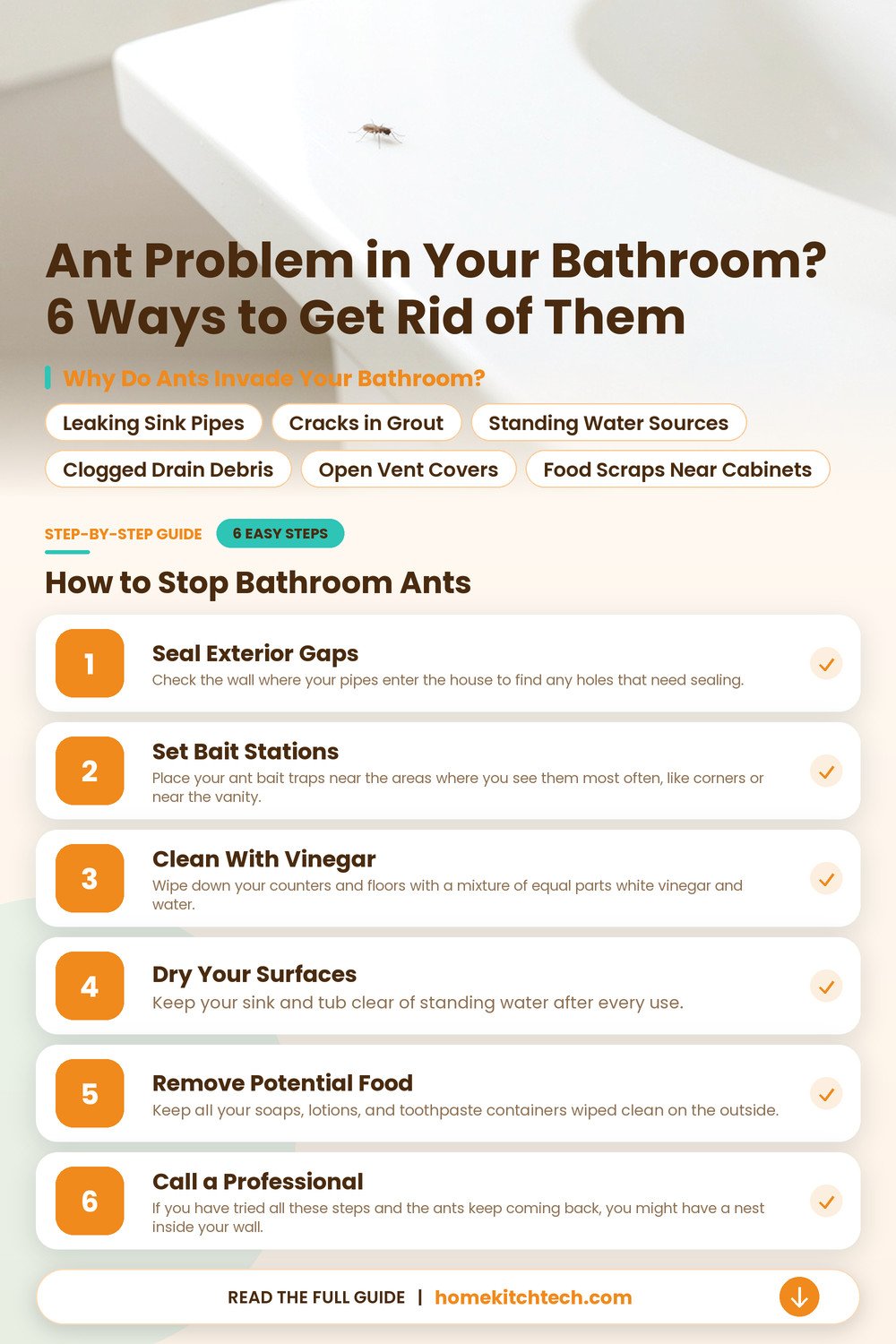
Why Do Ants Invade Your Bathroom?
You probably think your bathroom is clean, but ants can find water and tiny food scraps in the smallest cracks. They follow scent trails left by the first few scouts, which brings your whole room into their path. It’s frustrating, but identifying the source is the key to stopping them.
- A professional exterminator often charges $150 to $300 for a visit.
- Most bait stations cost about $5 to $10 at the store.
- Keep all sprays far away from kids and pets at home.
- You should read the product label before using any chemical bait.
Leaking Sink Pipes
You’ll see them gathered around the base of your cabinet where moisture collects from a slow drip. That damp wood acts like a beacon, so check for wet spots or soft patches. Tighten any loose joints or call a pro if the leak hides inside your wall.
Cracks in Grout
Tiny gaps in your bathroom floor tile provide a perfect highway for scouts to enter from the outside. They move through these spaces easily, especially when the weather turns dry. Fill these gaps with fresh caulk to block them from coming back inside your home.
Standing Water Sources
Your toothbrush holder or the back of your toilet can hold enough water to keep them coming. Wipe down these spots daily to remove the moisture they crave. You’ll notice they disappear quickly once you stop providing that free drink.
Clogged Drain Debris
A buildup of hair and soap in your drain creates a damp, messy environment that ants love. Use a small snake to pull out the gunk and grime that hides deep in the pipe. Clearing this out removes their favorite place to hide in your bathroom.
Open Vent Covers
Ants often crawl through your exhaust fan or vent covers to drop down into the room. Check the exterior of your house to see if the vent has a screen that keeps pests out. If it’s missing, you’ll need to install a mesh cover to stop their entry.
Food Scraps Near Cabinets
You might store shampoo or lotions near food items or trash cans that attract pests. Storing these items in sealed containers helps keep the area clear of enticing scents. Empty your trash frequently, and you’ll keep the room from smelling like a pantry to them.
How to Stop Bathroom Ants
You’ll find that handling this requires a mix of cleaning and setting traps in the right spots. It’s not a hard job, but you’ll need to be thorough to make sure they don’t find a way back in. Expect to spend about 30 minutes on your first pass.
Seal Exterior Gaps
Check the wall where your pipes enter the house to find any holes that need sealing. Use a tube of silicone caulk to fill these spots, which stops them from crawling inside your wall. Inspect both the inside and the outside of your home for these gaps. You should block every opening you find.
Stuff large holes with steel wool before you apply the caulk. This prevents them from chewing through the patch you just made. Let the caulk dry for a full day.
Set Bait Stations
Place your ant bait traps near the areas where you see them most often, like corners or near the vanity. These baits work because the workers carry the poison back to their nest. You’ll see more activity for a day or two, but that means the bait is working. Don’t spray them while the bait is out.
Wait a few days for the trap to clear the nest out. If you kill the scouts, the colony stays hidden. Let the workers finish their job.
Clean with Vinegar
Wipe down your counters and floors with a mixture of equal parts white vinegar and water. This solution cleans away the pheromone trails that tell other ants where to go. Do this every day until you stop seeing them walk across your tiles. It is a simple step that makes a huge difference.
Skip harsh cleaners that might damage your finish, as vinegar is usually safe for most surfaces. Test a small spot first if you are worried about your stone or tile. Consistency is the secret to success.
Dry Your Surfaces
Keep your sink and tub clear of standing water after every use. Ants can’t survive long without moisture, so they will eventually look for a better place to live. Take a moment to check the areas under your sink and around the base of your toilet.
A dry bathroom is much less interesting to a colony looking for a home. You’ll see their numbers drop once you remove the hydration they need. Take care to wipe the floor too.
Remove Potential Food
Keep all your soaps, lotions, and toothpaste containers wiped clean on the outside. Even a tiny bit of residue can be enough to draw them into your vanity drawers. Store these items in airtight bins if you still see them appearing after a few days. You don’t need to empty your whole cabinet.
Check your medicine cabinet too, as some products have sweet smells that act like magnets for pests. Keep the shelves clear of any spills or crumbs. Keeping things tidy is the best way to prevent a return visit.
- Call a local expert if you see them for more than two weeks.
- Ask about pet-safe options if you have animals living in your home.
- A pro can check your foundation for larger entry points you missed.
- Most pros offer a warranty on their work if the pests return.
Call a Professional
If you have tried all these steps and the ants keep coming back, you might have a nest inside your wall. A pro has access to products that you can’t buy at the store. They can safely treat your home without putting your family at risk.
Reach out to a local company for an inspection. They can find nests that are hidden behind your drywall or deep under the floor. Professional help is often the only way to get total peace of mind.
Why Does Your Old House Keep Attracting Ants?
Older homes often have settled foundations, which leave tiny gaps behind your baseboards or window frames. These hidden passages allow ants to wander inside, but you can fix them. You might notice them trailing along the floor to find a drink of water.
The moisture from your pipes, if they have a small drip, acts like a beacon for a thirsty colony. You’ll often find them congregating near the vanity, or the tub area. Once they find a reliable water source, they leave a scent trail that tells the rest of the group exactly how to reach your bathroom.
Seal worn weatherstripping around your door or windows to block these tiny invaders from entering. You should also keep an eye on the exterior siding, where utility lines enter the wall. Use long lasting caulk to seal any cracks in the foundation, and do it before the next rain.
- Older foundations shift and create gaps for ants.
- A steady water supply draws ants inside daily.
- Scent trails guide new ants to your bathroom.
- Durable exterior sealant stops future entry.
Do Different Bathroom Materials Change How Ants Act?
Ants aren’t picky, but they do love the texture of porous materials like unsealed floor tile or older wood trim. You’ll notice them hiding in the tiny spaces between tiles, where the grout has crumbled away. These spots provide a safe harbor for them to nest near your water pipes.
Check your vanity for particle board, and watch out for damp spots that make the wood soft. Ants can tunnel through this material once it starts to decay from persistent humidity. Wipe these areas with soapy water, and remove any lingering scent trails that keep them coming back to your soft wood vanity.
- Porous grout offers a perfect home for ants.
- Soft particle board allows ants to tunnel deeper.
- Damp wood attracts pests looking for moist nesting.
- Wipe surfaces to remove the scent trails they leave.
When Should You Call a Pro for Your Ant Problem?
Sometimes, the ants are coming from a large nest hidden deep inside your wall structure. If you keep seeing them after sealing every visible crack, you are likely dealing with a much bigger issue. A pest control expert has the right tools to reach places your hands can’t.
Don’t wait if you notice winged ants, which can signal a massive colony nearby. You might also find sawdust piles, which mean the ants are actually damaging your home’s framing. These signs mean it’s time to get a professional involved to protect your investment.
Reach behind your drywall or under the floorboards to find the main nest, which is often difficult to access. You can try store-bought traps, but they often only kill the workers you see. A pro can apply treatments that reach the queen and stop the cycle for good.
Keep your bathroom as dry as possible while you wait for help. Wipe down the counter and floor to remove any crumbs or sticky spots. A clean bathroom surface makes it much harder for them to find food while you work on a long-term fix.
- Winged ants often mean a large nearby colony.
- Sawdust piles indicate damage to your wall framing.
- Pro treatments reach the queen inside your walls.
- Keeping surfaces dry prevents them from finding water.
Are There Safety Mistakes That Make Ants Worse?
Avoid strong chemical sprays, as they can actually cause the colony to split and spread into other rooms. You’ll often end up with more trails than you started with, because the survivors scatter. It is better to use slow-acting baits that the ants take back to their nest.
Place your bait carefully, and never put it near your toothbrushes or towels where chemicals could rub off on your skin. Read the label to see if the product is safe for homes with kids or pets. If you aren’t sure, keep the bait inside a plastic storage container with small holes punched in the sides.
Leave the ants alone if you want to eliminate the entire group, so they carry the bait home. You want the whole nest to get treated. If you kill the scouts, the colony just sends out a new wave to find your damp water source again.
- Chemical sprays often cause the colony to scatter.
- Slow baits work better than instant contact sprays.
- Bait placement must stay away from your skin.
- Scouts carry the poison back to the queen.
How Much Does It Cost to Clear Your Bathroom Ants?
Most home fixes for this problem cost less than $30 for a few traps and a tube of caulk. You can usually find everything you need at a local hardware store in one trip. The time you spend is mostly waiting for the bait to work its magic over a week or two.
Hire a pro if you want a lasting solution, and expect to pay between $150 and $400 for a visit. You get the benefit of a total house check, not just the bathroom. It is a good trade if the ants keep coming back despite your best efforts to seal the small wall gaps.
- DIY supplies usually cost under thirty dollars.
- Professional services range from one fifty to four hundred.
- Bait takes about two weeks to clear nests.
- Seal gaps to finish the job in one hour.
Final Thoughts
Keep your bathroom dry to discourage ants from moving in. Check for tiny leaks under your sink, and wipe down the fixtures after every use. A little bit of consistent cleaning goes a long way toward making your space less inviting to pests. Bring in help if they persist, and do it before they get settled in your walls.
| Symptom | Likely Cause | Easy Fix |
|---|---|---|
| Trails on floor | Scent markers | Wipe with vinegar |
| Ants near tub | Leaking caulk | Apply new sealant |
| Sawdust on floor | Wood damage | Call a pro |
| Ants near sink | Pipe moisture | Tighten the nuts |
| Winged ants | Large nest | Use professional bait |
| Ants in vanity | Damp wood | Dry the space |
| Cracks in wall | Foundation shift | Use silicone caulk |
| Ants in grout | Missing mortar | Re-grout the tile |
Frequently Asked Questions
Is It Safe to Use Vinegar to Stop Ants?
Yes, it’s safe and effective for your home. Wipe your counters with a mix of water and white vinegar to erase their scent trails. It’s a great way to stop them from finding your bathroom easily.
Can I Use Natural Oils to Repel Ants?
You can, but it’s only a temporary fix for your bathroom. Peppermint oil might deter them, but it doesn’t solve the moisture problem in your walls. Seal the gaps if you want them to stay away for good.
Are the Ants in My Bathroom Looking for Food?
They’re usually looking for water, but they’ll grab any soap or toothpaste residue they find. Clean your sink and vanity every night, and remove these tiny snacks. Don’t leave wet items on the floor.
Do I Need to Unplug My Electronics If I Spray?
Yes, keep chemicals away from your electrical outlets and devices. Use a solid bait station instead of a spray, and don’t let any liquid get inside your wall plates.
Will a Dehumidifier Stop the Ants?
It helps by drying out the air, and it makes your bathroom less attractive to pests. You’ll find that fewer ants show up when the room stays dry. It supports your other sealing efforts.
What Should I Do If I See Ants in the Shower?
Check the caulk around your shower door, and replace it if you see any gaps. Don’t leave wet sponges or loofahs sitting in the tray. These items keep the area damp.
Can Ants Damage My Bathroom Plumbing?
They don’t eat pipes, but they can nest in the damp insulation around them. Check the area under your sink for signs of nesting if you see a lot of activity. Call a pro if you hear scratching sounds inside your walls.
