
As an Amazon Associate, I earn from qualifying purchases at no extra cost to you.
Bathroom Sink Stinks? 5 Causes Hiding in the Drain

Many times you’ll walk into your bathroom and catch a whiff of something that definitely shouldn’t be there. That funky smell usually hangs right around your sink, making you wonder what went wrong in the drain. You don’t have to live with it, and fixing it is often a quick, simple job. Plus, solving it now keeps your home smelling fresh.
Yes, you can fix this in about 30 minutes. Clear the stopper, check the trap, and flush the pipes. It isn’t hard, but it’s a bit messy, so grab some gloves and a bucket.
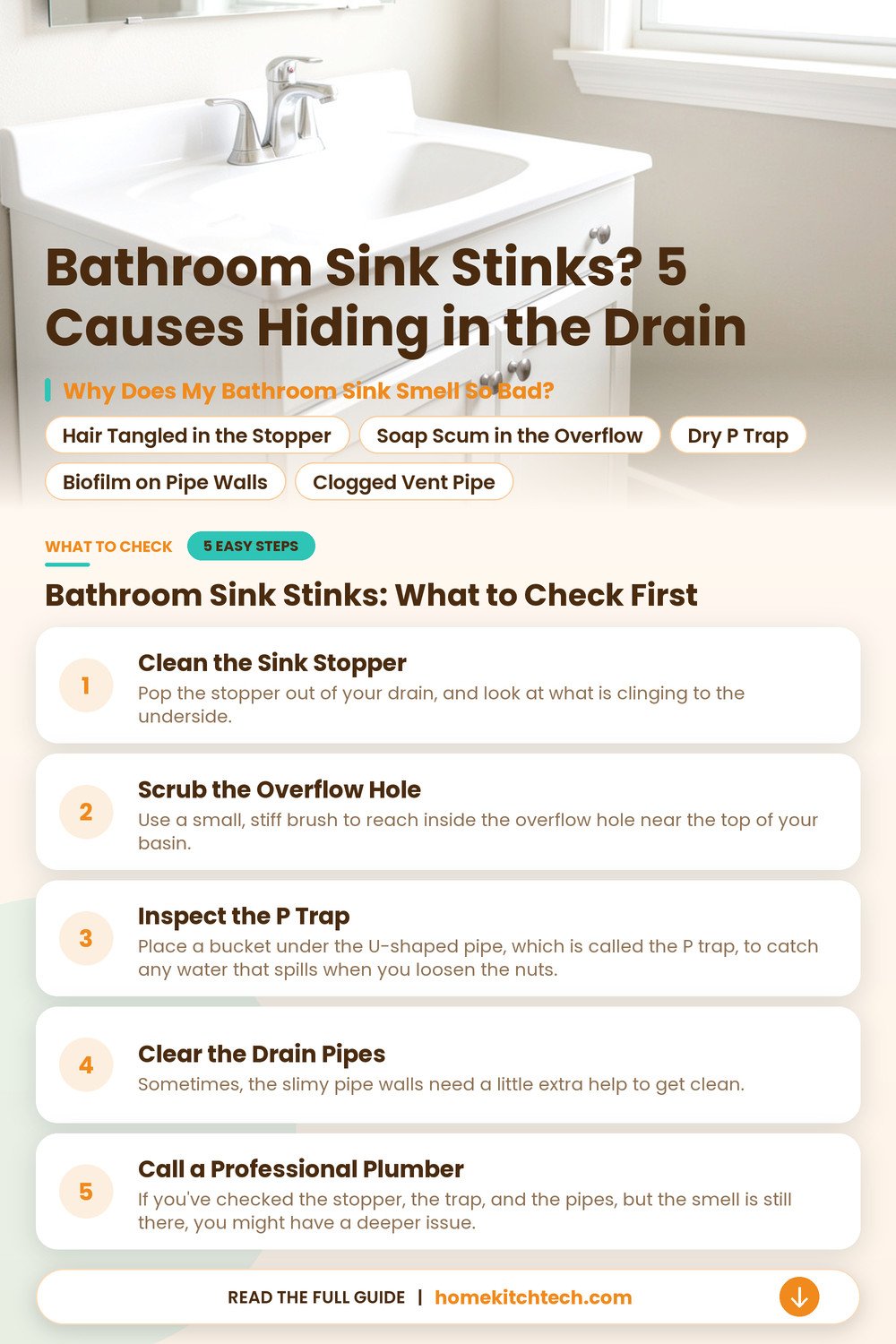
Why Does My Bathroom Sink Smell So Bad?
Your drain is a highway for water, but it also traps bits of waste that break down. You’ll notice the odor most when the air is damp, or after you’ve run the faucet for a while. It’s rarely a mystery once you know where the organic waste buildup hides.
Hair Tangled in the Stopper
Hair acts like a net, grabbing soap and skin cells as they wash down your drain. You’ll see this mass clinging to the metal or plastic parts of your stopper. It stays wet and starts to decay, which creates that sour smell you’re noticing.
Soap Scum in the Overflow
The overflow hole is the small opening near the top of your basin, which prevents spills. Water and soap splash into it, but it doesn’t get a good rinse like the main drain. That space becomes a cozy home for mold and bacteria that you can’t reach with a normal scrub.
Dry P Trap
Your drain pipe has a U-shaped bend that holds a little water to block sewer gas from entering your home. If you haven’t used that sink in a long time, the water in that bend evaporates. Once the water is gone, the pipe is open to the air from the sewer lines.
Biofilm on Pipe Walls
A thin, slimy layer called biofilm grows on the inside of your drain pipes over time. It’s made of bacteria and leftover toothpaste or soap that didn’t wash away. This layer gets thicker as it sits, and the smell grows stronger as the bacteria feed on your daily waste.
Clogged Vent Pipe
Your plumbing system has a vent on the roof that lets air in so water flows smoothly. If leaves or bird nests block that vent, your drain can’t breathe. This creates a vacuum that pulls the water out of your trap, which lets sewer gas drift back into your bathroom.
Bathroom Sink Stinks: What to Check First
You’ll start by checking the easiest spots before moving on to the pipes. Grab a flashlight and a pair of gloves, because you’re about to deal with some gross bathroom gunk that’s been sitting there for a while.
Clean the Sink Stopper
Pop the stopper out of your drain, and look at what is clinging to the underside. You will often find a thick, wet mess of hair and soap trapped at the opening. Pull this out with your fingers, or use a small tool if you prefer. Scrub the stopper clean in a separate basin, then rinse it well.
Don’t drop the stopper down the drain while you’re working. Keep a small bucket nearby to catch the mess you pull out. If the smell persists, you’ll know the issue is deeper in your plumbing.
Scrub the Overflow Hole
Use a small, stiff brush to reach inside the overflow hole near the top of your basin. You will want to dip the brush in a little soap to break up any hidden slime. Scrub the walls of that opening as best you can, because this clears out the mold. Rinse the area with a cup of liquid to flush the debris down the main drain.
If you skip this, the smell will just come back in a few days. This simple step clears out the hidden bacteria that love to grow in damp, dark places.
Inspect the P Trap
Place a bucket under the U-shaped pipe, which is called the P trap, to catch any water that spills when you loosen the nuts. You’ll need to turn the plastic rings by hand, or with a pair of pliers, to take the pipe apart. Empty the water into the bucket, and look for any solid matter trapped inside the bend. Close the shutoff valve under your sink before you start this to keep things dry. If the pipe looks clean inside, put it back together and tighten the rings snugly.
Clear the Drain Pipes
Sometimes, the slimy pipe walls need a little extra help to get clean. Use a long, flexible brush to reach into the drain pipe and scrub the sides. This knocks loose the biofilm that’s been building up for months.
- Use a stiff brush to reach deep into the pipe.
- Flush the pipe with plenty of liquid after scrubbing.
- Avoid harsh chemicals that can eat through your plastic pipes.
Call a Professional Plumber
If you’ve checked the stopper, the trap, and the pipes, but the smell is still there, you might have a deeper issue. A pro has the tools to check your roof vents and main sewer lines. They can find blockages that are too far down for you to reach.
Ask them to look for leaks in the wall, or issues with your home’s main vent. Don’t try to open walls or move heavy plumbing parts yourself. A plumber can reach what your tools can’t.
How Much Does Fixing That Stinky Sink Cost?
Most of the time, you can clear a stinky drain for under $20. A bottle of enzyme cleaner, or a simple drain snake, usually does the trick without any professional help. If you have the tools already, your cost is essentially zero.
You'll spend about 30 to 60 minutes on the job. Start by clearing your under-sink cabinet, so you have room to move and work. Once you have the space, you can get to the drain pipe assembly without much trouble.
Call a pro to handle a complex clog, or a dry trap, if it runs you about $100 to $200. Check the pipes if you can’t get the nut loose, or if you see water dripping from the wall. You'll save money by doing the easy stuff yourself.
- Enzyme cleaners break down gunk over several hours.
- Plastic drain snakes cost about $5 at hardware stores.
- Plumbers charge more for weekend or night visits.
Why Do These Bathroom Smells Return So Often?
Old pipes often hold onto smells. The walls inside get rough with age. That texture gives bacteria a perfect place to hang out and grow. Even after you scrub, a tiny bit of film usually stays behind.
Your daily habits also play a part in how fast the smell comes back. Things like heavy soaps, or oily lotions, coat your pipes. If you don’t run enough volume, that stuff just sits there and starts to sour.
- Daily habits affect how fast the film returns.
- Hard water minerals trap smells in the pipe walls.
- Daily rinsing keeps the drain clear of fresh debris.
What Should You Do When the Smell Stays After Cleaning?
If you’ve already scrubbed the stopper and flushed the pipes, you might have a vent pipe blockage on your roof. That pipe lets air into your system so water flows down smoothly. When it gets stuffed with leaves or a bird’s nest, the air has nowhere to go but up through your drain.
Check your roof for any obvious debris, but stay on the ladder and keep your feet firm. You'll need a long hose or a specialized snake to reach down into the vent. If you aren’t comfortable on a roof, call a pro to clear it.
Don’t ignore a gurgling sound when the water drains. That noise tells you the air isn’t moving right, which often means the vent is the real culprit. Get it fixed soon so your sink works like it should.
- A roof vent blockage causes nasty sewer smells indoors.
- Gurgling sounds mean your pipes lack enough fresh air.
- Pros use cameras to see deep into hidden vents.
Are There Common Mistakes That Make the Stink Worse?
Avoid pouring harsh chemicals down your drain, because it is a mistake you'll regret. Those liquids often eat away at old metal pipes, and they can cause leaks behind your wall. You'll end up with a much bigger mess than a simple bad smell.
Keep different cleaners separate, because mixing them is a big danger you must avoid. Combining bleach with ammonia, or acid-based drain openers, creates toxic fumes that are unsafe to breathe. Check the label before you pour anything into your drain.
Watch for leaks, and shut the main water valve off if you notice any dripping while you work. You don’t want water spraying inside your vanity while you’re focused on the pipes. Keep a bucket and old bath towels under the sink to catch any spills.
- Harsh chemicals can melt plastic or corrode metal pipes.
- Toxic gas forms when you mix different cleaning liquids.
- Always wear thick rubber gloves to protect your skin.
How Does the Age of Your Plumbing Change the Fix?
Older homes often have metal pipes that rust. They thin out over time. If your sink is decades old, be gentle when you turn the nuts on the trap. Force can easily snap a brittle pipe. This turns a small chore into a full, costly repair.
Newer homes usually feature plastic drain parts that are much easier to take apart. You can often loosen these by hand. That saves your tools for the tougher spots. Check the seal after you put it back together. Always inspect your plumbing connection points for small leaks after you finish.
Final Thoughts
A stinky sink is usually just a sign that your drain needs a little extra attention. Start with the easiest spots, like the stopper and the trap, before you try anything complicated. If the smell persists, don’t wait too long to call a pro for help.
| Symptom | Likely Cause | Easy Fix |
|---|---|---|
| Sewer gas smell | Dry P trap | Run the faucet |
| Slow drainage | Hair in stopper | Pull the stopper |
| Gurgling noise | Clogged vent | Clear roof pipe |
| Musty odor | Biofilm buildup | Use enzyme cleaner |
| Rotten egg scent | Gas leak | Call gas company |
| Mildew smell | Overflow debris | Scrub with brush |
Frequently Asked Questions
Is It Safe to Use a Plunger on My Bathroom Sink?
Yes, you can use a small sink plunger for a light clog. Just make sure you cover the overflow hole with a wet cloth so the air doesn’t escape while you push.
Can I Use Boiling Water to Clear a Smelly Drain?
It’s best not to, because boiling water can crack your porcelain sink or warp plastic pipes. Use warm tap water instead to flush out the soap and grime.
Do I Need Special Tools to Remove the P Trap?
You don’t need fancy tools, as most P traps have hand-tightened nuts. If yours is stuck, use a pair of channel-lock pliers and a towel to protect the finish.
Are Enzyme Cleaners Better Than Chemical Drain Openers?
Yes, they’re much safer for your pipes and the environment. You'll wait longer for them to work, but they won’t eat through your plumbing over time.
Should I Call a Plumber If the Smell is Everywhere?
You should call a pro right away if the smell is in every drain. This might mean your main sewer line has a break, which is a major job.
What Does a Sulphur Smell Mean in My Bathroom?
It usually means your P trap is dry or your vent is blocked. Check the trap first, as it’s the easiest thing for you to fix today.
