
As an Amazon Associate, I earn from qualifying purchases at no extra cost to you.
Remove a Bathroom Sink Plunger (Pop-Up Stopper): 4 Steps

Someone is standing in your bathroom right now, staring at a sink that won’t drain because the stopper is stuck. That pesky plug, which keeps your water in the basin, often traps hair and soap scum until it refuses to budge. You’ll need to reach under the vanity to free it. Grab a light and a bucket, then follow these steps to get your drain moving again.
You can remove your sink plunger in about 15 minutes, provided you loosen the pivot nut under the pipe. This part connects the rod to your stopper and holds everything in place. Once you unscrew that nut, the rod pulls out and the stopper lifts right out of the drain. It’s a bit fiddly, but you’ve got this.
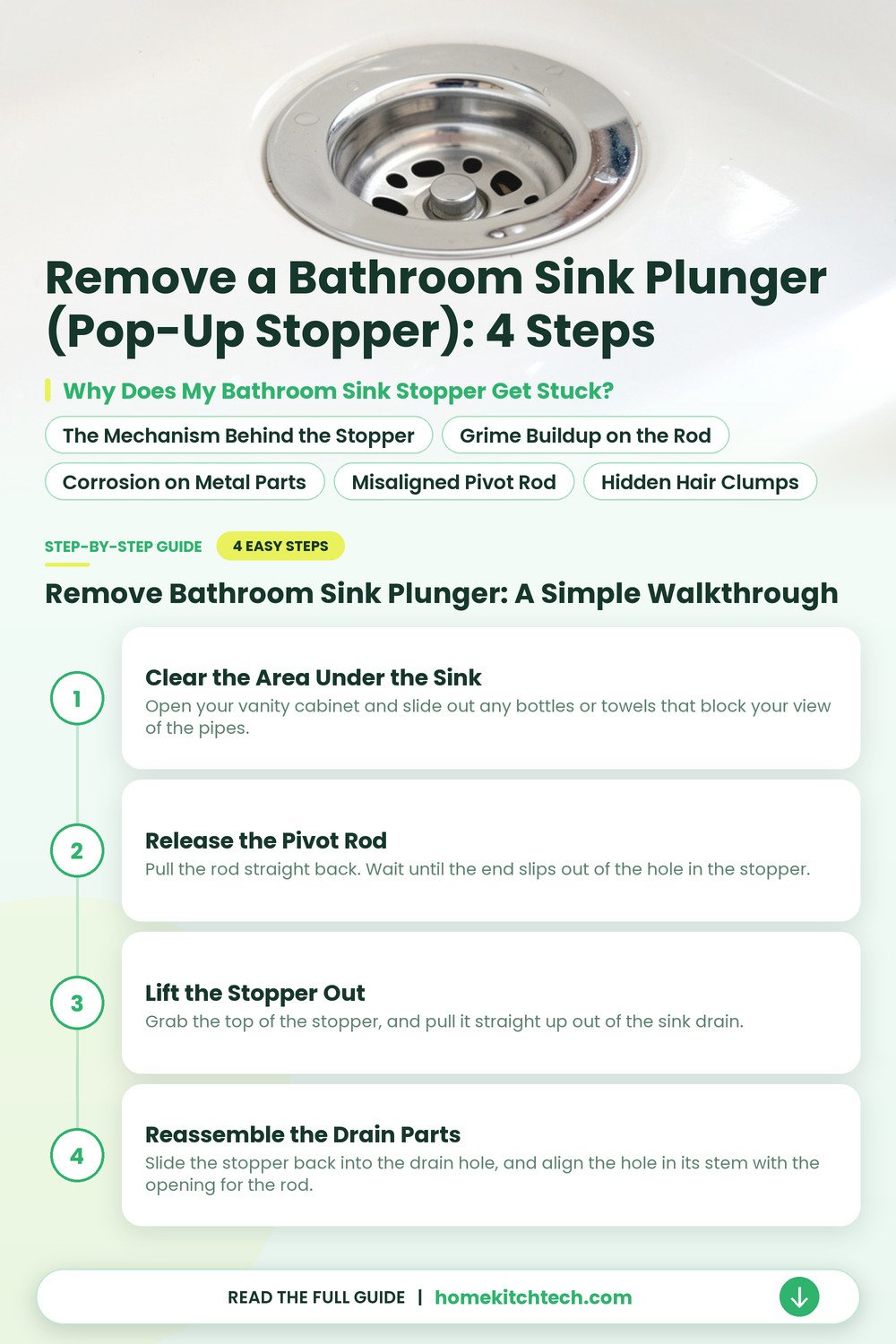
Why Does My Bathroom Sink Stopper Get Stuck?
Your drain stopper hangs onto gunk, because it sits right in the path of everything you wash down the sink. Bits of hair and soap buildup create a thick, sticky mess that catches on the metal parts. You’ll need to pull it out to get your drain working.
The Mechanism Behind the Stopper
Your pop-up stopper stays put because a small rod pushes it up and down from below. This rod connects to a pivot ball, which acts like a hinge inside your drain pipe. If that connection gets loose or coated in grime, the stopper won’t lift high enough to let water pass through. You’ll notice the sink draining slowly, even when the handle feels like it’s working.
Grime Buildup on the Rod
A thick soap scum layer often coats the rod and the stopper base over time. This gunk creates friction, which makes the mechanism feel heavy and sluggish when you pull the lever. You’ll find that regular drain cleaners don’t touch this mess, because it’s sitting on the mechanical parts rather than inside the pipes.
Corrosion on Metal Parts
Old pipes sometimes develop rust or mineral deposits where the rod meets the stopper. These rough patches catch hair and fabric fibers, turning a small clog into a complete block. If your sink has hard water stains, you’ll likely see white crusty bits on the pivot ball. That roughness stops the rod from sliding smoothly through the pipe.
Misaligned Pivot Rod
Sometimes, the rod inside the pipe isn’t centered correctly, so it doesn’t push the stopper straight up. You’ll hear a clunk or feel a resistance when you try to move the lever, especially if the rod is bent. This usually happens if someone bumped the drain pipe under the sink while moving cleaning supplies. A simple adjustment usually fixes this, without needing new parts.
Hidden Hair Clumps
Hair is the biggest enemy of your drain, since it wraps around the pivot rod. These clumps act like a net that catches everything else you rinse down. You’ll notice the water backing up faster and faster, as the hair pile grows. Clear that out to restore your normal flow rate.
Remove Bathroom Sink Plunger: a Simple Walkthrough
You’ll need a flashlight and a pair of pliers to clear the drain. Expect to find a mess of hair and soap when you finally pull the stopper out, so keep a rag handy for the cleanup.
Clear the Area Under the Sink
Open your vanity cabinet and slide out any bottles or towels that block your view of the pipes. Place your bucket directly under the p-trap, which is the U-shaped pipe, to catch any water that spills when you open the drain. Check that the area is dry before you start turning any nuts, as you’ll want to keep the floor clean.
Use your hand to reach the pivot nut, which is the circular piece connecting the horizontal rod to the drain pipe. If it’s too tight to turn by hand, use your pliers to give it a gentle nudge. Don’t force it, or you might crack the threads on the pipe. Once the nut feels loose, unscrew it the rest of the way with your fingers.
Release the Pivot Rod
Pull the rod straight back. Wait until the end slips out of the hole in the stopper. You’ll feel a slight click as the ball releases from the drain assembly. Watch for a small plastic or rubber washer that might fall out when the rod comes loose. Keep that part safe because you’ll need to put it back exactly where it was later on.
If the rod doesn’t move easily, wiggle it gently while pulling. Avoid yanking it because the metal rod can bend if you use too much force. Once the end is free, set the rod aside on your towel so it doesn’t get lost or dirty.
Lift the Stopper Out
Grab the top of the stopper, and pull it straight up out of the sink drain. It might be stuck tight, so twist it back and forth to loosen the gunk holding it down. You’ll probably see a clump of hair stuck to the bottom of the plug. Wipe the stopper clean with a damp rag, or use an old toothbrush to scrub away the soap scum.
- Rinse the stopper under warm water to remove all the remaining debris.
- Check the rubber seal on the stopper for any tears or dry spots.
- Use a small brush to clean the inside of the drain opening too.
- Take a moment to wipe the pivot rod clean before putting it back.
Reassemble the Drain Parts
Slide the stopper back into the drain hole, and align the hole in its stem with the opening for the rod. Feed the rod back into the pipe until the tip enters the hole in the stopper. Screw the pivot nut back onto the pipe by hand until it’s snug. Turn the water on to check that everything drains well and that the nut doesn’t leak. If you see water dripping from the nut, tighten it just a quarter turn more. Test the lever a few times to make sure the stopper moves smoothly, as this confirms the drain assembly alignment.
After you verify the movement, wipe away any stray moisture on the pipe. This prevents the area from staying damp. If the lever feels stiff, try a tiny bit of plumber’s grease on the pivot ball to help it slide.
Does Your Sink Age Change How You Remove the Bathroom Sink Plunger?
Older sinks often feature metal parts that can seize up, after years of moisture exposure. You might find that the pivot rod nut doesn’t want to budge, because of mineral deposits or light surface rust. Use a pair of pliers to gain extra force, but be careful not to bend the metal threads.
Newer models frequently use plastic nuts, which you can turn by hand. These parts are less likely to corrode, so your job is much faster. Keep a firm grip, and don’t slip.
Different brands might place the drain assembly components in slightly different spots, so check the underside of your basin first. You’ll want to see exactly where the rod connects, before you start turning things. If you can’t see the connection clearly, use a small mirror to get a better look.
Why Does the Stopper Mechanism Fail Over Time?
Frequent use causes the small plastic or metal parts to wear down through constant motion. You’ll notice that the stopper doesn’t sit flat or pop up when you pull the lever. Hard water is another common culprit, as it leaves a crusty layer that interferes with the smooth movement of your sink drain lift.
Excessive heat from hot water cycles can also warp thin plastic pieces inside the drain. This causes the rod to catch on the housing instead of sliding freely. If you notice a stiff feeling when you touch the handle, it’s a sign that your parts are nearing the end of their life.
Don’t ignore a sluggish drain, which can put extra pressure on your pipes. You’ll find that regular cleaning keeps the mechanism working, but eventually, you might need to swap out the drain stopper unit. It’s just part of keeping your bathroom in good shape.
- Hard water creates mineral buildup that acts like glue on parts.
- Tiny plastic clips break after years of constant opening and closing.
- Rust forms on metal rods when water sits in the drain.
- Hair and soap scum create a thick sludge inside the pipe.
When Should You Call a Professional for Help?
Stop immediately if you try to turn the pivot nut and feel it resisting. You don’t want to twist the pipe inside the wall, which could lead to a major leak. A pro has the right tools to reach behind the basin without damaging your plumbing fixture connections.
Sometimes, the drain flange seal is so tight that you can’t loosen it with a standard wrench. If you find yourself needing to use too much force, step back and call a plumber. They can reach what your tools can’t, and they won’t risk breaking your sink.
Keep a bucket ready whenever you open a drain, just in case you catch a surprise drip. If you see water leaking near the wall or through the ceiling below, turn your water supply off at the main valve right away. It’s better to be safe than sorry when dealing with hidden plumbing leaks.
- A stuck nut often needs a specialized basin wrench for removal.
- Leaks inside the wall require a plumber to avoid water damage.
- Stripped threads on your drain pipe make a proper seal impossible.
- Cracked porcelain basins can shatter if you put too much pressure.
How Much Time and Money Does This Task Take?
You can finish this job in about 30 to 60 minutes if everything goes smoothly. You’ll need a basic wrench, a pair of pliers, and a bucket to catch any leftover water. If you have to buy a new stopper kit, expect to pay between $15 and $40 at your local hardware store.
Don’t feel like you need a garage full of tools for this quick repair. You can usually manage with what you already keep in your kitchen drawer or tool kit. Take your time, and don’t rush the process if you want to avoid extra steps.
Keep your workspace dry by laying down some old towels before you start. If you find that the project is taking longer than an hour, take a break to regroup or look up a video for your specific sink model parts. It’s better to stay calm, as rushing leads to mistakes.
- A simple stopper kit usually costs about $20 to $30.
- Hardware stores stock common parts for standard bathroom sinks.
- You’ll save money by doing this yourself instead of calling pros.
- Allow extra time if the old parts are stuck with grime.
What Are the Most Common Mistakes During Removal?
Avoid mixing different brands of drain cleaners before you start, as this is a dangerous mistake. These chemicals can react and create toxic fumes, which you definitely don’t want in your bathroom. Wear gloves if you plan to scrub the drain, and never pour anything into the pipe while you’re working on the sink drain connections.
Close the water shutoff valve, or you’ll end up with a wet floor. You’ll regret it the moment you loosen the nut and water starts spraying out. Check that the water is off by turning your faucet handle after closing the valve, as this confirms the water supply isolation.
Keep track of the small washers or gaskets that come out during the process. These tiny pieces are needed for keeping your sink from leaking once you put it back together. Lay them out on a clean towel in the order you removed them, so you know exactly where the drain assembly components go later.
Final Thoughts
Organize your workspace and keep your tools close by, so you can finish the job quickly. Focus on the pivot rod connection, as that’s where most of the trouble hides. Take your time with the metal nuts to avoid stripping the threads, and keep a bucket nearby to catch any stray water. You’ll find that a little patience goes a long way toward getting your sink working like new again.
| Symptom | Likely Cause | Easy Fix |
|---|---|---|
| Stuck stopper | Mineral crust | Vinegar soak |
| Slow drain | Hair buildup | Pull out debris |
| Leaky nut | Worn washer | Replace gasket |
| Loose lever | Stripped screw | Tighten connection |
| Stiff handle | Rusted rod | Clean and grease |
| Water drip | Loose pipe | Tighten by hand |
Frequently Asked Questions
Can I Clean the Plunger Without Removing the Whole Drain?
Yes, you can often just unscrew the pivot nut under your sink to release the stopper. You’ll be able to pull it straight out to clean off hair and grime.
Will Vinegar Damage My Sink Finish?
It depends, so test a small spot first. Vinegar is great for mineral buildup, but it can dull some metal finishes if you leave it on too long.
Are Plastic Drain Parts Better Than Metal?
They aren’t necessarily better, but they are easier to remove because they don’t rust. You’ll find that plastic parts are common in many newer homes.
Do I Need to Turn Off the Water First?
Yes, you should always shut off the water valves under your sink before opening any pipes. It’s the only way to avoid a mess if a gasket slips.
What Should I Do If the Pivot Rod is Bent?
You’ll need to replace the rod if it’s bent because it won’t move smoothly through the drain housing anymore. It’s a cheap part, and you can find it at any hardware store.
Can I Use Pliers on Plastic Nuts?
Better not, because you’ll likely crack the plastic or strip the threads. Use your hands to loosen them first, and only use pliers if you absolutely have to.
