
As an Amazon Associate, I earn from qualifying purchases at no extra cost to you.
Broan-NuTone Bathroom Exhaust Fan Repair: 6 Problems Fixed

We all know the sound of a bathroom fan that just doesn’t pull the steam out anymore. You might hear a rattling noise, notice the mirror staying fogged, or smell that damp, musty air lingering long after your shower. These machines work hard in a humid space, so they eventually wear out or get clogged with dust. Keep your fan running well by checking a few simple parts.
Vacuum the dust out to fix most common problems. Turn off the power at your breaker box, then remove the cover to clear away any lint. If the fan still struggles, check the motor or the vent pipe for blockages. You’ll likely find the problem in one of these spots, so take a look.
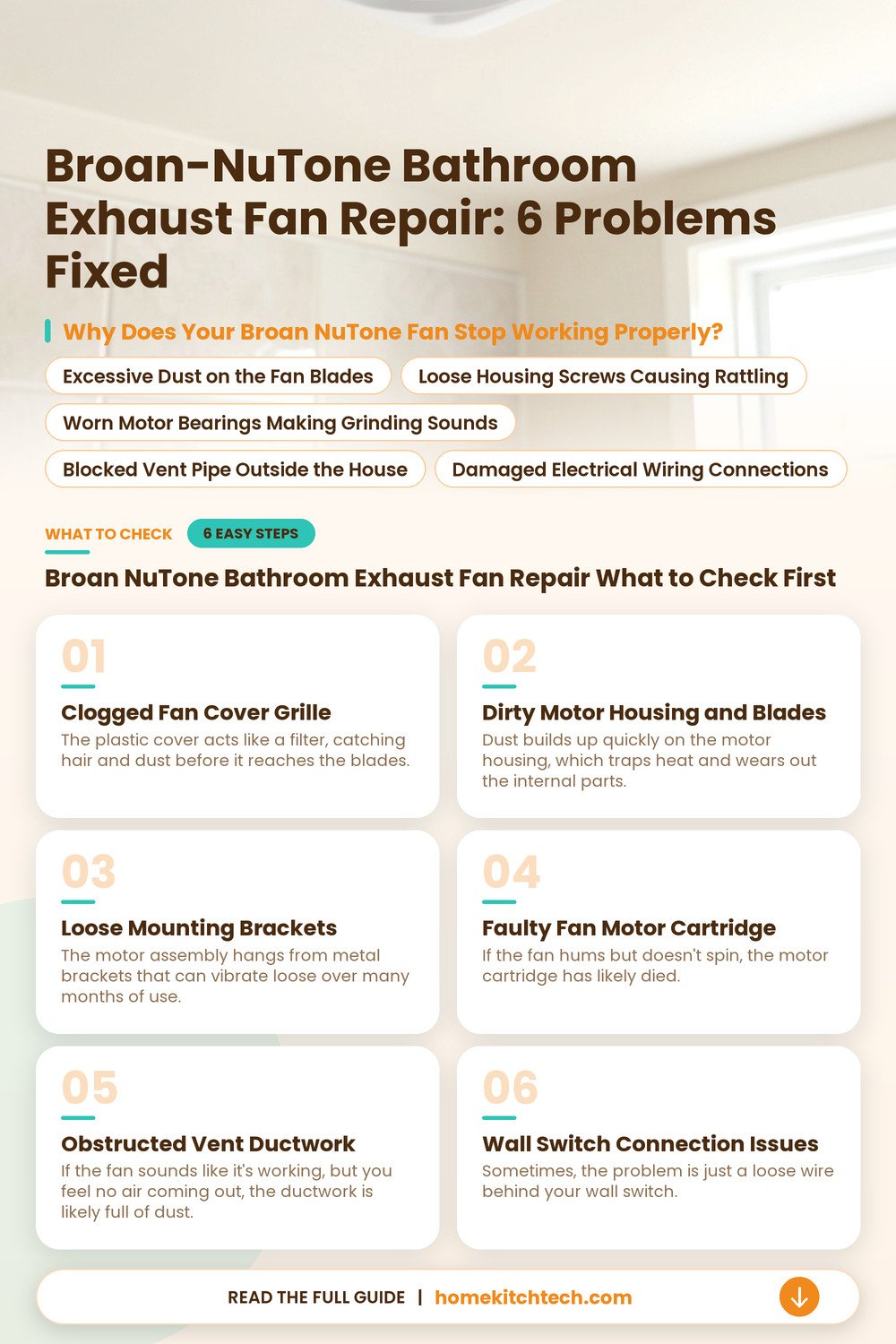
Why Does Your Broan NuTone Fan Stop Working Properly?
Your fan moves air through a small motor and out a vent pipe, but it gathers dust the whole time. You’ll find that even a thin coating of dirt slows the blades enough to ruin the suction power.
Excessive Dust on the Fan Blades
You’ll notice your fan struggling when the blades look fuzzy with gray dust. This dirt adds weight to the spinning parts, and it forces the motor to work harder than it should. Try popping off the cover to wipe the blades clean with a soft brush, but be careful. Keep water away from the motor or wires, as that leads to a short circuit. A clean fan blade spins much faster and moves more air for your room.
Loose Housing Screws Causing Rattling
A loud, metallic rattle often means the screws holding the housing in place have wiggled loose over time. Check the metal box inside your ceiling, and see if anything feels wobbly or vibrates against the joists. Tighten any loose screws you find, but be careful not to strip the metal holes. A tight housing connection stops the noise and keeps the fan sitting flat against your ceiling drywall.
Worn Motor Bearings Making Grinding Sounds
You might hear a high-pitched squeal. The motor bearings are likely failing. These tiny parts wear down after years of constant spinning, especially if the fan runs for long periods. You can’t fix a bad bearing once it fails, so you’ll need a new motor assembly. A worn motor bearing usually shows up as a steady, annoying sound that doesn’t go away after cleaning.
Blocked Vent Pipe Outside the House
The trouble might be outside. Check the exterior vent hood for bird nests, leaves, or debris. You might need a pro to clear the pipe if you can’t reach the vent from the ground. A blocked path stops your fan from pushing air out, which leaves all that moisture trapped in your home.
Damaged Electrical Wiring Connections
Burnt or loose wires can cause your fan to act up or stop working entirely. Turn off the power at your breaker first, then use a non-contact voltage tester to confirm there is no power before you touch anything. Look for signs of melting or charred plastic near the wire nuts. Call a licensed electrician if you see damaged wires, as this is a fire risk you shouldn’t try to fix on your own.
Broan NuTone Bathroom Exhaust Fan Repair What to Check First
You can usually fix these fans by cleaning the parts or replacing the motor cartridge. Grab a screwdriver, a vacuum, and a non-contact voltage tester before you climb the ladder.
- A quick cleaning often restores full power in 20 minutes.
- Expect to pay about $50 to $150 for a new motor.
- Always turn off the breaker to prevent a nasty electrical shock.
- Never use water on the motor or any electrical contact points.
Clogged Fan Cover Grille
The plastic cover acts like a filter, catching hair and dust before it reaches the blades. Pull the cover down, and wash it in warm, soapy water to remove years of grime. Make sure the cover is completely dry, and then snap it back into place. A clean grille lets your fan pull air freely again.
If you see heavy lint buildup on the plastic slats, use a vacuum with a brush attachment to pull it out. Don’t force the plastic clips when you remove the cover, or they might snap. If the clips look brittle, be extra gentle so you don’t have to buy a replacement cover.
Dirty Motor Housing and Blades
Dust builds up quickly on the motor housing, which traps heat and wears out the internal parts. Use a vacuum to suck the dust out of the motor vents while the fan is off. Be careful not to bend the metal blades or the housing, as even a tiny dent makes the fan shake. A clean motor stays cool and lasts longer.
Use a soft, dry cloth to wipe the blades after you vacuum the loose dust. If you see thick, sticky grime, try a little bit of mild cleaner on a cloth, but keep it away from the motor guts. You want the blades smooth so they slice through the air without resistance.
Loose Mounting Brackets
The motor assembly hangs from metal brackets that can vibrate loose over many months of use. Check that every screw is snug against the ceiling joists, and tighten any that wiggle. If the bracket is bent, the fan will shake the whole ceiling. Tightening these keeps the fan quiet and steady. You’ll find that a firm mounting bracket makes a world of difference in how quiet your fan runs.
Faulty Fan Motor Cartridge
If the fan hums but doesn’t spin, the motor cartridge has likely died. Unplug the motor cord from the internal socket, and slide the old cartridge out of the housing. Check your owner’s manual for the exact model number so you buy the right replacement part. A new cartridge usually clips right in, which makes this a very fast repair.
Make sure the power is off before you touch the plug. If the new motor doesn’t start, double-check that you pushed the plug all the way into the socket. A good connection is the difference between a working fan and a dark, quiet ceiling box.
Obstructed Vent Ductwork
If the fan sounds like it’s working, but you feel no air coming out, the ductwork is likely full of dust. Disconnect the duct from the fan housing, and look inside with a flashlight. If you see a wall of dust, use a long brush or a shop vacuum to clear the path. A clear path lets the air move quickly out of your bathroom.
Be careful not to poke a hole in the flexible ducting while you work. If the duct is crushed or torn, you’ll need to replace that section so the air doesn’t leak into your attic. A smooth, straight path is best for moving air.
Wall Switch Connection Issues
Sometimes, the problem is just a loose wire behind your wall switch. Turn off the power, and check the connections at the switch box. If the wires look clean and tight, the switch itself might be worn out and need a replacement. Call a pro if you aren’t sure how to handle these wires.
If your breaker keeps tripping every time you flip the switch, stop immediately. That means there is a short circuit in the wiring, which is a job for a licensed electrician. Don’t ignore a tripping breaker, as it’s a clear warning that something is wrong with your electrical system.
Why Does Your Broan NuTone Exhaust Fan Stop Spinning?
Age eventually takes a toll on the electric motor assembly, which drives the fan. Over time, the internal lubricants dry out, causing the parts to seize or create a high-pitched whine. You’ll notice the fan slows down or stops entirely when this friction becomes too much for the small motor to overcome.
Heat from your daily showers speeds up this wear process inside the unit. Plus, fine bathroom dust settles on the spinning components, and it adds extra weight. Once the motor struggles, it draws more power and can trip your circuit breaker panel.
When Should You Call a Pro for Your Fan Repair?
Hire a licensed electrician if you smell burning plastic, or see charred wires near the fan housing. These signs point to an electrical short, which could lead to a fire behind your ceiling drywall. Don’t risk your safety by messing with circuits that show signs of damage.
Fix minor issues yourself, but draw the line when the wiring looks complex or melted. If you turn off the power and the fan still won’t budge after you clean it, the problem sits deeper than your reach. A professional has the right tools to trace faults inside the wall cavity space.
Call a pro if the issue isn’t the fan at all, but the switch on your wall. If you aren’t comfortable testing wires with a non-contact voltage tester, put the tools away. Hire help for an hour, as it costs less than fixing a botched repair.
How Much Does a Bathroom Fan Fix Cost?
Expect to spend between $30 and $150 for a new replacement motor cartridge, depending on your specific model. You can often find these parts online, or at your local hardware store by checking the label inside your housing. Most repairs take about 30 to 60 minutes if you have a ladder and a screwdriver.
DIY repairs save you the service fee of a pro, which usually starts around $100. If you just need a new cover or a simple cleaning, the cost stays near zero. You’ll save money by keeping the unit free of dust and debris before it fails.
Check your model number carefully before you buy any new parts for your fan. If you order the wrong size, you’ll have to deal with returns and extra wait times. Take a photo of the label inside the unit so you get the right part size match.
- Buy a replacement motor that matches your specific unit model number.
- Use a sturdy ladder to reach the fan safely without wobbling.
- Keep the power off until you check that the new part works.
- Check the manufacturer website for a manual if you feel lost.
Does the Age of Your Fan Change the Repair?
Older units often use parts that are no longer in production, so you might need a full upgrade. You’ll find that newer fans fit into the same ceiling space, but they might require a bit of extra work to secure the housing. If your fan is over 15 years old, a complete swap makes more sense than hunting for rare parts.
Newer models run much quieter, and they move air more efficiently than the older versions. You’ll appreciate the lower noise level during your morning routine once the new unit installation is complete. Plus, modern fans often have better moisture sensors that turn the device on automatically.
Measure your ceiling opening before you buy a whole new fan kit. You don’t want to cut your drywall wider, so check the dimensions first. A simple swap is much easier than patching the ceiling and painting it to match the ceiling finish texture.
What Common Mistake Makes Fan Repairs Worse?
Don’t use water or liquid cleaners directly on the motor, or the wiring. You’ll damage the delicate electrical parts, and you’ll create a major shock hazard. Stick to a dry brush, or a vacuum hose to pull out the dust and grime.
Make sure you turn off the power at the breaker box, before you touch anything inside the ceiling. It’s a simple step, but people skip it and get a nasty surprise from a live wire connection. Always confirm the power is off with your tester, before you pull the motor out of the fan housing box.
Final Thoughts
Vacuum the grille every few months to keep your fan running well. This simple habit stops dust from reaching the motor, and it prevents the parts from wearing out early. Check the screws and the cover if your fan starts making a new noise. You’ll save yourself from a complete unit replacement by keeping the unit clean.
| Symptom | Likely Cause | Easy Fix |
|---|---|---|
| Fan won’t spin | Dead motor | Replace cartridge |
| Rattling sound | Loose screws | Tighten fasteners |
| Loud grinding | Worn bearings | Replace motor |
| No air flow | Clogged vent | Clear ductwork |
| Breaker trips | Electrical short | Call electrician |
| Slow speed | Dust buildup | Vacuum grille |
Frequently Asked Questions
Can I Replace Just the Motor Without Removing the Whole Fan?
Yes, you can. Most models let you slide a new motor cartridge into the existing housing, and it takes about 15 minutes. You’ll just need to unplug the old one, and snap the new one into place.
Should I Use Oil to Fix a Squeaky Fan Motor?
Better not, because oil attracts dust and will gum up the works in a few weeks. It’s a temporary fix that makes the long-term problem worse, so you’ll need to replace the motor if it’s already making noise.
Does a Clogged Vent Pipe Affect My Fan Life?
Yes, it does. Your fan has to work twice as hard to push air through a blocked duct, which burns out the motor faster. You’ll want to clear the outside vent cap, so the air keeps moving freely.
Will a Universal Motor Fit My Old Fan?
It depends on your brand and age. You’ll likely need a specific part made by the same company, so the mounting brackets align correctly. Don’t force a motor, as it won’t fit your housing.
Are There Any Signs That the Wiring is Bad?
Yes, you’ll see scorched marks on the wires, or you’ll smell a sharp, burning odor. If your fan flickers or makes a buzzing sound, stop using it immediately. Call an electrician to check the connections.
Can I Use a Vacuum to Clean the Fan Blades?
Yes, you can. It’s the safest way to remove dust, and you won’t get liquid near the electrical parts. You’ll want to use a soft brush attachment, so you avoid bending the metal.
