
Some days your bathroom smells like a fresh spring breeze, but other times you walk in and catch a foul scent. That intermittent sewer smell is a common frustration, and it usually points to a dry trap or a venting issue. Let's look at why it's happening and how you can fix it.
The main cause is a dry p-trap that lets sewer gas sneak up your drain pipes. It's a simple failure, so you'll need to inspect your plumbing system for a gap. If that doesn’t stop the smell, you likely have a blockage in your vent stack or a loose seal somewhere else.
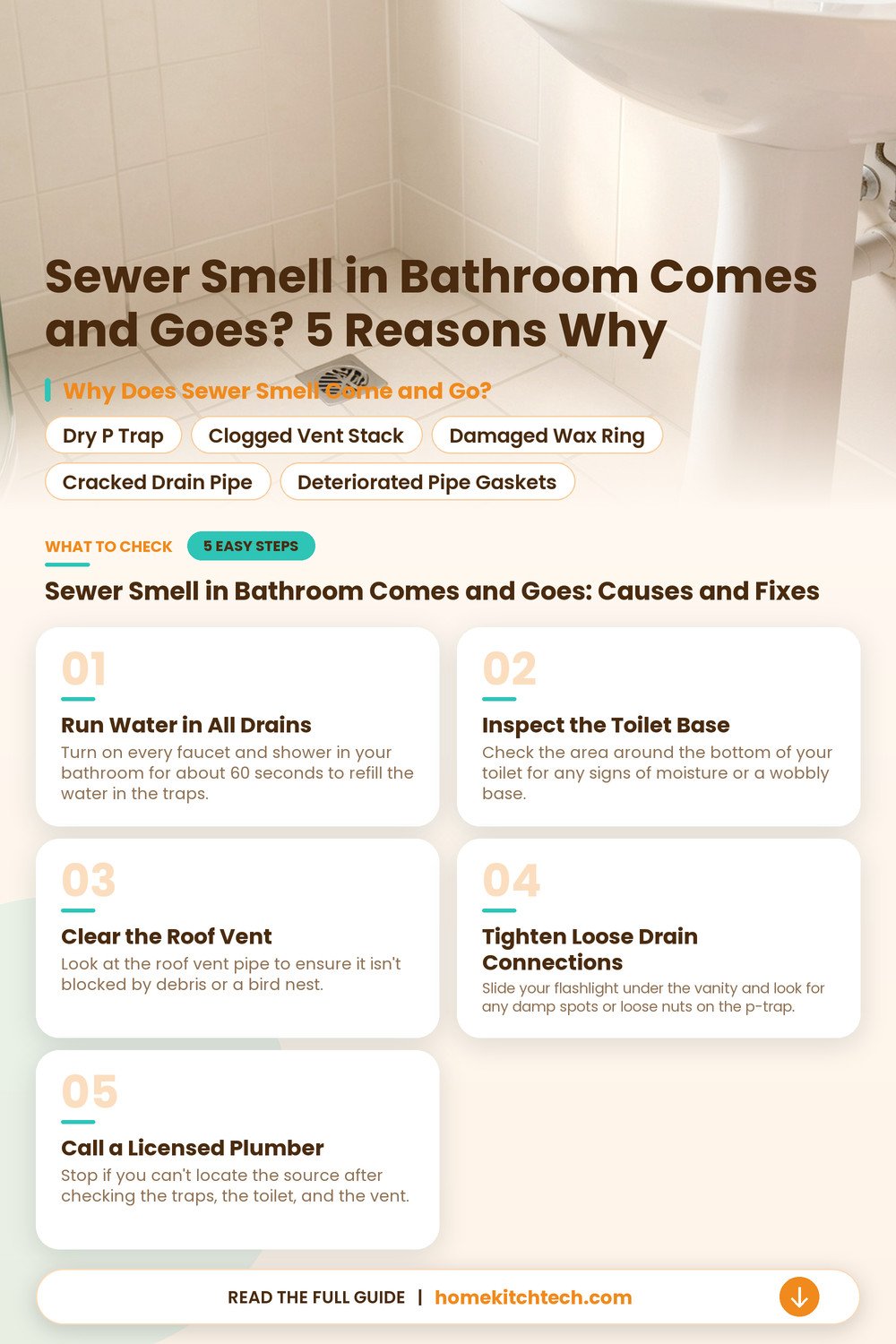
Why Does Sewer Smell Come and Go?
You might think a pipe should hold a smell inside at all times, but your home plumbing system relies on water to act as a gatekeeper. When that water evaporates or gets pushed out, the path opens wide for gas to drift into your room.
- A dry floor drain trap smells within two weeks of sitting empty.
- Most home vent stacks cost about $100 to $300 to clear professionally.
- Check your wax ring if the smell stays strong near the toilet base.
- Wear gloves and a mask if you find mold near a leaky pipe.
Dry P Trap
Every drain in your bathroom has a curved pipe section, which is designed to hold a small amount of water. This water sits in the bottom of the bend, and it blocks foul gases from entering your home. If you haven’t used the sink or shower in a while, the water dries up and leaves your bathroom drain pipe wide open for smells.
Clogged Vent Stack
Your plumbing system needs air to move water, so a vent pipe runs from your bathroom up through the roof. Leaves, bird nests, or even ice can plug this pipe, and that creates a vacuum that sucks the water right out of your traps. You'll notice the smell more often on windy days, because the air pressure changes outside your home.
Damaged Wax Ring
The toilet sits on a wax ring that seals the connection between the base and the drain pipe. If the toilet rocks, the seal fails. Gas can leak out from under the porcelain flange every time you flush, and you might not see water leaking. The smell will be strongest right at the floor level.
Cracked Drain Pipe
Hairline cracks in the pipes behind your wall, or under the floor, can leak small amounts of gas. These cracks are often hard to find, because they don’t always leak liquid water. That makes them much harder to spot. You'll need a pro to inspect the pipes if you can’t find another source for the recurring odor.
Deteriorated Pipe Gaskets
Rubber gaskets inside your drain connections can dry out, crack, or shrink over many years of service. When these seals lose their shape, they no longer fit snugly against the drain pipe connection to keep the system airtight. Temperature changes in your home can make these gaps expand and contract, which explains why the smell comes and goes.
Sometimes, a small gasket leak stays quiet until the humidity changes or the house settles. You might notice the scent only during certain seasons, or when the heat runs. You should check the plumbing pipe seals for any signs of brittle rubber or gaps.
Sewer Smell in Bathroom Comes and Goes: Causes and Fixes
You'll start by checking the easiest spots before you tear into any walls or pull up a toilet. Grab a flashlight and a bucket, but keep your tools handy just in case you need to tighten a loose fitting under your vanity.
Run Water in All Drains
Turn on every faucet and shower in your bathroom for about 60 seconds to refill the water in the traps. This is the fastest way to rule out a simple dry trap in a guest sink or a rarely used floor drain. You should see the water settle back into the curve of the pipe. If the smell returns later, you might have a slow leak that drains the trap too quickly.
Inspect the Toilet Base
Check the area around the bottom of your toilet for any signs of moisture or a wobbly base. A loose toilet breaks the wax seal and lets gas escape, which is a common source of intermittent smells. Try to wiggle the toilet gently by hand to see if it moves against the floor. If it shifts, you'll need to remove the toilet and replace the wax toilet ring to get a solid, airtight seal again.
Clear the Roof Vent
Look at the roof vent pipe to ensure it isn’t blocked by debris or a bird nest. You can often clear a clog by flushing the pipe with a garden hose from the roof. Be careful on the ladder and wear shoes with good grip. If the vent is clear, the air will move freely again and prevent the vacuum effect that pulls water out of your traps.
Tighten Loose Drain Connections
Slide your flashlight under the vanity and look for any damp spots or loose nuts on the p-trap. Sometimes, the plastic slip joints loosen up over time and let small amounts of gas escape into the cabinet. Tighten these by hand, but don’t force them or you might crack the plastic. If you find a wet spot, the washer inside is likely worn out and needs a quick swap.
Call a Licensed Plumber
Stop if you can’t locate the source after checking the traps, the toilet, and the vent. A professional has the right equipment to perform a smoke test, which pushes non-toxic smoke through your pipes to reveal hidden cracks or leaks. You shouldn’t try to fix major pipe issues inside a wall or under a concrete slab on your own. They can reach what your tools can’t and will ensure your plumbing is safe.
Does Your Bathroom Floor Material Matter for Sewer Smells?
Tile floors often hide a leaking toilet base because the moisture gets trapped under the porcelain. You might see a loose toilet that rocks when you sit down, which breaks the seal and lets gas escape into your room. Old homes with wood subfloors face a bigger risk because wood rots when it stays wet, making the gap grow wider over time.
Newer homes usually have plastic flanges that hold the toilet tight against your floor. If your installer used a thin wax ring or didn’t tighten the bolts, the gas sneaks out even if the floor feels dry. Check your floor for dark spots or soft areas, as those are sure signs that a broken toilet seal has been leaking for a while.
Why Does Weather Change Your Bathroom Odor?
Air pressure shifts outside your house can push sewer gas down your pipes and into your bathroom. You’ll notice this more when it’s windy, as the wind blows across the top of your roof vent pipe and creates a vacuum effect. It pulls air up from the main sewer line, which explains why the smell comes and goes with the changing wind.
High humidity also plays a part by keeping your drains from drying out, but it can make existing leaks smell much stronger. Your vent stack system might be partially blocked by leaves or bird nests, which stops the air from moving freely. When the air can’t escape through the roof, it finds the next easiest path, which is right through your sink drain pipe.
Are There Safety Risks with Bathroom Sewer Gases?
You should never ignore a strong, constant smell because sewer gas contains methane. It can cause headaches, dizziness, or nausea if it builds up in a small, closed bathroom. Open a window right away to bring in fresh air and clear the space before you start searching for the source of the leak.
Avoid using harsh chemicals to kill mold near a drain, because mixing them creates dangerous fumes. Wear gloves and a mask if you decide to scrub away any black, slimy growth around your drain pipe joints. If the smell makes you feel sick, leave the room and call a pro to handle the work.
Mold can grow behind your vanity if a slow leak has been dripping for months. It’s tough to see without moving the cabinet, so look for warping or peeling paint on your walls. Don’t try to rip out large patches of black mold growth yourself, as that spreads spores everywhere.
- Wear thick rubber gloves when you touch any drain parts.
- Keep the bathroom door open to help the air circulate.
- Never mix ammonia with bleach while you scrub your bathroom.
- Call a pro if you feel lightheaded or have trouble breathing.
Can You Repair Your Bathroom Drains Yourself?
Most simple fixes for a smelly bathroom drain cost less than $20, and they take under an hour. You can replace a wax ring or tighten a loose nut with just a few basic tools from your garage. It’s a messy job, but it’s well within reach if you’re comfortable with a wrench.
Purchase a new wax ring at your local hardware store, and get one for about $5 to $10. Turn off the water supply and drain the tank before you lift the toilet off the bolts. Take your time, because you want to make sure the flange is clean before you set the new ring down.
Clean the sink p trap as another job, which takes about 15 minutes. Place a bucket under the pipe, unscrew the plastic rings by hand, and dump the gunk into your trash. It’s a quick way to stop smells that come from hair and soap buildup inside the pipe.
Check the pipes behind your drywall, but call a pro if you find a crack. Fixing pipes behind walls requires special tools, and you want to prevent leaks in your floor. A plumber can reach what you can’t, so save yourself the stress and let them handle the heavy lifting.
What Are Better Ways to Find the Source?
Try a simple smoke test if you can’t find the leak by looking. You can buy a small smoke bomb or use a special testing kit that fills your pipes with thick, non-toxic smoke. If you see smoke puffing out from a wall or a base, you’ve found exactly where the gas is escaping your drain pipe system.
Stop using your bathroom for a few hours, and see if the smell fades. If it disappears while nobody uses your sink or shower, the problem is likely a dry trap that needs a fresh water seal. You should check your bathroom sink drain for any signs of slow drainage or clogs.
If the smell stays even after you clean the drains and check your toilet, you might have a hidden vent issue. A pro can use a camera to look deep inside your pipes, and they will spot cracks you can’t see. Sometimes, the fix is as easy as clearing a branch that fell into your roof vent pipe.
- Use a flashlight to look for wet spots under sinks.
- Check the toilet bolts to see if they are loose.
- Call a plumber if the smell persists after cleaning.
- Look for cracks in the pipes behind the vanity.
Final Thoughts
A sewer smell is almost always a sign that a seal or a water barrier has failed. Start by checking the easiest things like your drain traps and the toilet base, because that usually solves the problem without extra cost. If the smell persists, you should inspect the pipes in your walls for cracks. Keep your bathroom well ventilated, and stay alert for signs of leaks to prevent further damage.
| Symptom | Likely Cause | Easy Fix |
|---|---|---|
| Smell near toilet | Worn wax ring | Replace wax ring |
| Smell near sink | Dry p trap | Check water seal |
| Odor in wall | Cracked pipe | Call a plumber |
| Smell after wind | Blocked vent | Clear roof vent |
| Gurgling sound | Clogged vent | Clean roof stack |
| Damp floor | Leaking base | Tighten bolts |
Frequently Asked Questions
Can I Use Baking Soda to Stop the Smell?
Yes, you can use baking soda and vinegar to freshen your drains. It won’t fix a broken seal or a crack, but it’s great for removing odors caused by soap and hair.
Are Sewer Gases Flammable?
Yes, they can be if the concentration gets high enough in a small room. You should open your window and get out of the bathroom if the smell is very strong. Don’t light any candles until you’ve cleared the air.
Do I Need to Replace My Toilet Flange?
It depends on the condition of your existing flange. If it’s cracked or loose, you’ll need a new one to keep the toilet steady. You’ll know it’s time if the toilet won’t stop rocking even after you tighten the floor bolts.
Can a Loose Vent Pipe Cause a Smell?
Yes, a loose connection in your attic or wall can let gas leak into your home. You’ll need to check your attic, and look for any pipes that have come apart at the joints. Call a pro if you aren’t sure how to reach those pipes safely.
Will a Plumber Charge a Lot to Find a Leak?
It varies by your city, but you can expect a service call fee of $100 to $200 for a pro to inspect your system. They’ll use cameras and tools to find the leak fast. It’s often worth the cost to stop the gas from entering your living space.
Does the Age of My House Matter?
Yes, older pipes often have more cracks or rusted joints that let gas escape. You’ll want to check your drain connections more often, especially as your house gets older. A simple inspection once a year can help you catch these problems early.
Should I Pour Bleach Down the Drain?
Better not, because bleach can damage your pipes and won’t fix a mechanical leak. You’ll get better results by cleaning the trap manually, or checking your vent. Bleach is also a safety risk if it mixes with other cleaners in your drain.