
As an Amazon Associate, I earn from qualifying purchases at no extra cost to you.
Bathroom Pipes Smell? 5 Causes and How to Spot Yours

While you’re brushing your teeth, you might notice a sharp, unpleasant odor coming from the drain. It’s a common issue that ruins your morning, but you can usually fix it without much trouble. Let’s look at why your pipes are acting up.
The most common cause is a dried-out trap. You can fix this by running water to refill the pipe, so it blocks the air again. If the smell stays, you’ll need to check for clogs or a vent issue.
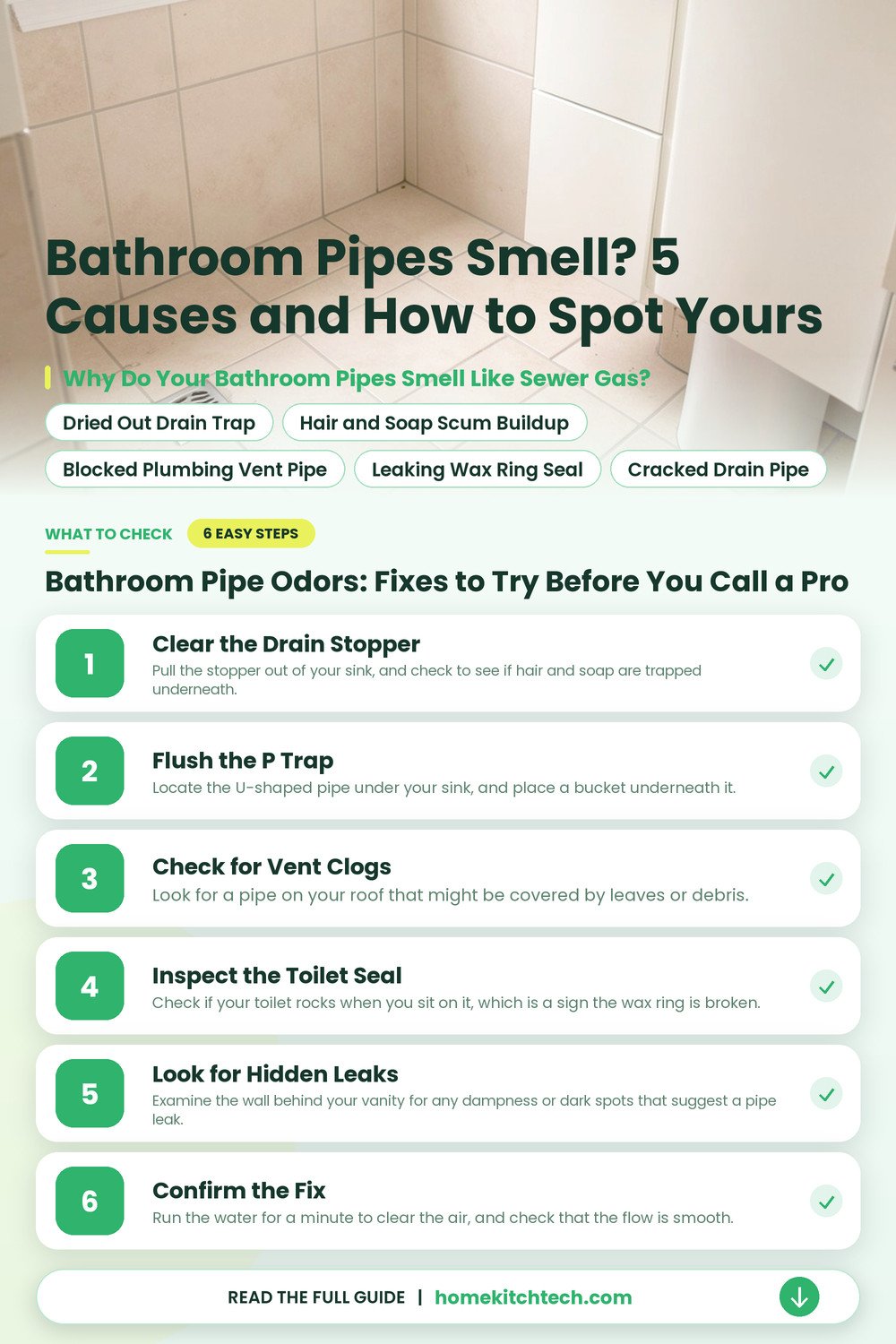
Why Do Your Bathroom Pipes Smell Like Sewer Gas?
When the seal inside your plumbing breaks or gets blocked, you’ll notice a heavy, rotten smell filling your bathroom. This odor usually means sewer gas is finding a way into your home.
Dried Out Drain Trap
Every sink has a U-shaped pipe, called a p-trap, that keeps a permanent water seal. If you don’t use that sink often, the water evaporates and leaves an open path for air to travel back up. You’ll notice the smell starts right after you walk into the room.
Water usually stays inside the curve to block the air, so keep an eye on sinks in your guest bathrooms. If you leave for a long trip, you might find a smell when you return.
Hair and Soap Scum Buildup
Hair often gets caught on the drain stopper and acts like a net for soap and skin cells. This decaying organic matter creates a thick, slimy mess that produces a sour smell as it breaks down. You’ll need to clear this out to stop the odor. Grab a pair of gloves, pull the stopper out, and remove the gunk. It’s a bit gross, but it usually solves the problem right away.
Blocked Plumbing Vent Pipe
Your home has a pipe that runs to the roof to let sewer gases escape outside, but it can get clogged by leaves or nests. When the air can’t move, it creates a vacuum that pulls the water right out of your drain traps. You’ll hear a gurgle or a glug when you use the sink or toilet. This is a tricky issue, so check your roof for debris or call a pro if you’re not comfortable climbing up there.
When the vent is blocked, the pressure changes, and that gurgling sound is the clear sign you have a problem. You’ll need to clear the top of the pipe to let the air flow freely once more.
Leaking Wax Ring Seal
If the smell is stronger near the base of your toilet, the wax ring might be failing. This ring creates an airtight seal between the floor and your toilet, so it prevents sewer gas from leaking into your home. You’ll notice a damp spot on the floor or a loose toilet when you sit down.
A damaged seal lets gas seep out, so you’ll need to lift the toilet and install a new ring. This broken wax ring is a common source of persistent bathroom odors that don’t come from the sink.
Cracked Drain Pipe
Old pipes can develop tiny holes or cracks, which allow gas to escape behind your vanity or inside a wall. You’ll notice the smell never goes away, even after you clean the drain and check your vents. These leaks are hard to find because you can’t see the pipe directly. Call a plumber to inspect your lines if you suspect a hidden pipe crack is the culprit.
Bathroom Pipe Odors: Fixes to Try Before You Call a Pro
You can usually clear these smells with a few simple tools and some patience. Keep a bucket and old towels ready before you open any pipe to catch the water that spills out.
- Pour one cup of baking soda down your drain first.
- Follow it with a cup of white vinegar for fizz.
- Wait about 15 minutes before you flush with hot water.
- Check the shutoff valve under your sink before opening anything.
Clear the Drain Stopper
Pull the stopper out of your sink, and check to see if hair and soap are trapped underneath. You’ll likely find a tangled mess that has been sitting there for weeks. Use an old toothbrush to scrub the inside of the drain opening, then rinse it well with water. This decaying organic matter is the most common reason for a sour smell in a bathroom sink.
Grab your gloves, and don’t be afraid to reach in. It’s a bit messy, but pulling out the clog will solve the problem.
Clean the stopper itself, since scum hides in the grooves. Once it’s shiny, slide it back into place.
Flush the P Trap
Locate the U-shaped pipe under your sink, and place a bucket underneath it. You’ll need to unscrew the slip nuts by hand or with a pair of pliers to remove the pipe. Clean out any sludge that has settled in the bottom of the curve, then put it back together tightly. This hidden pipe sludge is often the source of the persistent odor you’ve been smelling.
Inspect the rubber gaskets, and make sure they are seated correctly when you reassemble the pipe. A loose connection will cause a leak, so tighten the nuts firmly.
Check for Vent Clogs
Look for a pipe on your roof that might be covered by leaves or debris. If the pipe is blocked, you’ll need to clear it so the air can flow freely again. You can try to clear a small blockage with a garden hose, but be careful on the roof. If you aren’t sure how to handle this, call a professional to avoid any risk of falling.
Inspect the Toilet Seal
Check if your toilet rocks when you sit on it, which is a sign the wax ring is broken. A loose toilet allows gas to escape through the floor, and you’ll smell it every time you enter the room. You’ll need to turn off the water, drain the tank, and lift the toilet to replace the ring. If you aren’t comfortable moving the toilet, ask a friend to help you.
Look for Hidden Leaks
Examine the wall behind your vanity for any dampness or dark spots that suggest a pipe leak. If you find a leak, turn off the water shutoff valve immediately to prevent more damage to your floor. A small crack in a pipe needs a new section, which is a job for a plumber. Call a pro if you see water coming from inside the wall.
Confirm the Fix
Run the water for a minute to clear the air, and check that the flow is smooth. If the smell is gone, you’ve successfully cleared the blockage or fixed the seal. Keep your drains clear by removing hair after every few uses. If the odor returns, you might have a deeper issue with your main sewer line that needs a camera inspection.
Don’t ignore a smell that comes back quickly after you’ve cleaned everything. It could mean your vent system needs a professional look.
Why Does Your Bathroom Faucet Water Smell Like Rotten Eggs?
When your water comes out smelling bad, the problem usually starts inside your water heater tank. Bacteria can grow when the water sits for too long, especially if you have a magnesium rod that breaks down over time. This reaction creates hydrogen sulfide, which travels through your pipes and right out of your faucet.
If the smell only happens with the hot water, that confirms your tank is the culprit. You can try turning the heat up to 140 degrees Fahrenheit for a few hours to kill the bacteria, then flush the tank to clear out the remaining sediment. It’s a simple fix that often solves the issue.
Your cold water shouldn’t smell like eggs, so call a plumber if you notice it there too. That might mean your well or local water supply has a water contamination issue. Don’t ignore a persistent smell, as your safety matters more than saving a few bucks on a service call for a foul water odor.
Can You Fix Pipe Odors Without a Plumber?
Most drain smells come from simple blockages, which you can clear on your own. You just need a few basic tools like a bucket, a pair of gloves, and some patience to get the job done. Expect to spend about 30 to 60 minutes working underneath your sink to reach the p-trap drain assembly.
Buy a new part if you see rust, which usually costs under $20 at your local hardware store. If you have to replace a rusted pipe or a worn washer, that price might climb closer to $50. You’ll find that just clearing out the gunk is enough to make the smell vanish.
Start by placing your bucket under the pipes, and catch any water that spills out. Unscrew the plastic rings by hand, but skip the pliers because they can easily crack the older plastic parts. Scrub the inside of the pipe with a stiff brush to remove the buildup that causes the stink.
If the smell stays after you clean the pipe, check your vent stack on the roof. Debris like leaves or bird nests can block the airflow, which forces sewer gas back down into your home. A pro can reach what your tools can’t, so don’t hesitate to call one if you’re stuck with a persistent sewer smell.
- Wear thick rubber gloves to protect your skin from bacteria.
- Keep a towel handy to wipe up drips under the cabinet.
- Tighten the slip nuts by hand to avoid cracking the plastic.
- Check for leaks by running water after you reassemble everything.
What Factors Cause These Smells to Develop?
Age is the biggest player, as your pipes get rougher on the inside as they get older. Soap scum and hair cling to those rough spots, creating a perfect home for smelly bacteria. Hard water also leaves mineral deposits that trap debris, making the pipe sludge buildup grow much faster than it would with soft water.
Your own habits change how often you need to clean your drains. Thick lotions and heavy hair products can coat the pipe walls, so rinse your drains well after you use them. Once that waxy drain paste forms a layer inside your pipes, it won’t go away on its own, so you’ll eventually need to scrub it out.
Does the Pipe Material or Brand Change the Repair?
Older homes often have metal pipes that corrode and trap smells inside the pitted surface. Plastic pipes, which are common in newer builds, stay smoother but still catch hair and debris. You’ll need to be extra careful with metal threads, as they can cross-thread or snap if you force them too hard during your repairs.
Some high-end sink designs use a hidden overflow channel that you can’t easily reach. This area collects grime and mold, which causes a smell that seems to come from nowhere. Use a long, flexible brush to reach into these small gaps and clear out the hidden mold growth.
If you have a specialized drain stopper, check your manual before you pull it out. Some brands require you to unscrew a tiny set screw before the stopper will release. Don’t force the handle, because you might break the mechanism and lead to a costly repair for your sink hardware parts.
- Metal pipes require gentle handling to avoid stripping the threads.
- Plastic parts are easier to replace but prone to cracking.
- Hidden overflows need a thin brush to reach the mold.
- Check the manufacturer guide for your specific sink stopper model.
What Common Mistakes Make the Smell Worse?
Avoid using harsh drain cleaners in your sink, as they often ruin your pipes. These strong chemicals generate heat, which can warp plastic and eat away at the metal inside your wall. You’ll end up with a bigger problem, like a leak, that costs much more to fix than a simple cleaning job.
Never mix different cleaners, as that error creates toxic fumes in your bathroom. Don’t pour bleach into a drain that already has an acidic cleaner or a commercial product inside it. Keep your workspace ventilated, and run your bathroom exhaust fan while you work.
Another issue is forgetting to check for leaks after you finish cleaning. If the trap stays loose, sewer gas will rise straight up into your room. Tighten your nuts, and dry everything off to make sure the seal is holding those bad drain smells away.
- Read the label on any cleaner before you use it.
- Keep your face away from the drain while you work.
- Use a bucket to catch waste instead of pouring it out.
- Call a plumber if you smell gas near your lines.
Final Thoughts
You can usually trace a bathroom smell back to a simple blockage or a dried-out trap. Take your time to clean the parts thoroughly, and tighten every connection to keep the seal strong. If the odor continues even after you scrub everything, don’t keep guessing. Call a local plumber to check for deeper issues in your vent lines or your main sewer system, as they have the tools to find hidden problems.
| Symptom | Likely Cause | Easy Fix |
|---|---|---|
| Sewer gas smell | Dried p-trap | Run the faucet |
| Rotten egg water | Tank sediment | Flush the tank |
| Slow drain flow | Hair and soap | Use a drain snake |
| Musty cabinet odor | Leaking pipe joint | Tighten the nut |
| Constant gurgling | Blocked vent pipe | Clear the roof |
| Strong chemical scent | Old drain cleaner | Rinse with water |
Frequently Asked Questions
Is a Sewer Smell Always a Major Leak?
Not necessarily, as it’s often just a dry trap or a clogged vent. You should check the simple things first, but call a pro if you can’t find a clear source. Don’t assume the worst until you’ve looked under your sink for signs of water.
Can I Use Bleach to Clear the Smell?
It’s best not to, because bleach can damage your pipes and won’t remove the physical gunk causing the odor. You’ll have better luck with a brush and some dish soap. Skip the harsh chemicals to keep your plumbing in good shape.
Are My Pipes Too Old to Clean?
No, but you must be gentle when you take them apart. If you see deep rust or cracks, it’s time to replace them instead of just scrubbing. You’ll save yourself a headache by swapping out old, brittle metal for new plastic parts.
Do I Need to Turn Off the Water?
Yes, you should always shut off the valves under your sink before you open any pipe. It prevents a mess and keeps you from dealing with a flood in your bathroom. Don’t forget to keep a bucket handy for the leftover water.
How Do I Know If the Vent is Blocked?
You’ll hear a gurgling sound when you drain your sink, or when you flush your toilet. That noise means your system is trying to pull air from the drain, instead of the vent. Check your roof for debris if the sound happens every time.
Can a Bad Wax Ring Cause Pipe Smells?
Yes, a broken seal under your toilet lets sewer gas escape into your bathroom. You’ll often see the toilet rock, or feel moisture near the base if this is your problem. You’ll need to pull the toilet to replace the ring.
Should I Use a Snake or a Plunger?
A plunger works well for simple clogs, but a snake is better for deep hair piles. Use the plunger first to save yourself some time and effort. Don’t force either tool if you feel resistance, as you might damage the pipe.
