
As an Amazon Associate, I earn from qualifying purchases at no extra cost to you.
Bathroom Blinds Broken? 5 Quick Fixes Before You Replace Them

Whether you want more privacy or just need to block the afternoon sun, a stuck set of blinds is a real headache. You probably notice the trouble when you try to lift or tilt them, but nothing happens. It’s frustrating to deal with, and you don’t need a new set quite yet. Let’s look at why your blinds are acting up.
You can usually fix stuck blinds by checking the lift cords or the tilt mechanism for tangles. Start by pulling the blinds down slowly, so you can see if a cord is snagged. If that doesn’t work, inspect the headrail for broken clips or debris, as most issues are simple mechanical snags that you can clear in a few minutes.
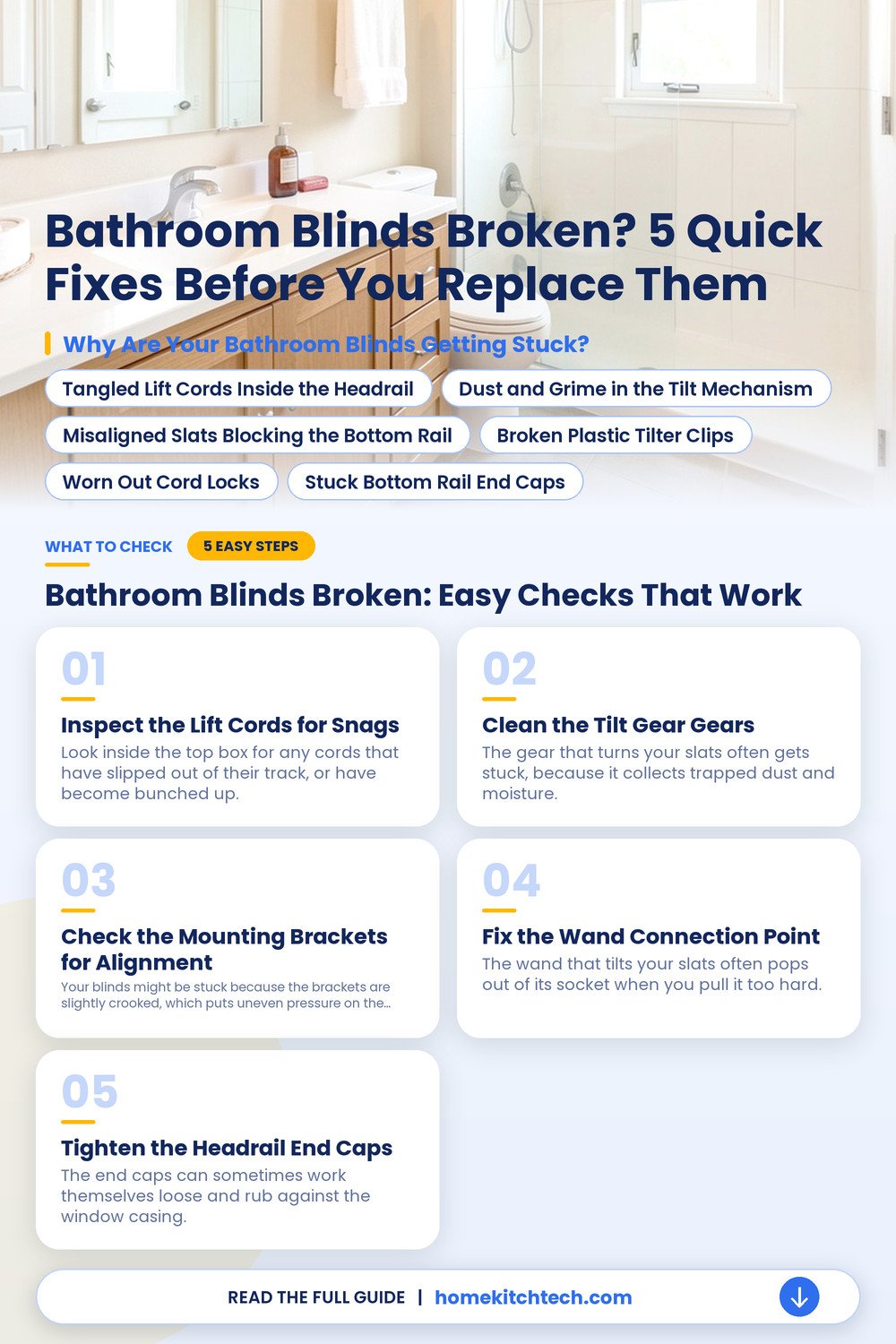
Why Are Your Bathroom Blinds Getting Stuck?
Your blinds take a lot of abuse in a bathroom, where moisture and heat are constant. You’ll often find that the plastic mounting brackets or the internal gears get gummed up over time. It’s rarely a complex failure, so you can usually spot the problem by looking closely at how they hang.
- A quick cleaning helps free up sticky tilt gears.
- Expect to spend about 10 minutes on a basic check.
- Keep your hands clean to avoid leaving oils on fabric.
- Replacement parts often cost less than 15 dollars total.
Tangled Lift Cords Inside the Headrail
When you pull the cord and the blind moves unevenly, you have a tangle inside the top box. You should take the blinds down, so you can get a good look at the spools. If one cord is wrapped over another, gently unwind it until the tension feels even again.
Dust and Grime in the Tilt Mechanism
The tilting gear sits right at the top, and it collects dust that turns into a paste with humidity. You can wipe this area with a dry cloth to clear the path for the gears. If it still feels stiff, a tiny drop of silicone spray helps everything move smooth again.
Misaligned Slats Blocking the Bottom Rail
Sometimes, the slats just aren’t sitting straight and catch on the side of the window frame. You can gently push the slats toward the center, so you can see if that clears the path. It’s a common issue after you’ve tilted the blinds a few times in a row.
Broken Plastic Tilter Clips
The little clip that connects your wand to the tilt rod often snaps after a few years. You’ll notice the wand spins, but the slats stay put. Check if the plastic teeth are worn down, as you can often slide a new clip right onto the rod.
Worn Out Cord Locks
If the blinds won’t stay up, the cord lock mechanism has likely lost its grip on the string. You see a small metal pin that isn’t biting into the cord like it used to. Try cleaning the cord with a damp cloth, since soap scum can make the string too slippery to hold.
Stuck Bottom Rail End Caps
The end caps on the bottom rail can scrape against your window trim, and they stop the blind from moving. You see scuff marks on the paint where the rail is dragging. Use a bit of sandpaper to smooth the plastic edge, so it clears the frame without catching.
Bathroom Blinds Broken: Easy Checks That Work
You find that most minor issues with your blinds respond well to a little bit of patience and a steady hand. You don’t need a toolbox full of fancy equipment, as a screwdriver and a damp cloth are enough to get things moving again.
Inspect the Lift Cords for Snags
Look inside the top box for any cords that have slipped out of their track, or have become bunched up. You can use a small screwdriver to nudge the lift cord mechanism back into its proper spot. Make sure the cord isn’t frayed, as a damaged string will keep catching on the plastic gears. Check for any knots that might be blocking the pulley, as these create tension that stops movement.
Don’t pull too hard, or you might snap the plastic spool inside the headrail. Always keep the mechanism level while you work, so you ensure the blind stays balanced when you hang it back up. If the cord looks worn, you can trim the frayed part and re-tie the knot to give it a fresh start.
Clean the Tilt Gear Gears
The gear that turns your slats often gets stuck, because it collects trapped dust and moisture. You can use an old toothbrush to scrub away any crusty debris from the teeth of the gear. If you see white or gray buildup, that’s just mineral deposits that you can wipe away with a wet cloth. Once the gear is clean, test the tilt wand to see if it turns smoothly without catching.
Don’t use heavy oil on these parts, as it just attracts more dust and makes the problem worse later on. A dry, clean gear is all you need for smooth tilting. Always keep your workspace tidy, because small parts can vanish on a wet bathroom floor.
Check the Mounting Brackets for Alignment
Your blinds might be stuck because the brackets are slightly crooked, which puts uneven pressure on the headrail. You can use a level to see if the top bar is perfectly straight across the window opening. If it’s tilted, loosen the screws just a bit, and nudge the bracket until everything looks even. Tighten the screws back down once the headrail sits level in the frame.
You notice the lift mechanism works much better when the weight is distributed evenly across both ends. If the screws won’t hold, move them to a new spot on the wood to get a better grip. Using a drill can help if the wood is very hard, but keep the speed low to avoid stripping the holes.
Fix the Wand Connection Point
The wand that tilts your slats often pops out of its socket when you pull it too hard. You can usually snap it back into place by lining up the notches on the end of the rod. If the plastic is cracked, you can use a small piece of clear tape as a temporary fix to keep it attached.
- Ensure the wand is pushed all the way into the gear.
- Check for a missing pin that holds the wand in place.
- Don’t force the wand if you feel resistance while turning it.
- Replace the whole wand if the plastic hook is completely broken.
Tighten the Headrail End Caps
The end caps can sometimes work themselves loose and rub against the window casing. You can tap them back in with a light touch, or use a tiny bit of glue to hold them in place. If they are permanently bent, you can just pull them off and leave them off, as they aren’t strictly necessary for the blind to work.
If the rail itself is bent, you can carefully straighten it with a pair of pliers and a cloth to protect the finish. Once the rail is straight and the caps are secure, your blinds should glide up and down without any more dragging or sticking.
Does Material Type Affect Your Bathroom Blinds Fix?
Metal blinds often bend when you pull them, so the slats catch on the side frame. Wood or faux wood versions are heavier, and they put more stress on the lift cord system over time. You notice the plastic components inside the headrail get brittle from constant moisture in your bathroom. Check your specific brand, as some makers use unique clips that don’t fit standard parts.
Plastic slats crack easily, so handle yours with care when you remove them to inspect the internal gears. Cloth tapes on older woven blinds can fray and jam the mechanism if they get wet too often, so keep them dry. Look for a model number on the top rail to see if you can buy a matching part for your window blind repair.
- Aluminum slats dent easily during your repair attempt.
- Heavy wood blinds need extra support for your brackets.
- Check if your warranty covers a broken cord lock.
- Match your replacement parts to the specific blind brand.
Can Poor Maintenance Make Your Blinds Worse?
Pull the bottom rail with a gentle touch to guide the bottom rail alignment, instead of using too much muscle. Forceful yanking snaps the internal strings, so stop pulling if you feel resistance. You end up with a tangled mess that is harder to fix than a simple jam, so take your time to avoid stripping the gears inside the headrail.
Moisture from your shower settles in the headrail, and it causes the metal parts to rust. If you see brown stains, the internal springs are probably seized. Don’t spray oil into the mechanism unless the manual says it’s safe, because it collects dust and creates a sticky sludge. Wipe the area with a dry cloth to clear away loose grit first.
You might be tempted to use pliers to pull a stuck cord, but that often shreds the fabric or snaps the delicate inner lines. Keep your tools simple, and stick to your fingers for most adjustments. If a part feels like it is going to break, back off and look for another way to release the tension.
- Avoid pulling hard on the cord when it jams.
- Never use heavy grease on your plastic gear teeth.
- Keep the headrail dry to prevent internal rust buildup.
- Stop immediately if you hear a loud plastic snap.
Why Do Bathroom Blinds Stick After Years of Use?
Steam from your shower is the main culprit for most window covering issues, so keep the fan running. Over time, that damp air swells the wood, or it causes mineral deposits to form on your tilt mechanism gears. Your blinds stop moving smoothly because the parts no longer fit together as they once did. Heat from direct sunlight also makes plastic clips brittle, and they become prone to snapping.
Dust mixes with the bathroom humidity to create a thick film. This gunk works its way deep into the cord locks, which makes them grip too tight. You need to clean these parts to restore the natural movement. Try a soft brush, and knock the loose debris out of the tight corners.
Frequent use wears down the small teeth on the plastic gears inside the headrail. When these teeth lose their shape, they skip over each other instead of moving the slats. You hear a clicking sound when you turn the wand, and this sign means the internal parts have reached the end of their life.
Sunlight also fades the lift cords, and it makes them lose their flexibility. Old cords stretch or shrink, which leaves your blinds hanging unevenly. If the cords look frayed or thin, they will likely break soon. Replace them before they snap inside the headrail housing unit.
- High humidity causes internal metal parts to corrode.
- Thick dust buildup jams the delicate cord lock teeth.
- Sunlight makes plastic components brittle and prone to breakage.
- Worn gear teeth cause the wand to skip clicks.
Should You Call a Pro for Your Stuck Blinds?
Some repairs require you to take the entire headrail apart, which is tricky if you don’t have the right tools. If you can’t see the source of the jam, don’t force the components open. A pro can reach what your tools can’t without bending the delicate metal housing, so you save time and you avoid buying a whole new set of blinds.
Try a simple reset first by pulling the cord all the way to one side, so you release the lock. If that fails, look for a small lever inside the headrail that you can nudge with a flat screwdriver. Be very careful around the internal tension springs, because they can pop out and get lost if you aren’t watching your work.
If you suspect the problem is electrical, leave it alone. These units have wiring that needs a steady hand, so call the manufacturer or a local specialist. You don’t want to risk a shock, or damage the motor beyond repair.
- Call a pro if the cord is knotted inside.
- Use a flashlight to inspect the hidden gear assembly.
- Stop if you feel a spring pop during work.
- Reach out to the maker for specific replacement parts.
Is It Worth Fixing Your Old Bathroom Blinds?
Repair a simple jam in about 20 to 30 minutes. If the cord is broken or the gears are stripped, you might spend $10 to $25 on parts. Compare that cost to the price of a new set of blinds for your bathroom. If your current ones are high quality, a small fix is worth the effort to keep them running.
Use basic tools like a screwdriver and a pair of tweezers to handle most minor issues. Check your local hardware store for universal cord locks or a replacement wand clip. If you find that the blinds are cheap plastic, replacing them might be faster than finding parts that fit. Decide based on how much time you want to spend on the job.
- Budget about $20 for most basic repair kits.
- Expect to spend 30 minutes on a deep clean.
- Check if your blinds are custom size or standard.
- Decide if replacement is easier than fixing the gears.
Final Thoughts
Focus on keeping your bathroom well-ventilated, so you prevent the moisture that causes most of these jams. A quick wipe of the headrail and slats after a shower keeps dust from turning into sticky grime. When you do run into a snag, take it slow and avoid forcing any part that feels stuck. Small, consistent care keeps your blinds moving perfectly.
| Symptom | Likely Cause | Easy Fix |
|---|---|---|
| Slats won’t tilt | Dirty gears | Clean with brush |
| Blind hangs crooked | Uneven cord length | Adjust cord knot |
| Cord feels tight | Dust in lock | Blow out dust |
| Wand spins freely | Stripped gear | Replace wand clip |
| Rail won’t lift | Tangled internal line | Untangle with tweezers |
| Squeaky turning noise | Dry plastic parts | Wipe with dry cloth |
| Slats won’t close | Bent side rail | Gently bend back |
| Blind drops fast | Worn cord lock | Replace lock unit |
Frequently Asked Questions
Can I Use Soap to Clean My Blinds?
It’s best to use only a damp cloth for most materials. Soap can leave a film that attracts more dust, so stick to plain water for your regular cleaning.
Are Motorized Blinds Hard to Fix?
They’re much harder because of the complex wiring and internal motor. Don’t open the housing yourself if you aren’t comfortable with electronics, as you’ll risk damage.
Do I Need to Take the Blinds Down?
You don’t have to, but it’s often easier to see the problem on a table. Lay them flat on a towel, so you don’t scratch your floor or the blinds.
Is It Safe to Use a Vacuum?
Yes, you can use the brush attachment on a low setting. Don’t use a powerful suction tool, because it can pull the slats out of their hangers.
Will a Hair Dryer Help Dry the Gears?
Better not, because extreme heat can warp plastic parts. Just let your blinds air dry in a cool spot after you wipe them down.
Does Sunlight Damage the Lift Cords?
Yes, it makes them brittle and prone to snapping. You’ll notice the color change first, which is your sign that they’re getting weak and might break.
How Do I Know If the Cord is Tangled?
You’ll feel a hard stop when you try to lift your blinds, so look inside the top rail with a light. Check to see if the cord is looped wrong, and use a tool to guide it back.
