
As an Amazon Associate, I earn from qualifying purchases at no extra cost to you.
Why Is My Bathroom Toilet Bubbling? 5 Causes to Check Now

The first thing you hear is a strange, wet sound coming from your toilet bowl. Bubbles rise to the surface while your sink or shower drains, which usually means your plumbing system is struggling to breathe. It's a bit unsettling, but you can track down the culprit with a few simple checks.
Your toilet is likely bubbling because air is trapped in your pipes. When water moves through your drain lines, it needs to pull air in from the roof vent to keep things flowing smoothly. If that vent is blocked or your main line has a clog, the air has nowhere to go but up through your toilet water.
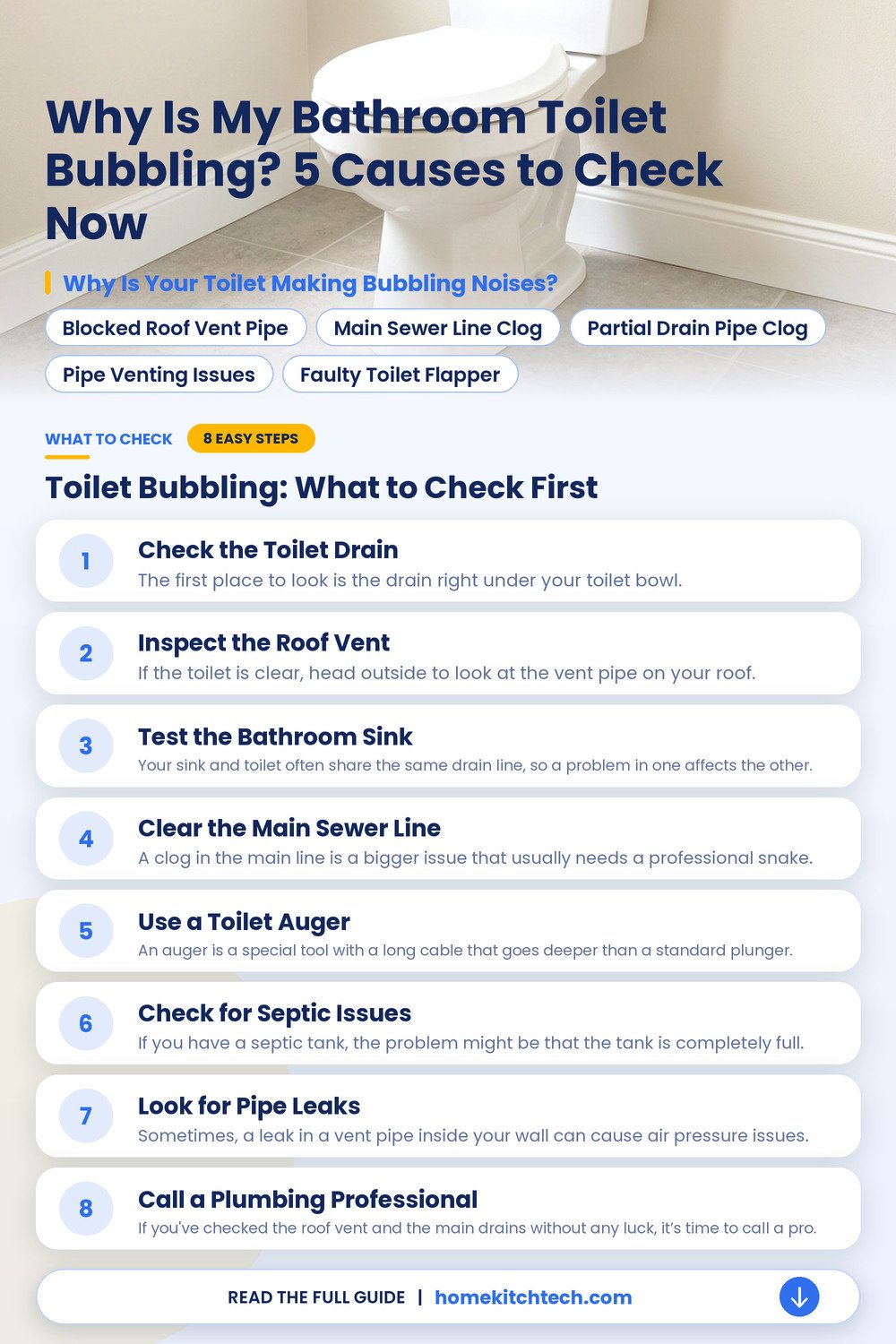
Why is Your Toilet Making Bubbling Noises?
Bubbles in your toilet mean your drainage system isn’t venting air the way it should. When water rushes down a pipe, it creates a vacuum that pulls air through your roof vent. If that vent is blocked, the system pulls air from your toilet.
- A blocked roof vent often causes air to back up in pipes.
- Local drain clogs can trap air in the line near your toilet.
- Professional drain cleaning services usually cost about $150 to $300 today.
- Never use harsh chemicals if you aren’t sure where the clog sits.
Blocked Roof Vent Pipe
Your roof vent is a pipe that pokes through your roof, and it lets fresh air into your plumbing. Leaves, twigs, or a dead bird can plug the opening. You’ll know this is the problem if you hear gurgling in every drain after you flush, as the system struggles for air. A pro can clear the roof vent pipe with a snake from the top.
Main Sewer Line Clog
The main line carries waste from your home. It can get hit with tree roots. Air gets trapped behind the mess, so you’ll hear bubbles whenever you run the laundry or take a shower.
Partial Drain Pipe Clog
A smaller clog sits down your drain, and it slows the flow without stopping it. Water passes by, but it doesn’t leave room for air to move. You’ll see the water level in your bowl rise and fall. Clear this partial drain clog with a small hand snake to get the air moving again.
Pipe Venting Issues
Some homes have plumbing that wasn’t built with enough vents, so the system struggles. Pipes might be too small, or they could miss a proper air intake near the toilet. You’ll hear the gurgle when you flush multiple toilets, or you run heavy water appliances.
Install an extra vent if your plumber suggests it to balance the air pressure in your walls. This is a big job, and it requires opening up your walls to reach the pipes. Don’t try to cut into your plumbing without a clear plan. A pro will know where the air needs to go, so they can stop the noise.
Faulty Toilet Flapper
A bad flapper doesn’t usually cause bubbles, but it can make your toilet run and sound like it's struggling. Check the rubber seal inside your tank, and see if it's worn or warped. A new part is cheap, and it usually takes about five minutes to swap out by hand.
Toilet Bubbling: What to Check First
You'll want to start by checking your main drains to see if the problem is local or systemic. If the bubbling only happens when you use one specific sink, the clog is likely in that branch line. When the whole house acts up, look toward the main line or the roof vent.
- Start by running every faucet to see which drains make noise.
- Keep a bucket and towels handy if you plan to open pipes.
- Close the shutoff valve behind the toilet to stop any leaks.
- Avoid pouring store-bought drain cleaners into a toilet with a clog.
Check the Toilet Drain
The first place to look is the drain right under your toilet bowl. If you recently flushed something too large or used too much paper, the blockage might be hiding right there. Use a sturdy plunger to push the obstruction through the trap and into the main pipe. You'll feel the resistance disappear if the plunger clears the path for the water and air.
Inspect the Roof Vent
If the toilet is clear, head outside to look at the vent pipe on your roof. You can often see debris like leaves or nests sitting right at the opening. Use a flashlight to check if you can see all the way down the pipe. If you see a blockage, a long, flexible plumbing snake can reach down to push the debris out of the way.
Test the Bathroom Sink
Your sink and toilet often share the same drain line, so a problem in one affects the other. If your sink drains slowly, that's a clear sign of a clog in the shared pipe. Take the P-trap apart under the sink to see if hair or soap scum is blocking the flow. Put a bucket under the pipe before you loosen the nuts to catch the water.
Clear the Main Sewer Line
A clog in the main line is a bigger issue that usually needs a professional snake. You’ll notice that every drain in your home is slow or making noise when you flush. Don’t waste your time with small hand tools if the clog is deep under your foundation. Call a licensed plumber to clear the main line so you don’t risk a backup in your basement.
Use a Toilet Auger
An auger is a special tool with a long cable that goes deeper than a standard plunger. It's designed to break up thick clumps of paper that get stuck in the toilet trap. Feed the cable into the drain and turn the handle until you feel the obstruction break apart. The water should flow freely once you pull the tool back out of the pipe.
Check for Septic Issues
If you have a septic tank, the problem might be that the tank is completely full. When the tank reaches its limit, the pipes have no place to drain, which forces air back into your home. You’ll notice a bad smell in the yard and very slow drains throughout the house. Call a septic service to empty the tank if you haven’t done that in a few years.
Look for Pipe Leaks
Sometimes, a leak in a vent pipe inside your wall can cause air pressure issues. If you see water spots on your ceiling or hear dripping, shut off your main water valve immediately. This is a sign that a pipe has failed and is leaking behind the drywall. Call a plumber right away because you'll need to open the wall to fix the pipe.
Call a Plumbing Professional
If you’ve checked the roof vent and the main drains without any luck, it's time to call a pro. They have cameras that can travel through your pipes to find the exact spot of the clog. You don’t want to guess where the blockage is hidden when your home's plumbing is on the line. A pro will get things flowing again without you needing to do the heavy lifting.
Is Your Bathroom Toilet Leaking While Bubbling?
Water pooling near your floor suggests your toilet wax ring has failed, which often happens when the unit wobbles. If you notice bubbles at the same time, your pipes are struggling with air pressure issues that move through the loose seal. Turn off the water supply behind the toilet first, and check the base for moisture.
Leaks aren’t always from the tank, as they could be water escaping the drain pipe due to a deep blockage. Dry the floor thoroughly, and watch for returning water after you flush. Keep a bucket and old towels nearby, since moving a heavy toilet requires a clear workspace.
Call a plumber if you find water coming through your ceiling, because that indicates a serious pipe break. Professionals have the tools to reach hidden spots, where your own reach might fail. Don’t ignore these signs, as constant moisture leads to wood rot and expensive floor repairs.
- Tighten the floor bolts first to see if the leak stops.
- Replace the wax ring if the toilet still rocks back and forth.
- Check the supply line connection for drips before removing the toilet.
- Use a flashlight to inspect the subfloor for soft or dark spots.
Why Does Your Toilet Bubble After Each Flush?
Age wears down the rubber parts inside your tank, and hard water minerals often coat the pipes, which slows the flow. These deposits trap air behind them, so the water pushes that air back up through the trap and causes a gurgle. You’ll notice this more as the buildup gets thicker over the years.
Poor habits like flushing wipes or too much paper also pack the pipes tight, leaving no room for air to escape. That pressure has to go somewhere, so it forces its way back through the water in your bowl. Try using less paper for a few days to see if the sound stops.
Sometimes, the main sewer line carries debris from outside, which creates a back-up that affects every drain in your house. If your shower or sink makes noise when you flush, the problem is definitely in the main line. Clear that path to stop the air from fighting your water flow.
- Mineral deposits build up slowly inside older metal or plastic pipes.
- Wipes labeled as flushable often cause major clogs in narrow drains.
- Tree roots can grow into underground lines and catch toilet paper.
- Hot water flushes help clear light grease buildup in smaller pipes.
How Much Does Fixing a Bubbling Toilet Cost?
Most simple fixes, like clearing a clog with a plunger or a basic snake, cost less than $20 for tools. You’ll save money by doing this yourself, since a professional visit usually runs between $150 and $350. Set aside about an hour of your afternoon, and handle the job properly.
Replace a toilet wax ring or a bad flapper for under $10 at any local shop. Spend more time cleaning up the area around the base than actually replacing the parts. Keep your workspace tidy, and avoid losing small screws or bolts.
Hire a plumber to clear a deep sewer line, as the price jumps because they bring specialized cameras and heavy equipment. They might charge by the hour, or offer a flat rate for a main line cleaning. Get a quote before they start, so you know what to expect.
- Plungers work best when you have a good seal around the hole.
- Rent a heavy-duty sewer snake for about $40 for four hours.
- Replacing a flapper takes about 15 minutes with basic hand tools.
- Keep your receipt if you buy parts, just in case you grab the wrong size.
What Safety Risks Should You Watch For?
Never mix different drain cleaners, as they can create dangerous fumes when combined with bleach or vinegar. Read the warning label on any chemical bottle, and wear rubber gloves to protect your skin. Keep the room ventilated by opening a window, and run your exhaust fan while you work.
A common mistake is using a metal rod to clear a deep clog, which can easily crack your porcelain pipes. Stick to flexible plastic tools, or a rubber-tipped plunger to stay safe. If the water doesn’t move after a few tries, don’t force it.
Heavy toilets are easy to drop, so ask a neighbor to help you move the unit if you pull it up. You don’t want to break the base, or hurt your back while trying to set the new wax seal. Clear the area of rugs and personal items first, and give yourselves plenty of room.
Turn off the water valve behind the toilet before you loosen any nuts or bolts. This prevents water from spraying across your bathroom while you work. Keep a bucket ready for the water that stays in the trap, and disconnect the supply line.
- Wear safety glasses when working with chemicals to prevent splashes.
- Close the shutoff valve completely to avoid a wet bathroom floor.
- Move heavy items slowly to keep from scratching your bathroom tile.
- Wash your hands thoroughly with soap after touching any drain parts.
How Do Different Toilets Affect Your Fix?
Older homes often have cast iron pipes that rust from the inside, which makes them rough and prone to catching waste. You’ll find that these pipes need more careful cleaning than modern PVC, as they crack if you use too much force. Check the pipe material before you start pushing a snake through the line.
Brand-name toilets sometimes use proprietary parts for the fill valve or the handle, so check the manufacturer’s website for specific replacements. You’ll want the exact fit to keep the water pressure steady and quiet. Don’t force a generic part into a system that needs a custom seal.
- Cast iron pipes require gentle cleaning to avoid causing leaks.
- Modern PVC pipes handle plastic snakes much better than metal ones.
- Check your owner manual for the specific flapper model you need.
- Well water often causes faster mineral buildup than treated city water.
Final Thoughts
Air trapped in your pipes causes the bubbling, which means your system can’t breathe properly. Check your roof vent for leaves or bird nests first, as that’s a common and simple spot to clear. Look into your main drain line for deeper blockages if the noise continues. Fix these issues early, and keep your bathroom plumbing running smooth and quiet.
| Symptom | Likely Cause | Easy Fix |
|---|---|---|
| Toilet gurgles | Air pressure trapped | Clear roof vent |
| Water at base | Worn wax ring | Replace wax ring |
| Slow flushing | Partial pipe clog | Use a plunger |
| Constant noise | Faulty fill valve | Install new valve |
| Wet floor | Leaking supply line | Tighten the nut |
| Bubbles everywhere | Main sewer clog | Call a plumber |
Frequently Asked Questions
Can I Use a Chemical Cleaner for Bubbling?
Better not, because chemicals often sit in the pipe and don’t fix the air pressure issue. You’ll likely just create a dangerous mess if the drain is already backed up, so stick to a plunger or a snake instead.
Will a Blocked Roof Vent Cause Bubbles?
Yes, it’s a very common reason for your toilet to make noise. If the vent is clogged, your pipes can’t pull in fresh air, so they grab it from your toilet bowl instead.
Should I Call a Plumber If Only One Toilet Bubbles?
It depends, but you can try to plunge it first. If you don’t see any change after a few tries, you should call a pro to check for deeper issues in your pipes.
Do I Need to Turn Off the Water Before Plunging?
No, you don’t need to turn it off for a simple plunge. Just make sure the water level is high enough to cover the head of your plunger so you get a good seal.
Is It Safe to Use a Metal Snake on My Toilet?
Better not, because you might scratch the porcelain or crack the pipe. You should use a closet auger, which is designed with a protective sleeve to keep your toilet safe.
How Do I Know If the Main Sewer Line is Clogged?
You’ll know if your shower, sink, and toilet all bubble at the same time. If flushing the toilet makes water rise in your shower, it’s a main line clog.
Will a New Wax Ring Stop the Bubbling?
No, a wax ring only seals the base to your floor. If your toilet bubbles, it’s an air pressure problem in your pipes that a new ring won’t fix.
