
As an Amazon Associate, I earn from qualifying purchases at no extra cost to you.
Bathroom Plumbing Problems: 10 Issues You Can Spot and Fix

Each time you notice a slow drain or a pool of water on your floor, you have a plumbing problem that needs your attention. You rely on a hidden network of pipes to move water away, but these systems often develop clogs or loose connections over time. Addressing these signs early prevents bigger, messier repairs later. Let’s look at how to get your bathroom back to normal.
Most bathroom plumbing problems start with simple clogs or loose connections. You'll find that a plunger, a small drain snake, or a wrench handles the majority of these issues in about 30 minutes. If water is leaking inside a wall or through a ceiling, turn off the main water valve and call a professional immediately.
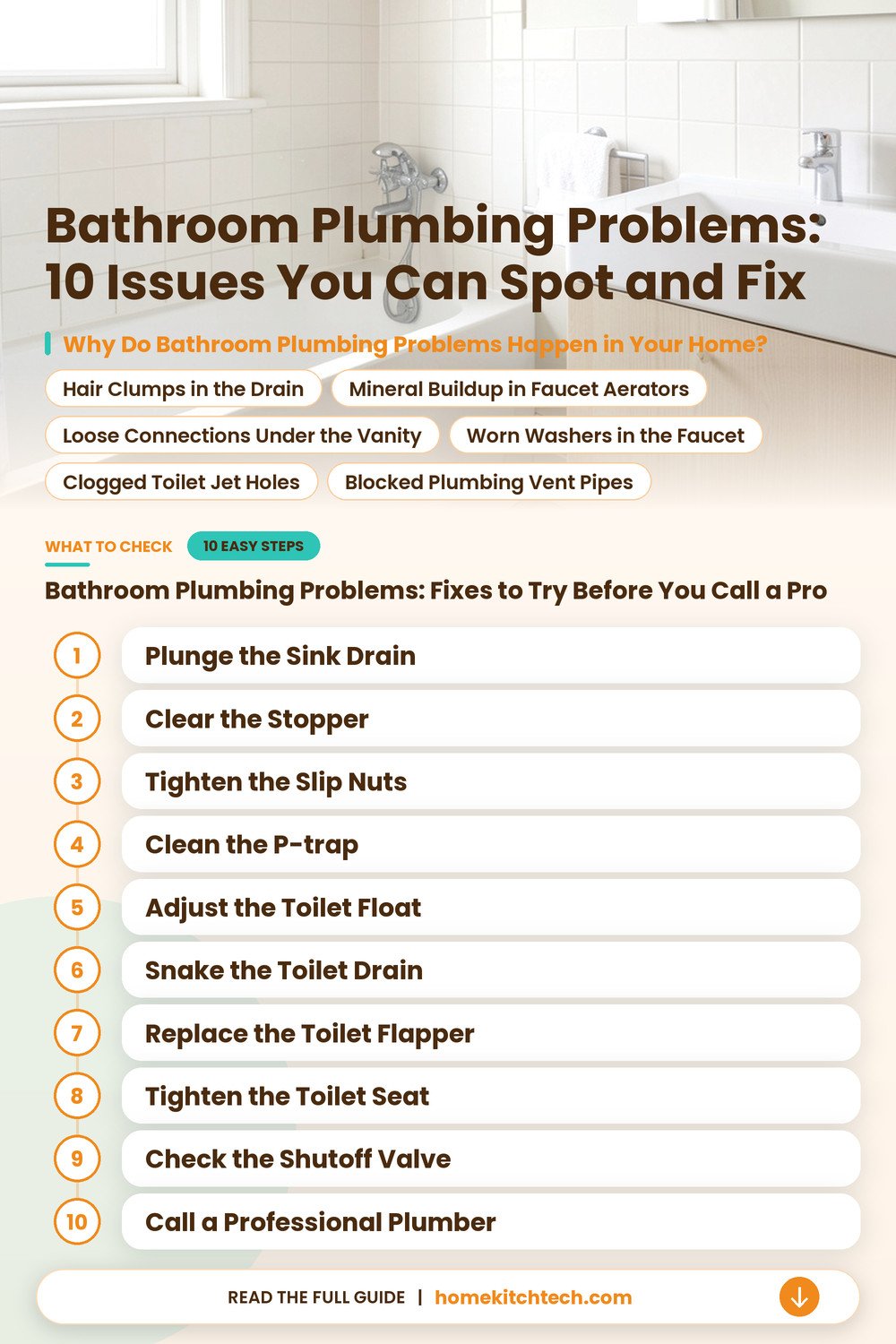
Why Do Bathroom Plumbing Problems Happen in Your Home?
Your pipes deal with a lot of debris every day, from hair and soap to paper and mineral buildup. When these things catch on rough spots or bends in the pipes, they create a dam that stops water from flowing freely. Over time, you might notice that your drains run slower or that your bathroom sink drain makes strange noises when it empties.
- A simple plunger fix takes about 5 to 10 minutes.
- Most drain snakes cost between $10 and $25 at hardware stores.
- Always wear gloves to protect your skin from bacteria in the pipes.
Hair Clumps in the Drain
Hair is the most common culprit for a slow drain because it acts like a net for soap and grime. You’ll find it wrapped around the stopper or caught just inside the pipe opening. Once it builds up, your water drains at a snail’s pace. It's a messy job, but clearing out the hair and soap scum usually solves your issue right away.
Mineral Buildup in Faucet Aerators
Hard water leaves behind crusty white minerals that eventually block the tiny holes in your faucet. You might see the water spray sideways or lose pressure because the flow is restricted. If you unscrew the tip of the faucet, you'll likely see the gunk clinging to the mesh screen. Soaking the part in vinegar dissolves the buildup, which restores your water flow to its original state.
Loose Connections Under the Vanity
Over time, the nuts on your sink pipes can vibrate loose or shift as the cabinet settles. You'll notice a small drip forming on the pipe or a damp spot on the bottom of your cabinet. Check these spots regularly, and tighten them by hand or with a wrench if you see any moisture. A dry cabinet is a sign that your connections are secure.
Worn Washers in the Faucet
Inside your faucet, small rubber washers create a tight seal to stop water when you turn it off. When these wear out, your faucet drips constantly, which wastes water and creates an annoying sound. You can replace these inexpensive parts to stop the leak. It's a fiddly job, but it saves you from listening to that drip all night.
Clogged Toilet Jet Holes
Your toilet has small holes around the rim that help the water flush with force. If these get blocked by mineral deposits, your flush won’t have enough power to clear the bowl. You can clear them with a stiff wire or a small brush to get the water moving again. This simple fix often makes an old toilet flush like it’s brand new.
Blocked Plumbing Vent Pipes
Your system needs air to move water through the pipes smoothly, and it gets that air from a vent on your roof. If leaves or nests block this vent, your drains will gurgle and run very slowly. You'll hear a distinctive sound, like a deep cough, every time you use the sink. Since this requires climbing onto your roof, you should call a pro for this one.
Bathroom Plumbing Problems: Fixes to Try Before You Call a Pro
You’ll need a few basics like a bucket, an old towel, and a wrench to get started on these repairs. Most of these tasks take less than an hour, but keep a bucket handy to catch any water that spills when you open a pipe. If you aren’t sure about a step, stop and call a plumber to avoid water damage in your home.
- Keep a bucket under the pipe before you loosen any nuts.
- Close the shutoff valve under your sink to stop the water flow.
- Get a second person to help if you need to move the vanity.
Plunge the Sink Drain
Fill the sink with a few inches of water, and block the overflow hole with a damp rag to keep the suction strong. Place your rubber cup plunger over the drain opening and push down firmly several times. The pressure should break up the clog and let the water flow again. If it doesn’t work after a few tries, you might need a drain snake.
Clear the Stopper
Pull the stopper out of the drain to see if hair or gunk is stuck to the bottom. Most stoppers lift right out or have a small screw you can loosen under the sink. Wipe away the grime with a paper towel and rinse the stopper before putting it back. This is the fastest way to fix a drain that just won’t empty.
Tighten the Slip Nuts
Use your hands or a pair of channel-lock pliers to tighten any loose nuts on the pipes under your sink. Don’t force them too hard, or you might crack the plastic or bend the metal. A snug fit is all you need to keep the water inside the pipes. Wipe the pipe dry afterward and check it again the next day for leaks.
Clean the P-Trap
Place a bucket under the curved pipe, known as the P-trap, to catch any water trapped inside. Unscrew the nuts on both ends of the trap and slide the pipe off carefully. Dump the contents into your bucket, wash the pipe in another sink, and put it back together. Make sure the rubber washers are seated correctly so you don’t get a leak.
Adjust the Toilet Float
Open the tank lid and check if the float is set too low, which keeps the tank from filling enough for a strong flush. You can usually turn a screw or move a clip to raise the float level. Test your flush after you make the change to see if it clears the bowl better. A higher water level provides the force you need for a clean flush.
Snake the Toilet Drain
If your plunger doesn’t work, use a toilet auger to reach deeper into the drain where the clog is stuck. Feed the cable into the drain until you feel the blockage, then crank the handle to break it apart. Pull the auger back slowly to remove the mess from the pipe. Avoid using harsh chemicals, which can damage your pipes and leave you with an even bigger mess.
Replace the Toilet Flapper
If your toilet runs constantly, the rubber flapper at the bottom of the tank might be warped or dirty. Turn off the water, flush the tank, and pull the old flapper off the chain. Snap the new one in place and make sure it sits flat against the opening. A new flapper costs just a few dollars and stops the water from running all day long.
Tighten the Toilet Seat
If your seat wiggles, look under the back of the bowl for the bolts that hold it in place. Tighten the nuts by hand or with a wrench until the seat is firm again. If the bolts are rusted, you might need to replace them with a new kit from the store. A stable seat makes your bathroom feel much more secure.
Check the Shutoff Valve
If you can’t turn the water off under your sink or toilet, the valve might be stuck from years of sitting still. Try turning it gently with a wrench, but don’t force it or you might break the handle. If it won’t budge, you’ll need to call a plumber to replace the valve. This keeps you from having a major flood if a pipe ever bursts.
Call a Professional Plumber
If you have tried these steps and the water still doesn’t drain or the leak persists, it’s time to call in a pro. They have cameras to look inside your pipes and tools to reach deep blockages in the walls. Don’t keep trying if you feel out of your depth, because water damage is expensive to repair. A pro can get your home back in working order safely and quickly.
How Much Will Fixing Your Bathroom Plumbing Problems Cost?
Budget for a plumber, which usually lands between $150 and $400 for a standard visit. That price covers travel and a couple of hours for the pro to address your leaking supply lines or a stubborn backup. Tackle the work yourself, and you’ll spend far less on basic hand tools and simple parts.
Small repairs at home take about 30 to 60 minutes to complete. Grab a basic set of wrenches, a bucket, and a few towels to catch any stray drips. Consider if you have the patience for a slow, fiddly task before you commit to the job.
Call a pro if you’re staring at a major pipe break or water pooling behind the wall. A licensed expert handles these situations safely, and they bring the right gear to protect your home. They reach what your tools can’t, helping you avoid ripping out cabinets or tiles to find the source.
Save money by grouping a few small tasks together for one single service call. Pros often charge a flat trip fee, so having them tighten a faucet, fix a running toilet, and clear a slow drain at once is smart. Avoid paying that base fee three separate times for three quick jobs.
- Keep a bucket under the shutoff valve while you work.
- Expect to spend $10 to $30 on common replacement parts.
- Ask about a flat fee before the plumber starts working.
When Should You Stop and Call a Plumber for Help?
Stop working immediately if you turn the shutoff valve and the water keeps flowing. This means the valve is stuck or broken, and you need a pro to replace it before you can safely open any pipes. A stuck valve often leads to a snap, which turns a drip into a flood.
Professional help is also necessary when you see water stains on your ceiling or damp drywall near the bathroom. These signs point to a hidden pipe leak that could be rotting your floor joists or causing mold growth. Hire an expert to open the wall and fix the pipe properly.
Locate your main water shutoff in the basement or near the water meter, and label it clearly for emergencies. Call a plumber to show you where it is if you can’t find it, because a minor problem can turn into a mess. You need to be ready if a major water leak starts.
- Turn off the main water line if pipes start spraying.
- Look for water supply lines that show signs of rust.
- Hire a pro if you hear water running inside walls.
Does Using Chemical Drain Cleaners Cause More Plumbing Problems?
Harsh chemicals often make your bathroom plumbing problems worse over time. These products create intense heat that can soften or warp your plastic pipes, leading to slow leaks. They also don’t clear hair or soap buildup well, so you’ll likely face the same clog again next week.
Strong cleaners damage the finish on your decorative drain covers and faucets if they splash back. Keep them away from kids and pets. Use a mechanical method, like a plastic drain snake or a plunger, to move a blockage.
Don’t mix different brands or types of drain cleaners, as this creates a serious safety risk. This combination creates toxic fumes that fill your bathroom fast. Tell the plumber if you've already used a chemical product, so they avoid skin burns while working.
Why Do Old Pipes Lead to Bathroom Plumbing Problems?
Old pipes often suffer from internal corrosion that narrows the path for water to flow through. You’ll notice this as a sudden drop in pressure or a drain that just won’t clear, even after you’ve scrubbed it. Over many years, minerals from your water supply layer onto the metal walls like internal pipe scale inside a kettle.
Heat changes also stress your pipes, especially every time you run a hot shower. The metal or plastic expands and contracts, which can eventually loosen joints or cause tiny cracks to appear. You’ll see these as damp spots that appear only after someone uses the bathroom for a long time.
- Replace old galvanized pipes to stop rust from forming.
- Check your faucet aerator screen for trapped mineral bits.
- Install a water softener if your area has hard water.
How Do Different Materials Change Your Plumbing Fixes?
Plastic pipes are usually easier to work with because they’re lightweight, and they don’t corrode like older metal ones. Cut them with a simple tool and join them with glue, but follow the instructions on the can perfectly for a tight seal. You’ll likely need a torch or specialized fittings to make a lasting repair if you have older copper pipes.
Modern faucets have parts that pop out easily, while vintage models often require a specific puller tool to remove a handle. Check the brand name on your fixture before you walk into the hardware store. Take a photo of the part, or bring the old one with you, so you get the right size for your specific plumbing setup.
Final Thoughts
Bathroom plumbing issues are usually manageable if you catch them early, so check your connections and keep your drains clear. A little effort goes a long way in preventing a midnight emergency. Don’t hesitate to bring in a professional to get the job done right if you ever feel out of your depth.
| Symptom | Likely Cause | Easy Fix |
|---|---|---|
| Slow sink drain | Hair and soap | Plunger |
| Running toilet | Worn flapper | Replace part |
| Dripping faucet | Bad washer | Swap O-ring |
| Damp floor | Loose trap | Tighten nut |
| Low spray | Mineral buildup | Vinegar soak |
| Pipe clatter | Loose strap | Add bracket |
Frequently Asked Questions
Can I Use a Plunger on a Bathroom Sink?
Yes, you can use a plunger. Cover the overflow hole with a damp rag first to keep the air pressure inside the pipe. If you don’t cover that hole, the air leaks out and you’ll struggle to clear the drain.
Are Leaking Pipes Always a Sign of a Big Problem?
Not always, as a loose nut is often the only thing causing the drip. Inspect the joint closely for moisture. If the water appears only at the connection, just tighten the nut to stop your leak.
Do I Need to Turn Off the Water Before Fixing a Faucet?
Yes, always shut off the valves under your sink before you start. You’ll avoid a spray of water that can damage your vanity or floor. If the valves under the sink are stuck, turn off the main water line to your home.
Should I Use Pipe Tape on All Threaded Connections?
You should use it on most threaded joints because it helps them seal well. Wrap the tape around the threads in a clockwise direction. Don’t use too much, or you’ll make it harder to thread the parts together.
Will a Snake Damage My Old Pipes?
It depends, so move slowly and don’t force the tool if you feel a hard stop. If your pipes are very old and thin, you might risk a puncture. Use a plastic version for plastic or newer pipes to keep things safe.
How Do I Know If My Toilet Flapper is Bad?
You’ll hear the toilet run off and on throughout the day, even when no one is using it. Add a few drops of food coloring to the tank, and wait 15 minutes to see if the color leaks into the bowl. If it does, your flapper isn’t sealing the water in.
What Should I Do If the Shutoff Valve is Stuck?
Don’t force it, because you might break the handle or the stem. Spray a little lubricant on the handle, and let it sit for a few minutes. If it still won’t turn, call a plumber to install a new valve for your safety.
