
As an Amazon Associate, I earn from qualifying purchases at no extra cost to you.
Bathroom Towel Holder Keeps Falling? 4 Fixes That Last

What if you reach for your towel after a shower, and the whole bar pulls right off the wall? It happens when screws lose their grip, or the small set screw underneath decides to vanish. You don’t need a pro, but you do need a quick fix. Save yourself a trip to the store, and keep your bathroom tidy.
You can fix a loose towel holder in about 15 minutes with a screwdriver. Tighten the small metal set screw on the bottom of the mount first, as that’s the most common culprit. If the wall anchor itself is spinning, remove the bar and tighten the anchor or swap it for a sturdier one.
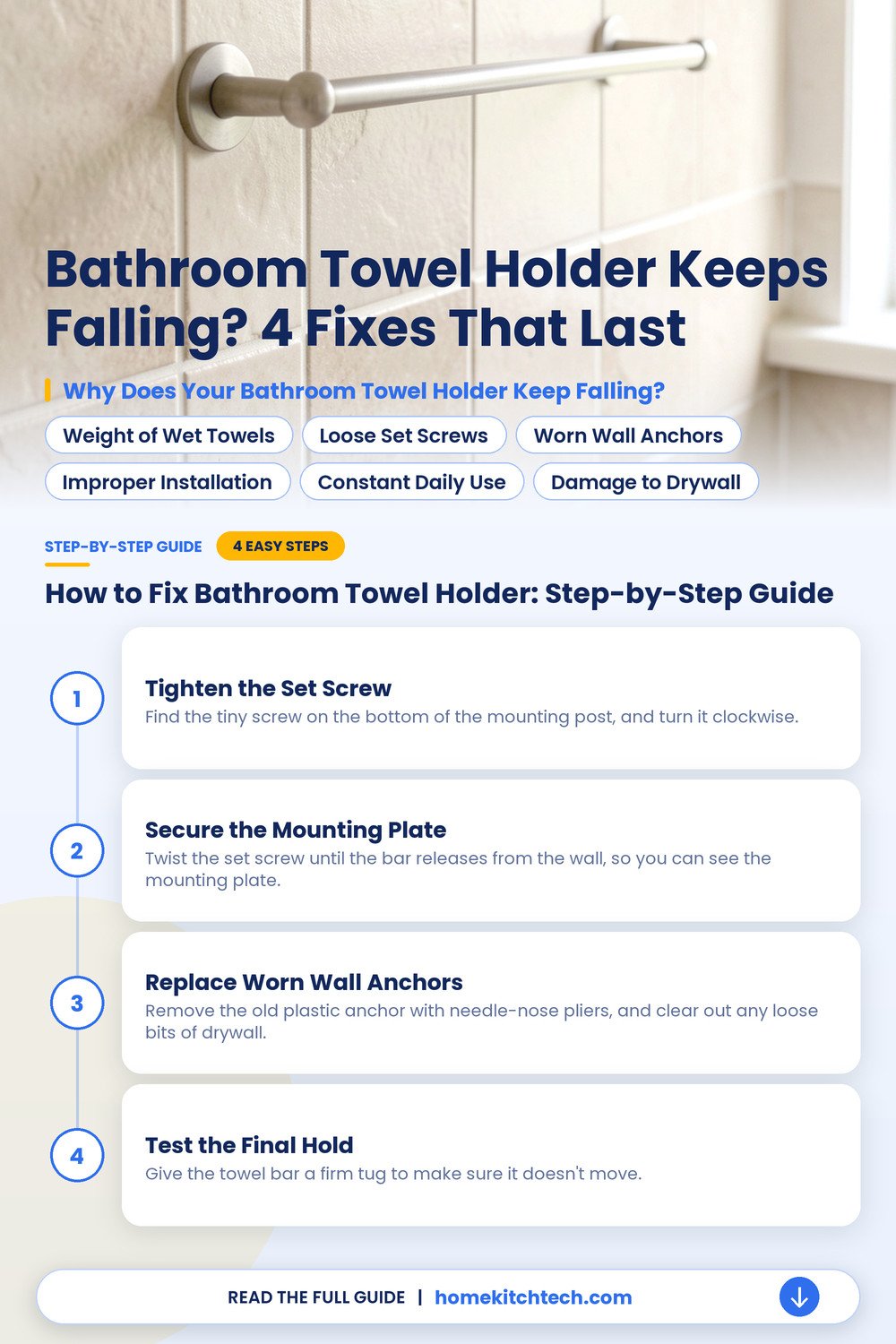
Why Does Your Bathroom Towel Holder Keep Falling?
Your wall is usually thin drywall, so it doesn’t hold screws well. You’ll notice the bar wiggle more each time you pull on a heavy towel. Often, the wall anchor pulls right out.
Weight of Wet Towels
Heavy, damp towels put a lot of pressure on small mounting brackets. Every time you pull, the bar acts like a lever and pries the screws out of the drywall. You need a solid towel bar anchor to handle that force, or it will just happen again.
Loose Set Screws
Small screws on the underside of the mount hold the bar to the wall plate, but they often vibrate loose. These turn with daily use, so check them first. Tighten them with a small driver, and the bar should feel solid again.
Worn Wall Anchors
Plastic anchors inside the wall lose their grip once the hole gets too big. You’ll see the whole mount move when you touch the towel bar. It’s time to replace the wall anchor with a fresh one that fits tight.
Improper Installation
Sometimes, the original installer didn’t use the right anchors for your specific wall. Drywall needs specific toggles to stay put under a heavy load. Use the right hardware, and your bar won’t budge.
Constant Daily Use
Frequent tugging creates a slow, steady strain on the mounting hardware. Your towel holder isn’t meant to handle the force of a sharp pull. Treat it gently, and the metal mounting bracket will stay in place much longer.
Damage to Drywall
The soft material around the hole can crumble if the screws move too much. You’ll need to fill the gap to get a tight fit again. A drywall patch kit works wonders if the hole is too wide.
Without a solid surface, the mount won’t stay against the wall. Fill the hole, let the patch dry, and drill a fresh spot for the best results.
How to Fix Bathroom Towel Holder: Step-by-Step Guide
You’ll need a small flathead screwdriver to finish this job. Most repairs take less than 20 minutes from start to finish. Check the underside of your mounting posts for the tiny set screw, as that’s where you’ll start.
Tighten the Set Screw
Find the tiny screw on the bottom of the mounting post, and turn it clockwise. Use a small screwdriver that fits the head perfectly, or you might strip the metal. If it doesn’t stop turning, the threads are likely stripped. You’ll need a new screw then.
Check that the bar feels solid against the wall plate once you’re done. If the post still wobbles, the issue is likely the wall anchor behind the plate, not the set screw itself.
Secure the Mounting Plate
Twist the set screw until the bar releases from the wall, so you can see the mounting plate. Use your screwdriver to turn the main screws until they bite into the wall. If they spin without grabbing, pull the plastic anchor out. Insert a new, larger one to get a better grip.
Ensure the plate sits flush against the wall before you put the bar back on. A loose plate means your bar will start to wobble again within a few days.
Replace Worn Wall Anchors
Remove the old plastic anchor with needle-nose pliers, and clear out any loose bits of drywall. Push a new toggle bolt into the wall hole, and tighten the mounting plate screws until they feel firm. This provides a much stronger hold than the original plastic plugs.
- Remove the old plastic anchor with needle-nose pliers.
- Push a new toggle bolt into the wall hole.
- Tighten the mounting plate screws into the new anchor.
Test the Final Hold
Give the towel bar a firm tug to make sure it doesn’t move. If it stays put, you’ve successfully restored the grip for your heavy towels. Skip the urge to pull too hard, which can stress the drywall again.
Don’t worry if it takes a few tries to get the screws set right. If the wall remains too damaged to hold the anchor, move the bar an inch to the side.
How to Fix a Loose Towel Bar in Your Bathroom?
Wobbling happens when the attachment points lose their grip on your wall. You should find the small fastener on the underside of the bracket, and give it a half turn. If that doesn’t hold, the mounting hardware behind the fixture might need a fresh start.
Check your plastic wall anchors to see if they look mangled or pulled away from the wall. Holes that have grown too large won’t hold the screws anymore. Remove the bar, clear out the old plastic, and install new hardware meant for your wall type.
Grab a screwdriver, and check the alignment of the base plate against the wall surface. Sometimes, the plate shifts slightly after years of tugging, which leaves the bar feeling loose. Push it back into place, and make sure it sits flush before you tighten the main bolts.
Test your fix by giving the bar a firm tug once you’ve reattached the main arm. If it stays put, you’ve solved the issue without needing a drywall patch kit. Keep an eye on it for a week, as daily use reveals if the mounting plate connection is truly solid.
Why Does Hardware Become Unstable Over Time?
Daily tugging on heavy damp towels, which hold a lot of water, slowly works the screws loose from your wall. You might notice the bar sagging after a few months of use, but it’s an easy fix. The constant pressure creates a tiny gap between your wall and the mounting bracket that grows wider every time you pull.
Heat and humidity in your bathroom, which stays steamy, can also soften the material around the anchor. Drywall gets brittle when it’s damp, so the plastic teeth of your heavy duty anchor lose their bite. You’ll find the whole piece wiggling because the hole has crumbled behind the paint.
Check the age of your towel rack assembly if you’ve lived in your home for many years. Metal parts wear down at the connection points, and the finish might mask cracks that make the unit brittle. Inspect the mounting bracket screws to see if they need a simple tightening.
- Metal brackets often wear down after ten years of heavy use.
- Soft drywall crumbles when anchors are moved or tightened too often.
- High humidity causes small amounts of rust on older steel screws.
Does Material Choice Change Your Repair Method?
Plastic fixtures usually break or snap at the mounting point rather than just coming loose. You can’t always tighten these, as the plastic threads often strip away completely. If you find yours is cracked, buy a new holder that matches your current bathroom hardware finish.
Metal bars have more room for adjustment, since you can usually swap out a stripped screw for one with a wider head. You’ll need to be careful with chrome or brushed nickel, as your metal tools can easily scratch the surface. Use a soft cloth between your pliers and the metal to keep it looking new.
Heavier bars made of solid brass require stronger anchors than the lightweight aluminum versions. Don’t try to hang a heavy bar with basic plastic plugs, if you’re mounting it into hollow space. Use toggle bolt anchors instead, which spread the weight across a larger area of your wall.
Which Mistakes Make Your Repair Harder?
Tighten screws only until the bracket sits firm and flat against the wall, but don’t force it. You might think more pressure equals a stronger hold, but you’ll likely strip the anchor right out of the drywall. Stop turning as soon as the bracket feels snug to keep your mount safe.
Use the right size screw, as that prevents your bar from wobbling for weeks. A screw that’s too thin won’t expand the anchor properly, so the hardware stays loose no matter how much you turn. Match your screw diameter rating to the anchor size to get the right grip.
Patch any crumbling wall holes, as ignoring them makes your next repair much bigger. You’ll find that fixing a hole that’s been ripped open by a failing anchor takes more time than doing it right the first time. Fill the gap with a little spackle, and let it dry before you try again.
Apply a light touch when you reinstall the mounting plate screws, because you don’t want to crack the plaster. If the wall is soft, use a toggle bolt anchor for a better hold. A little patience goes a long way, so move slowly.
- Only tighten screws until the bracket sits firm and flat.
- Match your screw thickness to the anchor for a secure hold.
- Fill oversized holes with spackle before you drill a new one.
When Should You Call a Pro?
Call a pro if you’re dealing with a bar that’s mounted into tile or stone, because it’s easy to break. Use a special bit, and keep a steady hand to avoid cracking your wall. You’ll save money and stress by having someone with the right gear handle that specific job.
Check for hidden damage if the wall behind your fixture feels soft or damp. If you notice the wood frame behind the drywall feels spongy, you might have a hidden leak. A pro can check for water damage, which is a much bigger issue than a loose towel bar bracket.
Stop if you aren’t sure where your water lines run in the wall, because pipes hide behind the paint. Puncturing a pipe while you’re trying to secure a towel bar mount is a nightmare you’ll want to avoid. If your wall sounds hollow in one spot and solid in another, stop and get advice.
Look for a pro if the wall is crumbling behind the tile, as you’ll need a professional tile installer to fix the base properly. This ensures your wall stays watertight after the repair.
- Tile surfaces are prone to cracking if you drill them wrong.
- Hidden leaks cause wall damage that simple anchors won’t fix.
- Professional installers use specialized bits for stone and ceramic tile.
Final Thoughts
A steady towel bar comes down to how well your anchors grip the wall behind the paint. Take your time to match the hardware to your wall type, as a good fit prevents the bar from wiggling in the first place. Once you have a firm base, your daily routine will be much less annoying.
| Symptom | Likely Cause | Easy Fix |
|---|---|---|
| Bar wiggles | Loose set screw | Tighten with hex key |
| Anchor pulls out | Oversized hole | Use toggle bolt |
| Sagging arm | Worn wall mount | Install new anchor |
| Clicking sound | Loose base plate | Adjust mounting bracket |
| Rust spots | High humidity | Clean with vinegar |
| Cracked finish | Over-tightened screw | Replace hardware unit |
Frequently Asked Questions
Can I Use Glue to Keep the Bar From Wiggling?
Better not, because glue is a messy and temporary fix that ruins your wall. You’ll have a hard time removing the bar later, and the weight of your wet towels will pull the glue and the drywall paper right off.
Is It Safe to Move the Bar to a New Spot?
Yes, you can move it if the current wall section is too damaged to hold an anchor. You’ll need to patch the old holes with spackle, but you’ll get a much stronger hold by drilling into fresh, solid drywall.
Do I Need to Turn Off My Water?
No, you don’t need to touch your plumbing for this job. Keep your water lines running while you work, but stay mindful of where you drill to avoid hitting a pipe inside the wall.
Will Any Wall Anchor Work for My Bar?
It depends, as your choice of anchor needs to match the weight of your towel bar. You’ll want to choose a toggle bolt for heavy bars or a high-quality screw-in anchor for lighter ones to keep it steady.
Should I Use a Power Drill for This Fix?
Use a manual screwdriver instead of a power drill for the final tightening. It’s too easy to strip the anchor when you use a drill, and you’ll have more control over the tension with your own hands.
How Much Weight Can My Towel Bar Hold?
It depends on your mounting method, but most standard bars handle about 10 to 15 pounds. You’ll want to avoid hanging heavy, soaking wet rugs on a single bar if you want to keep the hardware stable.
What is the Best Way to Clean the Metal?
Wipe the metal with a dry cloth to remove dust and hair. Skip harsh cleaners, which can strip the finish and make the metal more prone to rust and corrosion later on.
