
As an Amazon Associate, I earn from qualifying purchases at no extra cost to you.
Bathroom Drain Blockage Fix: 6 Methods Worth Trying First

Like a slow-moving river, your bathroom sink drain might eventually come to a near standstill. You’ll notice water pooling around the basin while you stand there. That gross gurgling sound often follows, which tells you something is stuck deep inside. It’s a common nuisance that usually happens when debris gathers over time. Let’s look at how to get your water moving again.
The most common cause for a blocked sink is a mix of hair and soap scum, which gets caught in the stopper. You can often clear this by pulling the stopper out and removing the gunk by hand. If that doesn’t work, check the trap underneath for a larger item.
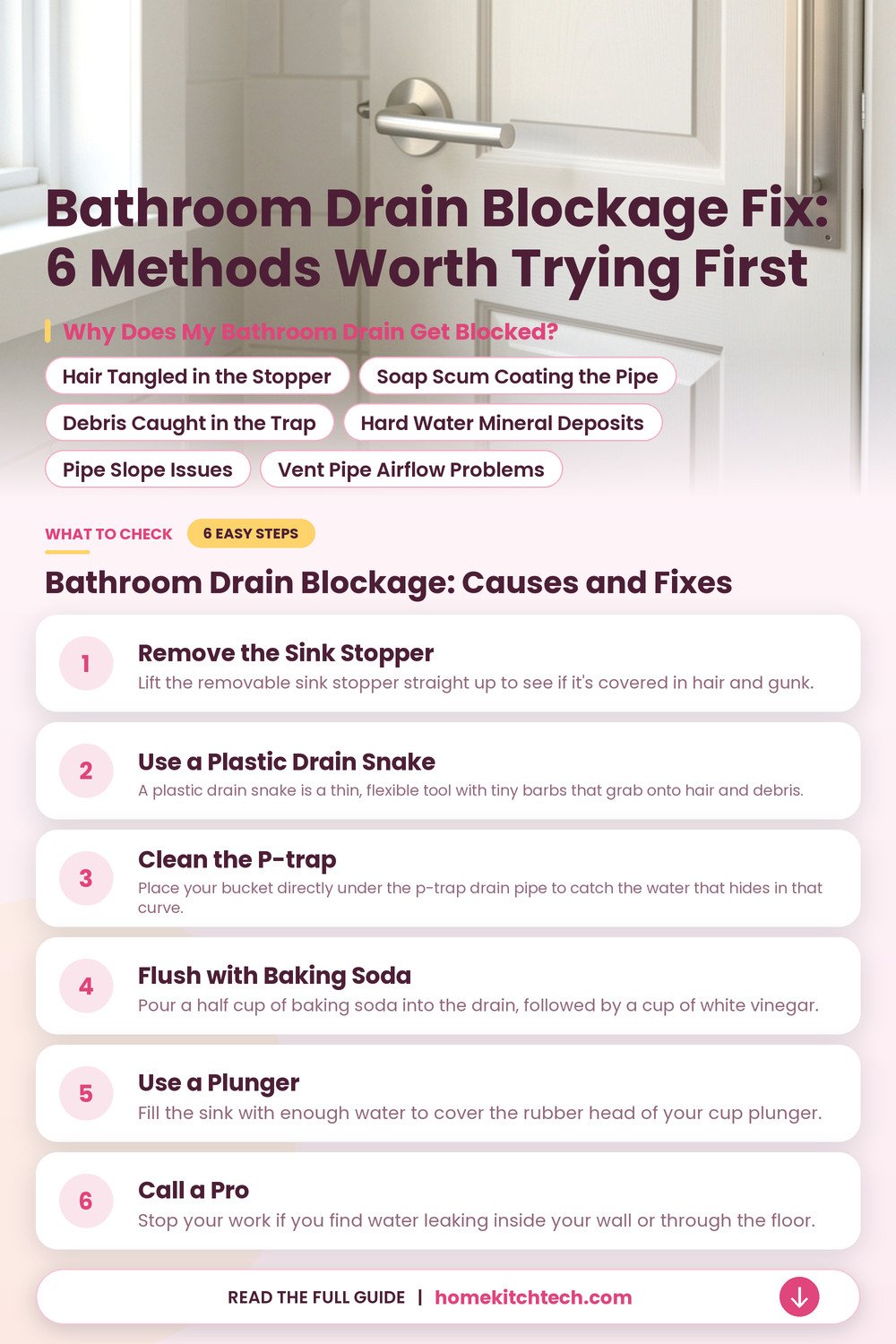
Why Does My Bathroom Drain Get Blocked?
Your drain works by pulling water down through a curved pipe, which is designed to hold a little water to stop sewer gas from coming back up. Over months, bits of hair, skin, and soap create a thick sludge that catches on the pipe walls. You’ll eventually see the water slow down, because this mass acts like a dam in your pipes.
- A simple clog usually takes about 15 minutes to clear.
- Expect to pay $0 to $30 if you have the right tools.
- Skip chemical cleaners, which can damage your pipes over many years.
Hair Tangled in the Stopper
You can easily see the start of your problem by looking right at the drain opening. Hair often wraps around the metal or plastic crossbars of the removable sink stopper, which creates a net for other debris. Pull the stopper out to see what is hanging off the bottom of it.
Most stoppers just lift straight out, but some need a small turn or a release under the sink. You’ll find a thick, slimy mess of hair and soap. Pull it off with a paper towel. Throw that mess in the trash, then wipe the stopper clean before you put it back in.
Soap Scum Coating the Pipe
Soap isn’t just bubbles, as it leaves a waxy residue that clings to the inside of your drain. This layer makes the pipe walls sticky, which helps hair and other particles anchor themselves in place. You’ll notice your drain getting slower over many months as this coating thickens.
Debris Caught in the Trap
The P-trap is the U-shaped pipe sitting under your sink, which catches heavy objects before they go further into your home. If your water isn’t moving, something might be resting at the bottom of this curve. You’ll need a bucket to catch the water that spills out once you loosen the slip nuts.
Hard Water Mineral Deposits
Minerals build up inside the drain pipes, and they form a rough, crusty surface. You’ll see a white or tan ring around the drain opening if this is a major factor. It’s a slow process.
Pipe Slope Issues
Pipes need a slight downward angle, but they must stay aligned to keep water moving toward the main sewer line. If a pipe has shifted, water will sit and let debris settle. You’ll find that your drain clogs much more often if the water doesn’t have a clear path.
Vent Pipe Airflow Problems
Every drain needs a vent pipe to let air in, so the water can flow without creating a vacuum. If your vent on the roof gets blocked, your drain will struggle. You’ll hear a rhythmic gurgle, or you might see the water rise and fall if the air can’t move.
Bathroom Drain Blockage: Causes and Fixes
Check the easiest spots first, before you move to the pipes underneath your vanity. Keep a bucket and a few old towels nearby to catch any water that leaks while you work.
Remove the Sink Stopper
Lift the removable sink stopper straight up to see if it’s covered in hair and gunk. Many models have a small nut or a pivot rod under the sink that you need to loosen first. If you aren’t sure how yours works, check your manual before you pull hard. It’s usually a simple job.
Take the stopper out, wipe the gunk off with a paper towel, and set the stopper aside. Use an old toothbrush to scrub any slime out of the drain opening. Put the stopper back in to test the flow. It should move freely now.
Use a Plastic Drain Snake
A plastic drain snake is a thin, flexible tool with tiny barbs that grab onto hair and debris. Feed the end down into your drain opening, and twist it as you push it deeper. Pull it back up slowly to see what you’ve caught on the barbs. Watch for the gunk.
You’ll likely pull out a clump of hair that was blocking the flow. Repeat this a few times until the snake comes back out clean. Test the sink to see if the water flows freely again. It makes a big difference.
Clean the P-Trap
Place your bucket directly under the p-trap drain pipe to catch the water that hides in that curve. Loosen the two slip nuts on the sides of the U-shaped pipe by hand, or use a pair of pliers. If they are tight, wrap a cloth around them to get a better grip without scratching the finish.
Slide the trap off and dump the water into your bucket. Clear out any solid gunk or jewelry caught in the bottom. Hand-tighten the nuts again to make sure they don’t leak.
- Use a bucket to catch the water that spills out.
- Wear gloves to keep your hands clean during this messy task.
- Check that the washers are seated correctly before tightening the nuts.
Flush with Baking Soda
Pour a half cup of baking soda into the drain, followed by a cup of white vinegar. You’ll see it fizz, which helps break up the light soap scum coating the pipe walls. Let it sit for about 20 minutes. It’s a natural way to freshen the drain.
After the time is up, pour a kettle of water down the drain to wash the loosened gunk away. Don’t use boiling water, which can crack porcelain or melt some types of plastic piping. Keep the water temperature moderate.
Use a Plunger
Fill the sink with enough water to cover the rubber head of your cup plunger. Push the overflow hole closed with a damp rag, so the pressure goes straight into the pipe. Pump the plunger up and down firmly to force the blockage to move. Watch the water level.
You’ll know it’s working if the water level starts to drop once you stop plunging. If the water stays put, you might need to try the snake again to break up a larger mass. Keep at it for a few minutes.
Call a Pro
Stop your work if you find water leaking inside your wall or through the floor. A plumber has the right tools to reach deep blockages that are past your reach. Call them if you’ve tried these methods and the water still doesn’t drain at all. Don’t risk a flood.
They can check your main sewer line to see if the problem is much bigger than your sink. It’s better to let them handle the heavy lifting when you’ve run out of safe options. Trust their experience.
How Much Does a Professional Drain Fix for a Bathroom Blockage Cost?
Pay a pro about $100 to $250 for a stubborn clog, depending on your area and the depth of the mess. You might pay more if they need to pull the toilet or run a heavy machine through your main line. Most simple jobs take them less than an hour, so you’re mostly paying for their expertise and the specialized plumbing tools they bring to your home.
Save your cash by trying a few simple steps first, especially if the water is only moving slow. If you own a basic snake or a good plunger, you’ll likely clear the blockage without needing outside help. Grab your durable rubber gloves and a bucket before you start, as things get messy quickly. It’s a smart way to work.
- Simple clogs often clear in about 20 minutes with basic tools.
- Professionals charge extra for weekend or after-hours service calls.
- Ask for a flat rate price before they start the work.
When Should You Stop and Call a Plumber?
Stop your efforts if you hear a strange gurgle in your toilet every time you run the sink. This sound means your venting system is blocked, which is a job for someone with the right gear and experience. Don’t force anything if you feel a hard stop, because pushing a tool too far can damage your drain pipe walls.
Call for help if you notice water seeping through your ceiling, or pooling around your vanity base. These signs suggest a leak in your pipes, not just a simple pile of hair or soap. You’ll want to shut off your water valve immediately to prevent any damage to your bathroom floor tiles. It’s the safest move.
Is Using Chemical Drain Cleaners a Bad Idea?
Avoid harsh liquids, as they are a common mistake that often makes your situation worse. These products, which contain strong acids or lye, sit in your p-trap drain pipe and can eat away at old metal. You’ll find that if the cleaner doesn’t clear the clog, you’re left with a pipe full of toxic water that you must bail out by hand.
Toxic fumes from these chemicals hurt your eyes and lungs, so keep your bathroom window open. You shouldn’t combine different brands, or pour them after a failed attempt with a plunger. Always wear protective gear if you decide to use them, but try a manual approach first.
Try a manual approach with a snake before you reach for the store-bought bottles. This method is safer for your health, and it won’t corrode the gaskets inside your sink. It’s a much better way to clear the blockage for good.
Keep your home safe by avoiding these products whenever possible. It’s the best way to protect your plumbing and your family. Reach for a snake instead.
- Store-bought cleaners can damage plastic pipes if used too often.
- Always check the label for specific warnings about your pipe material.
- Keep all cleaning products tucked away from children and pets.
How Do Pipe Materials and Age Affect Your Drain Fix?
Older homes often have cast iron pipes that rust and catch debris much faster than modern plastic ones. You’ll need to be extra gentle with these, as they become brittle and can crack under too much pressure from a metal snake. If your home was built before the 1970s, check your local building codes to see if you have these old cast iron lines.
Plastic pipes are easier to work with, but they can still bend or sag if you apply too much heat. Skip the boiling water if your sink uses flexible plastic lines, which can warp under high temperatures. You’ll find that standard room-temperature water is plenty for most routine maintenance.
Check your manual before you start pulling on the metal parts to avoid scratching the finish. Brand new fixtures sometimes have unique sink stoppers that require a specific tool to remove. You’ll save yourself a lot of frustration by identifying the stopper style before you grab your pliers.
Why Does a Bathroom Drain Blockage Keep Coming Back?
Frequent clogs usually point to a slope issue where your pipes aren’t angled enough to move water away. Gravity does the heavy lifting, but if your drain sits too flat, debris just settles in the bottom. You’ll notice the water slowing down over a few weeks, which is your sign that a bigger pile is forming.
Hard water is another common culprit that turns your pipes into a rough, crusty tunnel. Minerals like calcium stick to the walls, giving hair and soap a perfect place to snag and hold on. You’ll see white or tan crusting around your faucet, which tells you that the same stuff is likely building up inside your drain pipe interior. It creates a real mess.
Heat from your daily routine can also harden soap scum into a waxy plug that sticks to the pipe walls. Once this layer forms, your drain loses its smooth surface, and everything else flows much slower. You’ll want to avoid pouring greasy substances down the line. It’s a common mistake.
Bad habits like washing cotton balls or floss down the sink create a net that catches everything else. These items don’t break down like toilet paper, so they stay in your pipe until you manually pull them out. Check what you’re tossing in your sink, and you’ll keep your drain pipe flow clear and fast.
Final Thoughts
Clear a bathroom drain by focusing on patience and the right simple tool. Remove the physical blockage at the stopper or in the trap before you try any other methods. If you clear the gunk and the water still sits, look for deeper issues like venting or pipe slope. Take your time, keep a bucket handy, and don’t force anything that feels stuck.
| Symptom | Likely Cause | Easy Fix |
|---|---|---|
| Slow drainage | Soap scum | Manual snake |
| Gurgling sound | Vent blockage | Call a pro |
| Standing water | Hair bundle | Plastic snake |
| Foul odor | Trapped debris | Clean the trap |
| Water leaking | Worn gasket | Tighten the nut |
| Sink stopper stuck | Mineral crust | Vinegar soak |
| Low flow | Clogged aerator | Rinse the screen |
| Water backup | Main line clog | Use a plunger |
| Puddles at base | Loose pipe | Tighten with wrench |
| Pipe rattling | Loose bracket | Secure the pipe |
Frequently Asked Questions
Can I Use a Metal Coat Hanger to Clear My Drain?
It’s possible, but you should be careful not to scratch your sink or damage the pipes. Straighten the wire out and make a tiny hook at the end, then pull the hair out instead of pushing it deeper.
Is It Safe to Use a Plunger on a Bathroom Sink?
Yes, you can, but make sure to cover the overflow hole with a wet rag first. This creates a good seal so the pressure forces the clog out rather than just pushing air through the vent.
Do I Need to Take the P-Trap Off Every Time?
No, only try that if the plunger and snake haven’t worked after 20 minutes. Keep your bucket underneath to catch the dirty water that will spill out once you loosen the slip nuts.
Will Baking Soda and Vinegar Actually Clear a Blockage?
They’ll help with light soap scum, but they won’t move a thick mass of hair. Use them once a month to keep your pipes fresh, but don’t count on them for a total stop.
Can I Use a Garden Hose to Blast the Clog Away?
Better not, because the pressure from a hose is way too high for indoor plumbing. You’ll likely blow a connection apart and flood your bathroom floor in seconds.
How Do I Know If the Drain is Clear?
You’ll know it’s fixed when a full sink of water drains in less than 10 seconds. Listen for a smooth, fast sound as the water leaves the bowl.
Should I Pour Boiling Water Down the Drain?
It’s best to avoid boiling water, as it can crack your porcelain sink or warp the plastic fittings. Stick to room-temperature water to stay safe.
