
As an Amazon Associate, I earn from qualifying purchases at no extra cost to you.
Black Spots on Your Bathroom Mirror? 5 Causes Behind Them

So you're leaning in to brush your teeth, and those dark smudges at the edge of your mirror catch your eye. They don’t wipe away with glass cleaner, but that’s because they aren’t on the surface of the glass. You're looking at a breakdown of the materials, which sits behind the reflective layer. Here is what you need to know, so you can understand those spots.
You can't fix these spots because they show that the silver backing has oxidized, or worn away. The damage happens behind the glass surface, where you can’t reach it. If the mirror looks bad enough to bother you, the only real solution is to replace it with a new one.
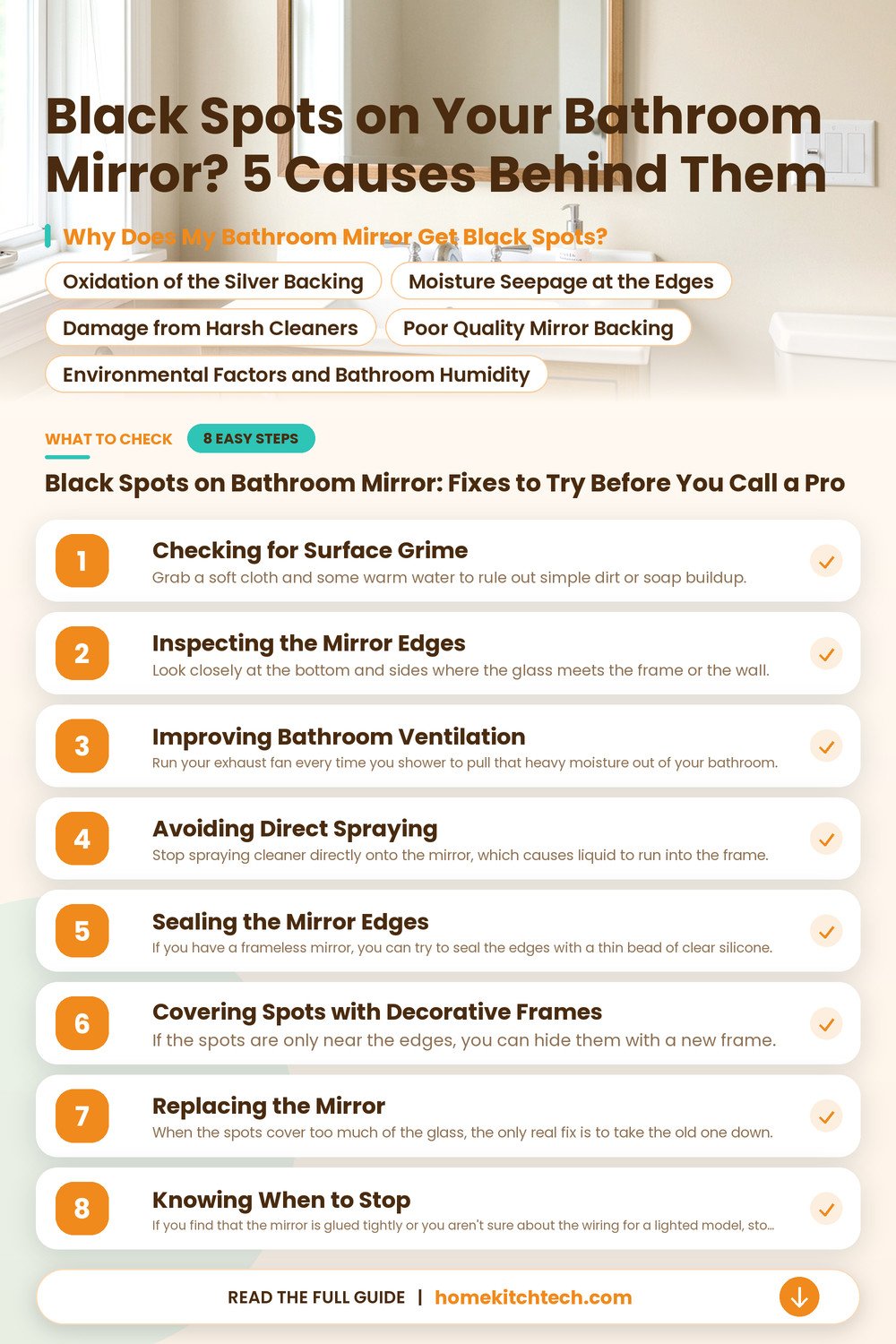
Why Does My Bathroom Mirror Get Black Spots?
These spots grow when moisture sneaks behind the glass and ruins the metal backing. You'll notice tiny dots at first, but they spread as water pools along the bottom. Once that seal fails, air attacks the silver layer.
- Humidity levels usually speed up mirror decay.
- Ammonia cleaners can eat through the edges.
- Quality mirrors use better sealants for protection.
- Replacement costs vary from $50 to $300.
Oxidation of the Silver Backing
The reflective layer on your mirror is a thin coat of silver or aluminum. Oxygen and moisture reach this layer through tiny gaps in the protective paint. You'll notice the silver turning dark or black as it reacts to the air. This chemical change is permanent, so your mirror won’t return to its original shine once the damage settles in.
Moisture Seepage at the Edges
Your mirror likely has exposed edges that soak up water like a sponge. When you splash at the sink, drops run down and sit against the bottom frame. This trapped water slowly works its way behind the glass, which creates the perfect home for black mirror spots to grow. Moisture makes contact with the silver, and the decay spreads inward.
Damage From Harsh Cleaners
Harsh glass cleaners contain chemicals that are too strong for the delicate edges of your mirror. If you spray directly onto the glass, the liquid runs down and pools in the frame. These cleaners dissolve the sealant, which leaves your mirror wide open to air. You'll see the damage start at the bottom and move upward over several months.
Poor Quality Mirror Backing
Not all mirrors have the same level of protection against a steamy bathroom. Cheaper versions, which often use thinner paint or lower-grade sealants, fail quickly. You'll find that these mirrors develop spots much faster than high-quality ones. If your mirror came with the house, it might just be reaching the end of its natural life.
Environmental Factors and Bathroom Humidity
High humidity is the biggest enemy of your mirror, especially if your room lacks a strong exhaust fan. You'll notice that mirrors in guest bathrooms, which have good airflow, stay clear for years. If your bathroom stays steamy long after you shower, that moisture hangs in the air and settles on every surface. It eventually finds those weak spots on your mirror, and that causes the backing to fail.
The constant cycle of damp and dry air acts like a slow-motion wrecking ball for your glass. You can't stop the physics of condensation, but you can control how much of it stays in the room. This helps protect the protective mirror backing from constant moisture exposure.
Black Spots on Bathroom Mirror: Fixes to Try Before You Call a Pro
You'll need to accept that these spots aren’t dirt, so scrubbing won’t make them go away. The damage is deep inside the glass, which makes it impossible to polish out. Your best path is to prevent more from forming or to swap the mirror for a new one.
Checking for Surface Grime
Grab a soft cloth and some warm water to rule out simple dirt or soap buildup. Sometimes, what looks like a black spot is just a clump of hairspray or dried toothpaste. Gently rub the area, but don’t use any abrasive scrubbers that might scratch the surface. If the mark doesn’t budge after a quick wipe, it's likely part of the mirror backing.
Inspecting the Mirror Edges
Look closely at the bottom and sides where the glass meets the frame or the wall. You'll see if the protective paint is peeling or if the edge looks cloudy. If the silver is flaking off, the damage has already moved past the edge and into the reflective area. This is a clear sign that the mirror silver damage is permanent.
Improving Bathroom Ventilation
Run your exhaust fan every time you shower to pull that heavy moisture out of your bathroom. You should leave the fan on for at least 15 minutes after you finish. This simple change keeps the air dry, which helps protect your current mirror and any future one you install. It's the easiest way to slow down the spread of spots.
Avoiding Direct Spraying
Stop spraying cleaner directly onto the mirror, which causes liquid to run into the frame. Instead, spray your cloth first and then wipe the glass surface. This keeps the edges dry and prevents harsh chemicals from pooling at the base. You'll find that your mirror stays cleaner and lasts longer with this small adjustment.
Sealing the Mirror Edges
If you have a frameless mirror, you can try to seal the edges with a thin bead of clear silicone. This creates a barrier that stops moisture from touching the silver backing. You need to be very careful to keep the silicone off the reflective front. If the spots are already there, this won’t remove them, but it might stop them from growing.
Apply the silicone in a smooth, continuous line along the bottom edge. Let it cure for 24 hours before you get the room steamy again. This acts as a shield for your bathroom wall mirror against daily splashes.
Covering Spots with Decorative Frames
If the spots are only near the edges, you can hide them with a new frame. You can buy pre-made frames that stick right over the edge of your existing glass. It's a great way to improve the look of your room without removing the mirror. Just make sure the frame covers the damage completely so you don’t have to look at it anymore.
This is a cosmetic fix, but it works well if the center of the mirror is still clear. You won’t be able to see the decay anymore, and the frame adds a finished look. It's much cheaper than buying a whole new mirror.
Replacing the Mirror
When the spots cover too much of the glass, the only real fix is to take the old one down. You'll need a helper since mirrors are heavy and can be sharp if they crack. Check the back to see how it's mounted, whether it's glued to the wall or held by clips. If it's glued, you might need a pro to help remove it without damaging your drywall.
You can find a new mirror that is built for bathroom use, which often includes better edge sealing. Look for one that explicitly mentions moisture resistance to avoid this problem later. It's a bit of work, but a clear mirror makes a huge difference in how your room feels.
- A professional mirror install usually costs $100 to $200.
- Check that your new mirror has a moisture-resistant backing.
- Use a mirror adhesive that is safe for silver backing.
- Wear heavy gloves whenever you handle old, loose glass.
Knowing When to Stop
If you find that the mirror is glued tightly or you aren’t sure about the wiring for a lighted model, stop and call a pro. A local handyman can handle the removal and mounting of a new unit in an hour or two. You'll save yourself the headache of a broken mirror or a damaged wall. Don’t risk a heavy glass accident when a pro can do it safely.
Final Thoughts: Most black spots are a sign of age and humidity that you can’t reverse. Once the silver backing starts to fade, it stays that way. Keeping your bathroom dry is the best way to protect your next mirror. That little bit of care goes a long way.
Why Do Bathroom Mirrors Turn Black?
Mirrors turn black when the protective coating on the back fails, which lets air touch the silver layer. You might notice these dark spots starting at the bottom edge. Water often sits there for long periods. Once that silver backing failure starts to break down, the damage is usually permanent.
Think of the glass as a window, but the real magic happens on the back. A thin layer of silver gives you a clear reflection image, and a layer of paint keeps that silver safe from the air. When the paint chips or cracks, your mirror begins to lose its shine.
This process is a slow chemical change that you can’t easily reverse. You’ll see the silver turn into a dull, dark gray or black color as it reacts with moisture. Over time, these spots grow larger and ruin your bathroom vanity view.
Can Age Cause Mirror Damage?
Old mirrors often show their years through these dark spots along the bottom. They appear as the edges degrade. You’ve likely seen this in older houses, where the original glass has survived for decades. The seals around the edge break down over time, letting moisture sneak in to attack the mirror backing material.
Heat and humidity in your bathroom speed up this natural aging process, too. Every time you run a hot shower, you fill the room with steam that settles on your glass surface area. That damp air finds every tiny gap, which eventually turns your once perfect mirror into a spotted mess.
How Can You Fix Those Black Spots?
Fixing these spots is rarely possible because the damage sits behind the glass, and you can’t reach it. You can cover them with a frame or a decorative border if they stay at the edges, but you can’t repair the silver. Replacing the mirror is the only way to get a clean mirror look again.
Professional glass shops might suggest re-silvering, but that costs almost as much as buying a new mirror. You’ll spend about $100 to $300 for a pro to handle that, plus the time to take the mirror down and move it. Often, it’s cheaper and faster to just pick out a new one.
Measure your space so you know exactly what size you need. Don’t waste money on fancy kits that promise to hide the spots, because they usually look worse than the damage. A new, high-quality mirror with a sealed edge will last you for many years.
- A new bathroom mirror usually costs between $50 and $200.
- You can expect to spend about an hour removing the old glass.
- Use a putty knife to gently pry the old glass from the wall.
- Wear thick work gloves to protect your hands from any sharp edges.
Does Mirror Quality Change the Outcome?
Cheap mirrors often use thin paint on the back, which makes them fail faster in a humid room. You’ll find that better brands use thicker coatings and better seals to keep the silver backing safe. If you live in a damp climate, buying a high-end mirror makes a big difference for your home.
Think about where you buy your glass, as big-box store options aren’t always built for heavy bathroom use. You want a mirror that says it’s rated for high moisture, which helps prevent those early black spot growth issues. It’s worth the extra money to avoid replacing your mirror every few years.
- High-quality glass usually features a thicker, more durable silver backing.
- Look for a mirror with sealed edges to block out damp air.
- Avoid mirrors with exposed silver edges if you have a steamy shower.
- Check the label to see if the manufacturer suggests a bathroom use.
When Should You Call a Pro?
Call a pro if your mirror is glued to the wall, or if it sits inside a complex frame. You might break the glass, or damage your drywall, if you try to force it off yourself. They have the right tools, which cut through the adhesive without leaving a huge mess behind.
Stop what you’re doing if you find that the mirror is extremely heavy, or hangs in a way you don’t understand. A local glass company can take the measurements and install the new mirror unit perfectly. They work quickly, so you don’t have to struggle with the heavy glass.
Don’t ignore the problem if the mirror starts to feel loose, because it could fall. A professional can secure it properly, so you don’t have to worry about it coming off the wall. They’ll make sure your bathroom mirror installation is safe, sturdy, and looks great in your room.
Final Thoughts
Black spots on your mirror mean the backing has failed, and there’s no way to repair the silver from the front. If you catch the damage early, you can sometimes slow it down by keeping your bathroom dry. Otherwise, plan to replace the glass once the spots start to bother you. A new mirror is usually the best way to get your clear view back.
| Symptom | Likely Cause | Easy Fix |
|---|---|---|
| Black edge spots | Moisture seepage | Decorative frame |
| Gray cloudy haze | Harsh cleaners | Mild soap |
| Loose glass | Broken adhesive | Professional mount |
| Dark center spot | Scratching | Cover with art |
| Rust-like flakes | High humidity | Better ventilation |
| Chipped silver | Physical damage | New mirror |
Frequently Asked Questions
Why Do Bathroom Mirrors Turn Black at the Edges?
It’s because moisture gets behind the paint, and it attacks the silver backing. You’ll see it start at the bottom because water drips down, and it sits there. That dampness eats away at the reflective layer, which creates those dark, permanent spots you see.
Can I Use Mirror Repair Kits to Hide the Spots?
No, skip those kits because they don’t actually fix the silver. You’ll end up with a blurry, ugly patch on your glass, and it looks worse than the original spot. It’s better to hide the damage with a frame or just replace the mirror entirely.
Will a Dehumidifier Stop the Black Spots From Growing?
Yes, it helps by pulling extra water out of your air. You’ll lower the humidity in your bathroom, and that slows down the decay of your silver backing. It’s a great way to protect your other bathroom items from moisture damage, too.
Does Vinegar Hurt My Bathroom Mirror?
Better not, because the acid can eat through the paint on the back. You should only use a soft cloth with a little bit of warm water, or use mild glass cleaner. If you spray the glass, always wipe it dry so that no liquid drips down to the edge.
Are There Specific Mirrors That Won’t Turn Black?
Look for ones that have sealed edges, which keep the moisture out. You’ll find that high-quality brands often use better backings, and they stand up to steam much longer. If you pick a mirror made for bathrooms, you’ll have a much better chance of avoiding these spots.
Can I Paint Over the Black Spots?
No, you can’t reach the back of the glass to paint it. Any paint you put on the front will just show up as a dark, messy blob in your reflection. It’s a waste of time, so don’t try it.
Should I Use Bleach to Clean My Mirror?
No, keep bleach far away from your glass. It’s too harsh, and it can damage the silver backing if it seeps into the edges. Stick to mild soap and water to keep your reflection looking sharp and clean.
What Should I Do If the Mirror is Glued to the Wall?
Call a pro, because you’ll likely rip the drywall if you pull it off yourself. They use a special wire to slice through the glue. This avoids hurting your wall, and it’s safer to let them handle the heavy lifting and the potential mess.
