
As an Amazon Associate, I earn from qualifying purchases at no extra cost to you.
Broan Bathroom Heater Not Working? 6 Checks Before You Call

Often, you'll flip the switch on your wall, but the heater stays silent. That chill in the air doesn’t go away, and you're left standing in a cold bathroom wondering what went wrong. You don't need to panic yet, as simple things like a tripped breaker often cause the trouble. Take a look at these basics before you call for help, because a quick fix might be waiting for you.
The most common reason for a cold heater is a tripped circuit breaker in your electrical panel. Go to your panel, look for a switch that sits in the middle or looks different from the others, and flip it back to the on position. If that doesn’t work, you'll need to check the unit itself for other issues.
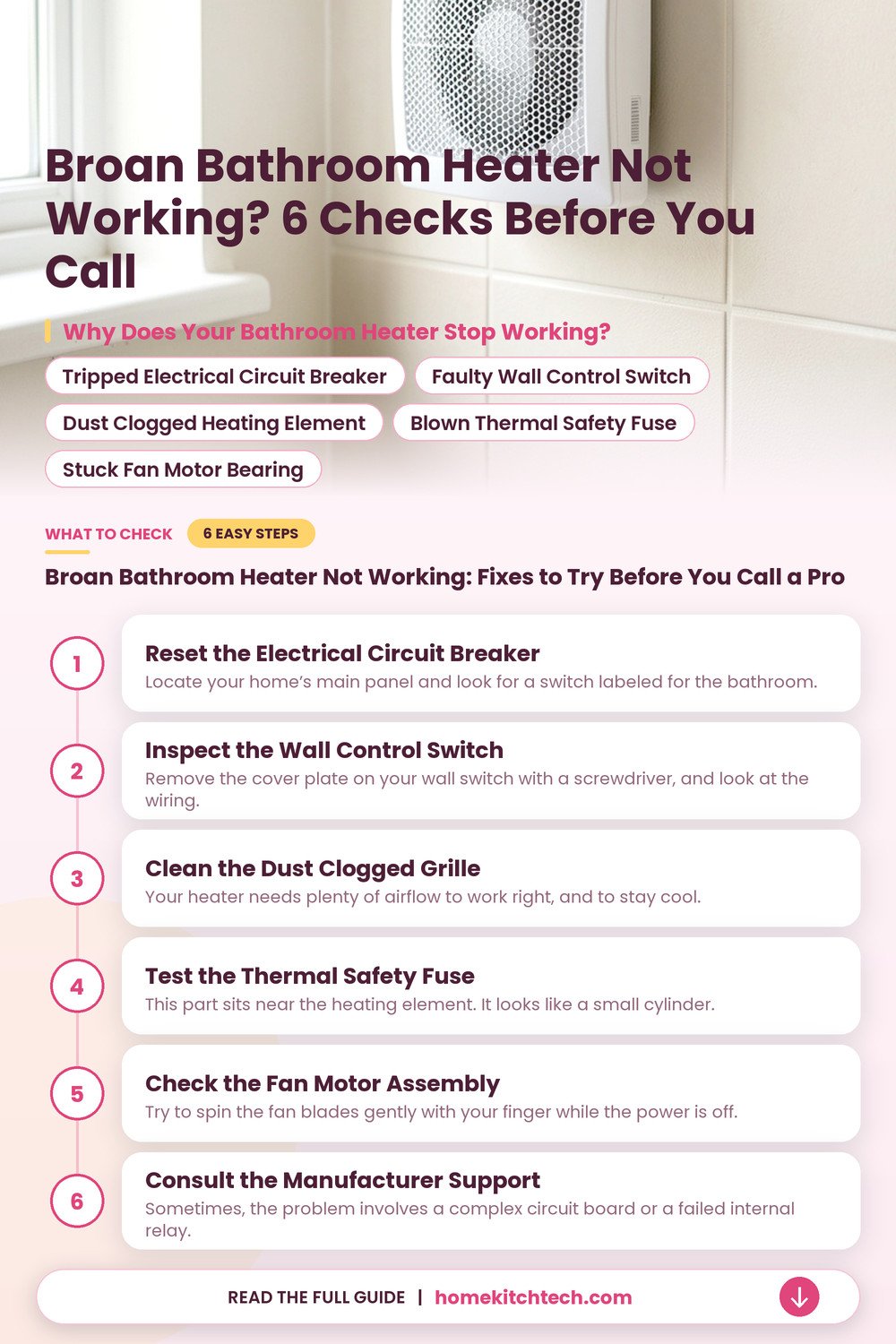
Why Does Your Bathroom Heater Stop Working?
Your heater relies on a steady flow of electricity to warm the air. When that stops, you'll notice the fan stays quiet and no heat comes out of the vent.
Tripped Electrical Circuit Breaker
A power surge or an overloaded electrical circuit breaker often causes the heater to shut down to prevent damage. You'll find your main panel in the basement, garage, or a hallway closet. Check for any switch that sits in the middle position, as that indicates a trip. Push it firmly to the off position, then back to on. It should stay there.
Faulty Wall Control Switch
That switch on your wall wears out over time from years of daily use. It sends power to your unit, so a bad contact inside stops the electricity from ever reaching the motor. You'll hear nothing when you flip it. If that happens, the switch is likely the culprit. Grab your tester.
Dust Clogged Heating Element
Your heater pulls in air from the room, and dust comes along for the ride. This fuzz builds up on the internal heating element and acts like a blanket, which causes the unit to overheat and trip a safety sensor. You'll see the dust if you look through the grille with a flashlight. Once it's blocked, the system won’t produce any warmth.
Blown Thermal Safety Fuse
A small fuse inside the heater acts as a final guard against fire. If the unit runs too hot, this part breaks the power path to keep your home safe. It's a one-time use part, so you'll need to replace it if it pops. You can't reset it, as it's designed to stop the flow of current permanently once it gets too hot.
Stuck Fan Motor Bearing
The motor that spins your fan has small metal parts that need to move freely. Over many years, the grease inside dries up or dust gets into the works. You'll notice a humming sound, but no air movement, if the motor is stuck. If the fan can't turn, the heater shuts down. This avoids burning the motor out.
Broan Bathroom Heater Not Working: Fixes to Try Before You Call a Pro
You can perform these checks with basic tools, usually in about 30 minutes. Turn off the power at the breaker first, and use a non-contact voltage tester to be sure the wires are dead.
- Check your breaker box first since it's the quickest fix.
- Always use a voltage tester before you touch any internal wires.
- Call a licensed electrician if you smell burning or see sparks.
Reset the Electrical Circuit Breaker
Locate your home's main panel and look for a switch labeled for the bathroom. It might look slightly out of line compared to the others, so give it a close look. Flip it completely to the off position, then snap it back to the on position. If it clicks back to off right away, you have a short somewhere that needs a pro.
This simple step restores power if a temporary surge tripped the system, but don’t force a switch that feels stuck. A persistent trip means there's a deeper electrical fault that requires an expert to diagnose. If the breaker stays on, test the heater again to see if it works.
Inspect the Wall Control Switch
Remove the cover plate on your wall switch with a screwdriver, and look at the wiring. Check for any loose connections, or wires that look charred. If the wires seem fine, use a voltage tester to verify power is entering and leaving the switch. If the switch shows no power output, it's likely dead and needs a replacement. Make sure you buy a switch rated for the same amperage as your heater.
Turn the breaker off before you loosen any connections to swap the old switch for a new one. Swap the switch carefully, and check the wires for tight fits. If the unit still won’t turn on, look at other parts.
Clean the Dust Clogged Grille
Your heater needs plenty of airflow to work right, and to stay cool. Grab a vacuum with a soft brush attachment, and run it over the vent grille. You'll pull out years of lint and hair that block the intake. This lets the fan breathe again, and prevents the unit from tripping its internal sensors. Use a flashlight to peer inside once the surface is clean. If the internal heating element is still covered in thick dust, you might need to remove the grille to reach it. Always keep the power off while you work near the metal parts.
Test the Thermal Safety Fuse
This part sits near the heating element. It looks like a small cylinder. Use your multimeter to check if the fuse has continuity, which confirms electricity can pass through it. If the meter shows no reading, the fuse is blown and must be replaced. You'll find the part number on the fuse itself or in your owner's manual. Never try to bypass this fuse, as it protects your home from overheating. Order the exact match from the maker's website to ensure your heater runs safely again.
If the fuse shows continuity, the problem lies elsewhere.
Check the Fan Motor Assembly
Try to spin the fan blades gently with your finger while the power is off. If the blades feel stiff or won’t move at all, the motor bearing is likely seized. A little bit of light oil can sometimes help, but often the motor needs a full swap. Listen for any grinding noises when you finally turn the power back on. A motor that hums but doesn’t spin is trying to work, but can’t overcome the resistance. If you see smoke or smell something odd, turn the breaker off immediately and call an electrician.
The motor assembly, if it fails, needs a direct replacement.
Consult the Manufacturer Support
Sometimes, the problem involves a complex circuit board or a failed internal relay. Check your owner's manual for troubleshooting codes or specific steps for your model. If you've checked all the simple parts and it still won’t heat, call the maker for advice. They can help you confirm if the unit is still under warranty or if it's time for a replacement. Don’t try to open sealed motor housings or tamper with internal wiring if you aren’t comfortable. A pro can reach what your tools can’t.
Always have your model number ready, as it speeds up the process.
Why Does Your Bathroom Heater Stop Running?
Age wears down the internal components of your electric bathroom heater over time. Parts like the motor or the heating coils simply reach the end of their life cycle, but humidity also plays a role in early failure. You’ll notice a slow decline in performance, before the unit finally quits for good.
Dust buildup acts as an insulator, which traps heat inside the housing and forces the unit to shut off prematurely. Your fan blades often gather thick layers of lint, which slows down the air flow. This cycle of overheating causes the safety thermal sensor to trigger more often than necessary.
Bad habits like running the unit for hours every day also accelerate the wear on your main heating element and switches. You’ll find that frequent cycling puts stress on the electrical connections. Clear the unit of debris, and it will likely live a much longer life.
- Clean the vent every six months to prevent dust buildup.
- Run the heater only when you are in the bathroom.
- Replace the unit if it makes loud grinding noises often.
Are There Safety Risks with a Faulty Heater?
You should never try to force a broken unit to run, especially when it smells like melting plastic or burning dust. These odors signal that your internal heater wiring might be overheating, or that a component is failing right now. Shut off the power at the breaker panel immediately to prevent any fire risk.
Water is a major enemy of these devices. Keep it far away from the casing. A short circuit happens the moment moisture touches the exposed electrical contact points inside your unit. You need to keep the bathroom well ventilated, so your heater stays dry and safe.
Never bypass the thermal safety fuse to keep the unit running. That little part exists to stop the heater from getting too hot and catching fire. If it trips, your system is telling you that something is wrong with the airflow intake path or the motor.
Does the Brand or Age Affect the Repair?
Older models often lack the modern safety features, which you find in your current bathroom ventilation fan setup. You might find that parts for an older unit aren’t sold in stores. Check the model number on the housing, and you’ll see if the manufacturer still supports your design. It’s tough when they don’t.
Newer units usually have modular parts that you can swap out with just a screwdriver. You’ll find that the wiring diagrams in your manual are easier to follow than those from twenty years ago. It's often a better value to replace a very old unit rather than hunt for a discontinued replacement heater part.
Some brands use proprietary connectors that don’t fit generic replacement motors. Check the maker’s website to confirm the exact part number before you spend any money. Use the right parts, or you might damage your entire electrical system setup and cause the motor to fail quickly.
- Use a non-contact voltage tester to check power is off.
- Buy only parts listed in your specific owner manual.
- Check the manufacturer website for the current warranty status.
When Should You Call a Professional?
A licensed electrician is your best contact, if you see charred wires or black marks inside the wall box. You shouldn’t mess with heavy duty wiring if you aren’t sure how it works. A pro can safely trace the circuit and fix the damaged electrical line before it gets worse.
Stop your repair job if you can’t find a clear reason for the failure after checking the obvious parts. Sometimes, the issue hides behind the wall where your tools can’t reach. You’ll save yourself a lot of frustration by having a pro handle the complex electrical troubleshooting needed for your specific setup.
Listen for a hum that doesn’t turn into a fan spin. This often means the capacitor or the motor is dead, and needs a full swap. You should call for help if you don’t feel comfortable working with the heater control box or the high voltage connections.
- Call a pro if the breaker trips again immediately.
- Ask for a licensed electrician to check your home wiring.
- Seek help if the heater makes sparks during operation.
What Does the Fix Cost and Take?
You can usually finish a simple cleaning or a minor part swap in about 30 to 60 minutes. Basic tools like a screwdriver and a vacuum brush are all you need to clear out the dust. Most simple heater repairs cost under $50, if you only need a new switch or a cleaning kit.
Professional repairs cost more, usually ranging from $100 to $300, depending on the labor and the parts needed. You’ll pay for their time, and their expertise in handling the electrical wiring system safely. It's worth the price, if it means your bathroom stays warm and your heater safety unit stays reliable.
- Budget about $20 for basic cleaning supplies and brushes.
- Plan for a full afternoon if you need to replace parts.
- Expect to spend $150 on a new high quality heater.
Final Thoughts
Most of the time, your heater just needs a good cleaning to get the air flowing again. Start with the basics like the circuit breaker and the wall switch before you assume the worst. If the unit is very old, you might find that a new one is more efficient and safer to run. Keep your vent clear and your electrical connections dry to get the best performance.
| Symptom | Likely Cause | Easy Fix |
|---|---|---|
| No heat | Tripped breaker | Reset the switch |
| Loud grinding | Worn motor | Replace the motor |
| Burning smell | Dust buildup | Vacuum the vent |
| Fan won’t spin | Stuck bearing | Clean and oil |
| Unit cycles off | Clogged filter | Clear the debris |
| Switch feels loose | Broken internal spring | Replace the switch |
Frequently Asked Questions
Is It Safe to Use a Vacuum on the Heater Grille?
Yes, you can use a vacuum with a soft brush attachment on your heater grille. It's a great way to pull out loose dust and lint without pushing debris into the unit. Just make sure you turn the power off at the breaker first.
Can I Replace the Heating Element Myself?
It depends on your model, but you can usually swap the heating cartridge if you have the right manual. You'll need to flip the breaker before you touch any wires. If the process looks too complex, don’t force it and call a pro instead.
Do I Need to Turn Off the Power to Clean It?
Yes, you must turn off the power at the main breaker before you touch the heater. It's a simple step, but it keeps you safe. Always use a tester to check the wires are dead before you start.
Are There Any Special Tools Needed for This Job?
You'll mostly need a standard screwdriver and a vacuum for your basic maintenance. If you need to check the wiring, a non-contact voltage tester is a very helpful tool to have. Don’t use any metal rods or sharp tools, which could damage the sensitive internal parts.
Will a Loose Wall Switch Keep the Heater From Running?
Yes, a loose or damaged wall switch can stop the power from reaching your heater. If the switch feels wiggly, it might be broken inside. Replace the wall switch quickly once you confirm the power is off at the panel.
Should I Oil the Fan Motor If It Squeaks?
Better not, because most modern fan motors have sealed bearings that don’t need oil. You'll likely just attract more dust if you add grease. It's better to replace the whole motor assembly if it starts making loud noises.
