
As an Amazon Associate, I earn from qualifying purchases at no extra cost to you.
How Much Does a Bathroom Upgrade Cost? 7 Things That Move the Price

Unless your current bathroom feels like a relic from another decade, you probably don’t think much about the cost to change it. Dated tile, leaky faucets, and peeling paint make your daily routine feel like a chore instead of a refresh. You might wonder if a few small tweaks will do or if a full gut is necessary. Let’s look at the numbers, so you can plan your next move.
A basic bathroom upgrade usually costs between $2,500 and $15,000, but your final price depends on the scope of the work. You'll spend less if you keep the current layout and swap out simple fixtures. If you choose to move your plumbing or add custom tile, the costs climb fast. Always get at least three written quotes before you start.
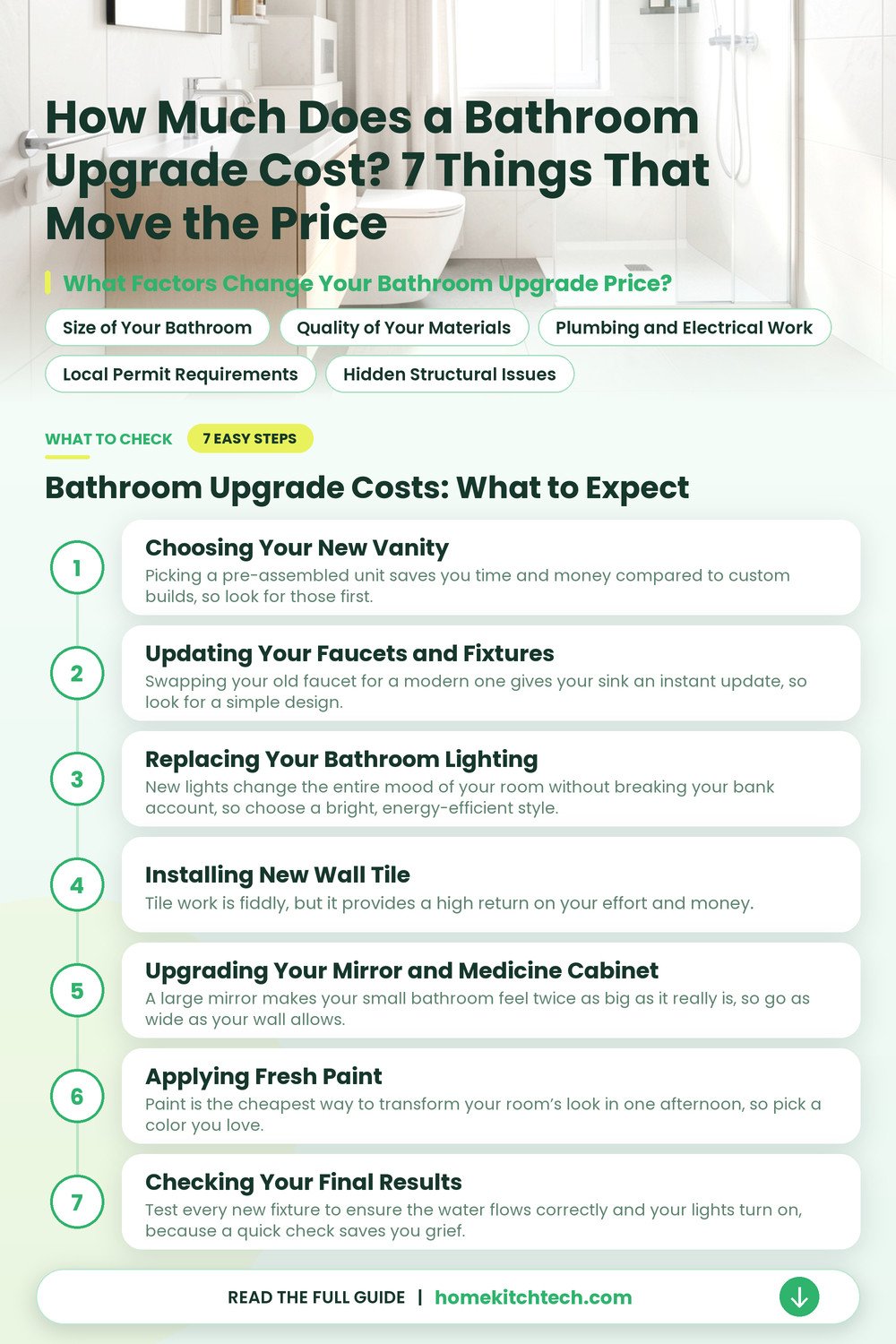
What Factors Change Your Bathroom Upgrade Price?
Upgrading your space involves more than just picking out a new mirror, so keep your goals clear. You'll find that labor costs and the quality of your materials often dictate the total bill. Most projects hit a snag when you start moving pipes, which adds to your professional labor fees.
Size of Your Bathroom
A tiny powder room costs much less to redo than a large primary suite, which saves you money. You'll need fewer square feet of tile and smaller pieces of furniture, which keeps your material budget in check. Bigger rooms require more labor, more supplies, and more time for your crew to finish the job.
Quality of Your Materials
High-end stone counters or designer hardware raise your bathroom vanity cost significantly. You can save money by choosing standard finishes that look great, but don’t carry a luxury brand premium. Your choice of materials sets the tone for the room, so compare samples before you commit to a final purchase.
Plumbing and Electrical Work
Moving your sink or toilet to a new wall requires a licensed plumber to redo your pipes, so prepare for extra costs. You should expect this part of the job to eat up a large chunk of your budget, because it involves opening walls and re-routing lines. A pro can handle the connections, but those hours add up quickly.
Local Permit Requirements
Your city might require a permit for any work involving your electrical or plumbing systems, so check the rules early. Contact your local building office to see what fees you need to include in your plan. If you skip this, you might face fines or trouble when you eventually sell your home.
Hidden Structural Issues
Opening up your walls often reveals rot or water damage that you didn’t know existed, so expect the unexpected. Keep an extra 10 percent of your budget in a separate account for these surprises. You'll be glad you have the cash, because you can’t leave moldy wood behind a new wall.
Bathroom Upgrade Costs: What to Expect
You'll find that planning ahead helps you control your spending from start to finish, so don’t rush. Expect to spend a few weeks gathering ideas and comparing local prices, but get your budget set first.
- Expect to pay about $500 to $2,000 for a simple vanity swap.
- Add $1,000 to $3,000 if you need to hire a professional plumber.
- Check local laws because permits can cost anywhere from $100 to $500.
- Keep your layout the same to avoid expensive plumbing and electrical changes.
Choosing Your New Vanity
Picking a pre-assembled unit saves you time and money compared to custom builds, so look for those first. You'll need to measure your space twice to ensure the new piece fits your existing footprint. A standard size makes your search much easier, and it keeps your vanity installation cost lower. Check the drawer clearance too, as you don’t want a door hitting the wall.
Measure your doorway as well, because you don’t want to find out the unit won’t fit after you buy it. Bring your tape measure to the store, and check the box dimensions before you pay.
Updating Your Faucets and Fixtures
Swapping your old faucet for a modern one gives your sink an instant update, so look for a simple design. You'll need a wrench and some plumber's tape to ensure your new connections don’t leak, but the task is doable. Always turn off your water shutoff valves before you start this job, or you might have a mess. If you find your pipes are corroded, it's a smart time to call a pro for help.
Replacing Your Bathroom Lighting
New lights change the entire mood of your room without breaking your bank account, so choose a bright, energy-efficient style. Turn off the power at your breaker box before you touch any wires, as safety is your top priority. Check your wall box to see if the new fixture fits your existing mounting plate. If you aren’t comfortable with wiring, don’t take a risk and call an electrician instead.
Installing New Wall Tile
Tile work is fiddly, but it provides a high return on your effort and money. You need a flat surface and the right adhesive to make sure your bathroom wall tile stays put. Clean the wall thoroughly so the thin-set mortar grabs the surface, and work in small sections. Keep your grout lines straight and your pattern looking consistent across the room, because small mistakes show up fast.
Upgrading Your Mirror and Medicine Cabinet
A large mirror makes your small bathroom feel twice as big as it really is, so go as wide as your wall allows. You can mount a simple frame, or you can choose a medicine cabinet for extra hidden storage. Use a level to make sure your mirror sits straight on the wall. If you're mounting a heavy cabinet, find the studs to ensure it doesn’t pull away later.
Applying Fresh Paint
Paint is the cheapest way to transform your room's look in one afternoon, so pick a color you love. You need a high-quality, moisture-resistant paint that handles the steam from your shower. Clean the walls with a degreaser first, so your paint sticks well. Use painter's tape for crisp lines around your trim and corners to give your work a polished look.
Checking Your Final Results
Test every new fixture to ensure the water flows correctly and your lights turn on, because a quick check saves you grief. Look under your sink for any dampness, which might mean a loose connection. If everything stays dry and operates smoothly, you've done a great job. Keep your receipts in a folder in case you ever need to check a warranty later.
Does the Age of Your Vanity Change the Cost?
Older units often require more work when you decide to swap them out, so prepare for a challenge. Your current vanity might be glued to the wall, or it could have plumbing that doesn’t match new standards. Account for extra labor if the bathroom subfloor shows signs of water damage once you pull the old cabinet away.
Modern valves won’t fit the supply lines in older homes, so check your pipes before you buy parts. You might find that your supply lines are too short, or the waste pipe needs a full reconfiguration. A little extra wiggle room in your budget helps when you hit these snags during a vanity installation.
Brands also affect your total price based on how they package their goods. Some units come with the top and sink pre-attached, which saves you money on labor. Others require you to buy parts separately, so keep your eye on the total price of all the new bathroom fixtures you need.
Why Do Bathroom Upgrades Cost More Than Expected?
Hidden rot often waits for you right behind the drywall, so be ready for surprises. You won’t see it until you remove the old sink and vanity to start the work. This mess adds time and material costs, because you have to fix the wall before you can put anything new in its place.
Poor planning also drives your total price up once you start. You might pick a fancy new stone countertop that needs a special support bracket you didn’t buy yet. These small items add up fast, so read your project list twice, and double-check every store order before you pay for your bathroom hardware.
Can You Save Money by Doing the Work Yourself?
You can save a chunk of your budget if you handle the demolition yourself. A full upgrade often runs from $2,000 to $10,000, depending on the scope. Most of that price goes toward professional labor, which you keep in your pocket if you have the right tools.
Expect to spend two full weekends on this work. You’ll need a basic set of wrenches, a drill, and a level to make sure everything sits straight. Don’t rush, because a crooked cabinet or a leaking pipe creates a major plumbing headache later.
Call a pro if you aren’t sure how to move your drain, or hook up the water lines. They can reach what your tools can’t, and they make sure your connections won’t leak behind the wall. It's worth the cost to have a pro handle the gas or heavy electrical work for your home safety needs.
- Rent a wet saw if you need to cut your own tile.
- Buy extra supplies for small mistakes during your first attempt.
- Cover your floor with heavy plastic to protect it from dust.
- Keep your old sink in the garage until the new one works.
Will Your Project Need a Permit?
Local rules change by city, so always check with your town office before you tear anything down. You might need a permit if you move your plumbing, or change the wiring for your lights. Make the call early, so you don’t face trouble when you need to show that the work met local codes.
Don’t assume your small upgrade is too minor for a permit. Even moving a drain just a few inches can trigger a requirement in some areas. Save yourself stress, and just make that quick phone call to the city first to get official building approval.
Safety is the main reason these rules exist for your bathroom. An inspector checks that your water lines won’t leak, and your electrical box stays safe behind the wall. You’ll sleep better knowing your new bathroom setup is solid and follows every local safety rule.
Is Hiring a Contractor a Better Choice?
A pro brings experience that helps you avoid pitfalls, which keeps your project moving. They know how to spot a bad pipe, or a weak floor, before it becomes a disaster. You’ll get a cleaner look because they do this every day and have the right repair tools for every corner.
Get at least three written quotes, so you can compare what each person includes in their price. Ask if the estimate covers the removal of your old vanity, and the disposal of the trash. You don’t want a surprise bill at the end, because you assumed the debris removal was part of the deal.
Stop and talk to your local building office if you have any doubts about your plan. They can tell you exactly what you need to do to keep your home safe. It's better to be sure about your path, so don’t guess when you’re already halfway through a messy bathroom project.
Final Thoughts
Budget for the unknown, because older homes often hide surprises behind the walls. Most of your costs come from the materials you choose, but the labor to fix old pipes or walls also adds up. Set aside an extra twenty percent for those hidden issues, so you aren’t caught off guard. Start with a solid plan, and stick to it to keep your project on track.
| Item or Condition | Usual Range | Notes |
|---|---|---|
| Vanity replacement | $500 to $3,000 | Price depends on size |
| Plumbing repairs | $200 to $800 | More if pipes move |
| Building permit | $50 to $250 | City rules vary widely |
| Electrical updates | $300 to $1,000 | Licensed pro is safer |
| Wall tile install | $10 to $25 per sq ft | Labor drives cost high |
| Faucet upgrade | $100 to $400 | Quality affects longevity |
Frequently Asked Questions
Is a Bathroom Upgrade a Good Investment?
It depends on your goals for your home. You’ll likely see a return on your money if you keep your choices neutral and fix any structural issues, but don’t expect to earn back every cent you spend. Focus on making your space work well for you while you live there.
Can I Change My Sink Without Replacing the Vanity?
Yes, you can do this if your new sink fits the existing hole in your countertop. You’ll need to disconnect the drain and the water lines first. Check the size of your current opening so you don’t end up with a sink that’s too small for your vanity.
Do I Need to Turn Off the Main Water Valve?
Yes, you should turn off the water before you touch any pipes. Use the shutoff valves under your sink first, but move to the main water line if you can’t stop a leak. You’ll avoid a flood in your bathroom if you test the water flow before you start.
Should I Replace My Old Light Fixtures?
Yes, it’s a great time to swap them when you’re already doing work in your bathroom. You’ll need to turn off the power at the breaker box, so be careful before you pull the old light down. Make sure your new fixture fits the existing box to keep your install simple.
Will a New Mirror Make a Big Difference?
Yes, it’s one of the easiest ways to refresh the look of your room. You can find many styles that mount easily over your existing wall anchors. You’ll be surprised how much larger your bathroom feels once you hang a clean, modern mirror in place of your old one.
How Do I Know If My Wall Has Rot?
You’ll see dark spots, soft wood, or mold if you have rot behind your vanity. Poke the wall with a screwdriver, and check if the wood feels mushy or crumbles easily. You’ll need to cut out the bad sections, so replace them with new material before you finish your upgrade.
