
As an Amazon Associate, I earn from qualifying purchases at no extra cost to you.
Rotten Bathroom Floor? 7 Steps to Replace It Safely

Most bathroom floors that feel soft or spongy near the toilet hide a mess of wet wood underneath. You’ll likely find that a slow leak from the wax seal, or a loose supply pipe, has been soaking the subfloor for months. It feels like a big job, but you can manage it if you take it one piece at a time. Grab your tools, and prepare for a little demo work.
Shut off your water and remove the toilet to start this repair. You’ll need to cut out the damaged wood, install new plywood, and put down fresh flooring to finish the project. This work takes a few days, but it stops the damage from spreading to your joists.
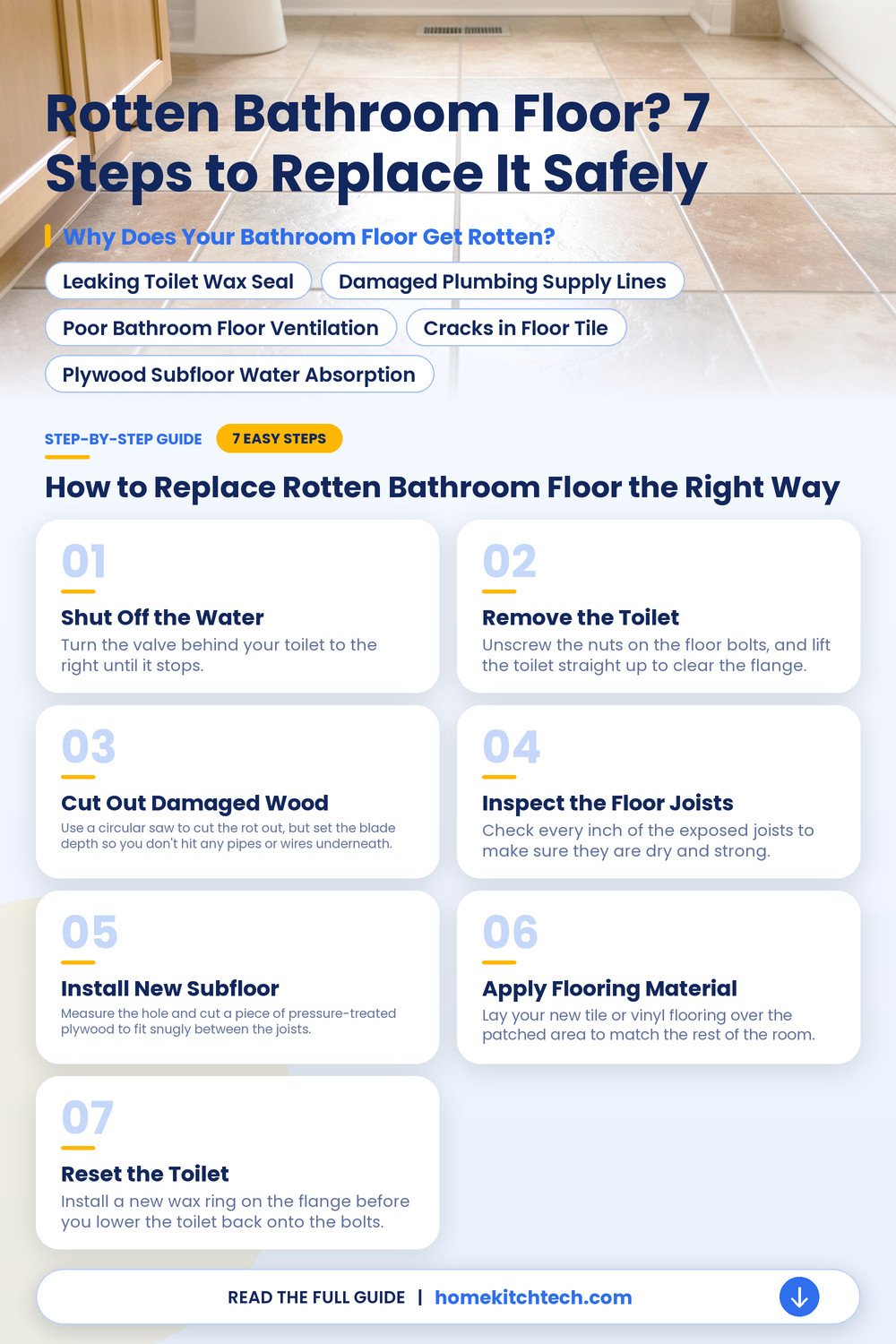
Why Does Your Bathroom Floor Get Rotten?
You’ll usually find that rot starts when water seeps past your toilet base. It hides under the floor for a long time, so you won’t know it’s there until the wood gets soft. This slow soaking ruins the subfloor material layers and can even reach the floor joists if you don’t catch it early.
Leaking Toilet Wax Seal
The seal under your toilet prevents water from hitting the floor, but it can fail if the toilet shifts. If the seal gets old, water leaks out and pools right on your subfloor. You’ll notice the floor feels soft around the base, which is a sign you need to pull the toilet.
Damaged Plumbing Supply Lines
A small drip from your supply valve adds up over time. You’ll see water staining on the floor around the pipe, which keeps the wood damp. Constant moisture makes the wood fibers break down, leading to the rotten wood planks that you’ll need to remove before they spread.
Poor Bathroom Floor Ventilation
Steam from your shower needs a way out, or it settles on your floor. If your fan doesn’t run, moisture stays trapped in corners. This damp air softens the surface, creating a perfect spot for rot.
Cracks in Floor Tile
Grout lines and tiles can crack when the house settles, or the subfloor moves. Water from your shower splashes into these cracks and sits against the wood. You’ll see the tiles loosen up, and the floor might even sink slightly when you step on that spot.
Plywood Subfloor Water Absorption
The wood layer under your finish floor acts like a sponge when it gets wet, so it loses strength. Once it soaks up enough water, it starts to crumble. You’ll need to pull out every bit of this damaged wood subfloor to build a solid base.
How to Replace Rotten Bathroom Floor the Right Way
You’ll find that tearing out the old floor takes more time than putting the new one in. Expect to spend a weekend on this, and keep a sturdy crowbar and a circular saw nearby for the heavy lifting. Work carefully around your pipes and electrical lines, as they run right under the floor.
- Set aside at least two full days for this project.
- Always turn off the water supply before you touch the toilet.
- Wear heavy gloves and goggles while you cut through the old wood.
- Expect to pay about $200 to $500 for new plywood and supplies.
Shut Off the Water
Turn the valve behind your toilet to the right until it stops. Flush the toilet to drain the water from the tank, then use a sponge to soak up what’s left in the bowl. You need the toilet empty and dry, so you don’t spill water on your already damaged floor while you work.
Keep a small bucket under the supply line, just in case a little water drips out when you loosen the nut. This simple step keeps your workspace dry and prevents extra mess.
Remove the Toilet
Unscrew the nuts on the floor bolts, and lift the toilet straight up to clear the flange. Lay it on an old towel to keep it from scratching your floor. Now that it’s out of the way, you can see how much of your floor is actually soft.
Cut Out Damaged Wood
Use a circular saw to cut the rot out, but set the blade depth so you don’t hit any pipes or wires underneath. You’ll need to cut back until you reach solid wood joists. Pull the pieces out with your crowbar, and clear away any nails or screws left in the joists.
Use a reciprocating saw to reach tight corners, but watch for hidden lines. You’ll want to clear the area well so you can inspect the frame.
Inspect the Floor Joists
Check every inch of the exposed joists to make sure they are dry and strong. If you find any wet spots, let them dry out with a fan for a day before you move forward. You’ll want to check for signs of mold or deep rot. If the joists themselves feel soft, you’ll need to sister them with new lumber for extra support. Don’t skip this step, because your new floor needs a sturdy structural frame.
Install New Subfloor
Measure the hole and cut a piece of pressure-treated plywood to fit snugly between the joists. Screw the new plywood subfloor panels directly into the joists, making sure the edges are supported on all sides. You want a flat, level surface that doesn’t flex when you walk across it.
Apply Flooring Material
Lay your new tile or vinyl flooring over the patched area to match the rest of the room. Use thin-set mortar for tiles or follow the maker’s instructions for your specific flooring type. Make sure the seams are tight, as any gap could let water back down to your new wood.
Reset the Toilet
Install a new wax ring on the flange before you lower the toilet back onto the bolts. Push down firmly to seat the seal, then tighten the nuts gently so you don’t crack the porcelain. Turn the water back on slowly, and watch the base for a few minutes to confirm there’s no leak.
After you finish, flush the toilet a few times to make sure everything works right. The area around the base should stay dry and firm when you step on it. You’ve successfully stopped the rot and given your bathroom a solid foundation base for years to come.
Can You Fix the Bathroom Floor Around Your Toilet?
Fix the wood right around your toilet base by pulling the fixture first. You’ll need to clear the area, disconnect the supply line, and lift the porcelain bowl off the bolts. Once the space is clear, check for dark, soft patches in the bathroom subfloor material that show where water has been sitting.
Cut into the wood with a sharp tool to remove the rotted section, and check the joists. You need to expose the floor joists to see if the rot has traveled into the frame of your house. If the wood feels solid and dry underneath, you’re ready to measure your replacement piece of plywood.
Screw the new wood into the joists, so it stays level and firm under your feet. Don’t leave any gaps between the old wood and your new patch, as these cracks invite future leaks. Apply a thin layer of durable wood sealant to the seams to keep moisture away from your fresh floor repair.
- Use a reciprocating saw to cut out the damaged wood sections.
- Wear a dust mask to avoid breathing in old, moldy wood particles.
- Clean the area with a vacuum to remove all loose debris.
- Check that your new subfloor sits flush with the existing surface.
Does the Age of Your Bathroom Affect This Job?
Older homes often have thicker floor materials, which make your repair task feel more involved. You might find several layers of vinyl or tile stacked up over the years, which hides the true state of your rotted wood. Lift these layers back to help you see if the rot has reached the bathroom floor joists or if it’s just on the top layer.
Modern bathrooms usually have a single layer of tile or sheet vinyl over the plywood, so you’ll find it much faster to reach the subfloor. If you’re working with a newer floor, try to keep the surrounding tiles intact so you don’t have to replace the whole room. You want to preserve the original floor finish as much as possible.
Different brands of toilets also have slightly different footprints on your floor. When you put the toilet back, you’ll need to make sure the new floor is strong enough to hold the weight without flexing. A weak floor causes the wax seal to fail, which starts your leak cycle all over again.
- Older homes may have tongue and groove planks instead of plywood.
- Use a pry bar to gently lift up old, brittle floor tiles.
- Test your floor stability by standing on the new subfloor patch.
- Keep a bucket nearby for any water left inside the pipes.
When Should You Call a Pro for Your Floor?
Sometimes, the rot has spread deep into the joists or the main support beams of your home. If you see the floor sagging, or notice deep black stains moving toward the wall, you’re looking at a bigger structural floor issue. A professional can reach what your tools can’t and will fix the framing before it becomes a major safety risk.
Feel free to call someone if you’ve never worked with plumbing or heavy porcelain fixtures before. Move the toilet carefully, as you don’t want to crack the base or hurt your back. If you aren’t sure how to handle the wax seal or the bolts, a plumber will handle the heavy lifting for you.
Skip the DIY route if your bathroom is on an upper floor. A leak could damage the ceiling below. Water damage in walls grows unseen, so keep a close eye on your bathroom floor integrity. A pro will check for hidden rot and make sure your bathroom floor is bone dry.
Why Does Rot Form Under Your Floor?
Rot happens when water sits in your floor for weeks or months without a chance to dry. Your toilet might have a tiny, hidden leak at the base. Over time, that small amount of water soaks into the wood, making it soft and spongy.
Poor airflow in your bathroom also plays a part in keeping your floor damp. If your exhaust fan doesn’t pull out the steam, that moisture collects on every surface. It eventually settles into the floorboards near the toilet, which creates a damp wood environment that is perfect for rot.
Even a good floor will fail if the sealant around your fixtures has worn away, so check the edges. You’ll notice the grout or caulk cracking as your house settles over the years. Water follows these tiny paths, seeps under your tile, and stays trapped inside the wood floor structure until the floor starts to fall apart.
- Check the wax ring under your toilet for signs of wear.
- Replace any cracked caulk around the base of your toilet bowl.
- Run your bathroom fan for 20 minutes after every single shower.
- Keep the floor dry by wiping up any stray splashes.
What Mistakes Make Your Floor Repair Worse?
Install the right type of wood for your floor patch to avoid a common mistake that leads to more rot. Use pressure treated plywood or exterior grade wood that resists moisture. If you use standard indoor plywood, it’ll soak up water like a sponge and fall apart within just a few months.
Another big error is skipping the new wax seal when you reset your toilet. The old wax gets flattened and won’t form a tight seal, no matter how hard you tighten the bolts. A bad seal sends water directly back into your new subfloor patch, which forces you to repeat this entire messy job.
- Buy exterior grade plywood to keep your floor durable.
- Always replace the wax ring with a brand new, thick one.
- Tighten the toilet bolts until firm, but don’t overdo it.
- Wipe away all old wax residue before setting the new seal.
Final Thoughts
Handle this repair by focusing on the source of the leak, as replacing the wood won’t stop the rot if the water keeps dripping. Make sure your subfloor is rock solid before you lay down your new tile or vinyl. Take your time, and don’t rush the reassembly of your toilet.
| Symptom | Likely Cause | Easy Fix |
|---|---|---|
| Soft wood floor | Leaking wax seal | Replace wax ring |
| Cracked floor tile | Weak subfloor | Install new plywood |
| Water on floor | Loose supply line | Tighten connection |
| Musty room smell | Trapped moisture | Improve ventilation |
| Toilet wobbles | Uneven floor | Shim the base |
| Dark wood stain | Slow pipe leak | Patch the subfloor |
Frequently Asked Questions
Can I Reuse My Old Toilet?
Yes, you can, provided it doesn’t have any cracks in the porcelain. You’ll need to clean off the old wax from the bottom before you set it back on your new floor.
How Do I Know If My Joists Are Rotten?
You’ll know by poking the wood with a screwdriver to see if it sinks in easily. If the wood feels soft or crumbles when you push, you’ll need to replace those sections.
Is It Safe to Use a Wax-Free Seal?
Yes, you can use a rubber or foam seal instead of wax. It’s often easier for you to install, and it won’t dry out or crack like the old wax rings.
Will My Floor Need a Special Coating?
No, it’s better to use moisture-resistant materials like pressure-treated plywood from the start. A coating on standard wood won’t stop rot if the wood gets wet from underneath.
Does My Toilet Need to Be Bolted Down Tightly?
Yes, you should tighten the bolts until the toilet is firm, but don’t force them. If you go too far, you’ll crack the porcelain base of your toilet.
Can I Patch the Floor Without Removing the Toilet?
No, skip that, because you need to see the entire area to fix the rot. You’ll find it impossible to get a good seal or a solid patch without moving the toilet.
