
As an Amazon Associate, I earn from qualifying purchases at no extra cost to you.
Replace a Bathroom Towel Bar in 10 Minutes: 5 Steps

A loose towel bar that wobbles every time you reach for a washcloth is more than just a nuisance. You’ll find that these fixtures often loosen over time, as the wall anchors lose their grip on the drywall. Refreshing the hardware isn’t a major project, but it does require a bit of patience to get the new brackets level. Grab your screwdriver, and let’s get that wall looking tidy again.
Replacing your bar is the quickest way to fix the problem. You’ll need a screwdriver, a level, and about 10 minutes to finish the job. If the new bar doesn’t align with the old spots, you’ll have to patch the wall and drill fresh holes for a secure fit.
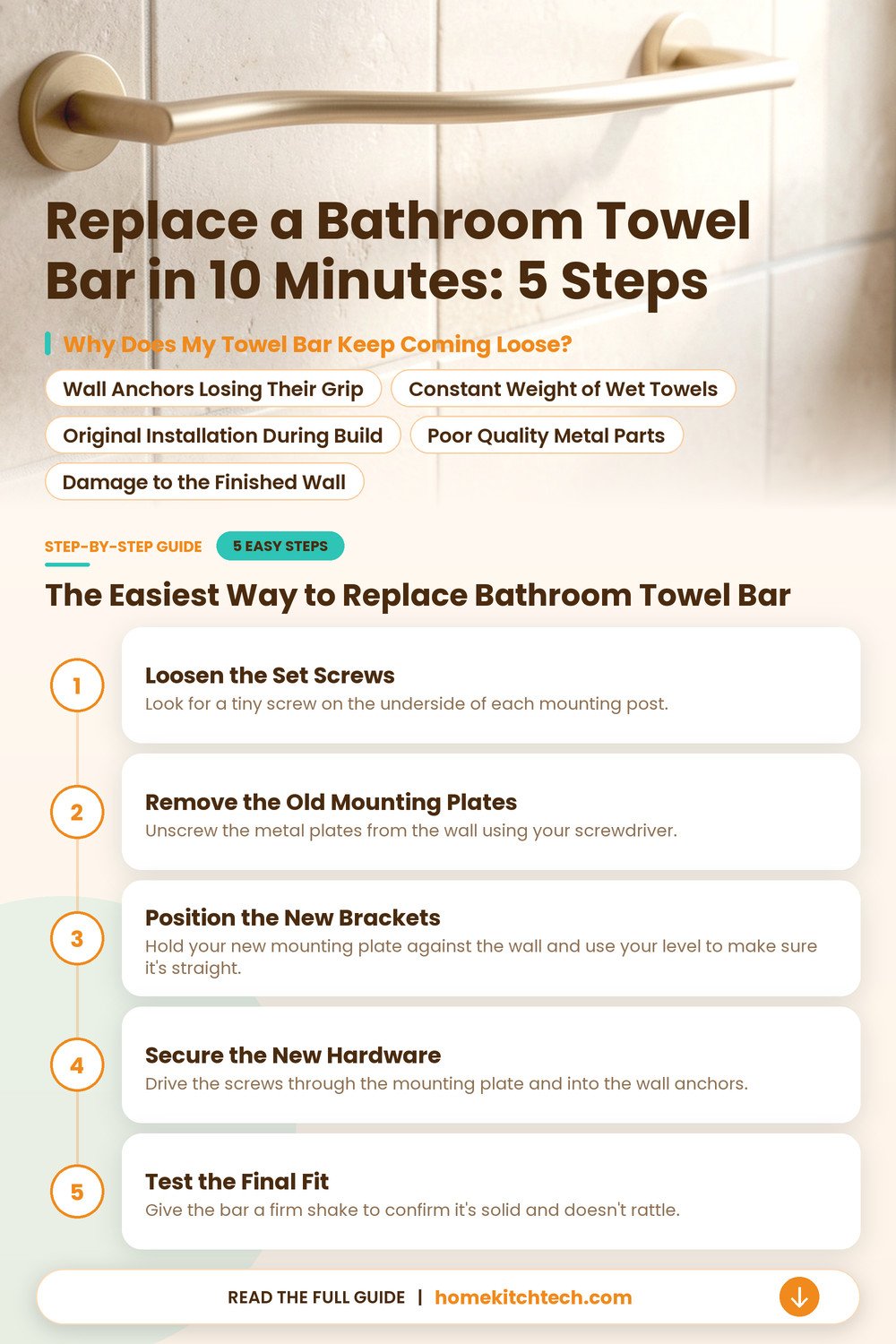
Why Does My Towel Bar Keep Coming Loose?
Most towel bars fail because the plastic wall anchors simply can’t handle the daily pull of heavy towels. You’ll notice the ends start to sag or wiggle, which means the screws are no longer biting into solid material. This happens because the constant weight slowly widens the hole in your drywall, until the entire piece pulls away.
Wall Anchors Losing Their Grip
Your drywall mounting anchors often give out because they aren’t meant for heavy, constant pressure. Once they shift, they tear the wall, and they leave you with a gaping hole that won’t hold a screw. Use sturdier toggle bolts if you want the new bar to stay put for good.
Constant Weight of Wet Towels
Wet towels are much heavier than you think, and they put significant strain on your hardware. Every time you grab a towel, you’re tugging on the bar and rocking it back and forth. This repetitive motion is the main reason your towel bar brackets slowly loosen from the wall over time.
Original Installation During Build
Sometimes, the original builder didn’t use the right hardware for your specific wall type. You might find that the screws were driven directly into the drywall without any anchors at all. That leads to a wobbly bar almost immediately, and there’s no way to fix it without starting over.
Poor Quality Metal Parts
Lower cost bars often use thin, flimsy metal that bends under the weight of a thick bath towel. You’ll see the ends start to warp, or the set screws fail to hold the bar tightly in place. Buy a sturdier set of hardware, and you’ll prevent these common structural headaches.
Damage to the Finished Wall
Removing an old bar often leaves behind ugly marks or chipped paint that you’ll need to address. If you’re lucky, the new mounting plates will cover the old holes completely. If not, a little bit of spackle and a touch-up of paint will make your wall look like new.
The Easiest Way to Replace Bathroom Towel Bar
Replacing this fixture is a straightforward task. It refreshes the look of your room. Plan to spend about 10 minutes on the actual work. You might need extra time if you’re patching the wall. Have a small level nearby to check that your new bar sits perfectly straight.
Loosen the Set Screws
Look for a tiny screw on the underside of each mounting post. Use a small flathead screwdriver, or the hex key that came with your new kit, to back it out. Once you turn it enough, you can pull the bar off the wall to reveal the mounting plate underneath. Do this carefully, as the bar might be heavier than it looks.
Don’t force the screw if it’s painted over or stuck with grime. A drop of penetrating oil can help it turn smoothly if it feels stubborn. Keep a firm grip on the bar while you work, so it doesn’t fall and scratch your floor.
Remove the Old Mounting Plates
Unscrew the metal plates from the wall using your screwdriver. You’ll likely see old plastic anchors left behind in the holes. Pull them out with a pair of pliers, or push them into the wall cavity if they won’t budge. Removing these remnants helps the new plate sit flush against the wall.
If the wall feels soft or crumbling around the holes, you’ll need to patch it before moving forward. A small amount of wall filler works wonders for these small spots, so take your time to smooth it out. Let the filler dry completely before you attempt to drill any new holes.
Position the New Brackets
Hold your new mounting plate against the wall and use your level to make sure it’s straight. Mark the screw locations with a pencil while you hold it steady. Double check that they align with the new plate’s spacing, if you’re reusing the old holes. Check your mounting hardware to see if it matches the size of your existing holes. If the new screws feel loose, swap them for slightly larger ones, or install new anchors. Taking this extra minute ensures your bar won’t wiggle after you finish.
Secure the New Hardware
Drive the screws through the mounting plate and into the wall anchors. Tighten them until the plate sits flush against the surface, but don’t over-tighten them or you’ll strip the drywall. Once the plates are firm, slide the new bar posts onto them and tighten the set screws.
- Check that the bar is level before tightening the final set screws.
- Tighten the set screws until they feel firm but not forced.
- Pull gently on the bar to ensure it doesn’t shift at all.
- Wipe away any pencil marks or dust left on the wall surface.
Test the Final Fit
Give the bar a firm shake to confirm it’s solid and doesn’t rattle. If it feels loose, go back and tighten the set screws on the bottom of the posts. Everything should feel rigid and look level when you’re finished with the job.
If you find that it still wobbles, check that the mounting plates are fully pressed against the wall. A loose plate is almost always the cause of a shaky bar. Once it passes your test, you’re ready to hang your towels.
How Do You Install a New Bathroom Towel Rack?
Find the right spot on your wall first, then grab your level. Mark your holes because a crooked bar stays that way forever, so take your time. You need a drill and the right bit for your wall type to make sure the towel bar brackets sit flush against the surface.
Once the brackets are level, push your heavy duty anchors into the holes. Tap them gently with a hammer until they sit flat, but don’t force them or you’ll crack the surrounding drywall. Line up your mounting plates, and tighten the screws until they don’t budge.
Slide the bar onto the brackets, and tighten the tiny set screws on the bottom. Give the whole thing a firm tug, so you know it holds your weight. If it stays put, you’re ready to hang your bathroom hand towels and move on to your next project.
When Should You Call a Professional for Your Towel Bar?
Sometimes, your wall is just too damaged to hold new hardware. If you see large, crumbling holes where your old bar used to be, your wall needs a patch before you try to mount anything else. A pro can fix the drywall, or they can install a wooden block behind the wall to provide a solid base for your heavy bathroom gear.
You might also run into trouble if you’re working with tile or stone, so be careful. Drill into these materials with special bits and a steady hand to avoid cracking your expensive finish. If you don’t own a diamond-tipped bit, it’s safer to hire someone who does.
Don’t ignore hidden pipes or electrical wires inside your wall. If you aren’t sure what’s behind your plaster, stop drilling before you hit a line that costs a fortune to fix. A pro uses a stud finder sensor to keep your home safe while they work.
- Use a diamond bit for drilling into hard ceramic tile.
- Patch large holes with joint compound before adding new anchors.
- Check for water lines behind the wall with a sensor.
- Ask for written quotes from three pros before starting work.
What Common Mistakes Ruin a New Towel Bar Installation?
Use a handheld stud finder to locate the framing. That is the fastest way to avoid a wobbly bar. You might assume your wall is solid everywhere, but the drywall between studs isn’t meant to carry heavy, wet loads. If you miss the studs, your bar will pull away from the wall the first time someone yanks a towel off it.
Another big error is using the wrong anchors for your specific wall material, so pick carefully. Plastic anchors that come in the box are often too weak for heavy, metal bars or thick, oversized towels. Buy metal toggle bolts if you want your setup to last through years of daily use.
Tighten the set screws properly. If you strip these small screws, you’ll have a hard time ever removing the bar again. Use the right size hex key, and go slow to avoid rounding out the soft metal heads.
- Buy metal toggle bolts for a much stronger wall grip.
- Test your wall studs before you drill any pilot holes.
- Use the correct hex key size to avoid stripping screws.
- Space your brackets exactly as the manufacturer guide suggests.
Why Does Your Towel Bar Feel Loose After a Few Months?
Heat and moisture inside your bathroom take a toll on your hardware, so keep an eye on it. Every time you run a hot shower, the air expands and contracts your wall material. This slowly loosens the grip of your anchors. It happens even if you installed everything perfectly at the start.
You’ll notice the bar wiggling when the weight of wet towels pulls on the brackets. Those damp fabrics add a lot of pressure, especially if you have a large family. Once an anchor starts to move, it widens the hole in your wall. That makes the wobble even worse.
Buy better quality hardware because cheap metal alloy bars don’t handle the constant tension as well as solid brass. These materials will stretch, and they eventually make the whole assembly feel flimsy. If you use stainless steel bars, your setup will stay rigid for years.
- Check your set screws every few months for signs of movement.
- Replace weak plastic wall anchors with stronger metal toggle bolts.
- Limit the number of heavy wet towels on one bar.
- Tighten loose hardware immediately before the hole gets too big.
How Do Different Materials Change Your Installation Steps?
Use solid brass or stainless steel for a long-lasting bar, but know it requires more care than lighter aluminum. These heavier materials need stronger supports, so they don’t sag over time. You’ll find that your brackets need extra long screws to reach deep into the studs for a secure hold.
If you choose a bar with a delicate finish like oil-rubbed bronze or polished nickel, keep your tools wrapped in a soft cloth. It’s easy to scratch the surface while you’re tightening the set screws, which ruins the look of your new bathroom upgrade. Always check the manufacturer guide for specific tips on protecting the finish during your install.
Older homes with plaster walls present their own set of challenges. Plaster is brittle and cracks easily, so don’t use a hammer drill on these surfaces. Use a slow speed setting and a sharp bit to keep the wall intact while you create your mounting bracket holes.
Final Thoughts
Refresh your bathroom by swapping out your old towel bar for a new one. Focus on finding solid wood studs for your mounting brackets, so your hardware stays tight for years. If you don’t feel confident drilling into your tile or plaster, call a pro instead of living with a damaged wall.
| Symptom | Likely Cause | Easy Fix |
|---|---|---|
| Bar wiggles | Loose wall anchor | Use toggle bolts |
| Hole is too big | Stripped drywall | Patch with compound |
| Bar spins | Loose set screw | Tighten with hex key |
| Crooked bar | Poor marking | Use a level |
| Sagging middle | Heavy wet towels | Limit towel count |
| Scratched finish | Tool slippage | Use soft cloth |
Frequently Asked Questions
Can I Install a Towel Bar on a Shower Door?
No, you shouldn’t try this unless your door is specifically made for it. Most shower glass will shatter if you drill into it, so stick to the walls.
Do I Need a Permit for This Project?
Usually, you don’t need a permit for a simple towel bar swap. Check with your local building office if you’re planning a full bathroom remodel, though.
Will a Longer Towel Bar Fit the Old Holes?
It’s unlikely, as mounting brackets vary by brand and size. You’ll probably need to patch the old holes and drill new ones for the new bar.
Is It Safe to Use Adhesive Instead of Screws?
Better not, because adhesive rarely holds the weight of wet towels for long. You’ll end up with a fallen bar and a damaged wall surface eventually.
How Much Does a Professional Installation Cost?
It depends on your local rates, but expect to pay about $50 to $150. Get two or three quotes to see what the going rate is in your city.
Can I Use a Power Drill on Plaster Walls?
Yes, but you should use a slow speed and a sharp bit. Go gently to avoid cracking the plaster, which is much more fragile than standard drywall.
