
As an Amazon Associate, I earn from qualifying purchases at no extra cost to you.
How Much to Rebuild a Bathroom? 8 Things That Drive the Cost

Every time you look at your tired bathroom, you probably wonder how much it takes to make it fresh again. You might see cracked tiles, a leaky faucet, or just a style that belongs in another decade. The total cost changes depending on whether you want a quick refresh or a full gut. Let’s look at the numbers, so you can plan your next move.
A full bathroom rebuild usually costs between $10,000 and $30,000. This price varies based on your city, the room size, and your chosen finishes. You’ll spend less if you keep the layout, but moving the toilet or sink will climb your budget quickly. Prices depend on your specific needs.
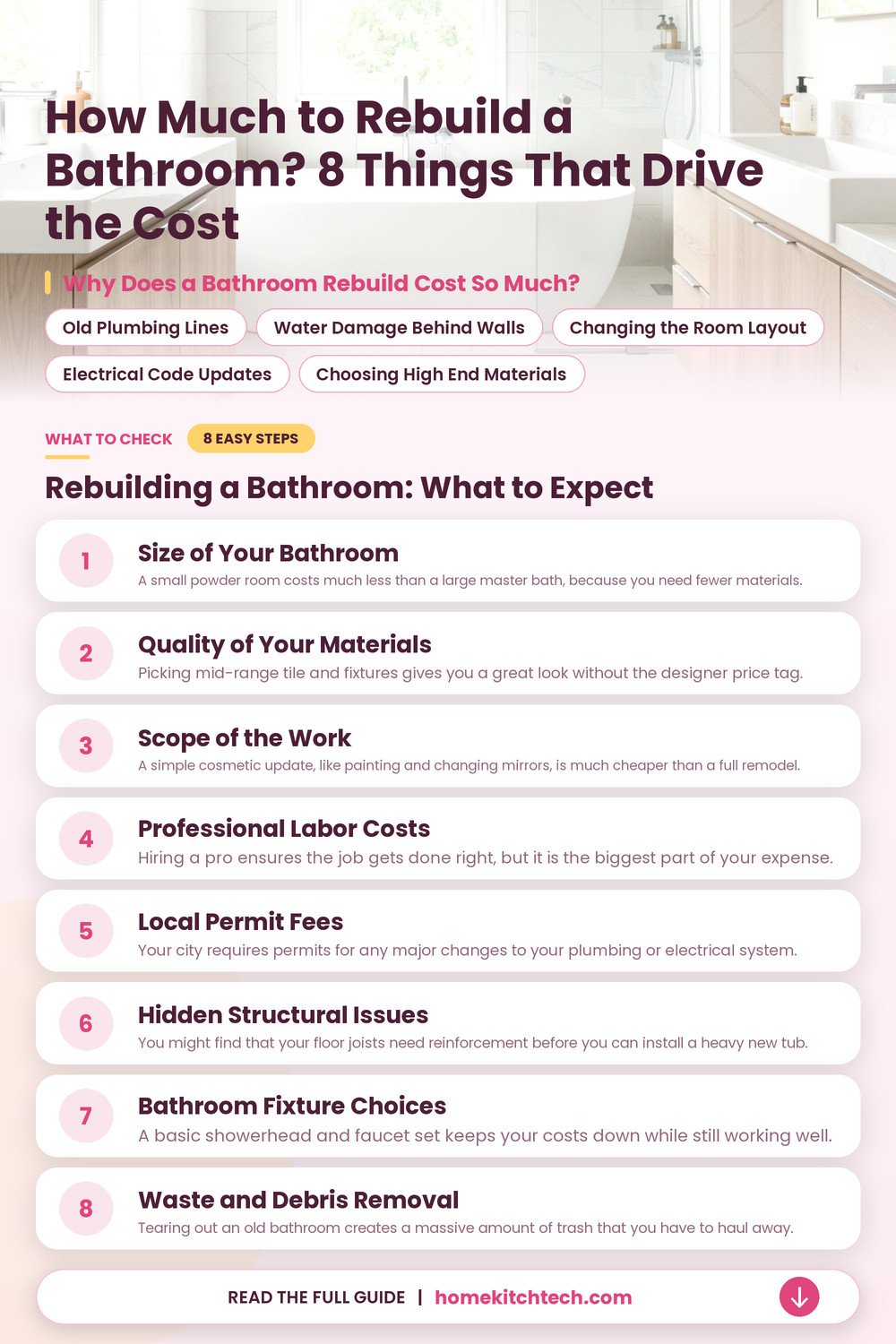
Why Does a Bathroom Rebuild Cost So Much?
You’ll often find hidden issues, like old water damage or plumbing that doesn’t meet today’s code, once you start pulling back the walls. Rebuilding a space is rarely as simple as swapping out a few fixtures.
Old Plumbing Lines
Hidden pipes often need an update to handle the pressure of modern fixtures. If your home has galvanized steel, you’ll need to replace it with copper or PEX to stop future leaks. Old lines can be brittle, so expect a plumber to spend extra time replacing your main drain line so it holds up for years.
Water Damage Behind Walls
You might find rot or mold once you tear out the old bathroom vanity unit and shower. Replacing damp wood is a necessary expense, but it keeps your home safe and dry. You’ll need to address the source of the leak, or you’ll just end up with the same problem in a few years.
Changing the Room Layout
Moving your toilet or shower requires a plumber to cut into your floor and ceiling, which is a major job. This labor adds up fast, because it changes your entire drain and supply system. You’ll need to account for extra materials, and you should expect the work to take longer than a simple swap.
Electrical Code Updates
Modern bathrooms need specific outlets that protect you from shocks near water. An electrician will likely need to rewire your bathroom lighting fixtures and fans, which helps keep your home safe. This work often requires opening up the walls to reach the wiring, so expect more time and labor.
Choosing High End Materials
Natural stone, custom tile, and designer hardware look great, but they carry a much higher price tag than basic options. You’ll see your total rise quickly when you pick luxury finishes for your shower floor. It’s easy to get carried away, so keep an eye on your spending as you select your items.
Rebuilding a Bathroom: What to Expect
Planning for your rebuild is just as important as the actual work itself. Expect to spend a few weeks, or even months, without a working bathroom if you’re doing a total gut job.
- Permits often add $500 to $2,000 to your total project cost.
- Labor usually takes up about 40 to 50 percent of your budget.
- Expect a 15 percent buffer for those surprise issues behind your walls.
- High-end fixtures can double the cost of a standard bathroom upgrade.
Size of Your Bathroom
A small powder room costs much less than a large master bath, because you need fewer materials. You’ll spend less on paint, tile, and flooring when the room has less square footage. Always measure your space twice, so you don’t overbuy expensive supplies. Don’t forget that a larger room also requires more labor hours to finish the walls and floors.
Quality of Your Materials
Picking mid-range tile and fixtures gives you a great look without the designer price tag. Budget-friendly brands often work just as well as the pricey ones. Check the quality of the finish, and pick items that feel sturdy. You want your shower tile to last, so don’t settle for the cheapest option you see on the shelf.
Scope of the Work
A simple cosmetic update, like painting and changing mirrors, is much cheaper than a full remodel. You’ll save thousands if you keep your existing shower and vanity intact. Think about your goals before you start ripping out perfectly good hardware. It’s often better to focus your funds on the areas that show the most wear.
Professional Labor Costs
Hiring a pro ensures the job gets done right, but it is the biggest part of your expense. You’ll pay more for licensed contractors who carry insurance and handle your permits. Get three written quotes to see what the going rate is in your area. Always verify their references, because quality work saves you from costly repairs later.
Local Permit Fees
Your city requires permits for any major changes to your plumbing or electrical system. Don’t skip this, because it protects you if you ever decide to sell your home. Check with your local office to see what is required for your specific project. It’s a small price to pay for the safety and legality of your new space.
Hidden Structural Issues
You might find that your floor joists need reinforcement before you can install a heavy new tub. This work is impossible to predict until the old floor is gone. Set aside extra cash, just in case you find something that needs a fix. You’ll be glad you have the funds ready if the pros find soft wood or uneven subflooring.
Bathroom Fixture Choices
A basic showerhead and faucet set keeps your costs down while still working well. You’ll find that fancy electronic toilets and steam showers add a lot to your bill. Pick features you’ll actually use every day, so you keep your investment smart. Focus on parts that are easy to clean and replace if they break.
Waste and Debris Removal
Tearing out an old bathroom creates a massive amount of trash that you have to haul away. You might need to rent a dumpster or pay a junk removal service to clear the site. Factor this cost into your total, so you aren’t surprised when the work begins. It’s a messy part of the job, but it’s part of the process.
How Much Does a Full Bathroom Remodel Cost?
Basic updates usually cost between $6,000 and $20,000. If you choose high-end finishes and move the walls, your total might climb past $30,000 quickly. Most projects take about three to six weeks to finish, but your timeline depends on your contractor’s availability and your local supply chain.
Clear the space by removing old tile or hauling away debris to handle the demolition work task yourself. Grab a sledgehammer and a sturdy pair of gloves to clear the area before your crew arrives. Don’t touch the plumbing or electrical lines unless you possess a license, as mistakes here cost more to fix later than hiring a pro from the start.
Check with your local building office to see which permits you need before you buy any materials. A small vanity swap might not require a permit, but moving a shower or toilet definitely will. Keep your receipts and your approved building plans in a folder, so you can show them to your inspector once your project wraps up.
- Budget extra cash for unexpected problems behind your walls.
- Order your tile and fixtures early to avoid long project delays.
- Get three written quotes from local pros to compare your costs.
- Keep your receipts in one place for your future home sale.
Is It Possible to Cut Costs by Keeping the Original Layout?
Save thousands on labor and pipe rerouting by keeping your sink and toilet in their current spots. You can avoid opening the floor and walls, which adds days of work and extra expense. If you like the way your room functions now, stick with the existing plan to keep your budget under control.
Spend your money on new paint, a fresh vanity, and updated light fixtures to provide a huge visual change for a fraction of the cost. You’ll avoid the hidden headaches of moving pipes and wires, but you’ll still make your bathroom feel brand new. Buy new bathroom cabinets that fit the current footprint, so you don’t have to patch your flooring or drywall repair patches.
How Does the Age of Your Home Change the Final Price?
Older homes often hide surprises like galvanized steel pipes or outdated wiring, which don’t meet current safety codes. You’ll need to account for these upgrades in your budget before you start tearing out your tile. A house built before the 1980s might also have lead paint layers or asbestos in the floor tiles, which requires professional testing and removal.
Modern homes usually feature standard layouts, so your renovation is much simpler and faster. You won’t face the same risk of finding brittle pipes or crumbling wall studs when you open up your vanity area. Newer homes are easier to update, and you’ll save on labor because your contractor won’t have to spend time fixing legacy issues.
Materials also drive your price. Natural stone or custom glass doors cost significantly more than standard acrylic options. Find quality fixtures that look great without spending a fortune. Shop smart and stick to mid-range materials to get the best balance of style and durability.
- Test your old floor tiles for asbestos before you start demo.
- Update your electrical outlets to ground fault circuit interrupters for safety.
- Choose porcelain tile instead of natural stone to save on costs.
- Buy your faucets and shower heads from reputable, well-known brands.
Can You Manage a Bathroom Remodel Without a General Contractor?
Manage your own project to save the fee that a contractor usually charges. You’ll need the time to coordinate your plumber, electrician, and tile setter. It’s a big job, and you’ll likely feel overwhelmed if schedules clash.
Call a pro if your project involves major structural changes, or complex plumbing rerouting that could cause leaks later. A licensed expert knows the local codes and carries the insurance you need to protect your home from damage. You’ll find that paying for professional labor is worth it, but make sure you hire someone you trust.
Why Do Costs Vary So Much Between Similar Bathrooms?
Your location determines how much you pay for labor and local building permits. Prices in a busy city are higher than in rural areas, because your pros face higher overhead costs and travel times. You’ll also find that the size of your bathroom dictates how much material you buy, which directly impacts your final invoice amount.
High-end finishes like heated floors or custom cabinetry push your price up, even if your room is small. You pay for the quality of the item plus the skilled labor needed to install it correctly. Cheap materials might look good for a year, but they often wear out.
Your project scope also dictates the total, as a simple refresh costs far less than a full gut job. When you decide to replace everything from the subfloor to switches, you’re essentially building a new room. This level of work requires more time, more materials, and more trips to the store for your supplies.
- Expect to pay more for custom work than for stock items.
- Factor in the cost of a dumpster for your old debris.
- Remember that your local labor rates change by the season.
- Check if your city requires a permit for minor plumbing changes.
Final Thoughts
A successful bathroom remodel depends on your ability to plan ahead, and you should always stick to your budget. Get your permits sorted early, and always account for the hidden issues that often appear once the walls come down. Take your time picking your materials, and hire a pro for any work that involves your home’s main systems.
| Item or Condition | Usual Range | Notes |
|---|---|---|
| Basic vanity swap | $500 to $1,500 | Includes faucet and labor |
| Full gut renovation | $6,000 to $20,000 | Varies by size and finish |
| Plumbing rerouting | $1,000 to $3,000 | Depends on pipe access |
| Electrical code update | $500 to $1,500 | Required for old homes |
| New tile installation | $1,000 to $4,000 | Depends on material cost |
| Building permit fee | $100 to $500 | Varies by your city |
Frequently Asked Questions
Is It Safe to Do My Own Bathroom Demolition?
Yes, you can do it if you wear your safety gear and shut off your water and power first. Don’t swing your tools near pipes or wires you can’t see. Stop if you aren’t sure what’s behind your wall, and call a pro to avoid injury.
Can I Save Money by Painting My Own Tiles?
You can paint them, but it’s often a temporary fix that won’t last long in a wet room. It’s better to save your money for new tile, because you want a look that stays fresh. Don’t expect paint to hide cracks or damaged grout lines in your shower.
Are High-End Fixtures Worth the Extra Cost?
It depends, as some offer better parts and easier repairs than cheap ones. You’ll find that quality brands often have parts available for years, while budget items are hard to fix. If you plan to stay in your home, you’ll appreciate the durability of better fixtures.
Does My Local Building Office Need to Inspect the Work?
Yes, you’ll need an inspection for most major changes to your plumbing or electrical systems. Don’t skip this, because you’ll need the records if you ever sell your home. Check with your local office for the rules.
Will a New Bathroom Increase My Home Value?
Yes, it usually helps, but you won’t always get back every dollar you spend. A clean, modern bathroom makes your home easier to sell. Don’t overspend on custom features if your other rooms don’t match that same level of quality.
How Do I Know If My Pipes Are Old?
You’ll see signs like low water pressure, rust-colored water, or frequent leaks in your pipes. If your home was built before the 1960s, you’ll likely have galvanized steel or iron pipes that need replacing. Ask a plumber to check your lines before you decide on your budget.
