
As an Amazon Associate, I earn from qualifying purchases at no extra cost to you.
Can You Cut on a Resin Cutting Board? Expert Guide

Most people grab a resin cutting board because it looks gorgeous. Then they freeze and wonder, “Wait, can I actually cut on this thing?” You are not alone in that moment. This article will tell you exactly what is safe, what is not, and how to use your resin board the right way.
First, check if your resin board has a food-safe seal before cutting anything on it. Then, use it only for light tasks like slicing soft fruits or cheese. Always wash it gently with mild soap after use. Never use harsh knives on raw resin surfaces, and keep the board away from high heat to avoid damage.
Can You Cut on a Resin Cutting Board?
Okay, so here is the honest answer. Yes, you can cut on a resin cutting board, but only if it is fully cured and sealed with a food-safe finish. Not all resin boards are made the same way, so this really matters before you grab your knife.
Raw or uncured resin is a big problem. It can leach chemicals into your food, and that is obviously something you want to avoid. So the first thing you should do is ask the maker or check the label to confirm the board is food-safe.
Even when a board is fully safe, it is still not ideal for heavy chopping. Resin is a hard surface, and it will dull your knives faster than wood or plastic. Plus, deep knife cuts can create tiny grooves where bacteria love to hide.
So think of your resin board as more of a “light duty” helper in the kitchen. It is great for serving, slicing soft things, or looking pretty on your counter. Just do not go at it with a cleaver.
- Always confirm the resin is fully cured before use
- Look for a food-safe label or certification on the board
- Avoid heavy chopping or cutting raw meat on resin
- Use softer knives or a gentle touch to protect the surface
- Clean it right away after each use with mild soap
- Keep it away from direct heat or sunlight to prevent warping
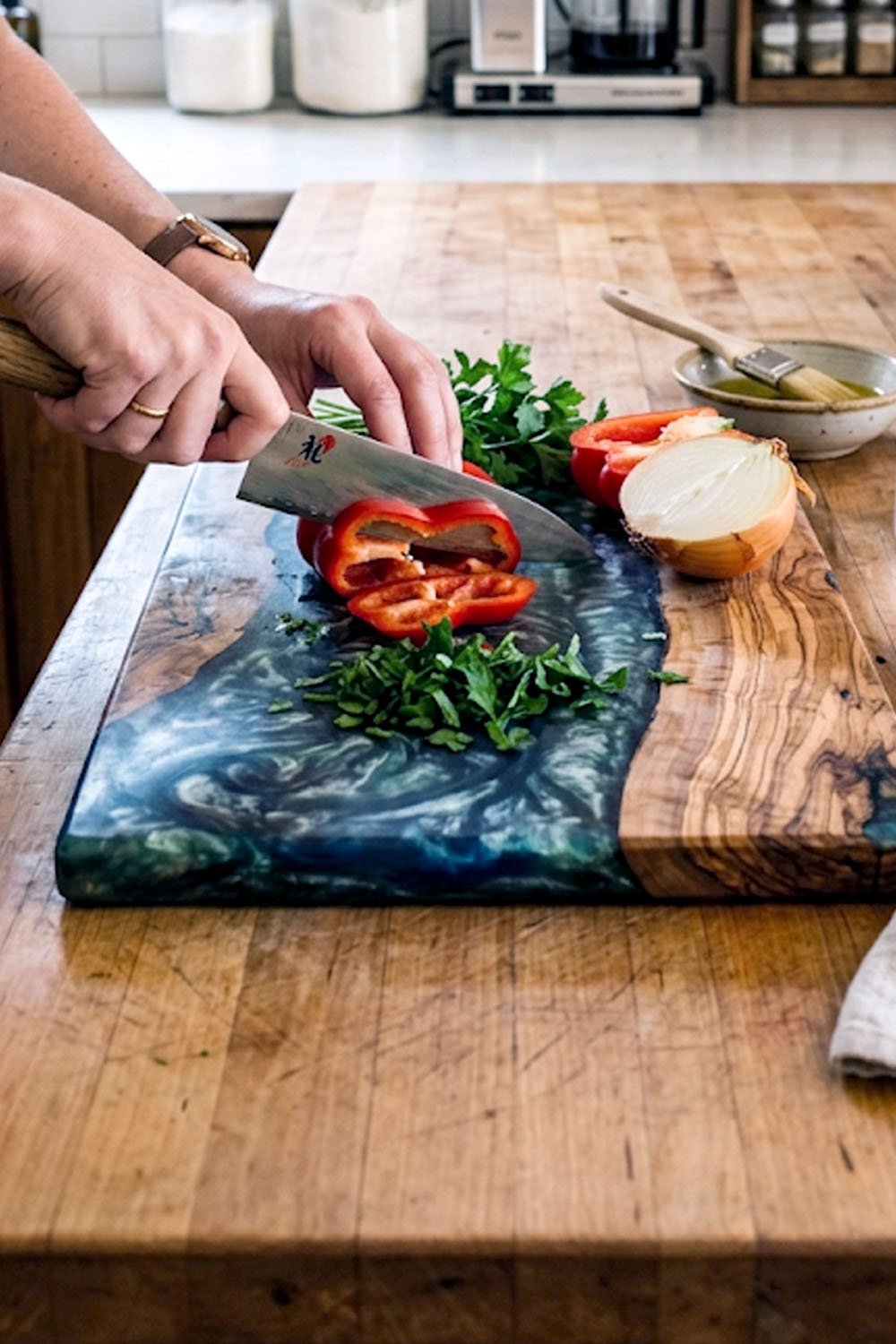
What Makes a Resin Board Food-Safe
Not every resin board you see on Etsy or in a store is safe for food contact. This is something a lot of buyers do not realize until after they bring one home. The type of resin used matters a lot, and so does how well it was finished.
Food-safe resin is specially made to be non-toxic once it is fully cured. The curing process hardens the resin completely, so it no longer releases any harmful chemicals. If the board skips this step or rushes it, there could be a real risk.
On top of that, many makers add a food-safe sealant as the final coat. This layer protects the surface and makes it safer to touch food. Without it, even a cured board might still absorb liquids or stain over time.
- Look for boards labeled “food-safe” or “non-toxic”
- Epoxy resin is most commonly used for kitchen boards
- Full curing time is usually 24 to 72 hours
- A sealant coat adds an extra layer of protection
- Handmade boards should come with safety info from the seller
- Avoid boards with glitter or dye that is not food-grade
How to Tell if Your Resin Board Is Ready to Use
So you just got a new resin cutting board and you want to use it today. Before you do, though, take a minute to check if it is actually ready. A few simple checks can save you a lot of worry later.
First, touch the surface. A fully cured resin board should feel completely hard and smooth, almost like glass. If it feels even a little bit tacky or soft in any spot, it is not ready yet. Put it aside for another day or two.
Next, smell it. Fresh or uncured resin has a strong chemical smell that is hard to miss. A safe, cured board should have little to no smell at all. Trust your nose here, it really does work.
- Press your fingernail gently on the surface to test hardness
- A finished board should have zero flex or softness
- No sticky spots means the resin has cured properly
- A mild smell is okay, but strong chemical odor is a red flag
- Check with the seller if you are unsure about curing time
- Store it flat to avoid any warping while it finishes curing
The Right Way to Cut on a Resin Board
Alright, your board is safe and ready. Now, let us talk about how to actually use it without ruining it. A little care goes a long way with resin boards, and it is honestly not that hard to do right.
Start with the right knife. A sharp chef’s knife or a soft serrated blade works best on resin. Avoid heavy cleavers or anything that requires a lot of force. The goal is light, smooth strokes that do not dig into the surface too deeply.
Also, think about what you are cutting. Resin boards are great for bread, cheese, fruits, and vegetables. However, cutting raw meat directly on resin is not a great idea. The grooves from knives can trap bacteria, and resin is harder to sanitize than wood or plastic.
- Use light pressure when cutting on a resin surface
- Stick to soft foods like bread, cheese, and fruit
- Avoid cutting raw meat or fish directly on the board
- Never use a mallet or heavy force on resin
- Rotate the board to spread wear evenly over time
- Add a rubber mat underneath to stop the board from sliding
How to Clean and Care for Your Resin Board
Cleaning a resin board is pretty simple, but there are a few things that can actually damage it if you are not careful. So let us keep your board looking great for as long as possible. It really is easy once you know the rules.
Always wash it by hand with warm water and mild dish soap. Resin does not do well in the dishwasher because the heat and harsh detergents can crack or warp it over time. A soft sponge is all you need to get it clean.
After washing, dry it right away with a clean cloth. Do not leave it soaking in water or sitting in a wet sink. Water can seep into tiny cracks and cause damage from the inside, especially on older boards.
- Hand wash only, never put it in the dishwasher
- Use mild dish soap and a soft sponge
- Dry it immediately after washing
- Apply a thin coat of mineral oil every few months
- Store it upright or flat in a cool, dry spot
- Keep it away from the stovetop or oven heat
Can a Resin Board Dull Your Knives
Yes, it absolutely can. This is one of the most common complaints from people who use resin boards daily. The surface is very hard, and that hardness takes a toll on knife edges faster than softer materials like wood.
Think about it this way. When you cut on wood, the blade sinks slightly into the surface. That gentle give actually protects the knife edge. Resin has no give at all, so the blade hits a solid, unyielding surface every single time.
Over time, that repeated impact chips away at the fine edge of your knife. You will notice your knives getting dull faster than usual. The good news is, you can still use your resin board, just be smart about which knives you grab.
- Hard surfaces like resin wear down knife edges quickly
- Use knives that are easy to resharpen on resin boards
- Avoid using your best Japanese chef knives on resin daily
- A honing rod after each use helps maintain the edge
- Consider using the resin board only for light tasks
- Keep a softer wood board for your heavy cutting work
Best Foods to Prep on a Resin Cutting Board
Now for the fun part. Let us talk about what this board is actually really good at. Because honestly, for the right foods, a resin board is a total joy to use in the kitchen.
Cheese is probably the number one thing resin boards shine at. The smooth, non-porous surface does not absorb odors or flavors, so your cheese always tastes clean and fresh. Plus, a beautiful resin board doubles as a stunning charcuterie display for guests.
Fruits and bread are also perfect choices. Slicing a baguette or cutting up mango on a resin board is easy and mess-free. The surface wipes clean in seconds, and there is no worry about staining like you might have with a wooden board.
- Soft and semi-hard cheeses are perfect for resin boards
- Bread, pastries, and crackers are ideal choices
- Fresh fruits like strawberries, grapes, and melon work great
- Use it as a serving board for appetizers and snacks
- Cooked meats that are already sliced are fine to serve on it
- Chocolates and desserts look stunning on a resin board
Are There Any Risks of Using a Resin Cutting Board
Let us be real for a second. There are some risks, and you deserve to know them upfront. Most of them are easy to avoid, but ignoring them can cause real problems in the kitchen.
The biggest risk is using a board that is not fully food-safe. If the resin was not cured properly or the seller used cheap materials, tiny amounts of chemicals can transfer to your food. This is rare with reputable brands, but it does happen with low-quality boards.
Another risk is bacterial growth in knife grooves. Once the surface gets scratched up from cutting, those grooves become hiding spots for bacteria. Regular cleaning helps, but it is still a bigger concern on resin than on naturally antimicrobial surfaces like wood.
- Buy from trusted sellers who confirm food-safe materials
- Replace your board if deep grooves or cracks appear
- Never use resin boards for raw poultry or seafood
- Inspect the surface regularly for signs of wear
- Avoid leaving food sitting on the board for long periods
- When in doubt, use a separate board for high-risk foods
Final Thoughts
I hope this gave you a clear and honest picture of whether you can cut on a resin cutting board. The short answer is yes, but with some care. Stick to light tasks, use the right knives, and always buy from a trusted source. Your resin board can be both beautiful and useful. You have totally got this!
| Feature | Details | Safe Level | Best Use | Care Tips | Watch Out For |
|---|---|---|---|---|---|
| Food Safety | Must be fully cured epoxy resin | High if food-safe certified | Serving and light slicing | Check label before first use | Uncured or cheap resin |
| Knife Compatibility | Hard surface, low give | Moderate | Light knives and soft foods | Use honing rod after cutting | Dulling of good knives |
| Best Foods | Cheese, bread, fruits | High | Charcuterie and snack boards | Wipe clean right after use | Raw meat and seafood |
| Cleaning Method | Hand wash only | High | Daily gentle cleaning | Mild soap, soft sponge | Dishwasher heat damage |
| Bacteria Risk | Can trap in knife grooves | Moderate | Low-risk foods only | Sanitize grooves regularly | Deep cuts in surface |
| Durability | Long-lasting if well cared for | High | Decorative and light duty use | Oil every few months | Heat, sunlight, soaking |
| Knife Damage Risk | High hardness dulls blades | Low for knives | Use secondary board for heavy work | Keep blades sharp | Using premium knives daily |
| Heat Resistance | Not heat-proof | Low | Cold or room temp foods only | Keep away from stove | Hot pans or dishes |
| Odor Absorption | Non-porous, resists odors | High | Strong-smelling foods like onion | Rinse quickly after use | Leaving food too long |
| Appearance | Stunning, artistic designs | High | Display and entertaining | Polish occasionally | Scratches from heavy use |
Frequently Asked Questions (FAQs)
Is It Safe to Cut Raw Meat on a Resin Board?
It is not recommended. Raw meat needs a surface that is easy to fully sanitize. Resin can develop knife grooves that trap bacteria, which makes it risky for raw proteins like chicken or fish.
Can I Put My Resin Board in the Dishwasher?
No, please do not. The high heat and strong detergents in a dishwasher can warp, crack, or dull the finish on a resin board. Always hand wash it with mild soap and warm water.
Is It Okay to Use a Heavy Cleaver on a Resin Board?
That is a bad idea. Heavy chopping tools can crack or chip the resin surface. Stick to lighter knives and gentle cutting motions to keep the board in good shape.
Can a Resin Board Cause Food Poisoning?
It can, if the resin is not fully cured or food-safe. Always buy from a reputable seller and confirm the board is certified safe before using it for food contact.
Do I Need to Oil a Resin Cutting Board?
It is not required, but a light coat of food-safe mineral oil every few months helps maintain the surface. It keeps the board looking great and adds a small extra layer of protection.
Is It Fine to Serve Hot Food Directly on a Resin Board?
No, avoid placing hot pots, pans, or steaming food directly on resin. High heat can warp or discolor the surface. Let food cool a bit before placing it on the board.
Can Resin Boards Be Used for Kids’ Food Prep?
Yes, as long as the board is fully food-safe and certified non-toxic. Stick to simple tasks like slicing fruits or spreading peanut butter, and always clean it well after each use.
Do I Have to Worry About Resin Scratching Easily?
Resin is actually quite scratch-resistant compared to plastic. However, heavy or sharp knives used with force can still leave marks over time. Light use and proper care keep it scratch-free longer.
