
As an Amazon Associate, I earn from qualifying purchases at no extra cost to you.
Bathroom Door Won’t Latch? 5 Fixes With Basic Tools

No one wants to spend their evening trapped in the bathroom because the door won’t open. You pull the handle, but the latch simply refuses to catch. It's a frustrating moment, and it usually starts with a loose screw or a sagging frame. Let's get your door working again, so you can move on with your night.
The most common cause is a misalignment between your latch and the strike plate. You should check if the hinges have loosened, since that causes the door to sag. Grab a screwdriver, tighten every screw you see, and test the handle again. If that doesn’t work, look at the latch itself.
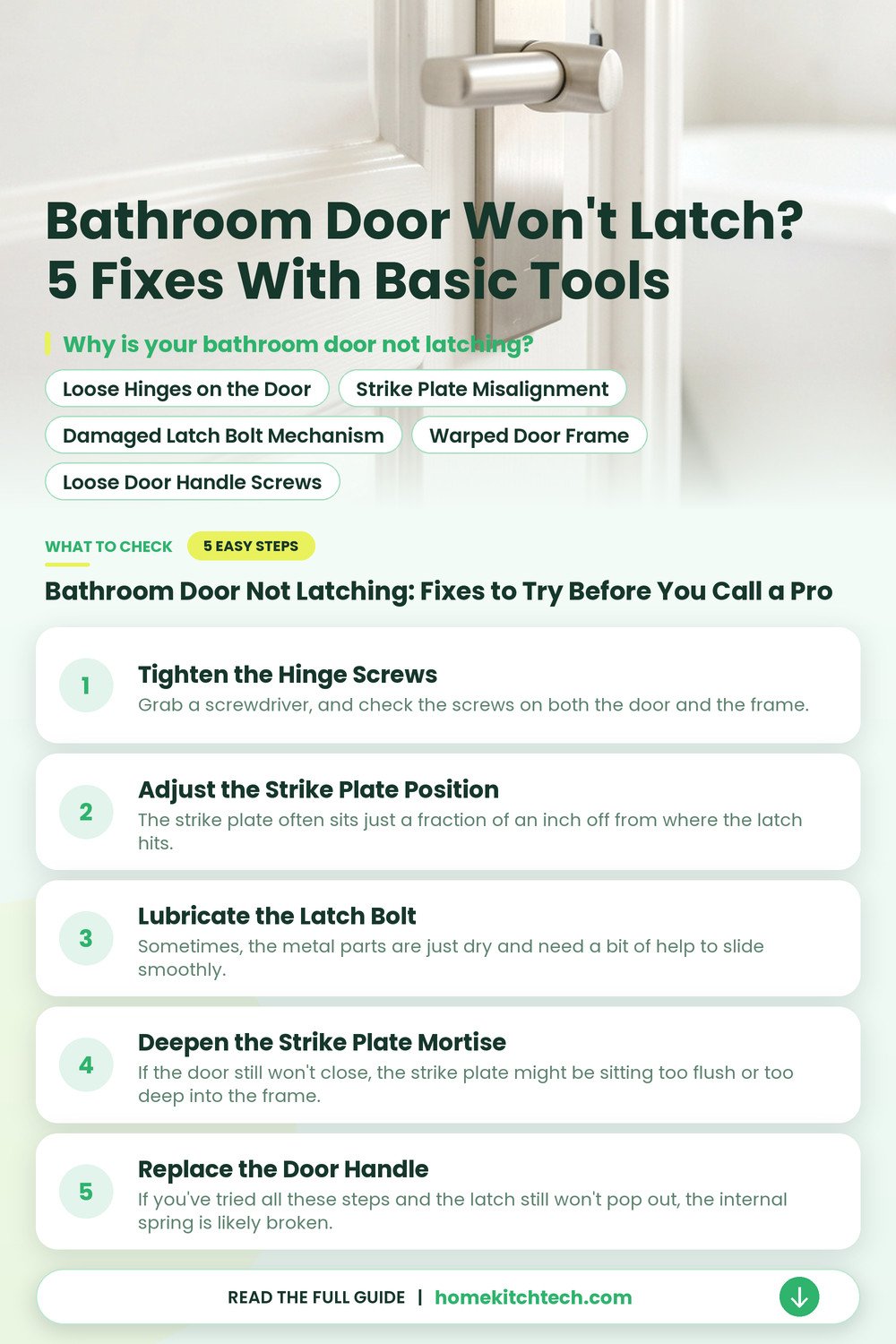
Why is Your Bathroom Door Not Latching?
You’ll find that most latching issues happen when the door shifts slightly in its frame. This small movement prevents the latch bolt mechanism from lining up with the hole in the door jamb. It's a common surprise, but it’s usually just a matter of gravity or weather changes.
Loose Hinges on the Door
Your door hangs on metal hinges that bear all the weight of the wood. Over months of use, the screws can pull away from the frame, but they allow the door to sag. You’ll notice the top corner rubbing, or the latch hitting the bottom of the strike plate. Tighten these hinge mounting screws first, and see if the door lifts back into its proper spot.
Strike Plate Misalignment
The metal piece on your door frame is called the strike plate. If your house settles or the door frame warps, the hole in this plate no longer lines up with your door hardware. You’ll see marks on the metal where the latch hits, but it misses the opening instead of sliding inside. It's a simple mismatch, and it keeps your door from clicking shut.
Damaged Latch Bolt Mechanism
The spring inside your handle can wear out, which leaves the latch stuck in a retracted position. You’ll feel the handle turn, but the metal bolt won’t pop out to hold the door closed.
This part gets a lot of action, and the internal springs eventually lose their tension. It's an easy fix, because you can buy a new unit at any hardware store.
Warped Door Frame
Humidity often plays a role in how your door fits inside the frame. During damp months, the wood can swell, which makes the door stick or sit too far away from the latch. You’ll feel the door dragging against the frame, or see a gap that’s too wide for the latch to reach. This change is often temporary, but it makes locking the door a real chore.
Loose Door Handle Screws
Your handle stays secure thanks to a few hidden screws that hold the two sides together. If these vibrate loose, the whole mechanism shifts and stops the latch from moving freely.
You’ll notice the handle feels wobbly, or it rattles when you touch it. Simply tighten these handle mounting screws to bring everything back into alignment for a smooth, firm click.
Bathroom Door Not Latching: Fixes to Try Before You Call a Pro
You can usually fix this issue in about 15 minutes, if you have a standard screwdriver. Most of the time, the problem is just a loose screw or a piece that needs a tiny adjustment. Keep your tools handy, because you’ll likely need to test the door a few times.
- Tighten all loose hinge screws to lift the door back into place.
- Use a metal file to widen the strike plate hole if needed.
- Replace the entire handle set if the internal springs feel broken.
Tighten the Hinge Screws
Grab a screwdriver, and check the screws on both the door and the frame. If a screw just spins without tightening, the hole in the wood is likely stripped out. You can fix this by stuffing a few wooden toothpicks into the hole with wood glue. Once that dries, put the screw back in, and it will bite into the wood firmly.
This step often solves the sag, which keeps your latch from hitting the strike plate properly. It's the easiest way to align your door, and you won’t need to remove any hardware. If the door still hits the frame after tightening, adjust the strike plate itself.
Adjust the Strike Plate Position
The strike plate often sits just a fraction of an inch off from where the latch hits. Take your screwdriver and loosen the screws on the plate, then shift it slightly up or down. You can use a metal file tool to carefully expand the hole if the latch is just barely missing the opening. It's a fiddly job, so take off only a little metal at a time.
Test the door after every few swipes of the file, and see if it catches. You want a snug fit, but don’t force the door to make it lock. Don’t take off too much metal, or the door will rattle when it’s closed.
Lubricate the Latch Bolt
Sometimes, the metal parts are just dry and need a bit of help to slide smoothly. Reach for a silicone spray lubricant or a bit of graphite to help the latch bolt. Wipe away any extra oil, so it doesn’t drip onto your floor or stain the wood. This often helps the latch snap into place with a satisfying click.
If the latch still feels gritty after lubrication, the internal spring might be failing. Look for signs of rust or debris inside the mechanism. A clean, smooth bolt should move in and out without any resistance from your finger.
Deepen the Strike Plate Mortise
If the door still won’t close, the strike plate might be sitting too flush or too deep into the frame. You can use a sharp chisel to carve out just a tiny bit more wood behind the plate. This lets the plate sit deeper, which gives your latch more room to extend and catch. Go slowly here, since you can’t add wood back once you cut it away.
Check your progress by holding the plate back in place, and trying the door. It's better to remove wood in small stages, rather than cutting too much at once. This fix is perfect for doors that seem to be just a hair too far from the frame.
Replace the Door Handle
If you’ve tried all these steps and the latch still won’t pop out, the internal spring is likely broken. You’ll need to unscrew the handle from the door and take it to the store to find a matching size. It's a straightforward swap, and it gives you a fresh, working lock in just a few minutes. Keep the door open while you work, so you don’t get locked inside.
Once the new handle is on, test the latch to see that it moves freely. If it still doesn’t catch, the issue might be a structural problem with the house that requires a carpenter. You’ve done what you can, and that’s the point where you call a pro.
Why Are You Trapped Inside Your Bathroom?
Panic happens when your bathroom door lock won’t turn, but you have options. Usually, the internal spring breaks or the latch gets jammed against the strike plate. Try to nudge the door toward the frame to release the pressure, which helps the latch slide back into the handle.
Wiggle the handle firmly while you push the door. If that doesn’t work, look for a small hole in the center of the knob. Use a thin paperclip or a tiny flathead screwdriver to press the emergency release button inside, which often pops the lock open.
Don’t force the handle too hard, or you might snap the internal parts. If you’re still stuck after a few minutes, call a neighbor to help from the other side. They can often unscrew the exterior door handle to let you out without damaging your door.
- Use a credit card to slide the latch back if it’s a simple spring latch.
- A small flathead screwdriver fits most emergency release holes on bathroom knobs.
- Keep a spare key or tool in a nearby drawer for future emergencies.
Do Different Door Materials Change Your Repair Steps?
Solid wood doors often swell when your bathroom gets humid, and this shifts the alignment of your latch. You’ll need to check if the door rubs against the frame before you blame the hardware. If the wood looks swollen, a light sanding on the edge often solves the problem without changing the lock.
Hollow core doors feel lighter, but they can twist over time because of cheap construction. Your latch might miss the hole because the door itself is sagging. Check your hinges first, as they hold the weight of the door and often require a simple tighten to bring the latch back into place.
Metal or fiberglass frames usually don’t warp, so the issue is likely a loose strike plate screw. These frames stay rigid, meaning your hardware is likely just worn down from years of use. Swap out old, stripped screws for longer ones to pull the plate tighter against the door frame edge.
When Should You Call a Professional Locksmith?
If your door handle won’t budge even with the screws removed, the internal mechanism is likely shattered. A pro has the right tools to take off a locked handle, and they won’t scratch your door finish. Don’t risk gouging your woodwork, if you’re not comfortable with the inner workings of a lock.
Sometimes, the door handle assembly is just too old to fix. A locksmith can match your existing hardware to a new one, so you don’t have to drill new holes. They’ll also check that the new lock functions smoothly, and that keeps you from getting stuck again.
Skip the DIY route if you notice the latch is stuck inside the door frame itself. A pro can safely cut the latch if it’s deeply wedged, and that keeps your door frame in one piece. You’ll spend about $80 to $200 for a visit, but it beats replacing a whole door.
- Call a pro if the internal spring mechanism is completely seized.
- Expect to pay for the visit plus the cost of new hardware.
- A locksmith can rekey your home if you want all doors to match.
How Can You Avoid Making Your Latch Problem Worse?
You might bend the metal inside your handle if you use too much force while the door is stuck. You’ll only make the internal pins harder to move, which turns a quick fix into a full replacement. Take a breath and work slowly, as patience is your best tool here.
Don’t spray heavy oil or grease into the keyhole or handle. That attracts dust and grime, which eventually gums up the delicate parts inside your latch bolt mechanism. Use a dry lubricant like graphite powder if you really need to help the parts slide, but skip the messy sprays.
Avoid using a knife or a thick screwdriver to pry the latch, as these tools easily mar your paint or wood. You’ll leave deep gouges that are hard to hide. Use a thin putty knife instead, which slides between the door and the frame without leaving a mark.
Check your hinges every few months to catch a sagging door early. A loose hinge mounting screw is the most common reason for a misaligned strike plate. Tighten a single screw, take a look at the gap, and prevent the latch from grinding against the metal strike plate.
- Skip liquid lubricants, as they trap dirt and cause future stickiness.
- Use a plastic card to test the latch before reaching for metal tools.
- Keep your hinges tight to prevent the door from sagging over time.
How Does Your Latch Wear Out Over Time?
Constant use wears down the metal spring that keeps your latch pushed out. You’ll notice the handle feels loose, or it doesn’t snap back when you turn it. Heat and moisture in your bathroom also speed up the corrosion of these tiny parts, and that makes them brittle.
Your habits also play a part, especially if you pull on the handle while the latch is still engaged. This puts unnecessary pressure on the internal spring pins every time you exit your bathroom. Over years, this habit causes the latch to sit crooked, and that explains why your door starts sticking or failing to catch.
- Replace the spring if the handle feels limp or doesn’t turn easily.
- Check the strike plate for deep scratches that indicate a misaligned door.
- Sand down high spots on the door edge if humidity causes the wood.
Final Thoughts
Inspect your hinges and strike plate first to see if a simple shift in the door is the culprit. Most issues are just a matter of a door that has moved over time, so it misses its mark. Tighten any loose hardware you find, and recheck the gap around the frame. You’ll likely find that a small adjustment gets your door back to clicking shut perfectly.
| Symptom | Likely Cause | Easy Fix |
|---|---|---|
| Handle feels loose | Broken internal spring | Replace handle set |
| Door won’t stay shut | Strike plate gap | Move strike plate |
| Door rubs frame | Sagging hinge | Tighten hinge screws |
| Latch is stuck | Poor alignment | Nudge door frame |
| Handle is stiff | Dirty mechanism | Use graphite powder |
| Door swings open | Weak latch spring | Replace latch bolt |
| Key won’t turn | Worn pins | Use dry lubricant |
| Knob feels wobbly | Loose mounting screws | Tighten handle screws |
Frequently Asked Questions
Is It Safe to Use a Screwdriver to Pry the Latch?
It’s better not to, because you’ll likely damage your door frame. If you need to force the latch back, use a thin plastic card or a putty knife to protect the paint on your door.
Can I Fix a Sagging Door Without a New Hinge?
Yes, you can often fix this by replacing one of the short hinge screws with a longer one. This pulls the door frame tighter, and it lifts the door back into the correct spot.
Are There Different Sizes for Bathroom Door Latches?
Yes, they come in a few standard sizes, so measure yours before you buy a replacement. Check the distance from the edge of the door to the center of the handle hole.
Do I Need to Remove the Whole Handle to Lubricate It?
No, you don’t need to take it off for a quick fix. You can usually puff some graphite powder directly into the latch gap while you work the handle back and forth.
Will a Warped Door Frame Always Need Replacing?
Not necessarily, as you can often sand down the area where the door rubs. If the warp is severe, you’ll need to call a pro to reset the frame.
How Often Should I Tighten My Door Hinges?
Check them about once a year, as part of your routine home care. It’s a simple task, but it keeps your door swinging smoothly and prevents latch problems.
What If the Latch Bolt is Bent?
You’ll need to replace the latch bolt, as it won’t function properly once it’s twisted. You can buy just the latch part at most hardware stores without replacing the handle.
