
As an Amazon Associate, I earn from qualifying purchases at no extra cost to you.
Bathroom Mold Keeps Coming Back? 6 Causes You Overlooked

One look at your ceiling tells you the story. You scrub the dark spots away, but they return within weeks, leaving you frustrated and tired of the chore. It's not your cleaning skills that fail you, but rather a hidden issue letting moisture linger where it shouldn’t. You need to find the root cause, so you can stop the cycle before it repeats again.
The most common reason for recurring mold is poor ventilation, which traps humid air in your room after every shower. Check your exhaust fan first, as it might just hum uselessly instead of moving air. If the fan works, you might have cold spots or slow leaks elsewhere. You'll stop the growth once you fix the airflow.
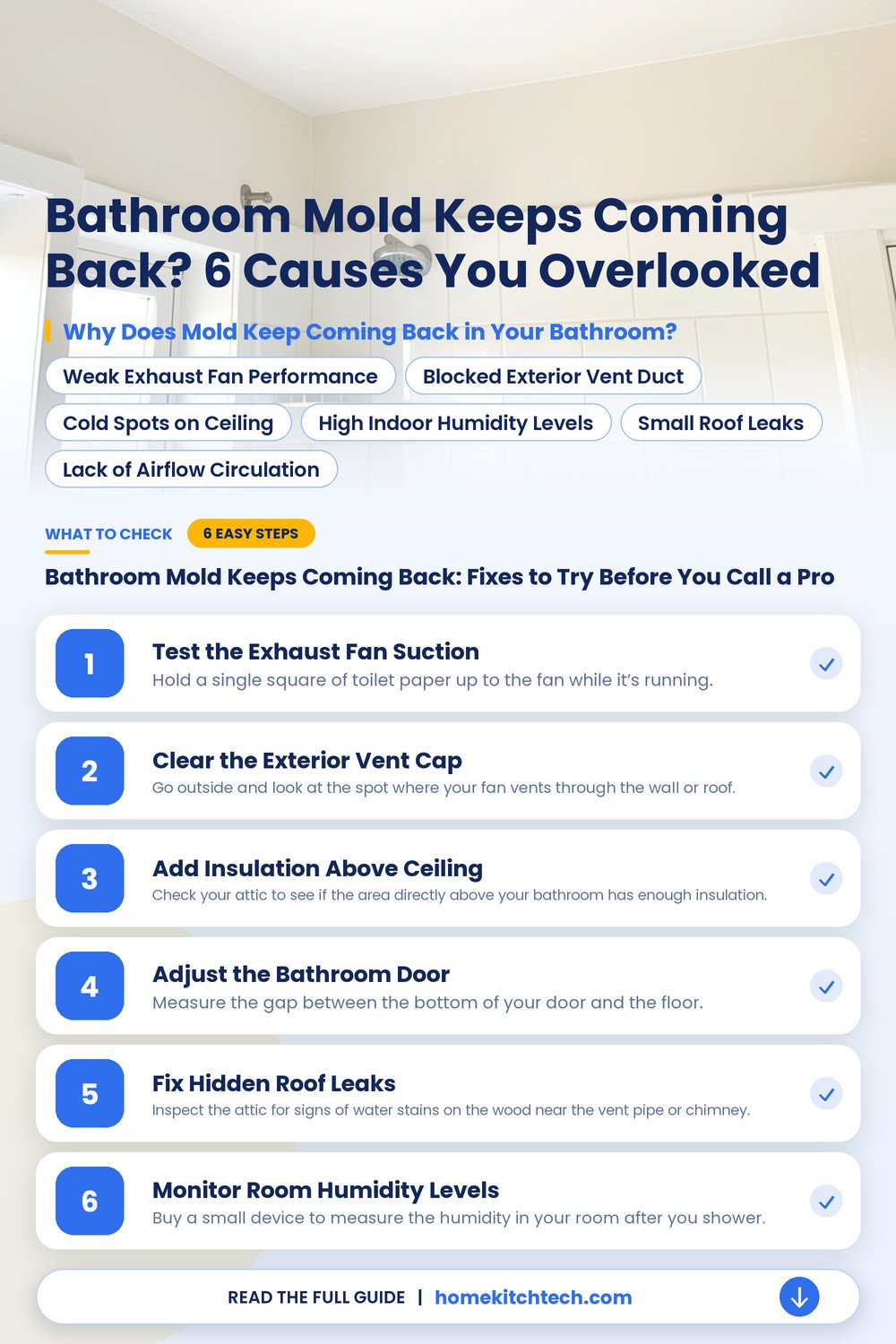
Why Does Mold Keep Coming Back in Your Bathroom?
You're dealing with a living organism that thrives in damp, dark corners. It needs only a tiny amount of moisture, and a food source like paint or drywall, to spread across your ceiling. You'll notice it returning because the underlying conditions that allowed it to grow in the first place haven’t changed.
- Mold cleanup costs vary, but basic supplies are under $30.
- Wear gloves and a mask when you scrub existing patches.
- Never mix bleach with other cleaners like vinegar or ammonia.
- Call a pro if the mold covers a large area.
Weak Exhaust Fan Performance
Your fan might sound like it's working, but it could be failing to move enough air. Dust clogs the motor and the blades, so the airflow slows down. You'll know it's struggling if the mirror stays fogged for more than 15 minutes after you shower. This trapped steam settles on the ceiling and feeds the mold growth cycle.
Blocked Exterior Vent Duct
The air from your fan has to go somewhere, and it usually travels through a duct to the outside. If the vent cap on your roof or siding is clogged with bird nests or debris, the air just pushes back into your ceiling cavity. You'll feel a lack of suction at the fan intake if the path is blocked. This trapped moisture creates a perfect home for dampness.
Cold Spots on Ceiling
Your ceiling might be colder than the rest of the room, due to poor insulation in the attic. Warm, wet air hits this cold surface, and it turns into tiny droplets of water. You won’t always see these droplets right away.
You'll notice this happening most in winter, when the temperature difference is high. This surface condensation buildup provides the constant hydration that mold loves. It creates a damp environment on your ceiling, even if your bathroom seems dry.
High Indoor Humidity Levels
Your home might have too much moisture in the air, from other sources like a basement or a humidifier. This extra humidity makes it hard for your bathroom to dry out, but you can manage it. You'll see the effects when towels stay damp for days, and the walls feel slightly sticky. Excess moisture throughout the house slows down the drying process for every surface.
Small Roof Leaks
Sometimes, a tiny leak from a damaged shingle or flashing lets water seep into your ceiling framing. You won’t see a drip, but the drywall stays damp enough to support life. You'll notice this if the mold appears in a specific, recurring pattern or along a seam. This hidden water keeps the area damp regardless of your fan.
Lack of Airflow Circulation
Your door might be too close to the floor. This stops fresh air from entering the room. Good ventilation requires a path for air to come in, while the fan pulls it out.
You'll find that the room stays muggy if the door is tight. It prevents proper air exchange. Proper bathroom air circulation is necessary to move that heavy, wet air out of your space for good.
Bathroom Mold Keeps Coming Back: Fixes to Try Before You Call a Pro
You can stop the cycle by improving how your room handles moisture. Expect to spend a few hours testing your setup, and keep a step ladder and a flashlight handy.
Test the Exhaust Fan Suction
Hold a single square of toilet paper up to the fan while it's running. If the fan has good power, it should hold the paper firmly against the grille until you pull it away. You'll find that a weak fan needs a good cleaning, or a motor replacement. If the paper falls, the fan isn’t moving enough air to prevent mold.
Clean the cover with a dry brush to remove dust buildup. Use a vacuum attachment to clear any debris from the blades, if you can see them. You'll notice an immediate change in the sound and pull, if the fan was just dirty. Keep the motor dry while you work, as water can damage the electrical parts.
Clear the Exterior Vent Cap
Go outside and look at the spot where your fan vents through the wall or roof. You'll likely find a screen or a flap that keeps pests out, but it can also trap lint. Carefully remove any leaves or nests that block the opening. You want the air to exit freely, not bounce back into your house.
It is a good idea to check this annually, as birds often build nests in these warm spots during the spring months. Use a long brush to reach inside the vent, if you see a buildup of lint. You'll be surprised at how much dust gathers there over the years. Wear safety glasses, and check that the flap opens and closes easily when the fan is on.
Add Insulation Above Ceiling
Check your attic to see if the area directly above your bathroom has enough insulation. You'll want to make sure the insulation isn’t covering the vent duct itself, which can cause condensation. Add more batting if you see bare spots in the floor joists. This keeps the ceiling warm, and it prevents water from forming.
Ensure you don’t block the soffit vents at the roof edge, which need to breathe. You'll keep the ceiling surface warmer by adding an extra layer of material. This simple change reduces the cold spots where moisture likes to gather. Check the manufacturer’s guide for your insulation type if you're unsure.
You should never cover the vent duct with loose insulation. Keep the area around the pipe clear to allow for proper airflow. This helps your attic moisture control stay balanced during the winter months.
- Roof leaks require a pro to ensure the flashing is sealed.
- Never climb onto your roof if you aren’t comfortable with heights.
- Water damage in drywall can lead to structural rot if ignored.
- Professional inspectors can find leaks you might miss from below.
Adjust the Bathroom Door
Measure the gap between the bottom of your door and the floor. You need at least half an inch to let air flow into the room from the hallway. You'll find that a tight door keeps the air stagnant, which creates a sauna effect. Trim the bottom of the door slightly, if it's sitting too low.
This simple change lets fresh air replace the steam that your fan pulls out. You'll notice the room dries much faster after you shower. It's a low-cost fix, but it makes a big difference in airflow. Check that the door still closes securely after you trim it.
Fix Hidden Roof Leaks
Inspect the attic for signs of water stains on the wood near the vent pipe or chimney. You'll see dark, damp-looking spots if rain is getting in. These leaks keep the ceiling drywall wet, even when the bathroom is dry. Call a professional roofer if you spot any signs of active water intrusion.
These hidden water leaks can cause damage that is hard to see from the bathroom. You should check the area carefully after a heavy rainstorm. If the wood is soft, you know you have a problem.
Monitor Room Humidity Levels
Buy a small device to measure the humidity in your room after you shower. You'll want to keep the level below 60 percent to prevent mold from getting a foothold. Run a dehumidifier in the hallway if the air stays damp for too long. This keeps the environment dry, and it remains inhospitable to mold spores.
Check the levels throughout the day to see how your room behaves. You'll find that consistent monitoring helps you identify when you need extra help. If the humidity stays high despite your efforts, call a professional to check for hidden plumbing leaks. They can find what you can’t reach.
Why is Your Bathroom Ceiling Molding Regularly?
Excess moisture trapped against your ceiling creates a perfect spot for spores to grow. Once the surface gets damp, it stays that way if your room doesn’t dry out within an hour after you finish your shower. You’ll often see dark spots form where the paint has bubbled or cracked from constant water exposure.
Check the paint finish on your ceiling to see if it’s the right type for a wet space. Flat or matte paint absorbs moisture, which feeds the growth, while glossier paint helps water bead up. You can scrub the area with mildew cleaning solution to kill the active colony before it spreads further across your ceiling drywall surface. It's a messy job, but it helps you get ahead of the recurring mold issue.
- Use a soft sponge to avoid damaging the ceiling texture.
- Wear a face mask when you scrub away visible growth.
- Keep your bathroom door open after you finish your shower.
- Check for signs of water seeping through your upper floor.
Can You Fix This Mold Problem Yourself?
You can handle most small patches of surface mold for under $50 if you have the right gear. A simple kit with a spray bottle, a scrub brush, and a protective mask covers the basics. Most jobs take about 2 to 4 hours of your time, but you’ll need to wait for the area to dry completely before you apply any new paint.
Call a pro if you see the mold covering a large section of your ceiling, or if you notice health symptoms when you enter the room. They have high-powered tools to find hidden water sources behind your walls that you might miss. It’s better to pay for a professional check than to deal with recurring mold issues that damage your home structure integrity. You don’t want to ignore these signs, as they often point to hidden water leaks.
- Buy a high-quality mold killer designed for indoor household surfaces.
- Expect to spend about $20 for a sturdy scrub brush.
- Clear out all your toiletries before you start the scrubbing.
- Wear rubber gloves to protect your skin from harsh chemicals.
Are There Any Safety Mistakes to Avoid?
Never mix bleach with other cleaners, because the fumes can make you sick quickly. Many people think bleach is the only answer, but it often just bleaches the color out without killing the roots inside your drywall. You’ll find that the spots come back within a week, because the core problem remains deep beneath the surface of your bathroom ceiling drywall.
Avoid using a pressure washer or a high-powered hose to rinse your ceiling, which forces water into the structure and creates more damage. You should also skip using an unvented space heater to dry the room, as this adds even more moisture to the air. Proper ventilation is the only way to keep your ceiling surface dry and clean. You need to focus on moving the air, not just heating it up.
Does Your Ceiling Material Affect Growth?
Older homes often have plaster ceilings that hold onto moisture much longer than modern moisture-resistant drywall. You’ll find that plaster absorbs water like a sponge, which lets mold grow deeper into the material where your brush can’t reach. If your ceiling has old wallpaper or multiple layers of paint, you’ll need to strip those back to stop the cycle.
Check the seams between your ceiling panels for any gaps that might allow steam to escape into your attic space. If you see signs of dampness, you’ll want to address the frame behind the tiles. It’s a fiddly job, but it lets you see if the wood frame above is wet. You don’t want to leave hidden water behind your ceiling tile system, as it causes structural wood rot. This keeps the drywall ceiling material from ever fully drying out.
- Remove the tiles carefully to avoid cracking the edges.
- Inspect the insulation above for signs of trapped moisture.
- Use a dry cloth to wipe down the metal grid.
- Replace any tiles that feel soft or show dark stains.
How Much Humidity is Too Much?
High humidity happens when your room can’t move air out as fast as your shower pumps it in. You might have a tiny bathroom, where the air gets saturated in just a few minutes of hot water use. If you don’t have a fan, or if the fan is too weak, the steam has nowhere to go but onto your cool ceiling surfaces.
Try to keep your shower temperature a bit lower, so you reduce the amount of steam you create during your routine. You can also run your exhaust fan for 20 minutes after you leave, so the room clears out. This simple habit prevents the excess bathroom moisture that fuels your ceiling mold problem every single day. It's an easy fix, but it takes consistency to protect your drywall ceiling finish.
- Install a basic humidity sensor to track your room levels.
- Keep your shower curtain pulled back to encourage better airflow.
- Wipe down the walls with a towel after your shower.
- Check your fan vent for dust blocking the air flow.
Final Thoughts
Mold on your ceiling is almost always a sign that your room isn’t drying out fast enough. You should focus on improving your ventilation first, as no amount of scrubbing will stop the growth if the air remains damp. Check your fan and keep the door open, so you help your bathroom recover after every use. That small change usually makes the biggest difference for your home.
| Symptom | Likely Cause | Easy Fix |
|---|---|---|
| Dark ceiling spots | Trapped steam | Run exhaust fan |
| Peeling paint | High moisture | Use gloss paint |
| Damp drywall | Roof leak | Call a pro |
| Musty air | Poor airflow | Open the door |
| Fuzzy growth | Thick dust | Scrub with soap |
| Soft ceiling tiles | Hidden leak | Replace tiles |
| Water beads | Cold surface | Add insulation |
| Stained corners | Poor venting | Clean the vent |
Frequently Asked Questions
Is It Safe to Use Bleach on My Ceiling?
Better not, because bleach can damage certain ceiling materials and often fails to kill the roots of the mold. You’ll find that using a dedicated mold cleaner is much more effective for your walls and ceiling.
Can I Paint Over the Mold to Hide It?
No, don’t do that, as the mold will simply grow through your new layer of paint within a few weeks. You’ll need to kill and remove the mold completely before you apply any primer or paint to your ceiling.
Are My Health Symptoms Linked to the Mold?
It depends, so you should check with a doctor if you feel unwell when you’re in your bathroom. If your mold area is large, you’ll want to bring in a pro to handle it safely.
Do I Need to Replace My Drywall?
You’ll only need to replace it if the drywall feels soft, crumbles, or has mold growing deep inside the material. If the mold is just on the surface, you can usually clean it off with the right supplies.
Should I Keep the Bathroom Door Open?
Yes, you should keep it open after you shower to let fresh air move through your room. This helps your bathroom dry out much faster and keeps the moisture levels down.
How Long Does It Take for Mold to Return?
It can return in just a few days, if the moisture source isn’t fixed. You’ll see it come back quickly, if your room stays humid and your fan isn’t moving air out effectively.
What Should I Use to Scrub the Ceiling?
You can use a store-bought mold cleaner to tackle the spots safely. Always wear gloves and a mask while you scrub your ceiling to stay protected from spores.
