
As an Amazon Associate, I earn from qualifying purchases at no extra cost to you.
How Mold Grows in the Bathroom: 5 Causes and What Stops It

So you walked into your bathroom today and noticed those dark, fuzzy spots creeping along the ceiling or near the shower tiles. It's not just dirty, it's a living colony that thrives on the moisture you leave behind every single day. That smell, a bit like wet earth or old paper, is usually the first sign of a hidden problem. Let's look at why your space is such a magnet for it.
Mold is a fungus that grows from tiny spores floating in your air, which settle on damp surfaces and multiply. It needs moisture, warmth, and a food source like dust or soap scum to grow. Once it finds a home in your bathroom, it breaks down materials and creates more spores to spread. You'll find it mostly on porous surfaces where water sits for a long time.
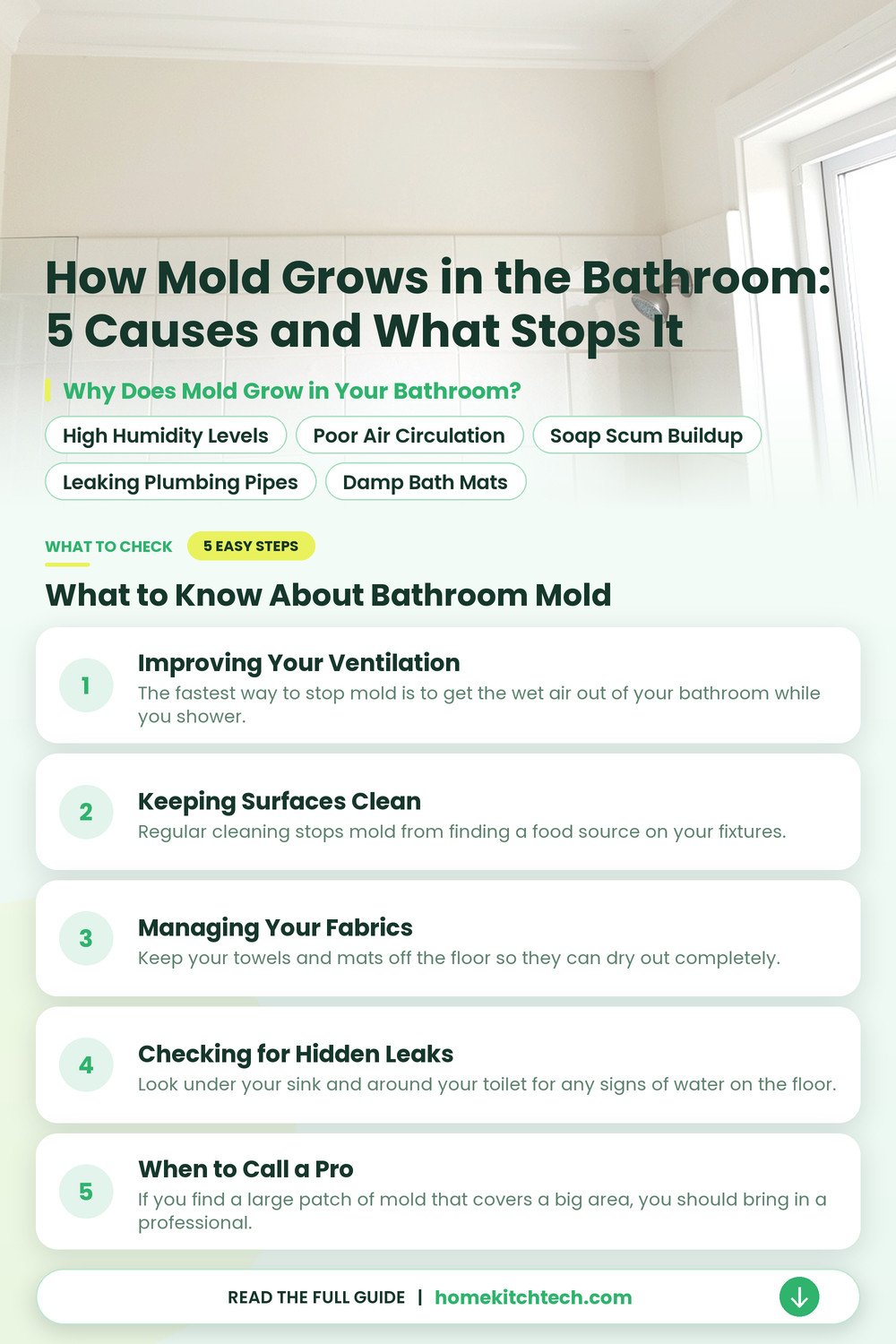
Why Does Mold Grow in Your Bathroom?
Your bathroom provides the perfect environment for mold because it stays wet longer than any other room in your house. Every time you shower, you add gallons of water vapor to the air, which then clings to your walls and fixtures.
High Humidity Levels
When your shower runs, the steam fills the room and raises the humidity quickly. If that air doesn’t escape, it condenses on your cold walls and mirror. This creates a thin film of water that never fully dries, which provides the exact conditions mold needs. You’ll notice this most on the upper corners of your walls, where the air stays still and damp.
Poor Air Circulation
Bathrooms without a window or a strong fan trap wet air inside for hours. Without a way to move that air out, your walls stay damp long after you leave. That trapped moisture soaks into your drywall and paint, which makes it a soft target for mold. You might see it start as tiny black dots that spread if you don’t improve the flow of air.
Soap Scum Buildup
Soap leaves behind a thin, waxy layer on your shower walls and glass doors. That layer acts like a snack for mold spores that land there. As you use your shower, the soap residue collects dirt and dead skin, creating a rich base for colonies. If you don’t scrub that film away, you’re essentially feeding the mold every time you clean yourself.
Leaking Plumbing Pipes
Small drips behind your vanity or under the tub create constant dampness, which you can’t even see. That water seeps into your floorboards or the back of your cabinets, giving mold a dark, hidden place to thrive. You might smell a musty odor that doesn’t go away even after you scrub the surface. A slow pipe leak is a silent way for mold to take over your home.
Damp Bath Mats
Towels and bath mats that stay wet on the floor for days are prime spots for mold. They hold onto moisture and trap it against your floor, preventing the surface from drying out. When you step out of the shower, your mat soaks up water and stays soggy until you hang it up. That constant contact with a wet floor creates a perfect, dark habitat for mold.
What to Know About Bathroom Mold
You'll find that managing mold is all about taking away the things it needs to survive, which means staying on top of moisture. It takes a little effort, but keeping your space dry is the best way to prevent big problems later.
Improving Your Ventilation
The fastest way to stop mold is to get the wet air out of your bathroom while you shower. Run your exhaust fan during your shower, and keep it on for at least 20 minutes after you finish. If you don’t have a fan, crack a window open to let the steam escape. You should also wipe down your shower wall tiles with a squeegee to remove excess water.
Wiping the glass and tiles prevents condensation from sitting on your walls, so do it after you bathe. It takes about one minute. A dry surface won’t support mold growth. You will find that this simple habit saves you hours of scrubbing later.
Keeping Surfaces Clean
Regular cleaning stops mold from finding a food source on your fixtures. Use a mild cleaner to remove soap scum from your tub and shower walls every week. Don’t forget to check the corners, and scrub the grout lines where grime hides. If you see dark spots, use a stiff brush and a cleaning solution.
Make sure you rinse away all cleaning products so no residue remains for mold to eat. Keep your cleaning supplies in a dry place outside the bathroom. Dried soap scum is much harder to remove than fresh residue. A clean surface is a major defense against new mold colonies.
Managing Your Fabrics
Keep your towels and mats off the floor so they can dry out completely. You should hang them on hooks or bars where air can reach every side. If you leave a wet mat on the floor, mold will grow underneath it very quickly. Wash your bath mats in hot water once a week to kill any spores that might be hiding.
- Use a fan to pull moisture out of your bathroom.
- Hang wet towels so they dry within a few hours.
- Wash your shower curtain if you see spots forming.
- Check under your sink for signs of damp wood.
Checking for Hidden Leaks
Look under your sink and around your toilet for any signs of water on the floor. If you see dampness or a stain on the wall, you might have a pipe that needs attention. Don't ignore a small drip, because it will eventually lead to a larger mold problem behind your walls. If you can’t find the source, call a plumber to check your pipes.
A pro can reach parts of your plumbing that you can’t see or touch. They can fix the leak before it ruins your cabinets or floor. Catching a leak early keeps your repair costs low. It is much better to fix a loose connection than to replace damaged wall materials.
When to Call a Pro
If you find a large patch of mold that covers a big area, you should bring in a professional. They have the gear to remove it safely without spreading spores to the rest of your house. If you feel sick or notice your mold comes back right after you clean it, that’s a sign of a deeper issue. Always check the official guidance on mold if you aren’t sure how to handle it.
A professional will find the moisture source that you might be missing. They can also tell you if your wall materials are too damaged to save. Don’t risk your health if the job looks too big for you to handle alone. A safe home is worth the cost of an expert.
How Much Does It Cost to Remove Bathroom Mold?
Most small spots won’t cost you a dime beyond a few household supplies, which you likely already own. Grab a spray bottle of white distilled vinegar and a scrub brush, and you can tackle the job in about 30 to 60 minutes. You’ll spend more time waiting for the solution to kill the spores than you will actually scrubbing the tile.
Big patches covering your entire ceiling or behind your drywall require more serious gear. You might need a respirator, a HEPA vacuum, and specialized cleaning gear, which brings your budget closer to $100 or $200. Professional testing or removal services obviously cost much more, often ranging from $500 to several thousand dollars depending on the size of the infestation.
Small areas are manageable for you if you take proper safety steps first. Always wear gloves, goggles, and a dust mask, so you don’t breathe in the spores. Open your window wide to keep fresh air moving, but keep the door closed to contain the mold spore dust.
- A gallon of white vinegar usually costs under $5.
- Scrub brushes for tile grout range from $3 to $8.
- You can buy a pack of disposable masks for $10.
- Hire a pro if the mold covers over 10 square feet.
Why Does Mold Return After You Clean It?
Moisture is the main culprit that lures mold back to your bathroom walls. Even if you scrub the surface clean, the hidden dampness inside your walls or behind your vanity keeps the roots alive. Stop the water source, or the spores will settle into your silicone caulk seal again.
Old, cracked silicone caulk bead around your tub often hides tiny pockets where mold thrives. You might think you killed the fungus, but it’s actually living in the porous material behind the seal. Remove the old stuff, and apply a fresh bead to solve this recurring problem for good.
Temperature changes also play a big part in your daily routine. Warm, steamy showers create condensation on your cold tile walls, which provides the perfect drink for new growth. Wipe your walls dry after every shower to prevent this water from sitting there long enough to cause trouble.
- Use a high-quality mildew resistant caulk for your tub.
- Run your exhaust fan for 20 minutes after showering.
- Fix leaky faucets that drip constantly into your sink.
- Check your wall paint for signs of water damage.
When Should You Call a Pro for Bathroom Mold?
Sometimes, the mold grows in places you can’t see, like inside your wall cavities or under your floorboards. If you notice a musty smell that just won’t go away, there’s likely a hidden mold colony you can’t reach with a brush. Don’t waste your weekend scrubbing if the problem is growing out of sight.
Health symptoms can also tell you it’s time to bring in an expert. If you or your family members start coughing or sneezing every time you enter the bathroom, you might have a dangerous mold growth situation that needs professional containment. These pros use specialized tools to check the air quality, and they remove the growth safely.
Check your local regulations regarding mold removal, because some areas have specific rules about how you dispose of contaminated drywall or insulation. A pro understands these local requirements, and they make sure your home stays safe during the entire cleanup process. It's better to be safe, so call a pro if you’re worried about your home air quality.
- Experts use moisture meters to locate hidden leaks.
- Professional mold removal includes sealing the work area.
- Air scrubbers help remove spores from your room.
- Call a pro if you see mold returning after cleaning.
What Common Mistake Makes Bathroom Mold Worse?
Stop mixing cleaning products, as that’s the fastest way to turn a simple chore into a dangerous situation. You might think combining bleach and ammonia will clean your shower faster, but that mix creates toxic fumes that hurt your lungs. Stick to one cleaner, and read the label before you start.
Another big mistake is painting over mold instead of removing it. You might want to hide the ugly spots with a fresh coat, but the mold will just eat through the new paint layer in a few weeks. It’s a waste of your money and effort to paint over something that’s still alive.
Avoid using a dry brush to scrub fuzzy mold spots, because you’ll just send millions of spores into the air. Keep the area damp while you clean to trap the dust, and use a wet sponge or a cloth soaked in your cleaning solution mix to wipe the surface gently. It’s a safer way to clean your bathroom wall surfaces.
- Keep your cleaning area well ventilated at all times.
- Never mix bleach with any other household cleaner.
- Use a damp cloth to wipe away surface mold.
- Wear long sleeves to protect your skin from spores.
How Do Materials Change Your Cleaning Plan?
Porous surfaces like wood trim strips or unsealed stone soak up moisture, and they hold onto mold much deeper than smooth glass or ceramic tile. You might need to sand and reseal wooden surfaces after you clean them to keep the mold from coming back. If the wood is soft or rotting, replace the piece entirely.
Your choice of cleaner also depends on the surface material type you’re scrubbing. Bleach works great on white tile, but it can ruin your colored grout or leave permanent marks on natural stone counters. Always test a small hidden spot first to see how your surface reacts to the cleaner before you go all in.
Final Thoughts
Keep your bathroom dry, as that’s the only way to win the long game against mold. Focus on your airflow. Fix any slow leaks before they turn into a major headache. Wipe down your shower walls after every use, and you’ll stop mold from settling in.
| Symptom | Likely Cause | Easy Fix |
|---|---|---|
| Musty smell | Hidden moisture | Run exhaust fan |
| Black spots | High humidity | Scrub with vinegar |
| Peeling caulk | Water damage | Replace the seal |
| Fuzzy growth | Poor ventilation | Wipe walls dry |
| Stained grout | Soap scum | Clean with brush |
| Damp mat | Standing water | Hang to dry |
Frequently Asked Questions
Is Bleach Good for Killing Mold?
Bleach kills surface mold, but it doesn’t penetrate porous materials like wood or drywall. You’ll find that it just bleaches the color out of the mold, leaving the roots behind. Use it on non-porous surfaces only.
Can I Use Baking Soda on Mold?
Yes, you can use baking soda to scrub surfaces, but it won’t kill the spores as well as vinegar. It’s a good gentle abrasive for your fixtures, but follow up with a disinfectant to finish. You’ll find it helps remove the lingering smell of mildew.
Are There Natural Ways to Prevent Mold?
Yes, you can use white vinegar to stop spores from growing on your bathroom surfaces. It’s a strong natural cleaner, so spray it on and leave it to dry. You should keep the area ventilated while you work.
Do I Need a Respirator to Clean Mold?
Wear a mask if you’re dealing with a large area of mold, because it protects your lungs from the spores you’ll release. You can find simple N95 masks at your local hardware store. Keep the door closed to contain the dust, but keep the window open for air.
Should I Replace My Shower Curtain?
Replace your plastic curtain if it’s covered in dark spots that won’t wash off. It’s often cheaper to buy a new one, so don’t waste your time scrubbing the folds. You’ll save yourself a lot of frustration, so just toss the old one.
Will a Dehumidifier Help My Bathroom?
Yes, a small dehumidifier works wonders if your bathroom doesn’t have a good fan. It pulls the moisture out of your air, which stops mold from finding a place to grow. Empty the tank regularly, and you’ll keep your air dry.
