
As an Amazon Associate, I earn from qualifying purchases at no extra cost to you.
Bathroom Radiator Not Working? 5 Fixes Before You Pay a Plumber

What if you walk into your bathroom, reach for the dial, and feel nothing but cold air? That radiator is supposed to keep your space cozy, but it’s clearly not pulling its weight today. You don’t necessarily need a pro right away, as some common hiccups are easy to fix. Don’t worry, because you can handle these minor troubles. Let’s look at why your heater might be taking an unscheduled break right now.
The fix is often just letting out a little trapped air. Use a radiator key or a flathead screwdriver to open the valve, and bleed the system. If that doesn’t bring the heat back, you might have a stuck pin or a faulty valve head. Check these simple things, but call a pro if you’re stuck.
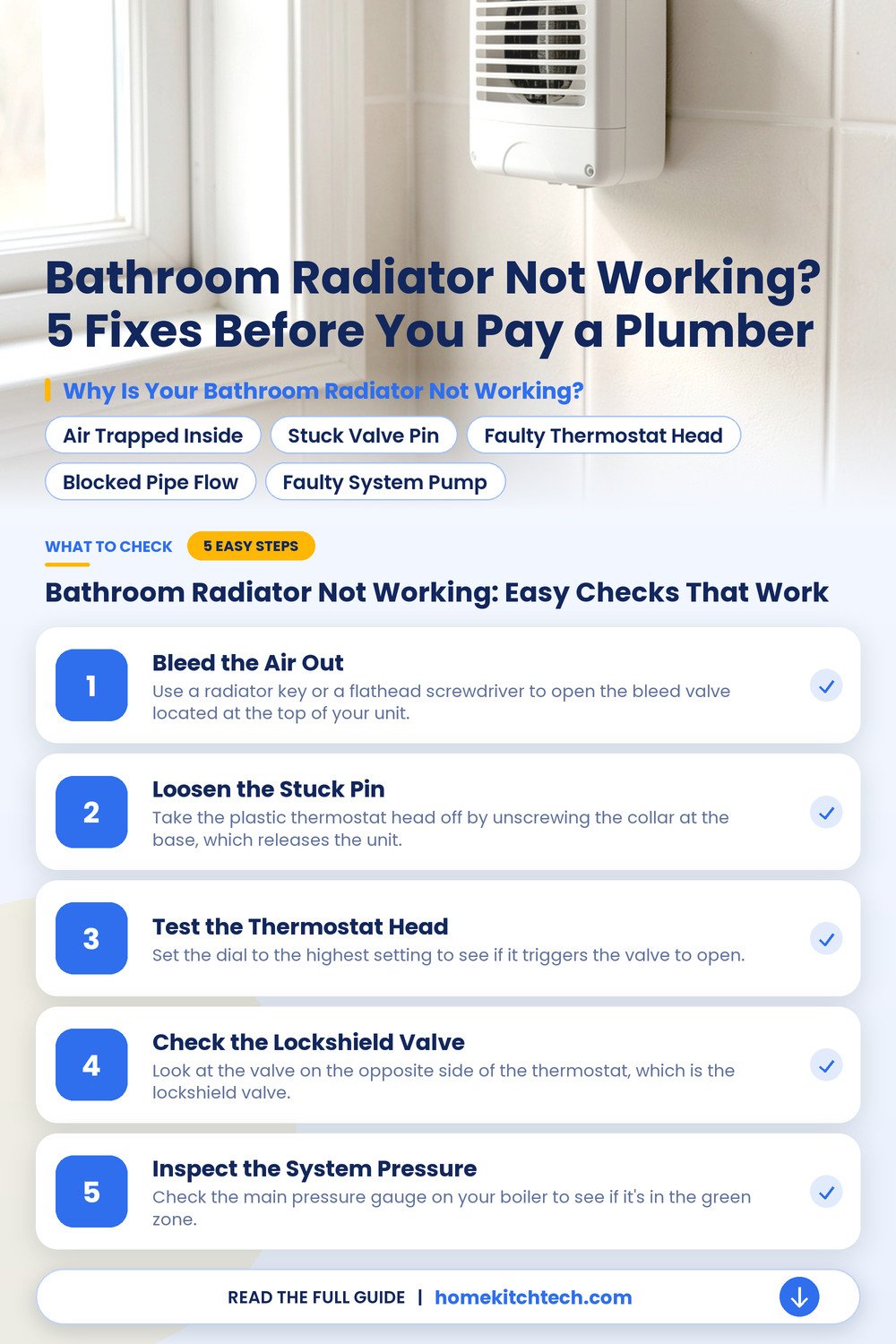
Why is Your Bathroom Radiator Not Working?
Your radiator relies on hot water flowing through it to stay warm. When air bubbles get trapped inside, they block the flow and leave your unit cold, even when the rest of your house is toasty. You’ll notice it right away, especially when the metal stays chilly to the touch.
Air Trapped Inside
Air pockets are the most common reason for a cold unit. When air builds up, it prevents the hot water from circulating through the pipes and into the metal fins. You’ll know it’s air if the top part of the unit feels cold, but the bottom stays warm. Bleed the air out to get the heat flowing again.
Stuck Valve Pin
The valve that controls water flow can sometimes get stuck in the closed position. This often happens if the unit hasn’t been used for a long time, like after a long summer break. You’ll see the valve head attached to the side of the radiator. If the pin underneath that head gets jammed, no hot water can enter your bathroom radiator unit to warm up the room.
Faulty Thermostat Head
Your thermostat head regulates the temperature by opening or closing the valve. If the internal sensor fails, it might think the room is already warm enough and keep the valve shut tight. You can tell if this is the issue if the head feels loose, or if the dial doesn’t click when you turn it. A broken head keeps your unit from getting the signal to heat up.
Blocked Pipe Flow
Sometimes, the problem isn’t the unit itself, but the pipes feeding it. If a valve elsewhere in the system is turned off, or if there’s a blockage, the water won’t reach your bathroom at all. Check your main valves to see if everything is open and clear. You might notice other radiators in your home are also cold if the main supply is the issue.
Faulty System Pump
The pump is the heart of your home heating system, pushing hot water through every pipe in your house. If the pump fails, your central heating pump won’t be able to push water all the way to your bathroom. You’ll likely notice the whole house feels cold, not just this one room. This is a bigger job that usually requires a pro to inspect the central unit.
Bathroom Radiator Not Working: Easy Checks That Work
You can often get things running again with a few simple tools and some patience. Keep a towel nearby, since you might see a tiny bit of water when you open the valves.
- Keep a bucket handy to catch any drips during the process.
- Turn off your heating system before you start to avoid burns.
- Wait for the unit to cool down completely before you work.
- Call a pro if you see leaks that don’t stop after tightening.
Bleed the Air Out
Use a radiator key or a flathead screwdriver to open the bleed valve located at the top of your unit. Turn it slowly counter-clockwise until you hear a hissing sound, which is the trapped air escaping. Hold a cloth over the opening to catch any spray. Once water starts to drip out steadily, tighten the valve back up firmly. This process clears the trapped air bubbles that keep your metal heater from getting hot.
If you don’t hear a hiss, the valve might be painted over or just very tight. Don’t force it too hard, or you risk snapping the metal. If it won’t budge, try a little penetrating oil and wait a few minutes before trying again.
Loosen the Stuck Pin
Take the plastic thermostat head off by unscrewing the collar at the base, which releases the unit. You’ll see a small metal pin sticking out of the valve body. Try pushing the pin in with the handle of a screwdriver to see if it moves freely. If it’s stuck, tap it gently, or pull it out very slightly with a pair of pliers. Once it pops back out on its own, it’s ready to work again.
Don’t pull the pin all the way out, because you’ll have water spraying everywhere. If the pin is completely seized, you’ll need a plumber to replace the whole valve.
Test the Thermostat Head
Set the dial to the highest setting to see if it triggers the valve to open. Sometimes, the internal wax sensor in the head just needs movement to wake up. Turn the dial back and forth several times to loosen up the internal parts. If it still doesn’t engage, replace the head with a new one. A new head is cheap, and it usually just screws on.
Check the Lockshield Valve
Look at the valve on the opposite side of the thermostat, which is the lockshield valve. It usually has a plastic cap over it to keep people from messing with it. Take the cap off, and use an adjustable wrench to check that the valve is turned fully open. A partially closed valve will restrict the water flow, and it will leave your unit lukewarm.
Remember which direction you turned it, so you can set it back if needed. If the valve feels very stiff, don’t force it past the point of resistance.
Inspect the System Pressure
Check the main pressure gauge on your boiler to see if it’s in the green zone. If the pressure is too low, the water won’t have enough force to reach the highest points in your house. Add water to the system by following your manual if the gauge is low. If you aren’t sure how to do this, call a pro to avoid causing any damage.
If you notice the pressure drops again after a few days, you might have a hidden leak. Check the pipes and valves around the house for any damp patches. A recurring pressure loss is a sign of a larger system problem that needs a professional look.
Can a Leaky Radiator Damage Your Bathroom Floor?
Water leaking from your bathroom radiator unit can ruin your subfloor, so look for signs of dampness. Check the joints and the bleed valve every week for signs of moisture. Wipe it up with a towel, and find the source of the drip immediately, because water spreads fast.
Most leaks happen because a nut has worked itself loose over time. Tighten these connections with an adjustable wrench, but be careful not to overtighten them. If the water is coming from inside the valve body, you might need to replace the rubber gasket seal to stop the flow.
Small drips often lead to warped floorboards, or mold growth beneath your tiles. Don’t deal with a full floor repair, because a valve nut only needed a half turn. Keep a close eye on your pipes to catch these problems, so they don’t become expensive home projects.
Why Does Old Age Stop Your Radiator From Heating Up?
Internal rust builds up over many years and turns into a thick sludge that blocks your water flow. You’ll notice the bottom of your unit stays cold, but the top might feel warm. This gunk settles at the lowest point of your system, and it prevents hot water from circulating through the metal fins.
Hard water also plays a part by leaving behind mineral deposits on the inside of your valves. These crusty bits make it hard for the parts to move, or close properly. If your system is more than 15 years old, you might find that the old radiator pipes have narrowed from these deposits.
Try a system cleaner to break down some of this debris, but it’s often a slow process. If the sludge is too thick, the chemical additives won’t do much to help your heat. Flush the entire system to get it running like new again.
- Sludge blocks the bottom fins and stops your heat.
- Hard water crusts up the valves and slows flow.
- Old pipes narrow over time and restrict hot water.
- A full system flush clears out stubborn interior gunk.
Do Different Radiator Models Need Special Care?
Electric towel warmers operate differently than standard water-filled units, because they don’t use pipes to heat the air. Check the manual for your specific brand to see if it has a heating element that needs a reset. Any electrical work requires you to turn off the power at the breaker first.
Cast iron units hold heat longer, but they are much heavier than modern steel or aluminum radiators. Ask a second person to help if you ever decide to remove one for painting or deep cleaning. Because they are so heavy, always check your heavy wall brackets for signs of sagging or loose screws.
How Much Does a Professional Radiator Repair Cost?
Most simple valve replacements cost between $100 and $250 when you hire a pro to do the work. Pay more if the plumber needs to drain the entire heating system to reach the broken part. Save that money by doing the job yourself in about an hour, if you have the right tools.
Parts like a new thermostat head or a bleed key are cheap, usually costing under $30 at your local hardware store. You don’t need fancy equipment to fix most common issues in your bathroom. Spend a little time watching a video repair guide for your specific model, so you know you have the right steps.
Don’t rush into a big bill until you’ve tried the simple fixes like bleeding the air or adjusting the valve. You might find that your radiator just needs a tiny bit of attention to get back to full power. Call a pro if you aren’t comfortable working with your plumbing or electrical lines.
When Should You Give Up and Call a Plumber?
Stop working on your pipes if you see water spraying, or if the valve won’t budge after applying steady pressure. You risk snapping a pipe if you force a stuck nut, which leads to a major flood in your home. Admit you’re out of your depth, as it’s better than turning a small fix into a messy disaster.
If your breaker keeps tripping every time you turn on the heater, you have an electrical fault that needs a professional eye. A licensed electrician can test your radiator electrical wiring for safety, and they can prevent a fire hazard. Don’t gamble with your home’s electrical system, because you aren’t sure about the cause of the failure.
Call for help if you hear loud banging or clanking noises coming from deep inside your walls. These sounds often mean that your system pump is failing, or that there’s a serious blockage in the main supply line. Let a pro handle the heavy lifting, so you can get back to enjoying a warm bathroom.
Final Thoughts
Your bathroom radiator needs a little attention every now and then, because that keeps your space comfortable. Most issues stem from trapped air or simple valve blockages, so you can fix them with basic tools. Don’t ignore small leaks or cold spots, as these signs usually point to a problem that will only get worse. Take your time with every step, and you will have a warm home again.
| Symptom | Likely Cause | Easy Fix |
|---|---|---|
| Cold bottom section | Internal sludge | Power flush the system |
| Water on floor | Loose valve nut | Tighten with wrench |
| Clicking noise | Trapped air | Bleed the radiator |
| Unit stays cold | Stuck valve pin | Tap to loosen |
| Slow heat up | Low pressure | Refill the loop |
| No heat at all | Broken thermostat | Replace the head |
Frequently Asked Questions
Is My Radiator Dangerous?
Usually, no, but leaks can cause damage or slips if you aren’t careful. Keep the area dry and watch for signs of rust to prevent larger problems.
Can I Fix a Cold Radiator Myself?
Yes, you can often solve simple issues like trapped air or a stuck pin. Grab a few basic tools, check your manual, and go slowly to avoid mistakes.
Are Radiator Keys Universal?
Most bleed valves take a standard square key, but some use a flathead screwdriver. Check your specific unit to see which one you need for the job.
Do I Need to Drain the System?
No, you don’t usually need to drain it for small fixes. Use a small cloth or bucket to catch drips while you bleed the air.
Does a Cold Radiator Mean the Boiler is Broken?
Not necessarily, because it might just be a local issue in that one room. Check your other heaters before worrying about the main boiler.
Should I Use Chemicals to Clear Sludge?
Better not, because harsh cleaners can sometimes damage old pipes or seals. Stick to physical fixes first and talk to a pro about deeper cleaning.
