
As an Amazon Associate, I earn from qualifying purchases at no extra cost to you.
How Long is Rotisserie Chicken Good in Fridge (Safety Tips)

Rotisserie chicken makes dinner easy, but leftovers always raise a real question. How long can that chicken sit in the fridge before it turns risky? Most cooked chicken stays safe for three to four days, as long as it gets stored the right way. This guide walks through storage tips, warning signs, and simple ways to tell when chicken has gone bad.
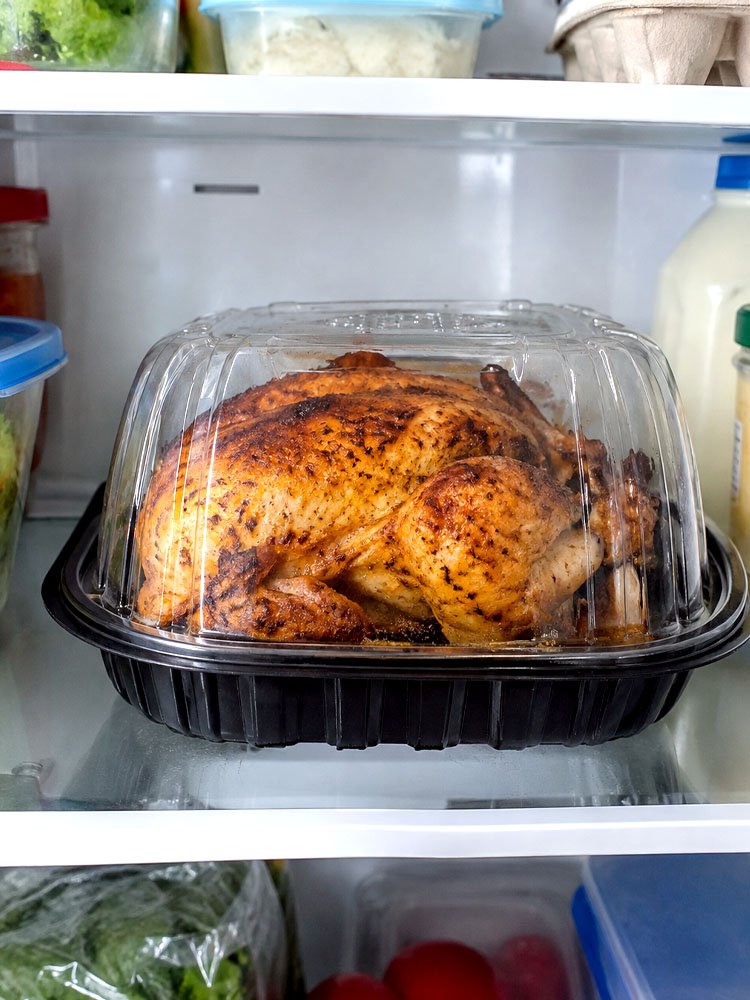
You can keep rotisserie chicken in the fridge for three to four days, no longer than that. Check the purchase date first, then pull the meat off the bone if that hasn’t happened yet. Store it in a shallow, airtight container, since this helps it cool fast and stay fresh longer. Once day four passes, toss anything left over, even if it still smells okay. Smell alone isn’t a reliable test, so trust the clock over your nose every time.
Why Does Rotisserie Chicken Spoil So Fast?
Rotisserie chicken sits under warm heat lamps at the store, and that warmth speeds up bacteria growth. Once it cools, the clock starts.
The Danger Zone Explained
Food safety folks call the range between 40 and 140 degrees the danger zone. Bacteria multiply fast in that window, sometimes doubling every twenty minutes or so. Rotisserie chicken passes through that zone while it cools on the counter, which is exactly why timing matters so much here.
Bacteria Growth on Cooked Meat
Cooked chicken isn’t automatically safer than raw meat once it sits out for a while. Heat kills most bacteria during cooking, but new bacteria can land on the meat afterward. Hands, air, and countertops all carry germs, and cooked chicken has no natural defense left against them.
Store Handling Before You Buy
Grocery stores often keep rotisserie chicken warm for hours under a heat lamp before anyone buys it. That long stretch of warmth isn’t dangerous by itself, but it does use up some of the chicken’s safe window. Getting it home quickly matters more than most people realize.
Cooling Time After Purchase
Chicken left out on a counter for more than two hours starts building bacteria fast. On a hot day, that window shrinks down to just one hour. Getting the chicken into the fridge soon after a meal protects the rest of it for later.
Bone-In vs Sliced Chicken
A whole chicken with the bone still in cools slower than shredded or sliced meat. Thick sections near the bone trap heat, and that heat keeps the danger zone active longer. Pulling meat off the bone before storing it helps everything cool evenly.
Fridge Temperature and Storage
A fridge set above 40 degrees won’t keep chicken safe, no matter how careful the storage method is. Use a fridge thermometer if there’s any doubt, since dial settings can lie. Keeping the fridge cold enough matters just as much as the container chosen.
Getting chicken cold fast matters more than almost anything else here. Small habits, like splitting meat into smaller portions, make a real difference in how long it stays safe to eat.
- Cool chicken within two hours of cooking or buying it
- Split large portions into smaller containers for faster cooling
- Keep the fridge at 40 degrees or below at all times
- Remove meat from the bone before storing leftovers
- Use shallow containers instead of deep, crowded ones
- Label containers with the date so nothing gets lost track of
How to Store Rotisserie Chicken the Right Way
Good storage habits stretch rotisserie chicken’s safe window and cut down on waste. A few small steps make a real difference here.
Cool It Down Quickly
Leftover chicken shouldn’t sit on the counter for long stretches after a meal. Two hours is the general limit, and that drops to one hour on hot days. The faster chicken cools, the safer it stays.
Split a whole chicken into smaller pieces before it goes into the fridge. Big chunks trap heat in the middle, and that slows cooling way down. Smaller pieces lose heat much faster this way.
Spread the pieces out instead of stacking them in one pile. Airflow around each piece helps the fridge do its job. A little extra space now saves trouble later on.
Choose the Right Container
Shallow containers beat deep ones for chicken storage, hands down. Deep containers trap warmth in the center, and that center takes much longer to cool than the edges do.
Airtight lids matter too, since they keep out fridge odors and keep moisture locked inside. A loose cover lets air dry out the meat and lets germs sneak in easily.
Glass or hard plastic containers work better than flimsy bags for this job. Bags can tear, and torn bags leak juice all over the fridge shelf.
Separate Meat From Bones
Bones hold onto heat longer than the meat around them, which slows the whole cooling process down. Pulling meat off the bone speeds things up a lot.
Store bones separately if there’s a plan to make broth later. Broth needs bones anyway, so this isn’t wasted effort, it’s just smart planning ahead.
Shredding or slicing the meat also makes reheating easier down the road. Smaller pieces heat evenly, instead of staying cold in the middle.
Label With the Date
A simple label solves more fridge mysteries than people expect. Write the date chicken went into the fridge, right on the container or a piece of tape.
Memory isn’t reliable after a busy week, and leftovers often get pushed to the back. A date takes the guesswork out completely, so there’s no need to wonder.
This habit costs seconds but saves food, and it saves worry about eating something too old later.
Keep the Fridge Cold Enough
None of these steps help much if the fridge itself runs warm. Chicken needs a fridge at 40 degrees or below to stay safe during its whole storage window.
Check the fridge with a thermometer instead of trusting the dial, since dials often run warmer than the number suggests. A cheap thermometer solves this problem for good.
Avoid packing the fridge too full, either, since crowded shelves block cold air from circulating properly around stored food.
Freeze What Won’t Get Eaten
Freezing extends chicken’s life far beyond the fridge window, often out to four months or longer. If four days feels too tight for how the week is going, freezing solves that.
Portion the chicken before freezing, so smaller amounts thaw faster later on. Freezing one giant block means thawing one giant block, and that takes forever.
Frozen chicken works great in soups, casseroles, and quick weeknight meals. It’s a shortcut worth using instead of tossing food out.
Storage habits add up over time, and small changes protect both food and health. None of these steps take much effort, but skipping them costs more in the long run.
- Cool chicken within two hours, one hour if it’s hot outside
- Use shallow, airtight containers instead of deep or loose ones
- Pull meat off the bone before storing it away
- Label every container with the date it went into the fridge
- Keep the fridge at 40 degrees or colder, always
- Freeze portions that won’t get eaten within four days
How Can You Tell if Rotisserie Chicken Has Gone Bad?
A sour or sulfur-like smell is usually the first sign something’s wrong. Fresh chicken smells mild, almost nothing at all, so any strong odor is a red flag worth trusting right away, since noses catch trouble before eyes usually do.
Texture matters just as much as smell does. Chicken that feels slimy or sticky has likely crossed into spoiled territory, even if the smell hasn’t caught up yet. Fresh chicken feels smooth and slightly moist, never tacky to the touch.
Color changes tell a story too, and it’s worth paying attention. Gray or greenish patches mean bacteria have taken hold, and that meat belongs in the trash, not on a plate. Bright white or light tan is the color worth looking for instead.
When in doubt, throw it out, plain and simple. That old saying exists for a reason, since a little food waste beats a night of food poisoning every single time.
- Sour, sulfur, or ammonia-like smell means it’s time to toss it
- Slimy or sticky texture signals spoilage even without a smell
- Gray or greenish color means bacteria have already taken over
- Mold spots of any color mean immediate disposal, no exceptions
- A fizzy or bubbly texture points to bacterial buildup
- When unsure, throw it out rather than risk getting sick
Is It Safe to Eat Rotisserie Chicken After Five Days?
Five days pushes past the safe window that food safety guidelines recommend for cooked chicken. Three to four days is the general rule, and five days sits outside that range, even if the chicken still looks fine. Looks can be deceiving, unfortunately, since bacteria don’t always change how food appears on the outside.
Some bacteria that cause food poisoning don’t affect smell, taste, or color at all. That’s part of what makes old chicken risky, since there’s no reliable warning sign to catch every problem in time. Cooking chicken again won’t fix this either, since some bacteria leave behind toxins that heat simply can’t destroy.
Risk also depends on how the chicken got stored throughout the week. Chicken kept at a steady cold temperature the whole time carries less risk than chicken that warmed up even once. Still, five days is generally considered too long to gamble on, no matter how careful the storage was.
Better to freeze chicken early than push the fridge window right up to its edge like that.
- Five days exceeds the recommended three to four day fridge window
- Bacteria can grow without changing smell, taste, or appearance
- Reheating doesn’t destroy toxins some bacteria leave behind
- Storage consistency affects risk, but doesn’t erase it completely
- Freezing earlier avoids this gamble altogether
- When past four days, throwing it out is the safer call
Can You Freeze Rotisserie Chicken to Make It Last Longer?
Freezing works well for rotisserie chicken, and it solves the short fridge window problem completely. Frozen chicken stays safe for about four months, sometimes longer if it’s wrapped well and the freezer stays consistently cold the whole time.
Wrapping matters a lot here, more than most people expect. Air exposure causes freezer burn, which dries out the meat and ruins texture, even though it doesn’t make the chicken unsafe. Tight wrapping or a sealed freezer bag keeps that from happening in the first place.
Portioning before freezing saves time later on down the road. Smaller batches thaw faster and heat more evenly than one giant frozen block would. Planning ahead this way makes weeknight meals much easier to pull together fast.
Thawing should happen in the fridge, never on the counter. Counter thawing lets the outside warm up long before the inside does, which creates the same danger zone problem all over again.
- Frozen chicken stays safe for about four months when wrapped well
- Tight wrapping prevents freezer burn and protects texture
- Portioning before freezing speeds up thawing and reheating later
- Thaw in the fridge, never on the counter
- Label frozen portions with the date, just like fridge storage
- Use frozen chicken within its window for the best flavor
Does Reheating Kill Bacteria in Old Chicken?
Reheating kills a lot of bacteria, but it doesn’t erase every risk that comes with old chicken. Heat destroys living bacteria fairly well, as long as the chicken reaches a high enough internal temperature all the way through the meat.
That’s the catch, though, since some bacteria produce toxins while they grow, and those toxins can survive cooking even after the bacteria itself dies off. This is part of why chicken past its safe window still carries risk, even piping hot off the stove.
Reheating chicken to 165 degrees handles most everyday bacteria concerns for food that’s still within its safe window. A food thermometer takes the guesswork out, since eyeballing doneness isn’t reliable for leftover meat at all.
Reheating isn’t a fix for chicken that’s already spoiled, though, no matter how hot it gets. It only works as intended when the chicken was safe to begin with, and just needed warming back up.
- Reheating to 165 degrees kills most everyday bacteria
- Some bacterial toxins survive cooking even after bacteria die
- A food thermometer removes guesswork better than timing alone
- Reheating doesn’t rescue chicken that’s already spoiled
- Only reheat chicken that’s still within its safe fridge window
- Stir or rotate food midway through reheating for even heat
Final Thoughts
I hope this clears up how long rotisserie chicken really lasts in the fridge. Three to four days is the safe window, and small habits, like cooling fast and labeling containers, stretch that window’s usefulness. When in doubt, trust the clock over the nose, and freeze extra portions instead of risking a spoiled meal.
| Storage Method | Fridge Life | Best Practice |
|---|---|---|
| Whole rotisserie chicken | 3 to 4 days | Remove meat from bone before storing |
| Shredded or sliced chicken | 3 to 4 days | Store in shallow, airtight containers |
| Chicken broth made from bones | 4 to 5 days | Refrigerate within two hours of cooking |
| Frozen rotisserie chicken | About 4 months | Wrap tightly to prevent freezer burn |
| Chicken left out at room temp | 2 hours max | Discard after the two hour mark |
| Chicken left out on a hot day | 1 hour max | Discard sooner above 90 degrees |
| Reheated leftover chicken | Eat same day | Reheat to 165 degrees internally |
| Soup or casserole made from leftovers | 3 to 4 days | Cool quickly, then refrigerate right away |
| Fridge temperature setting | 40 degrees or below | Check with a thermometer regularly |
| Chicken with visible spoilage signs | 0 days | Discard immediately, don’t taste test |
Frequently Asked Questions
Is Rotisserie Chicken Safe to Eat Cold From the Fridge?
Yes, cold rotisserie chicken is safe to eat straight from the fridge, as long as it’s within the three to four day window. Many people enjoy it cold on salads or sandwiches without any need to reheat it first.
Can You Eat Rotisserie Chicken Left Out Overnight?
No, chicken left out overnight sits far past the two hour safety limit, even if the room felt cool at the time. Bacteria multiply fast during that stretch, so it’s safer to toss it than risk food poisoning from a meal that looked fine.
Are There Signs You Should Never Ignore With Leftover Chicken?
Yes, slimy texture, gray color, and sour or sulfur smells are warning signs worth taking seriously every time. Any one of these signs means the chicken should go straight into the trash, regardless of how many days it’s been stored.
Do Bones Make Chicken Spoil Faster Than Boneless Meat?
Not exactly, but bones do slow down cooling, which extends the time chicken spends in the risky danger zone. Removing meat from the bone before storing it helps it cool faster and stay safer for longer overall.
Does Rotisserie Chicken Last Longer Than Homemade Roast Chicken?
No, both last about the same amount of time in the fridge, generally three to four days when stored properly. The cooking method doesn’t change the storage rules much, since bacteria growth depends mostly on temperature and time, not preparation style.
Should You Wash Rotisserie Chicken Before Storing It?
No, washing raw or cooked poultry isn’t recommended, since it can splash bacteria around the kitchen sink and counters. Cooking already handles the bacteria concern, so rinsing adds risk without adding any real safety benefit.
Will Freezing Rotisserie Chicken Change Its Taste or Texture?
Slightly, yes, freezing can make texture a bit drier once thawed, especially if the wrapping wasn’t airtight enough during storage. Using the chicken in soups, casseroles, or saucy dishes helps mask any texture change while keeping flavor mostly intact.
Should Leftover Chicken Skin Be Removed Before Storing?
Not necessarily, skin can stay on during storage without causing safety problems, though some people remove it for texture reasons. Either way, the same three to four day fridge rule applies, regardless of whether skin stays on or comes off.
