
As an Amazon Associate, I earn from qualifying purchases at no extra cost to you.
Why Does My Bathroom Smell Like Fish? 5 Causes to Check

All of a sudden, you walk into your bathroom and catch a whiff of something that reminds you of a fish market. It's not just you, and it's certainly not a normal smell for a clean space. That scent usually points to a breakdown somewhere in your plumbing or ventilation. Let’s look at why this happens and how you can fix it.
The most common reason for a fishy smell is a dry p-trap, which is the curved pipe under your sink or shower. Water normally sits in that pipe to block sewer gas, but if it evaporates, those gases drift into your room. You can stop the odor by replacing that water seal.
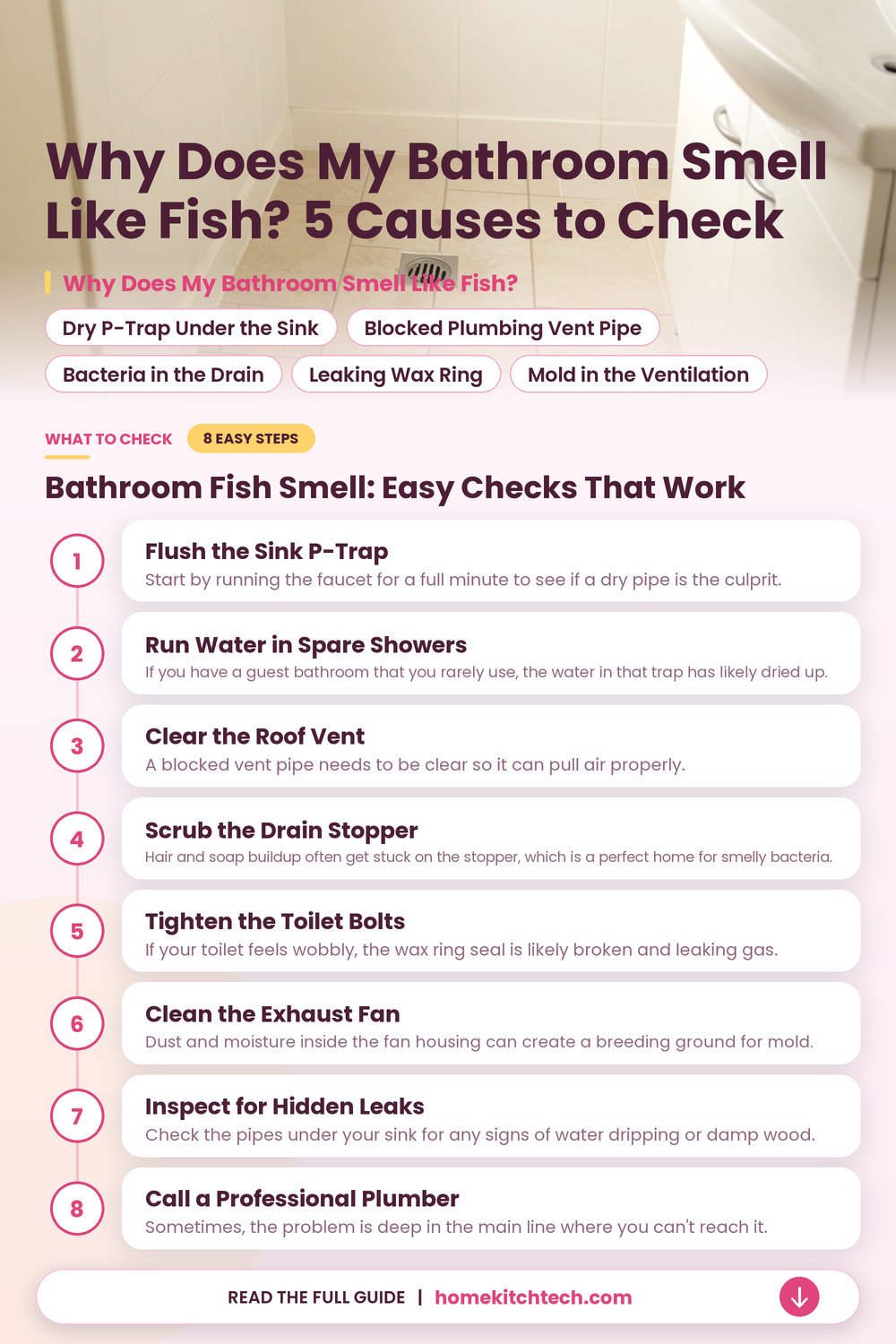
Why Does My Bathroom Smell Like Fish?
Smells like this usually come from sewer gases that have found their way past the barriers, which are meant to keep them out. You’ll often notice this scent near the drain, but it can linger in the air if your room lacks airflow.
- A dry p-trap allows sewer gas to enter your home.
- Poor ventilation makes even small odors feel much stronger.
- Most sewer gas issues cost less than $50 to solve.
Dry P-Trap Under the Sink
Your p-trap water seal stays full to act as a barrier against nasty smells. When you don’t use a sink for a long time, the water evaporates. That protective barrier disappears, so gas drifts into your room. Try running the water for a minute to fill the pipe back up.
Blocked Plumbing Vent Pipe
Your pipes need air to move water, so they have a vent that goes out through your roof. If debris blocks that main vent stack, air pressure sucks the water out of your traps. You’ll hear a gurgle when you drain water. That sound is a sure sign your system is struggling.
Bacteria in the Drain
Sometimes, hair and soap scum pile up in your pipes and turn into a slimy mess that traps odor. Bacteria grow in this drain pipe gunk. As they break it down, they release gases that smell like fish. You'll notice the smell gets stronger when you turn on the water.
Leaking Wax Ring
The seal under your toilet, known as a wax ring, keeps sewer gas from leaking into your bathroom floor. If the toilet rocks, gas escapes and hits you right in the nose. You’ll see signs like a loose base, or you might find small water stains on the floor.
The gas leaking from your toilet floor seal is more than just a nuisance. It carries bacteria that can settle into your subfloor, which causes lasting problems. You’ll need to pull the toilet to replace the ring, but only if the smell doesn’t go away after you tighten the bolts.
Mold in the Ventilation
High humidity in your bathroom can lead to mold growing inside your exhaust fan or ductwork. This growth often gives off a damp, fishy odor that hangs in the air. You’ll notice this smell lingering long after you shower, especially if your fan isn’t clearing the steam.
Bathroom Fish Smell: Easy Checks That Work
You can start by clearing the air and checking the most likely spots for odors to hide. This process takes about 20 minutes, and you’ll only need a few simple supplies like a bucket or a flashlight.
- Wear rubber gloves to protect your hands from drain gunk.
- Use a flashlight to look deep into your drain openings.
- Open a window while you work to keep the air fresh.
Flush the Sink P-Trap
Start by running the faucet for a full minute to see if a dry pipe is the culprit. If the smell stays, you might have a clogged drain line that needs a bit more attention. Grab a bucket and place it under the pipe, then unscrew the nuts to remove the trap and clear out any debris.
That pipe sits low under the vanity, so lay down an old towel to catch any drips. Once you pull the trap off, rinse the inside thoroughly to remove the buildup. Reattach everything tightly, and test for leaks by running the water again.
Run Water in Spare Showers
If you have a guest bathroom that you rarely use, the water in that trap has likely dried up. Simply turn on the faucet or shower for a minute, and do this every few weeks to keep the seal full. You’ll find this keeps the sewer gas from creeping back into the house.
Check the area around the base of the shower for any cracks in the caulk seal edges, which can also trap moisture. If you see mold growing in those spots, scrub it away with a mild cleaner. Keep the shower door open after you run the water to let the space dry out.
Clear the Roof Vent
A blocked vent pipe needs to be clear so it can pull air properly. Check your roof for any nests or debris that might be sitting over the opening. If you aren’t comfortable on a ladder, call a pro to handle this part safely.
Sometimes, a bird or a squirrel builds a nest right over the pipe opening. That blockage forces gas back down into your bathroom, so you need to remove the obstruction carefully. Make sure the vent cap is secure, as that keeps future pests out of your plumbing system.
Scrub the Drain Stopper
Hair and soap buildup often get stuck on the stopper, which is a perfect home for smelly bacteria. Pull the stopper out and use an old toothbrush to scrub away the slime. You’ll notice a big difference once that gunk is gone and the water flows freely again.
Tighten the Toilet Bolts
If your toilet feels wobbly, the wax ring seal is likely broken and leaking gas. Tighten the bolts at the base, but be careful not to over-tighten them, which can crack the porcelain. If the toilet still rocks, you'll need to pull it up and replace that old wax ring.
Clean the Exhaust Fan
Dust and moisture inside the fan housing can create a breeding ground for mold. Turn off the power at the breaker before you pull the cover off to wash it with warm soapy water. You’ll want to make sure the fan blades are clean so they move air efficiently again.
Inspect for Hidden Leaks
Check the pipes under your sink for any signs of water dripping or damp wood. A small, slow leak can keep a spot wet, which leads to mold and that fishy smell you’re trying to stop. Fix any loose connections you find, or replace the washers if they look worn out.
Call a Professional Plumber
Sometimes, the problem is deep in the main line where you can’t reach it. If you’ve tried these steps and the smell remains, it’s time to call a plumber to check your sewer system. They have the right tools to find hidden breaks or blockages that you can’t see.
If the sewer line itself has a crack, no amount of cleaning will stop the smell. A plumber can use a camera to inspect the main drain pipes for damage or tree roots. They can fix these deep issues, which brings peace of mind and a fresh bathroom.
Why Does My Bathroom Smell Like Ammonia?
A sharp ammonia scent often links back to your toilet, especially when urine splashes under the rim or behind the base. You might not notice it until the humidity rises, which pulls the scent into your air. Bacteria love to live in those hidden damp spots, so that smell is actually a sign of tiny organic leftovers.
Check the caulk line around your floor first. If that seal is broken, urine can seep into your subfloor and sit there for weeks. You’ll need to peel the old material away and scrub the area with a mild cleaner before you lay down fresh caulk.
Your grout can also hold onto those smells if it isn’t sealed well, so scrub the floor thoroughly. When you mop, you might just be pushing the dirty water deeper into the porous tile grout. Try a deep scrub with a stiff brush and a cleaner made for stone or tile to lift the embedded grime.
Does Age or Material Change the Smell?
Older homes often have cast iron pipes that develop rust inside, which can trap bits of waste and create a fishy odor over time. Newer plastic pipes usually stay smoother, but they can still collect hair and soap scum if your slope isn’t quite right. You’ll find that the older your home gets, the more those rough pipe surfaces act like sponges for bathroom smells.
Your choice of cleaning products matters, because some harsh chemicals can eat through thin plastic parts or ruin the finish on your fixtures. If you notice the smell gets worse after you use a specific cleaner, stop and switch to something gentler. That approach won’t break down your plumbing pipe materials over time.
- Metallic smells often come from old corroded brass drain parts.
- Plastic pipes stay cleaner longer when you use weekly enzyme treatments.
- Porous tile grout holds onto bathroom odors much longer than porcelain.
What Are the Costs and Steps?
Most of these fixes cost less than $20 for a bottle of cleaner or a tube of caulk. You can grab a stiff brush and a bucket at any hardware store, which keeps your total expense very low. If you have to replace a wax ring, you’re looking at maybe $10 for the part and a few hours of your time.
Clear everything out from under your vanity so you have room to work. You’ll want a bright flashlight for inspection to see the back of the pipes, where drips often hide. Take your time to wipe down every surface with a damp cloth and a mild soap to see if that clears the air.
If you decide to pull the toilet to check the seal, make sure you have a helper nearby. It’s a heavy item, and you don’t want to crack the porcelain or hurt your back. Once you lift it, look at the old wax ring to see if it’s compressed or leaking, then clean the flange before you set the new one.
Is There a Dangerous Mistake to Avoid?
Combine cleaning liquids only if the label says it’s safe, but never mix bleach and vinegar. You might think combining them makes a stronger cleaner, but that actually creates toxic gas that hurts your lungs. Keep your products separate, and always read the label before you pour anything down your drain.
Use a plastic tool instead of a metal snake on your delicate drain pipes to keep your plumbing safe. A metal rod can poke a hole in an old pipe, which turns a small smell into a major water leak inside your wall. If your drain is truly stubborn, call a pro instead of forcing a metal tool through the bend.
Can I Get Help From a Pro?
When you’ve scrubbed every inch and the smell still lingers, it’s time to bring in a pro. A plumber can use a smoke test to find hidden leaks behind your drywall that you can’t see with a flashlight. They have tools to reach deep into your main line, which is usually worth the $100 to $200 cost for your professional plumbing help.
Ask them to check your sewer line for any blockages that might be pushing air back up into your house. Sometimes, a neighborhood sewer issue causes the problem. A pro knows exactly how to test for that, and they’ll tell you if your vent pipes are blocked by leaves.
If you feel overwhelmed by the task, don’t feel bad about calling for help. You’re better off paying for a quick fix than living with a bathroom that you don’t want to use. A pro can save you hours of frustration, and they get your home smelling fresh again in just one visit.
- Professionals use cameras to look inside dark and twisted drain lines.
- Smoke tests identify invisible gaps in your hidden bathroom pipe system.
- Sewer line issues require special equipment that only plumbers carry today.
Final Thoughts
Bathroom smells rarely go away on their own, so you should tackle them as soon as you notice a change. Focus on your toilet base and the drain traps first, as those are the most common spots for trapped moisture and waste. Keep your space dry and use mild cleaners to stop the buildup before it starts. A little regular scrubbing goes a long way toward keeping your air clean.
| Symptom | Likely Cause | Easy Fix |
|---|---|---|
| Rotten fish smell | Dry drain trap | Add water |
| Sharp ammonia scent | Urine on floor | Scrub with soap |
| Musty damp air | Mold in fan | Clean the blades |
| Gurgling drain sound | Blocked vent pipe | Clear roof stack |
| Wet spot at base | Broken wax ring | Replace the seal |
| Dark grout stains | Trapped bacteria | Deep scrub grout |
| Sewer gas smell | Cracked pipe seal | Call a plumber |
| Constant odor | Hidden plumbing leak | Use smoke test |
Frequently Asked Questions
Is It Safe to Use Bleach in My Drain?
It’s best not to. Bleach can ruin your pipe seals and won’t touch the thick gunk that causes most smells, so skip it and use a simple enzyme cleaner instead.
Can I Tighten My Toilet Bolts to Stop the Smell?
You can try, but don’t overdo it. If you tighten them too much, you’ll crack the porcelain base, so just give them a small turn until they feel firm.
Are My Pipes Too Old to Save?
It depends on the damage. If you just have surface rust, a good scrub helps, but you’ll need a pro if the metal has holes that leak gas.
Does My Ventilation Fan Need a Deep Clean?
It does if you see dust hanging from the cover. Pop the cover off, soak it in warm soapy water, and vacuum the motor carefully to clear it.
Will a Baking Soda Paste Remove Odors?
Yes, it’s great for your grout and tile. Mix it with a little water, scrub the area, and rinse it well to lift away the trapped smells.
Can I Use a Plunger on a Smelly Drain?
You can, but it’s only for clogs. If the smell is from the trap, a plunger won’t help, so you’ll need to clean the stopper instead.
What Should I Do If the Smell is Stronger Near the Ceiling?
You should check your exhaust fan duct. Sometimes, moisture sits in the hose and grows mold, which you’ll need to wipe out with a damp cloth.
