
As an Amazon Associate, I earn from qualifying purchases at no extra cost to you.
Replace a Bathroom Sink Roof Vent Pipe: 6 Steps Done Safely

Each sink in your home needs a steady path for air to flow so water moves down your pipes. If you hear a gurgling sound or notice the drain runs slowly, your venting system might be blocked or damaged. The pipe that runs from your sink up through your roof helps air move to keep things draining. When that path fails, you need to fix it fast.
You can usually fix a vent issue by clearing debris or replacing a damaged section of pipe. Start by checking your roof for blockages, which is the most common cause of a stalled vent. If the pipe is cracked or broken, you’ll need to remove the old section and install a new piece to restore airflow.
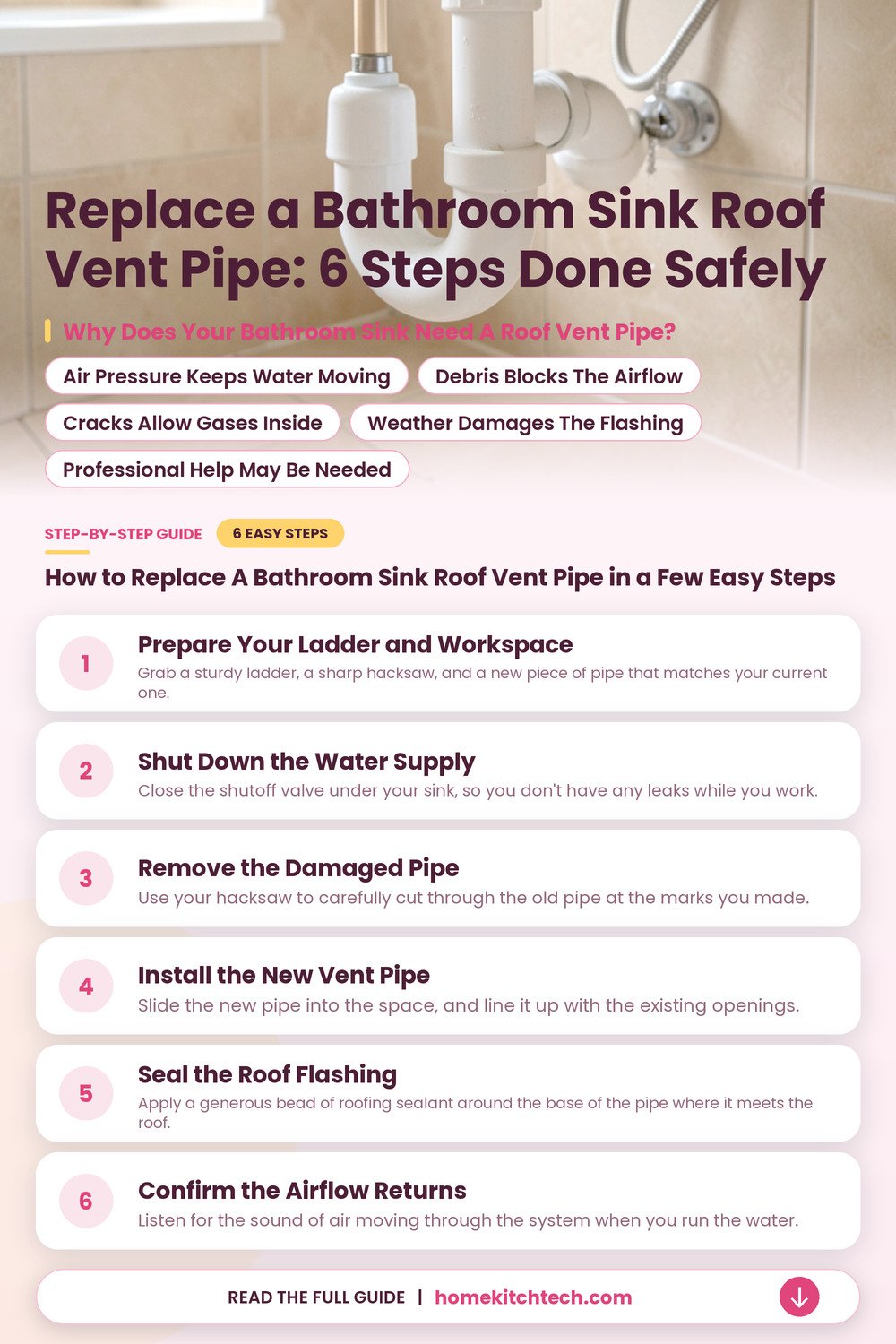
Why Does Your Bathroom Sink Need a Roof Vent Pipe?
Each sink in your home needs a steady supply of air to move water down your pipes. Without an open path to the roof, your drains won’t work well and you’ll hear strange noises.
Air Pressure Keeps Water Moving
Think of your drain like a straw, but hold your finger over the top hole. The water won’t flow until you let air inside, so your roof vent pipe provides that air. It’s a simple, clever way to keep your sink draining fast, and it stops the drain from stalling.
Debris Blocks the Airflow
Leaves, twigs, and bird nests often fall into the pipe from the top. These items form a plug, so fresh air stops reaching your plumbing. You’ll hear your sink gurgle when the air gets trapped, but cleaning the top usually solves the problem.
Cracks Allow Gases Inside
Pipes can crack from age, or they shift as your home settles. These gaps let sewer gases escape into your attic, but you’ll smell them quickly if a leak exists. It’s a sign that your vent pipe system is broken and needs a patch or a full replacement.
Weather Damages the Flashing
The spot where your pipe pokes through the roof uses a sturdy roofing boot seal to stay dry. If this rubber dries out or tears, water will drip into your home. You’ll see water stains on your ceiling nearby, so check the area after every storm.
Professional Help May Be Needed
Some problems hide deep inside your walls, or they require work on a steep roof. A plumber can reach what your tools can’t, so call for help if you’re unsure. It’s a smart way to meet local codes, and you’ll avoid the risk of falling.
How to Replace a Bathroom Sink Roof Vent Pipe in a Few Easy Steps
You’ll need a ladder, a new pipe section, a saw, and a helper to keep things steady. Clear some space in your attic or on your roof, and keep a bucket ready if you’re working near any water lines. This job takes a bit of time, so plan for a full afternoon.
Prepare Your Ladder and Workspace
Grab a sturdy ladder, a sharp hacksaw, and a new piece of pipe that matches your current one. Wear gloves to protect your hands from sharp edges, and check that your ladder sits on firm, level ground. Always have a second person hold the ladder at the bottom. Bring a bright flashlight if you’re working in the dark attic.
Safety comes first, so don’t rush. You should bring a flashlight so you can see the pipe joints clearly, and you’ll want a stable surface for your feet.
Shut Down the Water Supply
Close the shutoff valve under your sink, so you don’t have any leaks while you work. Place a bucket under the pipe area, and keep some old towels ready. You don’t want a surprise spill, so stay alert.
Check that the area is bone dry. If you see water leaking inside your wall, stop and call a plumber.
Remove the Damaged Pipe
Use your hacksaw to carefully cut through the old pipe at the marks you made. Go slowly so you don’t damage any nearby wood or electrical wires hidden in the wall. You’ll feel the tension release once you finish the cut. Remove the loose piece by twisting it gently until it pulls free. Check the remaining edges to make sure they’re clean and smooth.
Install the New Vent Pipe
Slide the new pipe into the space, and line it up with the existing openings. Use a rubber coupling to join the pieces together, and tighten the metal bands with a screwdriver. This creates a seal, so it keeps gases inside the pipe.
- Check that the new pipe fits snugly against the old edges.
- Tighten the metal bands until they don’t budge anymore.
- Ensure the new pipe is level so water doesn’t pool inside.
- Test the seal by pouring a little water down the drain.
Seal the Roof Flashing
Apply a generous bead of roofing sealant around the base of the pipe where it meets the roof. This keeps rain from running down the side of the pipe and into your home. Smooth the sealant with a putty knife to ensure it covers every gap. Check that the rubber collar fits tightly around the pipe for a water-tight finish. If the flashing is torn, replace the whole piece to prevent future leaks.
Confirm the Airflow Returns
Listen for the sound of air moving through the system when you run the water. A smooth, quiet drain means the air is flowing freely through your new pipe. You should notice the gurgling sound disappears after you finish the repair. Check your ceiling and attic for any moisture over the next few days. If everything stays dry and the sink drains well, you’ve done a great job.
How Much Does Fixing Your Vent Pipe Cost?
Expect to pay a professional plumbing contractor about $200 to $600 if you hire them to climb on your roof. You’ll spend about $50 to $150 on materials if you tackle the job yourself during a weekend. The total time usually takes 3 to 5 hours, but it depends on your roof pitch.
Check with your local building office before you start, because your city may require a permit for roof work. You’ll need to confirm your local codes for pipe thickness, and fire blocking is often required. A local plumbing expert can reach what your tools can’t if your roof is too steep for you.
- Factor in the cost of renting a safe ladder for the day.
- Buy extra sealant to keep your roof dry after the work.
- Check your local permit fees before you purchase any new pipe parts.
- Ask a friend to hold the ladder while you work on the roof.
Are There Safety Risks When You Work on the Roof?
Prioritize stability over speed, because climbing onto your house puts you at risk of a fall. Wet shingles or a steep slope make the surface slick, so stay off the roof if it’s damp. Keep your eyes on your footing, and wear shoes with good grip to avoid slipping while you handle the vent pipe replacement.
Skip the job if the weather looks bad, or if you feel unsteady on a ladder. A common mistake involves trying to reach too far, so move the ladder closer to your workspace instead. Never lean out past the side rails of your ladder while you hold heavy tools.
Call a pro if your roof is high, or if you don’t have the right gear to stay steady. They have the training to navigate high spots without damaging your shingles. You’ll sleep better knowing your roof is sealed tight, and your safety is intact.
- Wear rubber-soled shoes to keep your grip on the roof surface.
- Use a harness if your roof pitch is steep or very high.
- Keep your weight centered between the side rails of the ladder.
- Watch for loose shingles that might shift under your weight as you move.
Does the Material of Your Pipe Change the Job?
Older homes often use heavy cast iron, which is much harder to cut and lift than modern plastic. You’ll need a special saw to slice through metal if that’s what you find on your roof. Plastic PVC is lighter, but you must use the right primer and glue for a durable pipe joint.
Match the diameter of the pipe before you head to the store to get your supplies. You’ll need to match the size of your current vent so the air moves freely. Stick to one type of pipe for the entire repair, because different materials don’t always connect well.
Watch for signs of rust or decay near the flashing base seal where the pipe meets the roof. Metal pipes often corrode right at that spot, so keep an eye on them. Replace the whole section if you see damage, so you won’t have to climb back up there next season.
Why Does Your Vent Pipe Fail Over Time?
Heat from the sun expands the pipe, but cold nights make it shrink, which slowly breaks the seal at the roof line. You’ll see the flashing pull away or crack after a few years of these temperature swings. This allows water to trickle down the outside of your pipe, and it leaks into your attic space.
Clear the top of the pipe if leaves, bird nests, or ice plug the opening. You’ll hear a gurgle in your sink when the air can’t get down to balance the pressure, so check the top first. Remove any debris you see, because that’s usually the first step to fix the flow.
- Inspect the flashing around your vent for small gaps or tears.
- Clear away any debris that you see sitting in the pipe opening.
- Check the rubber boot for cracks that let water into the attic.
- Measure the pipe diameter to buy a matching cover for the vent.
When Should You Call a Pro Instead of Doing It Yourself?
If you notice water stains on your ceiling or damp wood in the attic, the damage likely goes deeper than just the pipe. You’ll need an expert to check for hidden rot or mold, because that could be growing in your walls. They have the tools to pull back your asphalt roof shingles safely without causing more leaks.
Don’t try to patch a major leak with tape or caulk, because those are only temporary fixes. You’ll end up with more damage when the water finds another way into your home, so call a pro. A plumber knows how to properly secure the pipe, so it won’t move again.
Sometimes, the issue isn’t the pipe, but the way the vent was installed in the first place. A pro can reroute or adjust the system, so it vents correctly through your roof. You’ll save money in the long run by fixing the original piping cause the right way.
- Ask for a written quote from three different local plumbing pros.
- Check for signs of water damage inside your attic every few months.
- Let a pro handle jobs that involve cutting into your roof structure.
- Get a professional opinion if you suspect the vent layout is wrong.
Final Thoughts
Clear the vent pipe and keep it sealed to make sure your sink drains fast, and your home stays dry. Check the flashing around the pipe every spring, so you can catch small cracks before they become big leaks. Take your time with the repairs, and don’t rush when you’re working on the roof.
| Symptom | Likely Cause | Easy Fix |
|---|---|---|
| Slow sink drain | Clogged vent | Clear debris |
| Water in attic | Cracked flashing | Replace boot |
| Gurgling sounds | Blocked airflow | Clean pipe top |
| Musty smell | Leaking vent | Seal joints |
| Loose pipe | Worn support | Tighten bracket |
| Wet insulation | Damaged seal | Patch flashing |
Frequently Asked Questions
Can I Use a Snake to Clean a Clogged Vent Pipe?
Yes, you can, but use a long plumbing snake to reach the clog. Be careful not to force it, because you might puncture the pipe wall. Go slowly, and you’ll feel resistance if you hit a blockage.
Will a Blocked Vent Pipe Cause My Toilet to Gurgle?
Yes, it often does, because air pressure is trapped in your plumbing lines. You’ll hear the noise in your sink or toilet when you flush. It means your system is struggling to breathe, so check the roof vent soon.
Does the Height of the Vent Pipe Above the Roof Matter?
Yes, it needs to stick up high enough to stay above snow or debris. Check your local building guide for the exact inches required in your area, and you’ll avoid most clogs. The opening should sit well above your shingles.
Can I Put a Screen Over the Vent Pipe to Stop Birds?
Yes, you can, but make sure the mesh is wide enough that frost won’t block it. You don’t want ice to build up and seal the pipe shut in winter. Check it every fall to keep it clear.
How Do I Know If My Roof Flashing is Leaking?
You’ll see water marks on your attic rafters right near the pipe. If the wood looks dark or soft, you’ve got a leak that needs a new seal. Don’t wait, because water damage spreads fast in your attic.
Should I Replace the Entire Vent Pipe or Just the Top Part?
It depends, but replace the whole section if you see rust or cracks anywhere on the pipe. You’ll save time and effort by doing the whole job once. You don’t want to climb back up there next year for a small section.
