
As an Amazon Associate, I earn from qualifying purchases at no extra cost to you.
Clean Bathroom Fixtures: 5 Methods for Chrome and Brass

Like a lot of things in your home, your bathroom fixtures start to lose their shine when soap scum and mineral deposits build up over time. You might notice your once-gleaming chrome faucet looks dull, or your brass shower head spray pattern is uneven. It’s frustrating when your hard work cleaning the room doesn’t show, but you can bring back that original sparkle with a few simple steps. You don’t need fancy gear to get the job done right.
The quickest way to clean bathroom fixtures is with white vinegar and a soft cloth, so start there. Soak any removable parts in a vinegar-filled bag to break down crusty buildup, which makes the job much easier. Buff the metal dry with a clean towel, and your fixtures will look fresh.
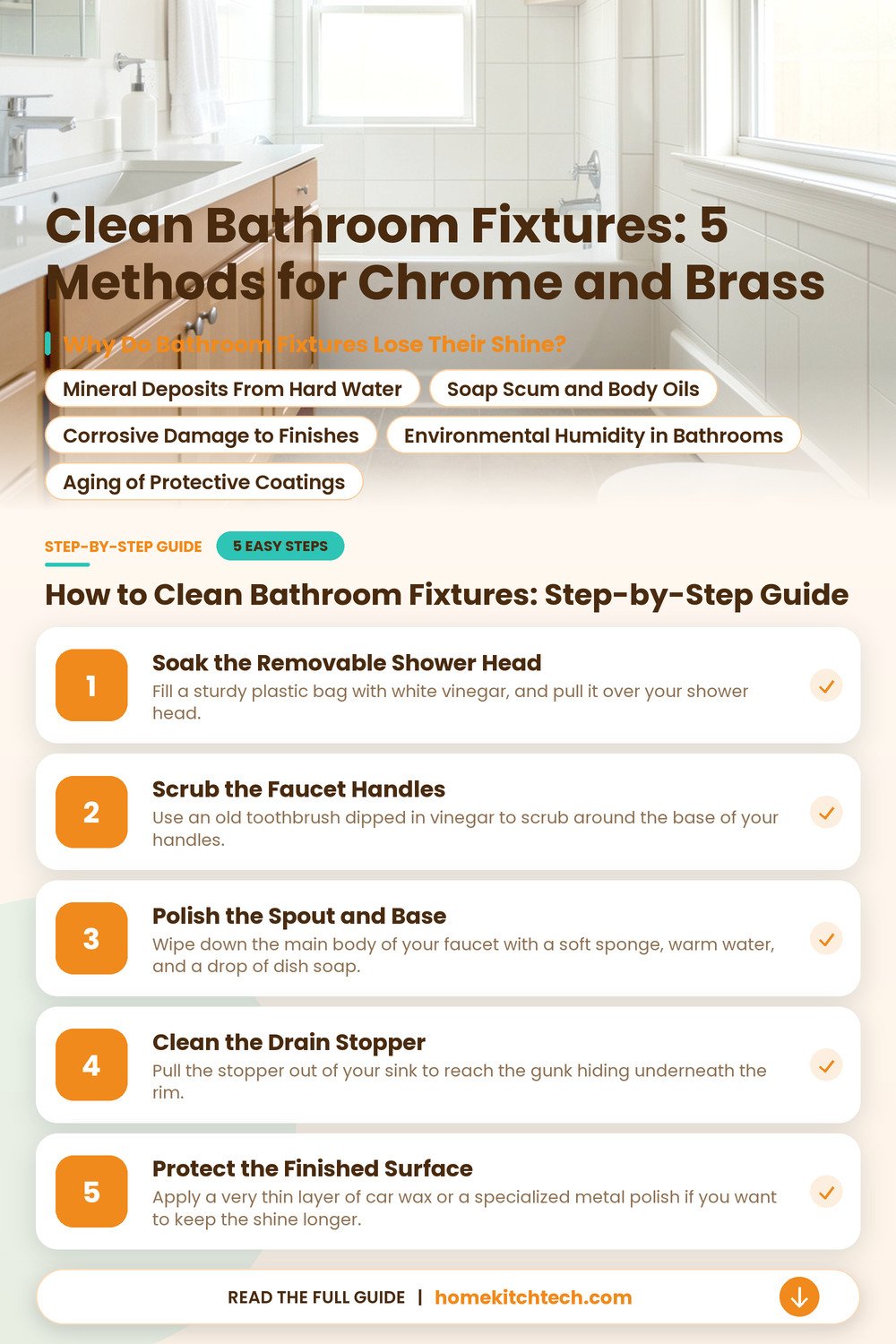
Why Do Bathroom Fixtures Lose Their Shine?
Your fixtures often look dingy because of hard water stains that cling to the metal finish. You’ll see this as a stubborn, chalky crust that builds up every time water splashes and evaporates on your surfaces.
Mineral Deposits From Hard Water
These bits of rock stay behind after your tap water dries, so they create a crust. You’ll notice them first around the base of your handles. This chalky mineral buildup gets thick over time. It eventually blocks the flow of water, so your spray pattern goes sideways.
Soap Scum and Body Oils
Your daily routine leaves a film of soap and skin oils on your metal surfaces. This creates a sticky layer that attracts dust and hair, so it turns dull quickly. You’ll need a mild soap to cut through that grime. It’s a common issue in every home.
Corrosive Damage to Finishes
Some cleaners are too harsh for your delicate metal finishes, so they cause permanent pits. You might think a strong scrub will help, but it usually scratches the protective clear coat off. Once that finish is gone, your fixtures lose their shine for good. You’ll see dark spots appear.
Environmental Humidity in Bathrooms
Moisture makes it easier for dust to stick and harden into a crust, which is why your fixtures look dirty. It stays damp in your bathroom, so gunk grows on your hardware. You must keep your metal surfaces dry, or the cycle continues. That moisture causes lingering grime.
Aging of Protective Coatings
Most modern fixtures have a clear coat that keeps them bright and smooth. You’ll notice this layer wearing thin after years of use, which makes the metal underneath look cloudy. Once that seal breaks, your fixtures become much harder to keep clean. It’s a normal part of aging.
How to Clean Bathroom Fixtures: Step-by-Step Guide
You’ll get the best results by focusing on one fixture at a time, so you don’t miss any spots. Have your supplies ready, including a soft cloth, white vinegar, and a small brush.
- Use white vinegar for most chrome and brass cleaning jobs.
- Avoid steel wool or harsh pads that scratch your metal finish.
- Test any new cleaner on a hidden spot to prevent damage.
- Keep your fixtures dry after every use to stop new buildup.
Soak the Removable Shower Head
Fill a sturdy plastic bag with white vinegar, and pull it over your shower head. Use a large rubber band to hold the bag in place, so the nozzle sits fully submerged. Let it soak for about 30 to 60 minutes to dissolve the mineral buildup inside. It takes time, but it works well. You’ll see the crust vanish.
Check your owner’s manual before you start this process if you have a special finish. Some brass or oil-rubbed bronze fixtures don’t react well to long soaks in acid. If your manual says no, wipe it down with a damp cloth and mild soap instead. Take care with the finish.
Scrub the Faucet Handles
Use an old toothbrush dipped in vinegar to scrub around the base of your handles. Gunk hides in the small gaps, so be thorough. Give it a good scrub, and then wipe it clean. Don’t forget to check the underside, as that’s a common spot for missed grime. It’s a fiddly area.
Wrap a vinegar-soaked paper towel around the handle for ten minutes if you have stubborn spots. The acid needs time to soften the crust, so wait patiently. Once the spots lift, polish the metal with a dry microfiber cloth to make it shine. You’ll see the original metal finish emerge.
Polish the Spout and Base
Wipe down the main body of your faucet with a soft sponge, warm water, and a drop of dish soap. You’ll want to remove the film of soap, skin oils, and dust that makes the metal faucet spout look cloudy. Use a circular motion to lift the dirt, but don’t press too hard. Rinse everything with a damp cloth, so no soap residue stays behind.
Clean the Drain Stopper
Pull the stopper out of your sink to reach the gunk hiding underneath the rim. It’s usually covered in hair and soap slime, so grab a paper towel to wipe the worst of it away. Scrub the remaining bits with your toothbrush and a splash of vinegar. Rinse it well before you slide the stopper back into the drain.
Check the pivot rod if your stopper doesn’t sit flat anymore. Sometimes, that part collects grime and needs a simple rinse to move freely. A clean stopper doesn’t just look better, it also keeps your sink draining fast. You’ll appreciate the smooth motion.
Protect the Finished Surface
Apply a very thin layer of car wax or a specialized metal polish if you want to keep the shine longer. This creates a barrier, so water beads up and rolls off the metal. Use a soft cloth to rub it in, and then buff it until it’s clear. It’s a simple step, and it saves you from having to scrub as often.
Don’t use too much wax, or you’ll see a smeary film on the metal. A tiny amount on your cloth goes a long way toward protecting the finish. If you notice the water doesn’t bead up anymore, it’s time to add another light coat.
How Much Does It Cost to Clean Bathroom Fixtures?
Cleaning your bathroom light fixtures and hardware usually costs under $10 if you have basic supplies at home. You likely have white vinegar, dish soap, and soft cloths in your kitchen already. Even if you buy a new sponge or a small bottle of mild cleaner, you’ll spend less than $15 for the whole job. It takes about 20 to 45 minutes, depending on how many items you tackle.
Do this work yourself, and you’ll save money while freshening up your space. You just need a bit of patience and a steady hand when you reach for higher bathroom spots. If you see deep scratches or flaking metal, that’s a sign the finish is gone, and no amount of scrubbing will bring back the shine. You’ll know it’s time for a change.
- Soft cloths prevent scratches on delicate metal surfaces.
- White vinegar dissolves mineral buildup on chrome and brass.
- Old toothbrushes reach into tight gaps around light bases.
- Mild dish soap cuts through oily fingerprints on glass.
Should You Call a Pro for Tarnished Hardware?
A professional cleaning service or plumber can handle deep stains that your own tools can’t reach. If you see signs of heavy corrosion or if a fixture feels loose, don’t force it. A pro can safely remove parts that are stuck to the wall, so you don’t break a pipe or crack your tile. They have specialized non-abrasive tools to polish finishes, and they won’t strip the protective layer.
Try to wipe the surface with a damp cloth first to see if the grime is just on top. If the metal looks pitted or dull after you clean it, the finish has probably worn away. That’s when you’ll want to think about replacing the piece, rather than scrubbing it more. Don’t use harsh chemicals, which can ruin the metal finish surface even further.
Replace the part if it is rusted solid. A pro can help with that, or you can buy a new fixture yourself. You’ll find that new hardware updates the whole room, and it’s often worth the cost. Don’t worry if you aren’t a plumber, as many parts are easy to swap.
- Plumbers fix leaks that cause constant water spotting.
- Electricians handle light fixtures if wires seem exposed.
- A pro replaces parts that are rusted solid.
- Professional polish restores shine to high-end bathroom metals.
Does the Material Change How You Clean?
The material of your bathroom hardware finish dictates exactly what you can use. Chrome is tough and handles vinegar well, but brass, nickel, and oil-rubbed bronze need much gentler care. Those softer finishes can lose their color if you use strong acids or rough scrubbers. Check the manufacturer’s care guide to see which cleaners are safe, and test your cleaner on a small spot first.
Older fixtures often have a thin clear coat that protects the metal from air and water. If you scrub too hard, you’ll peel that protective clear layer right off and leave the metal open to air, which makes it tarnish faster. Always use a soft cloth with your cleaner before you do the whole piece, because it keeps the metal safe.
Are There Common Mistakes with Bathroom Fixtures?
Use a soft cloth on your brushed nickel faucet instead of a scouring pad, because that pad leaves permanent marks. You might think the grit helps, but it actually creates tiny grooves that catch more dirt later. Stick to soft microfiber cloths to keep the surface smooth and shiny. Also, don’t leave vinegar sitting on your hardware for more than an hour, because the acid can eat through the finish.
Rinse the fixture well, as that’s just as important as the cleaning step itself. If you leave soap or vinegar residue behind, it attracts dust and makes your bathroom metal fixtures look cloudy by the next day. Always wipe them dry with a clean cloth to prevent new water spots from forming right away. You’ll find it saves a lot of time.
- Microfiber cloths wipe away dust without scratching metal.
- Harsh bleach cleaners cause pitting on stainless steel.
- Keep fixtures dry to avoid new mineral crusts.
- Avoid scrubbing too hard to protect the factory coating.
Why Do Fixtures Get Dirty So Fast?
Your bathroom sink faucet and shower head work hard every single day. Warm water from your shower creates a humid environment that helps soap residue stick to every surface it touches. When the water evaporates, it leaves behind minerals that build up into a crusty layer. This cycle happens faster in homes with hard water, which is full of calcium and magnesium.
Heat also plays a big part in this process. Higher temperatures make it easier for body oils and soap scum to bond with the metal. If you don’t wipe your fixtures dry after each use, those ingredients sit there and harden into a stubborn film. It’s not a sign of a dirty home, just a result of how you use your bathroom hardware surfaces.
Clean your fixtures regularly, so those layers don’t become thick. If you skip this, the buildup starts to block the spray holes or makes your handles feel sticky. A quick swipe with a towel takes seconds, and it stops the cycle before it gets out of hand. You’ll keep your chrome finish shine for years.
- Hard water leaves mineral deposits on your faucets.
- High humidity helps soap scum cling to surfaces.
- Body oils turn into a sticky film over time.
- Regular wiping prevents grime from hardening in place.
Final Thoughts
Clean your fixtures often, so you stay ahead of the daily buildup. A quick wipe after your shower prevents the worst of the mineral crust from ever taking hold. If you notice a spot that won’t budge, try a gentle soak with vinegar rather than reaching for a harsh scrub brush. You’ll keep your bathroom looking sharp, and you’ll save yourself a lot of heavy work later on.
| Surface or Item | Tool or Product | Time Needed |
|---|---|---|
| Chrome faucet | White vinegar | 10 to 15 minutes |
| Glass light shade | Dish soap | 20 to 30 minutes |
| Brass hardware | Soft cloth | 5 to 10 minutes |
| Shower head | Plastic bag | 45 to 60 minutes |
| Nickel handle | Mild soap | 5 to 10 minutes |
| Drain stopper | Old toothbrush | 10 to 15 minutes |
Frequently Asked Questions
Can I Use Lemon Juice on My Faucets?
Yes, you can use it as a natural acid to break down light mineral deposits. Just be sure to rinse it off well with water, because the sugar in the juice can leave a sticky film if you don’t.
Will Vinegar Damage My Bronze Fixtures?
Better not, because bronze finishes are often delicate and can react poorly to strong acids. You should stick to warm water and a tiny bit of mild dish soap to keep your finish safe.
Is It Safe to Use a Toothbrush?
Yes, it’s a great tool for getting into the tight corners around your handles. Just make sure you use a soft-bristle one so you don’t scratch the metal while you’re scrubbing.
Do I Need to Take the Fixtures Apart?
Usually, no, you can clean most things right where they sit. Unless you see a heavy clog inside a shower head, you’ll find that wiping and soaking from the outside does the job just fine.
Can I Use Glass Cleaner on My Metal?
Better not, because some glass cleaners have ammonia that can dull your metal over time. You’ll get better results by using a dedicated metal polish or just plain soap and water.
What Should I Do If the Finish is Peeling?
It’s time to replace the part, because once the protective coating is gone, the metal underneath will corrode quickly. You can’t fix a peeling finish, so you’ll want to plan for a new fixture soon.
