
As an Amazon Associate, I earn from qualifying purchases at no extra cost to you.
Ants Coming Out of the Bathroom Sink? 5 Ways to Block Them

Always look at your sink when you see tiny movement near the drain. It’s unsettling to find bugs where you wash your hands, but finding their path is the first step toward getting rid of them. You’re likely dealing with a simple entry point, rather than a massive infestation. Let’s look at why they’re visiting your bathroom, so you can stop them.
The most common cause is a thin layer of organic debris inside your sink drain pipe, which acts like a dinner bell for ants. Check the drain and the overflow holes first, as these are the easiest spots for them to gather. If you see a line of ants, they’re likely following a scent trail from a nearby wall or floor crack.
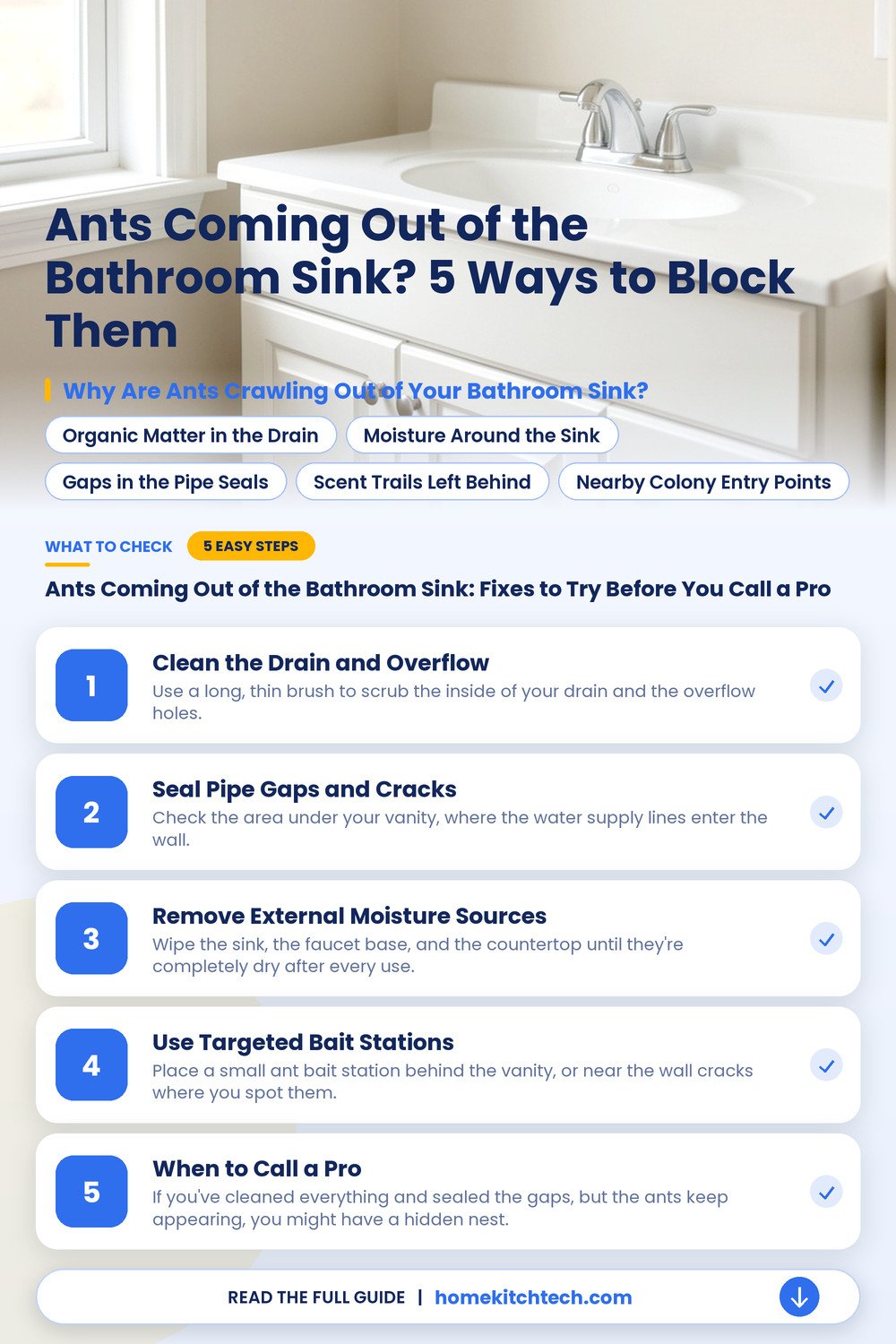
Why Are Ants Crawling Out of Your Bathroom Sink?
Ants often use your plumbing as a highway because it provides moisture and warmth. You’ll notice them most when it’s dry outside, as they seek out your damp bathroom environment to stay hydrated.
Organic Matter in the Drain
Tiny bits of soap, skin cells, and hair create a food source that attracts ants to your drain. You’ll notice them scouting around the rim or the overflow opening when this buildup gets thick. It’s a small, manageable problem, and you can address it with a quick cleaning.
Moisture Around the Sink
Ants need water to survive, and your sink provides a steady, reliable supply. If your faucet has a tiny drip, or if water sits around the base, you’re offering them a perfect place to hang out. They’ll keep coming back until you remove that water source, which is your best defense.
Gaps in the Pipe Seals
Your plumbing enters the wall through small holes, which are sometimes larger than the pipes themselves. Ants squeeze through these gaps to move between the wall space and your bathroom. Seal these areas to keep the pests behind the wall, and you’ll block their favorite entry point.
Scent Trails Left Behind
Ants leave a path. When one finds food, it leaves a chemical trail for others. You might scrub the sink clean, but that invisible trail remains for the colony to track. Use a dry cloth to wipe the surface, as this helps break the cycle.
Nearby Colony Entry Points
Sometimes, your sink is just the closest exit point for ants nesting in the wall or under the vanity. You’ll see them emerge from the overflow drain, or the base of the faucet. Seal the tiny wall cracks to place your defenses more effectively, and you’ll stop them before they arrive.
Ants Coming Out of the Bathroom Sink: Fixes to Try Before You Call a Pro
You’ll need a flashlight, a bucket, and some basic cleaning supplies to get started. Plan to spend about 30 minutes, carefully checking your plumbing and clearing away any attractants you find. It’s a straightforward process, and it helps you regain control of your space.
Clean the Drain and Overflow
Use a long, thin brush to scrub the inside of your drain and the overflow holes. You’ll want to clear out that gunk and grime which draws the ants in. Rinse everything with plenty of water, but keep the shutoff valve closed if you need to take any parts apart. Take the drain stopper out if it unscrews, so you can reach deeper into the pipe. Scrub the underside of the stopper, as that’s a prime spot for buildup. Don’t use harsh chemicals, which can damage your pipes.
Seal Pipe Gaps and Cracks
Check the area under your vanity, where the water supply lines enter the wall. You’ll often find small spaces, which allow ants to crawl through. Fill these gaps with a bit of silicone caulk. It’s a permanent fix, and it stops future visitors from using your plumbing as a doorway. Keep the area clean, so you can spot any new cracks that develop over time.
Remove External Moisture Sources
Wipe the sink, the faucet base, and the countertop until they’re completely dry after every use. Ants won’t linger in a space that lacks the water they crave. It’s a simple habit, and it makes your bathroom much less inviting to them.
Use Targeted Bait Stations
Place a small ant bait station behind the vanity, or near the wall cracks where you spot them. The ants will take the bait back to their colony, which is the only way to stop the problem at the source. Keep these baits tucked away where kids and pets can’t reach them.
- Read the bait label carefully to ensure safe placement.
- Keep all baits away from your food and water areas.
- Monitor the stations daily to see if the ants decrease.
- Call a pest control pro if the ants keep returning.
When to Call a Pro
If you’ve cleaned everything and sealed the gaps, but the ants keep appearing, you might have a hidden nest. A pro has the tools to find where they’re hiding behind your walls. Don’t hesitate to ask for help if the problem feels bigger than your own supplies can handle.
If you suspect a pipe is leaking inside the wall, shut off the main water valve and call a plumber immediately. You don’t want to deal with water damage on top of a pest issue. A quick call saves you a lot of trouble in the long run.
Should You Call an Exterminator for Bathroom Ants?
When you spot a steady stream of ants, it’s a sign that they’ve found a reliable source of food or water inside your wall. You can try to block them, but a professional will find where they enter your home. They have access to commercial sprays and baits that work faster than store-bought options.
If the ants return even after you scrub your porcelain bathroom sink and clear the drain, give a pro a call. They can inspect your crawl space, and they can check your foundation for a larger nest. Search for signs of a hidden ant colony to stop the invasion before it grows.
Why Do Ants Keep Finding Your Sink?
Ants need moisture to survive. Your bathroom is often the dampest room in your house. They’re attracted to the condensation that gathers on your pipes, or around the faucet base. If your bathroom stays humid, they’ll keep coming back for the water.
Hard water buildup can also provide tiny hiding spots for scouts to live. Over time, your faucet aerator screen might collect minerals that hold enough moisture for ants to set up camp. It’s a small, quiet space that you won’t notice until you see them crawling out.
Old pipes sometimes have tiny leaks that you can’t see behind the vanity. Even a small drop of water keeps the wood damp, and it creates a perfect home for insects. Check under your cabinet, and look for signs of water damage signs or soft spots in the wood.
Is It Dangerous to Use Harsh Sprays Near Your Drain?
Never pour strong chemicals down your drain to kill ants. Strong cleaners can create toxic fumes that stay in your bathroom air, and you’ll want to avoid anything that could damage your pipes. Don’t leave a residue in your sink, as it might linger.
Some people try to use bug spray inside the drain, but that’s a mistake. The spray can coat your inner drain pipes and trap debris, which makes a clog more likely later. It also doesn’t stop the ants from finding another way into your room.
Use a dry cloth to wipe away their scent trails. This removes the pheromones that ants use to tell their friends where to go. You can keep the bathroom surfaces clean, and you won’t hurt your plumbing or your lungs.
Does the Age of Your Sink Change the Solution?
Older homes often have gaps around the plumbing. These holes are where it enters the wall. You can fill these with a bit of steel wool or caulk to stop pests. Modern sinks usually have better seals, but even those can crack as the house settles over time.
If you have a pedestal sink, the open pipes are easier to inspect for leaks or gaps. You’ll find it simpler to clean around the base and keep it dry. A vanity cabinet hides the plumbing, which makes it harder to spot plumbing leak signs before the ants appear.
Different brands use various materials for gaskets, and they age differently. Check your manual to see how to safely remove the trim around your faucet. You might find that a worn-out faucet rubber gasket, which has dried out, is letting in more than just air.
- Use a flashlight to check for gaps behind your vanity.
- Apply silicone caulk to seal any cracks around the wall.
- Stuff steel wool into holes where pipes enter your wall.
- Replace worn rubber gaskets to stop small water leaks now.
How Much Will It Cost to Stop These Ants?
You can start by using basic cleaning supplies, which you likely already have under your sink. A bottle of dish soap and some white vinegar will cost less than $5. Most of your time goes into scrubbing and drying, which usually takes about 30 to 45 minutes.
If you decide to buy bait stations, expect to spend about $10 to $20 at a local store. These baits are effective, because the ants carry the poison back to their nest. It’s a much better way to deal with a colony of ants than just killing the ones you see.
A visit from a local pest control service typically costs between $100 and $300. You’ll pay more if they need to return for multiple treatments, or find a large nest. It’s worth the money if you’ve tried everything else, and the persistent ant problem just won’t leave.
Final Thoughts
Ants in your bathroom are usually searching for water rather than food. You can stop them by keeping your sink area dry, which removes the moisture they crave. Sealing any small openings around your pipes blocks their entry, and wiping away their scent trails prevents them from returning. If you still see ants after a week of keeping everything dry, call a pro to check your walls for a hidden nest.
| Symptom | Likely Cause | Easy Fix |
|---|---|---|
| Ants near faucet | Leaky pipe seal | Apply new caulk |
| Ants in drain | Organic drain buildup | Use enzymatic cleaner |
| Trails on counter | Scent markers | Wipe with vinegar |
| Pests under vanity | Damp wood | Run a dehumidifier |
| Crawling in sink | High room humidity | Open the window |
| Ants in overflow | Hidden debris | Scrub with brush |
Frequently Asked Questions
Can I Use Oils to Repel Ants?
Yes, you can try peppermint oil to discourage them. You’ll need to wipe it around the edges of your sink with a dry cloth. It doesn’t kill the colony, but it masks the scent trails that ants follow.
Are These Ants Eating My Plumbing?
No, they aren’t eating your pipes. They’re just using the gaps around your pipes to travel into your bathroom, so seal those holes to stop them.
Should I Use Ant Baits Inside the Vanity?
Yes, you can place them in corners where you see activity. Make sure you keep them away from your kids and pets by reading the label carefully.
Do Ants Mean My Pipes Are Leaking?
It’s possible, but it isn’t always true. You should check under your sink for any signs of moisture, or you can look for water damage on the wood.
Will Flushing the Drain Fix the Problem?
It helps to clear out the organic gunk that attracts them, but you need more than water. You’ll want to use a stiff brush to scrub the drain walls, for the best results.
How Often Should I Clean My Sink to Prevent Ants?
You should wipe it down every few days to keep it dry. If you notice any standing water, dry it up right away.
