
As an Amazon Associate, I earn from qualifying purchases at no extra cost to you.
Bathroom Sink Drain Rusting? 4 Causes and What to Do

During your morning routine, you might notice a reddish-brown stain spreading around your drain. It looks like a small mess, but it often marks the start of a bigger problem with your sink hardware. You'll want to know what's causing it before the finish flakes away entirely. Here is why it happens, how it spreads, and what you can do about it.
Your sink drain is likely rusting because the protective coating has worn off, exposing the metal underneath to moisture. Check the drain flange first to see if the finish is chipped or thinning. If you catch it early, you can stop the spread before the rust deepens or starts to leak.
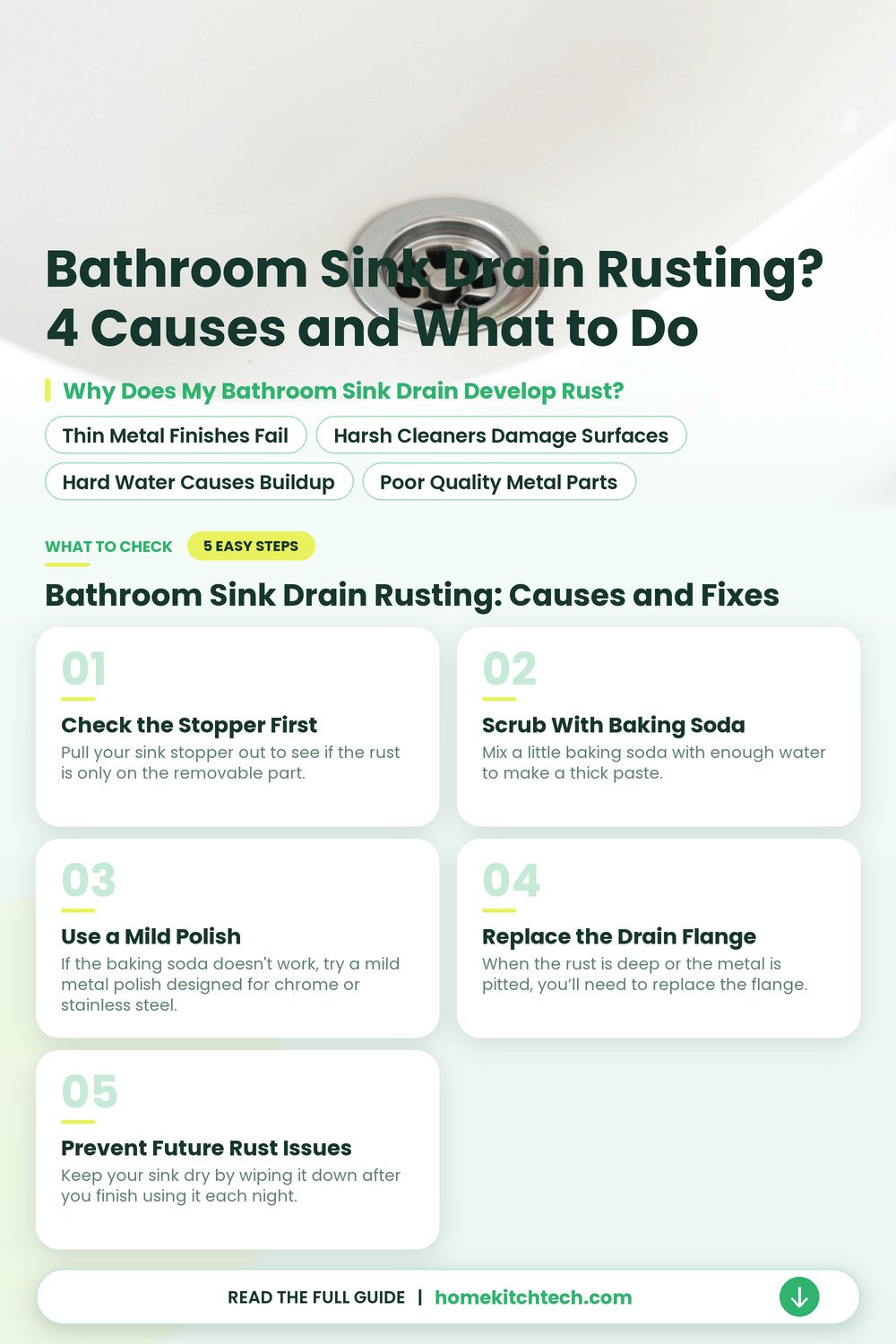
Why Does My Bathroom Sink Drain Develop Rust?
Rust doesn't just appear out of nowhere in your basin, but it happens when the thin layer on your drain flange gets a tiny scratch or starts to wear thin. You’ll want to address it, because a little spot grows fast.
Thin Metal Finishes Fail
Many modern drains feature a base with a shiny coating. Over time, constant exposure to soap and water wears that thin layer away. You'll notice the chrome sink finish losing its shine before the rust actually begins to show. Once the base metal is exposed, it reacts with the air and water in your bathroom.
Harsh Cleaners Damage Surfaces
Strong scrubbers are too rough. They create microscopic scratches, which hold onto water long after you finish washing your hands. Those tiny, damp pools are exactly what causes the rusting sink drain to form. If you prefer cleaning agents, check the label to make sure they won’t strip the finish.
Hard Water Causes Buildup
Minerals in your water supply settle around the drain, and they trap moisture against the metal. This mineral crust, often called scale, acts like a sponge. It keeps the metal wet for hours, which is bad. You'll find that a hard water deposit makes a perfect home for rust. It's hard to see the damage happening underneath those crusty layers until the rust bleeds through.
Poor Quality Metal Parts
Cheap replacement parts use low-grade steel. This material corrodes quickly once the outer layer gets even a tiny nick. You'll see the rust spread much faster on these parts, but solid brass or high-quality stainless steel models last far longer. If your drain was installed by a previous owner, it might simply be reaching the end of its life.
Bathroom Sink Drain Rusting: Causes and Fixes
You can often fix a small amount of surface rust with a few simple household items. If the rust is deep or the metal feels soft, you'll need to replace the entire drain assembly soon. Grab a bucket and some old towels before you start, just in case you need to loosen the pipes underneath.
Check the Stopper First
Pull your sink stopper out to see if the rust is only on the removable part. Often, the main drain flange is fine, but the stopper has lost its finish from sitting in standing water. You can buy a new stopper for a few dollars at any hardware store. If the rest of the drain looks solid, swapping this one piece might be all you need to do.
Scrub with Baking Soda
Mix a little baking soda with enough water to make a thick paste. Apply this to the rust spots and let it sit for about 15 minutes. Use an old toothbrush to scrub the area gently, then rinse it with clean water. You'll see the surface rust lift away if the metal underneath is still intact.
Use a Mild Polish
If the baking soda doesn’t work, try a mild metal polish designed for chrome or stainless steel. Put a small amount on a soft cloth and rub the area in small circles. This helps remove the oxidation and can sometimes seal the metal against further air contact. Always check the label to ensure the polish is safe for your specific sink finish.
Replace the Drain Flange
When the rust is deep or the metal is pitted, you'll need to replace the flange. Close the shutoff valves under your sink to stop the water, then use a pair of pliers to loosen the lock nut on the drain pipe. Place your bucket under the pipe to catch any leftover water. You should call a plumber if you have trouble reaching the connections or if you notice leaking inside the cabinet.
- A new drain flange usually costs between $20 and $50.
- Check that your new part matches the sink's drain opening size.
- Use fresh plumber’s putty to ensure a tight, leak-free seal here.
- Ask a friend to hold the drain while you tighten the nut.
Prevent Future Rust Issues
Keep your sink dry by wiping it down after you finish using it each night. Removing the standing water prevents minerals from settling into the drain area. You'll find that a quick wipe with a dry cloth takes less than 30 seconds. This simple habit keeps your fixtures looking new for years and stops new rust from starting.
Final Thoughts: Most rust issues start as tiny scratches that trap water. If you keep the drain clean and dry, you'll stop the damage before it gets worse. If the rust comes back after you scrub it, that's your sign to replace the drain. It's a common job that you can manage with just a few basic tools.
Can I Use Strong Chemicals to Clear Rust?
Skip those harsh drain cleaners if you want to save your pipes from damage. Most of these products contain chemicals that eat through metal, so your bathroom sink drain can actually rust faster after a treatment. These liquids often sit in the curve of the pipe, and they soften the metal over time.
Try a manual approach to remove the debris that hides in your sink. Use a simple snake or a wire tool to pull out the gunk. This clears the way for water to flow, so you won’t need to expose your plumbing to burning agents.
If your drain remains blocked after you pull out the hair and slime, call a pro. A plumber has tools that reach past your drain pipe connection to clear deep clogs. They won’t leave behind any residue, and they keep the metal safe from chemical wear.
- Wear thick rubber gloves before you touch any chemical drain cleaner.
- Keep a bucket ready under the sink to catch any spilled water.
- Check that your shutoff valve is fully closed before you open pipes.
- Use a small plastic bag to collect any hair you pull out.
Does the Age of the Sink Change Things?
Older bathroom fixtures often have thicker metal than the newer models you see today. Sinks installed 20 years ago hold up better against rust, but they still wear down eventually. The finish, which is the protective top layer, thins out from years of scrubbing.
Once the finish is gone, your raw metal sits exposed to every drop of water that hits it. Tiny spots of orange or brown form right where the water pools. If your sink is quite old, the metal drain flange is often pitted beyond a simple cleaning.
Newer sinks often use plastic or coated materials that resist rust, but these parts can crack or fade. Check your model number if you plan to swap the drain. A part made for a modern sink usually won’t fit the older plumbing in your wall.
Is There a Better Way to Clean the Drain?
Stop scrubbing at the rust with steel wool, which leaves tiny bits of iron behind. These little pieces quickly turn into new rust spots, and they make your sink look worse than when you started. Use a soft nylon brush or a microfiber cloth to keep the metal surface smooth.
Try a paste of vinegar and baking soda for a gentle touch that lifts stains safely. The mixture will bubble as it works, so let it sit for a few minutes before you wipe it away. A clean drain won’t just look better, as it also prevents the moisture that feeds the sink rust stains.
- Mix equal parts baking soda and water for a mild scrubbing paste.
- Use an old toothbrush to reach the edges of the drain opening.
- Wipe away the paste with a dry cloth after you finish scrubbing.
- Dry the metal with a clean cloth to stop water from pooling.
What Does It Cost to Replace a Rusty Drain?
You can expect to spend about $20 to $60 for a new drain assembly kit at a hardware store. If you decide to do the job yourself, you’ll save on labor but need to set aside about two hours for the project. You’ll need a basin wrench to reach the nuts behind your sink, which makes the work much easier for your hands.
Check your pipes for leaks once you finish the installation. You might see a small drip if the rubber gasket seal isn’t seated perfectly against the sink bottom. A quick turn of the nut usually stops the leak, but you should keep a dry towel under the sink while you test it.
Why Does My Drain Rust After I Clean It?
Your sink drain develops rust because the protective coating has worn thin. You might see the damage after you wipe away the grime, because moisture finds its way into the tiny scratches left by your cleaning tools. Once water touches the bare metal, a chemical reaction starts that leaves those stubborn brown rings behind.
Heat from your hot water speeds up the process, because it opens the metal pores. It’s a cycle where the heat, water, and air work together to break down the sink surface finish.
Poor water quality also plays a role in how fast your drain turns orange, because minerals leave deposits that trap moisture against the metal. Wipe your sink dry after every use, so you can keep that moisture from settling in your drain. It’s the best way to protect your plumbing drain hardware.
Final Thoughts
Rust in your bathroom sink is usually a sign that the protective finish has reached the end of its life. You can clean and polish the surface to make it shine for a while, but the metal underneath will continue to react with water. Keep the area dry, and reach for a replacement drain when the scrubbing no longer helps. A fresh part makes your whole vanity look new again.
| Symptom | Likely Cause | Easy Fix |
|---|---|---|
| Orange rings | Hard water | Baking soda paste |
| Slow drainage | Hair clog | Use a snake |
| Leaking pipe | Loose gasket | Tighten the nut |
| Dull finish | Old age | Mild polish |
| Brown flakes | Pitted metal | Replace flange |
| Surface spots | Thin coating | Wipe it dry |
Frequently Asked Questions
Can I Paint Over the Rust?
Paint won’t stick well to a wet, metal drain. It peels or chips within a few weeks and creates a bigger mess for you to clean.
Does Vinegar Really Remove Rust?
Vinegar works on light spots, if you let it soak for a while. Lay a damp cloth over the rust for 15 minutes, but be sure to rinse and dry the area well.
Will a Softener Fix the Problem?
A softener helps by removing the minerals that trap moisture in your drain. You’ll see less buildup, but it won’t fix the metal that’s already damaged.
Are Plastic Drains Better?
Plastic drains won’t rust, so you’ll avoid the orange stains entirely. Check that your sink fits a plastic model before you buy one, as they vary in size.
Should I Call a Plumber?
Call a plumber if the rust is coming from a leak inside your wall, or if you feel unsure about the work. A pro will check your pipes, so you don’t end up with water damage.
Will the Rust Keep Coming Back?
A recurring problem means the metal is too far gone to save. Replace the drain flange, and this will stop the rust from spreading to the rest of your sink.
