
As an Amazon Associate, I earn from qualifying purchases at no extra cost to you.
Bathroom Smells Like Pee? 6 Causes and How to Remove It

The first thing you notice when you walk into your bathroom is that sharp, stinging scent. You scrub the floor and spray air freshener, but the smell just hangs there in the air. You aren’t imagining things, and it’s likely not a cleanliness issue at all. Let’s look at what’s really happening under your floorboards.
The most common cause is a dry drain, which lets sewer gas drift back into your room. You can fix this by running water in every sink, tub, and floor drain for a minute to refill the seal. If the smell persists, check your toilet wax ring or the exhaust fan.
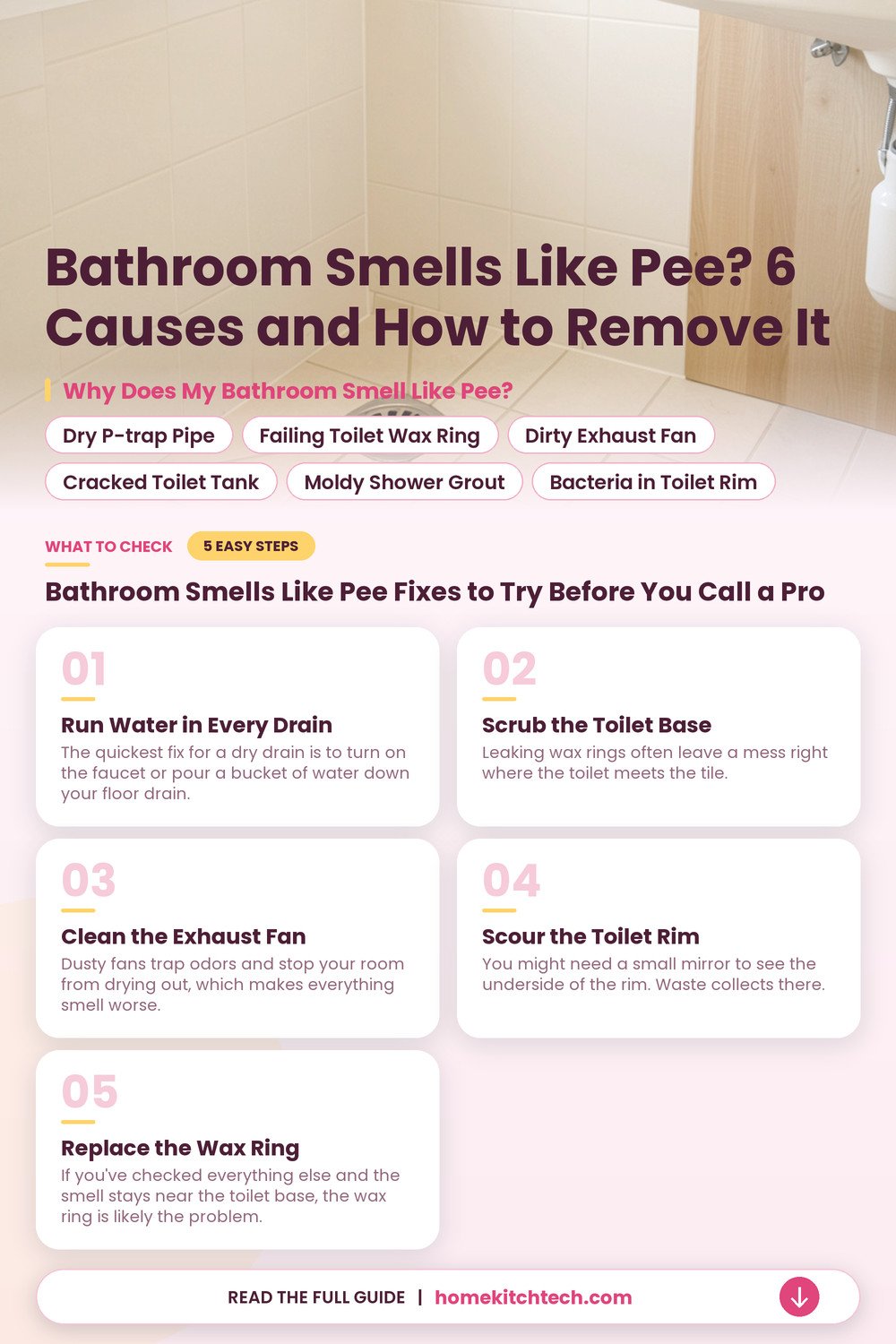
Why Does My Bathroom Smell Like Pee?
Smells in your bathroom often come from hidden spots where moisture or waste builds up over time. You’ll find that air flow and small leaks are usually the culprits, but you can fix them.
Dry P-Trap Pipe
Your sink and floor drains have a U-shaped pipe that holds water, which keeps sewer gases from creeping into your room. If you haven’t used a specific drain in a while, that water evaporates and leaves a clear path for odors. Turn on the faucet to fill the trap, and that stops the smell immediately.
Failing Toilet Wax Ring
A wax ring sits between your toilet base and the drain pipe to create a tight seal. When this ring breaks down, small amounts of waste or water leak onto your floorboards. Look for a slight wobble in the toilet, or notice if the smell is strongest near the floor.
Dirty Exhaust Fan
Your bathroom fan pulls humid air out of the room, but it also collects dust and grime in the process. Over time, that damp gunk turns into a breeding ground for bacteria that release a sharp, unpleasant scent. Pull the cover off to wash it, and that usually solves the issue.
Cracked Toilet Tank
Small hairline fractures in the porcelain toilet tank can cause slow leaks that you might miss at first. Water drips down the back of the bowl, and it gathers in the dark, warm space between the toilet and the wall. That stagnant water starts to smell like ammonia after just a few days.
Moldy Shower Grout
Pee-like smells sometimes come from mold that feeds on soap scum and skin cells inside your shower. If your shower grout lines stay damp, the surface turns into a sponge for bacteria. Use a stiff brush and a vinegar solution to kill the growth and remove the scent.
Bacteria in Toilet Rim
The underside of your toilet rim is a dark, hidden area where mineral buildup traps waste and bacteria. You can’t see this spot unless you look up from below, but it’s a major source of bathroom odors. Scrub with a curved brush to keep the buildup from becoming a problem.
Bathroom Smells Like Pee Fixes to Try Before You Call a Pro
You’ll start by checking the simplest things first, which saves you time and effort. Most of these steps take less than 15 minutes, and they require nothing more than basic cleaning supplies.
Run Water in Every Drain
The quickest fix for a dry drain is to turn on the faucet or pour a bucket of water down your floor drain. This fills the pipe with a fresh seal, which keeps sewer air out of your home. If the smell is gone in an hour, you’ve solved the mystery. Check every drain including the shower and the guest sink to be sure.
If you have a vacation home or a guest bathroom that stays empty, the water in the traps evaporates fast. Try putting a few drops of mineral oil into the drain after you fill it with water. The oil sits on top, and it stops the water from drying out so quickly.
Scrub the Toilet Base
Leaking wax rings often leave a mess right where the toilet meets the tile. Wipe the floor, and scrub the base of the toilet with a strong all purpose cleaner to see if the smell fades. If you notice a persistent dampness or a wobbly toilet after you clean, the wax ring needs a replacement. Do this carefully.
Tighten the nuts on the floor bolts, but be careful not to crack the porcelain by turning them too hard. A loose toilet creates a gap that lets smells escape, even if the wax is intact. If it still wiggles, you’ll need to pull the toilet to inspect the seal.
Clean the Exhaust Fan
Dusty fans trap odors and stop your room from drying out, which makes everything smell worse. Turn the power off at the breaker before you touch any electrical parts, then pull the cover down. Wash the plastic cover in soapy water, and use a vacuum to suck the dust out of the motor. Use a damp cloth to reach the blades, and keep your ladder steady.
- Wipe the fan blades with a damp cloth to remove stubborn gunk.
- Check that the vent flap outside your house opens and closes freely.
- Use a soft brush to reach deep into the internal housing parts.
- Replace the fan if the motor sounds loud or doesn’t spin well.
Scour the Toilet Rim
You might need a small mirror to see the underside of the rim. Waste collects there. Use a toilet brush or an old toothbrush to scrub the area with a disinfectant bowl cleaner. This clears away the buildup that hides bacteria and holds onto those sharp, ammonia-like smells. Do this regularly.
Don’t use bleach on the bowl if you’ve already used other cleaners, because mixing them creates dangerous fumes. Stick to soap or a dedicated bathroom cleaner to be safe. You’ll know it’s clean when the water runs clear and the smell disappears after a day.
Replace the Wax Ring
If you’ve checked everything else and the smell stays near the toilet base, the wax ring is likely the problem. This job involves turning off the water, disconnecting the supply line, and lifting the toilet off the floor. It’s a messy project, so have a bucket and old towels ready. You’ll want to work slowly.
Once the toilet is off, scrape away the old, flattened wax and install a new ring. Set the toilet back down firmly, so the wax creates a perfect, airtight seal. If you feel unsure about lifting the toilet or aligning it, call a professional to handle the heavy work.
Does My Old Flooring Hold Onto Pee Smells?
Porous materials near your toilet often soak up accidental splashes, and they hold the scent for years. If you have older wood or thin vinyl, the liquid seeps into the seams and stays trapped beneath the surface. You’ll find that regular surface cleaning doesn’t touch the source of the stink.
Seal the gaps with a clear silicone caulk to stop new moisture from getting under your floor. You can also pull up loose tiles to check if the subfloor underneath is damp or rotting. If the wood feels soft or spongy, you’ll need a bigger repair.
Older homes with original tile often have cracked grout lines that act like a sponge for spills. Since you can’t easily wash inside those cracks, the odor lingers long after you mop. Scrub with a stiff brush and a bathroom floor cleaner to lift any buried grime. It’s tough work, but it’s worth the effort.
Can I Fix This Without Hiring a Plumber?
Most of these tasks take about 30 to 60 minutes, and they cost less than $20 for supplies. You can usually finish them with tools you keep in your kitchen or garage. Grab a bucket, some gloves, and your favorite scrub brush to get started today.
You’ll need to turn off the water valve behind your toilet before you touch any parts. This prevents a mess if you accidentally knock something loose while you work. Check your toilet shutoff valve to see if it turns freely before you begin the job, so you aren’t surprised.
Wait to call a pro unless the smell persists after you clean the entire area. A professional can reach deep into your drain lines, or they can replace parts that require special tools. You’ll save money by checking the simple spots first, so keep your receipt if you buy new parts.
Why Do These Smells Come Back After I Clean?
Bacteria loves to hide in the tiny spaces where your toilet meets the floor, so it’s easy to miss a spot. You might scrub the bowl until it shines, but the smell remains if the underside of the base is dirty. It only takes a small amount of trapped moisture to keep that pee scent alive in your air.
High humidity in your bathroom can make the problem worse by keeping those damp spots wet. If your room doesn’t vent well, the air stays thick and holds onto every scent. Run your fan during and after your shower to keep your space dry and fresh. It’s a simple habit.
Heat from the floor or nearby heater vents can also draw out trapped odors from old spills. The warmth encourages bacteria to grow in the cracks of your tile or wood. You’ll notice the smell gets stronger when the room is warm, or during the summer months, so keep the area cool. Use a deep cleaning brush to scrub those cracks.
- Use an enzyme cleaner to break down organic waste in your grout.
- Check the bolts holding your toilet down for any loose movement.
- Keep your bathroom door open to help air circulate after you shower.
- Wipe the floor around your toilet daily to prevent new spills soaking.
Is Using Strong Chemicals a Good Idea?
Avoid pouring harsh drain cleaners or bleach into your toilet to mask the scent. These liquids can damage your pipes, and they won’t reach the spots under the floor where the real odor lives. You’ll only create a mix of fumes that makes your bathroom feel even less inviting, so stick to mild soap.
Use a nylon brush or a soft cloth to protect your ceramic bathroom fixtures while you work. Don’t use a wire brush or coarse steel wool, because those can scratch your porcelain or finished floor. Once you damage the surface, it becomes much easier for bacteria to stick and grow again. It’s a trap.
Keep your room well ventilated when you use any cleaning product. You don’t want to breathe in the concentrated fumes while you work in a tight space. Open a window, or keep the door cracked to let fresh air move through your bathroom. You’ll be glad you did. Use a non toxic cleaner to stay safe.
- Wear rubber gloves to keep strong cleaners off your skin while scrubbing.
- Rinse all surfaces with plain water after you use a cleaning solution.
- Read the label on your cleaner to see if it is safe for tile.
- Test your cleaner on a hidden spot before you scrub the whole floor.
When Should I Call a Professional for Help?
Stop your work if you see water pooling around the base of your toilet after you flush. This means your seal is broken, and you might have a leaking wax ring that could damage your subfloor. A plumber has the right gear to pull the toilet and replace the ring quickly. It’s safer to call early.
You should also call for help if you smell something sharp even after you deep clean every corner. Sometimes, a hidden pipe leak in the wall allows sewer gas to escape. That isn’t a simple cleaning job, and it needs a pro to locate the source of the hidden sewer leak.
- Ask your plumber to check your main vent stack for blockages.
- Request a smoke test if the source of the odor stays hidden.
- Have a pro look at your p-trap if you hear odd gurgling.
- Call a local expert if you suspect a leak inside your wall.
Final Thoughts
Focus on the area right around the base of your toilet, as that is where most of these smells originate. Use an enzyme cleaner to break down organic matter that common soaps miss. If the smell persists after a thorough scrub, check your seals and venting to make sure nothing is leaking. It’s a bit of work, but you’ll get it clean.
| Symptom | Likely Cause | Easy Fix |
|---|---|---|
| Smell near floor | Trapped spills | Enzyme cleaner |
| Odor after flushing | Broken seal | New wax ring |
| Damp floor | Leaking tank | Tighten bolts |
| Musty air | Poor airflow | Run exhaust fan |
| Sharp scent | Dry drain | Add water |
| Lingering odor | Dirty grout | Scrub with brush |
Frequently Asked Questions
Is It Safe to Use a Pressure Washer on My Bathroom Floor?
No, don’t do that. You’ll force water into your subfloor and under your walls, which causes rot and makes your smell problem much worse.
Can I Use a Scented Candle to Mask the Pee Smell?
You can, but it won’t fix the source. You’ll just have a mix of flowery scent and old pee, so clean the floor first to get real results.
Are Old Toilet Bolts a Source of Odors?
Yes, they can be. If your bolts are loose, the toilet rocks and breaks the seal, so tighten them up or replace them if they’re rusted.
Does My Exhaust Fan Need a Filter Change?
It might, if your model has one. You’ll need to pull the cover off and check the manual to see if you’ve got a filter that needs cleaning.
Will a New Toilet Seat Stop the Smell?
Only if the old one is soaked in grime, but it’s worth a try. You’ll find that replacing a plastic seat is cheap and easy if you can’t get the old one clean.
What Should I Look for Under the Toilet Base?
Look for wet spots or dark mold on your floor. You’ll need to dry that area, and you should seal it up to stop the bacteria from growing back.
