
As an Amazon Associate, I earn from qualifying purchases at no extra cost to you.
Bathroom Fixtures Loose on the Wall? 4 Fixes That Hold

With daily use, bathroom fixtures often wiggle or pull away from the wall. You might notice a towel bar spinning in your hand, or a soap dish sliding down the tile every time you reach for it. Loose screws and worn anchors are usually the culprits behind these annoying shifts, so check them soon. Tighten those connections now, and you’ll stop the damage from getting worse.
You can fix most loose fixtures in about 15 minutes. Start by checking the small set screw on the underside of the mounting post. If that’s tight, you’ll need to remove the post. This allows you to reach the wall anchors inside, which is where the real problem usually hides.
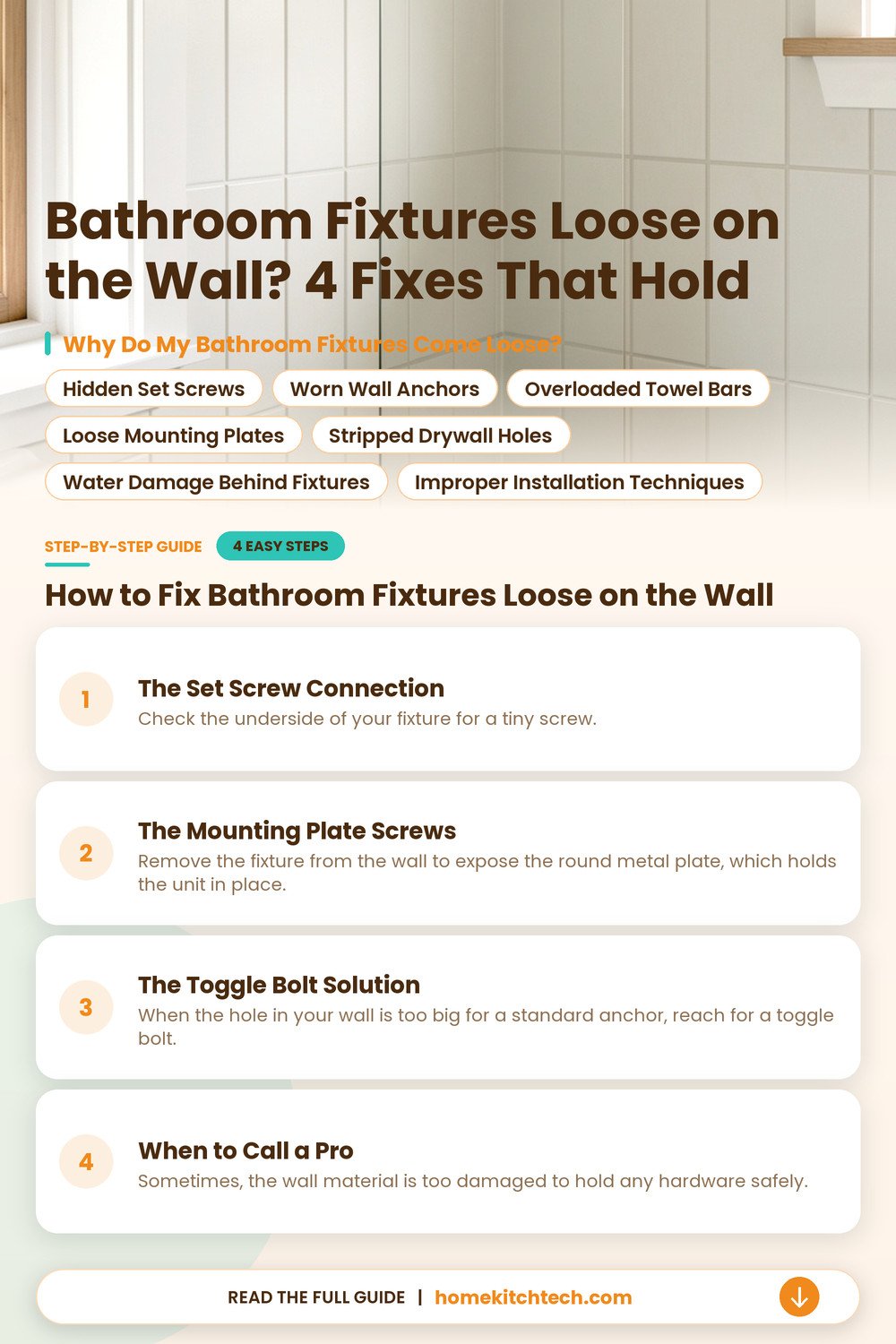
Why Do My Bathroom Fixtures Come Loose?
Your fixtures take a lot of abuse from heavy wet towels, and frequent grabbing makes the problem worse. The constant tugging slowly works the screws loose, which eventually strips the wall anchors inside your drywall.
- A loose towel bar often hides a hidden set screw.
- Drywall anchors fail when they get wet or overloaded.
- Tightening a screw usually takes less than five minutes.
- Pro repairs for stripped tile holes can cost $100.
Hidden Set Screws
Most modern fixtures attach to a small plate screwed into the wall. You’ll find a tiny set screw on the bottom of the post, which locks the piece in place. If this screw backs out, the whole fixture feels wobbly even if the mounting plate base is secure. Tighten it with a small hex key to stop the movement.
Worn Wall Anchors
Your wall anchors hold the screws against the drywall surface, but they aren’t meant for constant motion. Over time, the back and forth tugging makes the hole wider until the anchor just spins. Once it spins, it can’t provide any grip for your hardware. You’ll need to swap these for better ones.
Overloaded Towel Bars
Towel bars are meant for light loads, but they often carry heavy, soaked bath sheets. This weight puts extra stress on the mounting points every time you pull a towel off. You’ll notice the bar dipping, so check if the drywall mounting holes are getting bigger.
Loose Mounting Plates
The metal plate bolted to your wall is the foundation for the entire fixture. If the screws holding this plate shift, the whole unit will feel unstable. You’ll need to remove the fixture cover, so you can see if these screws need a turn. A simple twist usually fixes it.
Stripped Drywall Holes
Drywall is soft, so the mounting holes can get chewed up if the hardware moves too much. When the hole becomes a jagged gap, standard anchors won’t hold anymore. You’ll need a toggle bolt or a larger anchor to grab solid material. It’s a quick fix that lasts.
Water Damage Behind Fixtures
Moisture often sneaks behind your fixtures if the caulk seal is broken. This water softens the drywall, which makes the mounting area mushy and weak. You’ll see dark spots or crumbling material if the wall is waterlogged. Don’t try to tighten screws into wet, soft drywall, because they will just pull right out.
You need to dry the area first, or patch the spot to regain a solid surface. If the wall feels like damp cardboard, you’ll need to cut out the bad section and install a new patch.
Improper Installation Techniques
Many fixtures are installed with light duty anchors that aren’t meant for bathroom humidity. You might find that the original builder used the wrong size for your specific wall type. This is why things wiggle so fast.
How to Fix Bathroom Fixtures Loose on the Wall
You’ll likely find that a simple adjustment fixes your wobbly towel bar or robe hook. Keep a flathead screwdriver and a hex key set nearby, as those are the only tools you’ll need for most of these jobs.
The Set Screw Connection
Check the underside of your fixture for a tiny screw. Use your hex key to turn it clockwise until it bites into the mounting plate surface. If the fixture still wobbles, the mounting plate itself needs a tighter grip on the wall. You should feel the post lock firmly against the wall once the screw is tight. Don’t force it too hard, or you might strip the metal threads.
The Mounting Plate Screws
Remove the fixture from the wall to expose the round metal plate, which holds the unit in place. Grab your screwdriver, and tighten the two main screws that hold this plate to the wall. If they spin without tightening, your wall anchors have failed. Pull the old anchors out, and replace them with new, high quality ones. Make sure the plate sits flat against your wall before you slide the fixture back on.
The Toggle Bolt Solution
When the hole in your wall is too big for a standard anchor, reach for a toggle bolt. These metal wings fold up to slide through the hole, then snap open behind the drywall to create a rock solid grip.
- Drill the hole just wide enough for the folded toggle.
- Push the bolt through the fixture and the wall hole.
- Tighten the bolt until the wings pull firmly against the back.
- Stop if the bolt feels like it’s bending the metal plate.
When to Call a Pro
Sometimes, the wall material is too damaged to hold any hardware safely. If you see a large, crumbling hole in your tile or drywall, you’ll need a professional to patch it properly. They can install blocking inside the wall to give your fixtures a permanent, secure surface. Don’t risk making the hole bigger, because you might not know how to patch the wall material.
How Much Does Fixing Loose Bathroom Fixtures Cost?
You’ll mostly pay for small parts when you tackle this chore. You can often find a replacement brass mounting bracket or a set of screws for under $10 at the local hardware store. If you need to buy a new tool like an Allen key set, that might add another $10 to your total.
Save money by doing this work yourself, since you avoid the service fee a professional would charge to come to your home. Most local plumbers start their visits at $80 or more, so keeping your tools handy is a smart move. You’ll likely finish the whole job in about 20 to 30 minutes.
Buy a small tub of wall repair compound and a piece of sandpaper if you find that the wall itself is crumbling behind the unit. This will keep you well under $20. You won’t need to hire a pro unless you see large cracks that go deep into your wall structure, which could mean a bigger problem.
Does the Material of Your Bathroom Fixtures Matter?
Older metal parts often have a different weight than the newer plastic versions you’ll find today. Heavy cast iron or solid brass pieces put more strain on your durable wall anchors over time, which makes them wiggle loose faster. Lighter materials don’t stress the wall as much, but they can crack if you pull on them too hard.
Check the finish on your hardware, because chrome and brushed nickel can scratch easily if your screwdriver slips during the fix. Use a piece of painter’s tape on your tool tip, so you protect the surface while you work.
Age matters, because the internal threads inside older units can wear down until they won’t hold a screw anymore. If yours spins without ever tightening, look for a matching replacement part. Check the brand name stamp on the back to see if you can order a new piece.
- Solid metal pieces need stronger toggle bolts to stay secure.
- Plastic parts can snap if you over-tighten the mounting screws.
- Older finishes might look dull after you scrub them clean.
- Different brands use unique screw sizes that don’t always match.
Why Do Bathroom Fixtures Become Unstable Over Time?
Steam from your daily shower is the main culprit for weakening your bathroom walls. Moisture seeps behind the metal plates, which softens the drywall and makes your screws lose their grip. You’ll notice the unit rocking when you touch it, even if the fixture mounting screws seem tight.
Hard water also plays a part, as it leaves mineral deposits that build up inside the tiny gaps. This crust pushes the fixture away from the wall, which puts extra pressure on the hardware. You might see a white, chalky ring forming where the metal meets your tile.
Frequent use of your towel bars or robe hooks creates a cycle of tiny movements that loosen the connection. Every time you pull a towel off, you’re giving it a little tug. Over a few years, that constant force turns a firm installation into a wobbly loose fixture mess.
- Daily temperature changes cause metal parts to expand and contract.
- Well water minerals create stubborn crust that pushes hardware out.
- High humidity levels slowly degrade the paper backing on drywall.
- Frequent tugging on bars stretches the holes in your wall.
Which Safety Mistakes Make Loose Fixtures More Dangerous?
Don’t ignore a loose unit, because you might think it’s just a minor annoyance. A wobbly grab bar is a major fall hazard, so fix it before you or a guest relies on it for balance. If it’s meant to hold your weight, skip the quick fixes and make sure it’s anchored into a solid wood stud.
Try not to use a power drill when you’re tightening small screws on delicate finishes, as you can easily strip the head. Use a hand screwdriver to feel the tension, so you don’t break the plastic parts. This gives you better control.
Watch out for wires hidden inside the wall, especially if you’re drilling new holes for a fresh anchor. Turn off the breaker for your bathroom lights if you’re working near a switch or an outlet, because it’s better to be cautious than to hit an electrical wire line while you’re trying to secure a simple hook.
Never use glue or epoxy as a permanent way to hold a heavy fixture to the wall. It might feel strong for a day, but it will eventually fail under the weight of wet towels. Glue is a temporary fix that makes a real fixture repair job much harder later, so avoid it.
- Turn off the power before you drill into any wall.
- Check for hidden pipes before you sink a long screw.
- Wear safety glasses when you’re sanding down old wall patches.
- Use a stud finder to locate solid wood behind tiles.
When Should You Stop and Call a Pro?
Stop what you’re doing if you see water leaking from behind the wall plate, as this indicates a damaged pipe. This is a job for a licensed plumber, so shut off the water to your bathroom until they arrive. You’ll keep your home safe by letting a pro check the hidden pipe system.
Call a professional if you’ve tried two different types of anchors and the fixture still pulls away from the wall. This usually means the drywall is too damaged to hold anything, and you might need a pro to open the wall. They can install a solid wood block behind the surface for a truly permanent hold.
Ask for help if you’re dealing with expensive or antique hardware, because some high-end brands have hidden systems that require specific tools. It’s better to pay for a pro than to ruin a piece you can’t replace. You’ll avoid a costly hardware mistake by calling for help early.
- A plumber can reach what your tools can’t inside walls.
- Professionals carry specialized anchors for tricky tile or stone surfaces.
- Wet drywall needs a full replacement before you can remount.
- Don’t force a stuck valve if you’re not sure how.
Final Thoughts
Check your bathroom hardware regularly to catch loose screws before they cause damage. You’ll stop most wobbles with a simple turn of a screwdriver, but you should always look for soft spots in the wall behind the unit. Use the right type of anchor for your specific surface to get a firm hold. A little maintenance now prevents bigger, more expensive repairs down the road.
| Symptom | Likely Cause | Easy Fix |
|---|---|---|
| Wobbly towel bar | Loose set screw | Tighten with Allen key |
| Spinning screw | Stripped drywall hole | Use toggle bolt |
| Rocking shower handle | Damaged wall anchor | Replace with new anchor |
| Rust streaks | Water behind plate | Clean and caulk edges |
| Loose robe hook | Worn mounting plate | Tighten base screws |
| Cracked wall tile | Over-tightened screw | Use plastic washer |
| Fixture pulls away | Soft drywall | Patch and relocate |
| Rattling sound | Broken internal clip | Order new part |
Frequently Asked Questions
Is It Safe to Use a Power Drill on Tile?
It’s safe if you use a diamond-tipped bit, and go very slowly. You’ll want to put a piece of tape over the spot first, so your drill doesn’t slip and crack your tile.
Can I Fix a Loose Grab Bar Without a Stud?
It’s best not to, because a grab bar needs the strength of a wood stud to hold your weight safely. If you can’t find one, you’ll need to call a pro to install a backing board inside your wall.
Do I Need Special Anchors for Drywall?
Yes, you’ll need toggle bolts or plastic expansion anchors to hold your fixtures steady. Regular screws won’t grip the drywall, and they’ll just fall out as soon as you hang something heavy.
How Do I Find a Hidden Set Screw?
You’ll usually find it on the underside or the bottom of the fixture base. Use a flashlight to look into the small hole, and you’ll see it waiting for your hex key.
Will Caulk Help a Loose Fixture Stay Still?
No, skip that because caulk is only meant to seal out water. It doesn’t have the strength to hold a heavy metal unit to the wall, so it’ll just peel off.
Can I Reuse the Old Wall Anchors?
It’s best not to, because they lose their grip once you pull them out. Buy a fresh pack of the same size, and you’ll have a much tighter fit.
Should I Use a Metal or Plastic Anchor?
It depends on your wall type, but metal toggle bolts are stronger for heavy items. Use plastic anchors only for light things like toilet paper holders or small robe hooks.
What Does a Stripped Screw Hole Look Like?
You’ll see a hole that’s wider than your screw and filled with crumbled white dust. If you see this, you’ll need a larger anchor to get a firm hold again.
