
As an Amazon Associate, I earn from qualifying purchases at no extra cost to you.
Something Clogged in Your Bathroom? 6 Checks to Find It

While you stand there waiting for your sink to drain, that slow, gurgling sound usually means something is blocking the path. Water shouldn’t just sit in the basin when you pull the stopper, and it certainly shouldn’t bubble back up. Something is stuck in the pipes, but you can find it without calling a pro. Let’s get your bathroom back to normal, and you’ll have it running smoothly in no time.
The quickest way to fix a clogged drain is to clear the stopper and the trap. You’ll need a bucket and pliers to get the job done. Start by checking the stopper for hair, which catches most of the mess. If that doesn’t work, unscrew the p-trap to remove the remaining blockage.
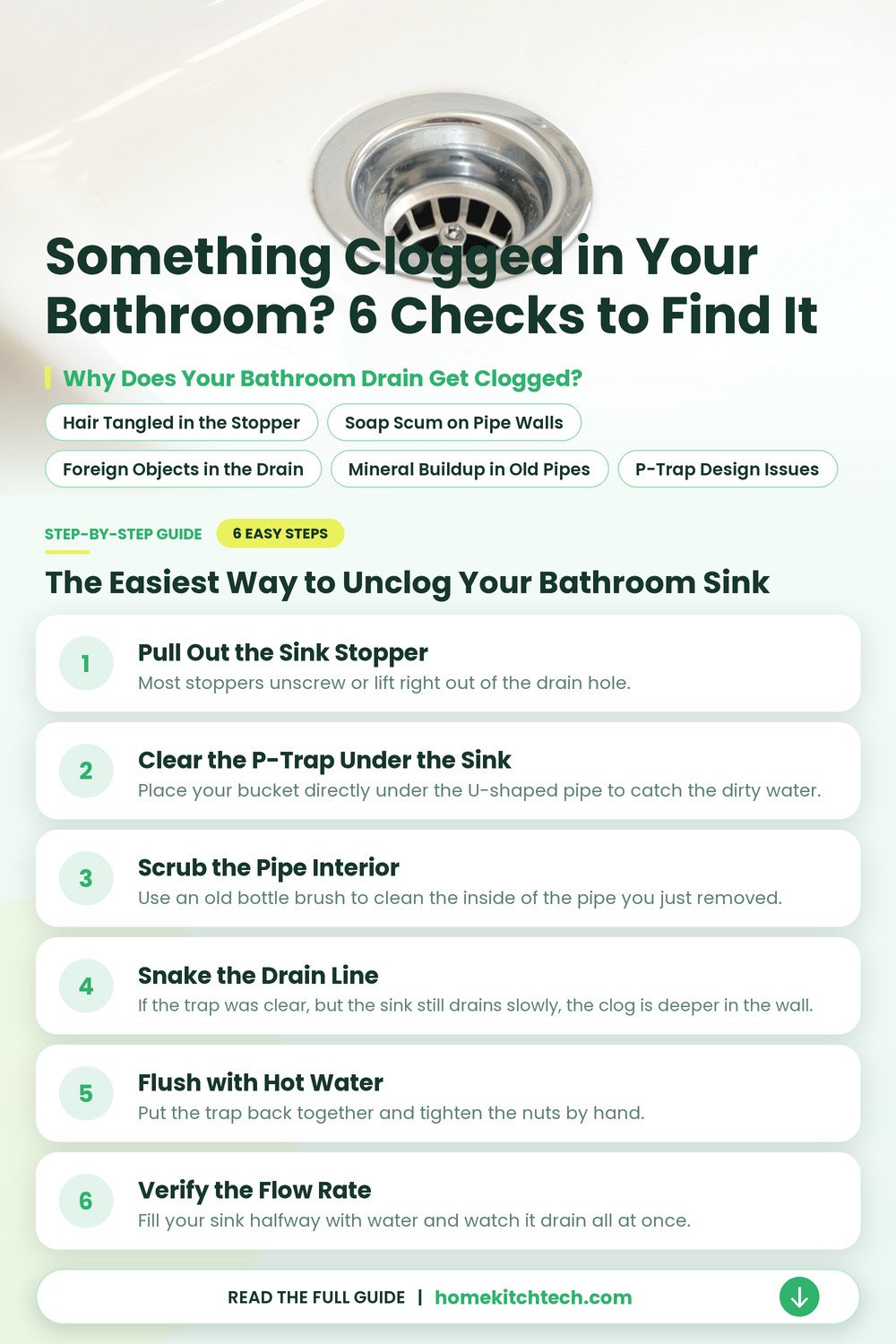
Why Does Your Bathroom Drain Get Clogged?
Your pipes aren’t designed to swallow everything that goes down them. Most blockages happen because hair and other debris build up over time until your drain turns into a slow, sticky mess.
Hair Tangled in the Stopper
The most common spot for a clog is right at the top. Hair acts like a net, grabbing onto bits of grime. You’ll see a thick, gross clump clinging to the metal rod once you pull it out. That hair trap is usually the first thing you should check.
Soap Scum on Pipe Walls
Soap residue coats your pipes, making them narrower. Eventually, this sticky soap film catches other items that would normally pass through. You’ll see this buildup if you shine a light into the opening. It’s a common cause of slow drainage.
Foreign Objects in the Drain
Sometimes, a small item like a cotton swab falls in by accident. These things don’t dissolve, so they sit in the pipe and act as an anchor. Everything else that goes down hits that item and piles up behind it. You’ll need to reach in and grab the trapped foreign object before the water flows freely again.
Mineral Buildup in Old Pipes
If your house is older, the inside of your pipes might be rough and crusted with minerals. This uneven surface gives debris a place to catch and hold on, which slows down your drainage. You’ll notice the rough pipe interior gets more jagged as the years go by.
P-Trap Design Issues
The p-trap is the curved pipe under your sink that holds a bit of water to keep sewer gas out. While it does a great job at that, it’s also a natural trap for heavy things. Anything dense settles right in that curved drain section. You’ll find it’s a common collection point for lost jewelry or heavy grit.
The Easiest Way to Unclog Your Bathroom Sink
You'll likely find the blockage by checking the parts you can reach with a few basic tools. It takes about 20 to 30 minutes, so clear some space and keep a bucket handy for the water trapped in the pipe.
- A bucket catches the mess when you open the pipe.
- Skip chemical cleaners, which often fail on deep hair clogs.
- Wear rubber gloves because the water inside is usually gross.
Pull Out the Sink Stopper
Most stoppers unscrew or lift right out of the drain hole. Give it a firm pull, or look for a small nut underneath the sink that holds the rod in place. Once it’s free, wipe off the hair and gunk clinging to the bottom. If the water flows fast after this, you’ve finished the job.
Don’t force the stopper if it feels stuck, as you might snap the plastic or metal parts. Loosen the nut on the back of the drain pipe first, which lets the rod slide out easily. Check the stopper rod assembly for any bent metal before you put it back in.
Clear the P-Trap Under the Sink
Place your bucket directly under the U-shaped pipe to catch the dirty water. Use your pliers to loosen the slip nuts on both ends of the trap, then pull the pipe off. Dump the water into the bucket, and reach inside to pull out any trapped hair or sludge. You’ll find that most clogs hide in this curved p-trap section.
Check the rubber gaskets for damage while the pipe is off. If they look dry or cracked, pick up new ones at the hardware store to prevent leaks later.
Scrub the Pipe Interior
Use an old bottle brush to clean the inside of the pipe you just removed. Scrape away the slime so the pipe walls are smooth again. Rinsing the piece in a separate sink helps you see if any hidden debris remains. Be careful not to scratch the plastic or metal too deeply. A smooth surface helps keep new clogs from starting right away.
Snake the Drain Line
If the trap was clear, but the sink still drains slowly, the clog is deeper in the wall. Feed a small plastic drain snake into the opening and twist it as you push. Pull it back slowly to bring the blockage out with you. Repeat this a few times until the snake comes out clean. Don’t push too hard, or you might damage the pipe connections inside the wall.
Flush with Hot Water
Put the trap back together and tighten the nuts by hand. Run the hot water for a few minutes to clear out any loose bits left in the line. This also helps you see if any drips form at the connections you just touched. If you see a leak, give the nut a tiny turn with your pliers. Stop as soon as it feels snug, as over-tightening can crack the plastic.
Verify the Flow Rate
Fill your sink halfway with water and watch it drain all at once. A fast, swirling vortex shows that your pipes are clear and ready for use. If it still moves like molasses, you might need a longer snake or a professional plumber to check the main line. Wipe down the area to keep it dry and clean. You’re all set to use your sink again without any annoying gurgles or standing water.
How Much Money Does Fixing a Bathroom Clog Cost?
You can clear most clogs for less than $10, provided you have a few simple tools on hand. A basic plastic drain snake or a small plunger usually costs between $5 and $15 at a local hardware store. Don’t buy chemical cleaners, because they often fail to reach deep blockages.
Save yourself the $100 to $200 a plumber charges for a house call by doing this work yourself. You’ll need about 20 to 40 minutes of your time to take things apart and scrub the gunk out. Keep a bucket and some old towels nearby, because things get a bit messy when you open the pipes.
Wait until you have good light in your bathroom before you start. Clear out your under sink storage so you have plenty of room to move your arms. You’ll find that having a clear workspace makes the whole process much faster, and it keeps your supplies dry.
- A plastic drain snake costs about $5 at most local stores.
- Plumbers charge between $100 and $200 for a simple drain visit.
- Expect to spend about 30 minutes on a typical bathroom clog.
Are There Any Common Mistakes That Make a Clog Worse?
Many people reach for a harsh liquid drain opener the second they see slow water. That’s a mistake, because those chemicals generate heat that can warp your plastic pipes or damage your faucet finish trim over time. They also leave a messy puddle if the drain is completely blocked, which puts you at risk when you take the pipe apart.
Never use a metal coat hanger to push through a blockage in a modern bathroom. You might scratch the inside of your pipes, or you could even poke a hole in a thin plastic wall. Use a flexible plastic tool instead, as it’s always safer for your plumbing system.
Plug the overflow hole with a wet rag if you decide to use a plunger. Air escapes through that hole, so your plunger won’t create the pressure you need to dislodge the mess if it’s left open. Plug it tight, and you’ll see much better results.
- Liquid cleaners often sit on top of a tough clog.
- Metal tools easily scratch or crack the inside of pipes.
- Covering the overflow hole doubles the force of your plunger.
Why Does a Bathroom Drain Stop Working So Suddenly?
Old pipes often get a rough texture on the inside from years of mineral buildup. This rough surface acts like a net, catching hair as it washes down your drain. You’ll notice the water slowing down over several months, until it eventually crawls to a stop.
Heat from your hot water can also soften the soap scum buildup on your pipe walls. When the water cools, that gunk hardens into a thick, waxy plug that blocks the path. You’re left with a clogged sink drain that barely moves water at all. It’s a frustrating end to your morning routine.
- Hard water leaves crusty minerals inside your plumbing over time.
- Soap scum builds up in layers like candle wax inside pipes.
- Hair acts as a filter that catches everything else passing by.
When Should You Stop and Call a Professional Plumber?
If you’ve tried a snake and a plunger, but the water still won’t move, you might have a deeper issue. A blockage further down in your main house line requires tools that you probably don’t own. Call a pro if you hear gurgling in your toilet or shower whenever you run the sink, as that sign points to a vent issue or a main line clog.
Skip the DIY route if you notice water leaking from a joint after you tighten it back up. You might have cross-threaded a nut, which is an easy way to ruin your pipe threads. A licensed professional plumber can reach the spots your tools can’t and fix the leak before it ruins your cabinet floor.
Try one more time with a longer snake if you feel a soft resistance, but don’t force it. If the tool hits something solid and won’t budge, back off. You don’t want to break a pipe fitting inside your wall where you can’t reach it.
- Call a pro if water backs up into other drains.
- Leaking joints after a repair suggest a broken pipe thread.
- Stop if you hit a hard object you cannot move.
Does the Age of Your Plumbing Change the Fix?
Older homes often have heavy metal pipes that rust on the inside. You need to be extra careful with these, as they’re much more brittle than the plastic ones in newer houses. If you use too much force with a snake, you might crack a rusted pipe and create a much bigger problem for your home.
Newer homes usually have plastic pipes that flex when you push a tool through them. You’ll find these much easier to take apart and put back together. Just be sure to keep your pipe wrench grip light, so you don’t crush the plastic fittings. It’s a delicate balance for your plumbing repair job.
Always check the condition of your rubber washers whenever you disconnect a pipe. They get dry and brittle as they age, so replacing them for a dollar or two prevents leaks later. You’ll have a much tighter seal if you use new, flexible washers.
- Metal pipes crack easily if you use too much force.
- Plastic fittings require a gentle touch to avoid crushing them.
- Old rubber washers often leak when you put pipes back.
Final Thoughts
The secret to a clear drain is catching the problem before it turns into a total block. Pay attention to how fast your water drains, and clear the stopper as soon as you see hair piling up. It takes just a minute to pull out the gunk, and that small effort keeps your pipes flowing for years. Don’t wait for a flood to grab your plunger or snake.
| Symptom | Likely Cause | Easy Fix |
|---|---|---|
| Slow drain | Hair buildup | Pull out stopper |
| Gurgling sound | Main line clog | Call a pro |
| Leaking joint | Worn washer | Replace washer |
| Standing water | Pipe blockage | Use a snake |
| Foul smell | Trapped gunk | Clean the trap |
| No water flow | Deep clog | Use a plunger |
Frequently Asked Questions
Yes, you can use it for small, slow drains. Pour a half cup of baking soda and a half cup of vinegar into your drain, then wait 15 minutes before you flush it with hot water. It won’t work on a total block, but it clears minor buildup.
Are Chemical Drain Cleaners Safe for My Pipes?
Better not, because they can damage plastic fittings and ruin your pipe finish. It’s best to skip them, as they also create a dangerous mess if you have to take the pipe apart later. Stick to physical tools like a snake or a plunger.
Do I Need to Turn Off the Water Before I Start?
Yes, turn off the shutoff valves under your sink before you loosen any nuts. This keeps your floor dry and prevents a surprise spray of water. It’s a simple step that saves you a lot of cleanup.
Is It Normal for My Drain to Smell?
It’s common, but it usually means there’s gunk trapped in the stopper. Clean the stopper and the area around it with a brush. If the smell stays, clean the p-trap under your sink.
How Do I Know If the Clog is in the Wall?
You’ll know if you clear the p-trap, and the sink still won’t drain. If you’ve snaked the pipe as far as you can and hit nothing, the blockage is deeper. Call a professional plumber to look at your main line.
Will a Plunger Fix a Sink Clog?
It can, but you have to seal the overflow hole first. Without that seal, the air just escapes and you won’t get enough pressure to push the clog through. Keep a wet rag nearby to plug that hole tight.
