
As an Amazon Associate, I earn from qualifying purchases at no extra cost to you.
Cricket in Your Bathroom? 5 Steps to Get Rid of It Fast

When you walk into your bathroom late at night and hear that distinct, rhythmic chirping, you know exactly what's hiding in the shadows. Crickets aren’t just loud, but they're experts at finding the darkest, dampest corners of your home to call their own. They don’t belong in your vanity or behind the toilet, so let’s get them out. You deserve a quiet space.
Trapping a cricket starts with a good look at your dampest spots, like under the sink or near the shower base. You can often catch them with a simple sticky pad, or a glass and a stiff piece of paper. Once you clear the moisture and seal the cracks, they won’t have a reason to stay.
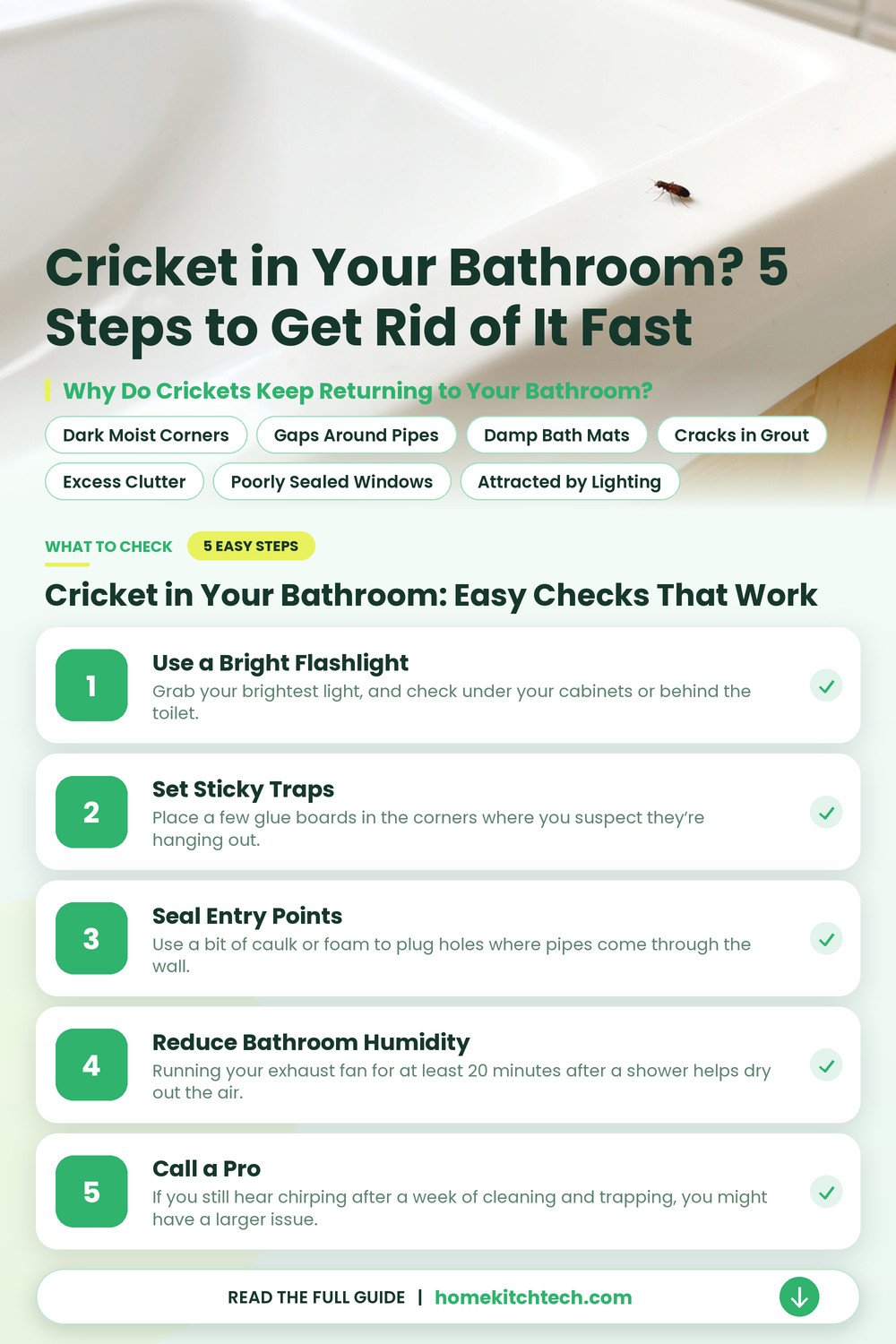
Why Do Crickets Keep Returning to Your Bathroom?
You'll find that crickets crave moisture and warmth, which makes your bathroom their dream home. They usually sneak inside through tiny gaps in your window screens or door frames when the weather shifts outside.
Dark Moist Corners
Your bathroom provides the perfect mix of humidity and shadows that crickets love. They hide behind your pedestal sink, or underneath cabinets where the air doesn’t circulate well. You’ll notice them staying quiet during the day, but they start their chirping once the house settles down at night.
Gaps Around Pipes
Small spaces around the pipes under your vanity are like open doors for these insects. Even a tiny hole in the wall, where the plumbing enters, gives them an easy path from the crawlspace or basement. Seal these gaps with a bit of expanding spray foam to block their entry points for good. You’ll find it stops them cold, and your pipes will look much neater too.
Small cracks are common. You should check behind your vanity, and use a flashlight to spot any hidden holes.
Damp Bath Mats
Wet fabric on the floor creates a cozy, damp spot for a cricket to rest. Hang your towels and mats up to dry completely after every shower, which removes the moisture they rely on to stay comfortable. Skipping this step makes your floor a magnet for pests.
Cracks in Grout
Tiny fissures in your floor tiles give pests a place to wedge themselves. If you have old, crumbling grout, it creates a perfect tunnel system for them to hide within your walls. Filling these spots keeps your bathroom cleaner, and it limits the places where unwanted visitors can tuck away.
Excess Clutter
Stacks of towels, cleaning bottles, or extra supplies create a maze that’s hard to monitor. Clear the floor. Keeping your cabinets organized limits their hiding spots. When there's nowhere to scurry, a cricket is much easier to spot and catch.
Poorly Sealed Windows
Window frames that don’t sit flush against the wall invite all sorts of bugs inside. Check your screens for tears or loose edges, which stops them from getting in. If the seal is loose, use a bit of weather stripping to tighten up the frame and keep your home secure.
Attracted by Lighting
Outdoor lights near your bathroom window can lure crickets closer to your home at night. Switch to yellow bulbs, or keep the blinds drawn, to stop them from gathering on your glass. They move toward the light, and they eventually find their way inside through any small opening they encounter.
Cricket in Your Bathroom: Easy Checks That Work
You'll likely need to spend about 15 to 20 minutes clearing out hiding spots and setting up traps. Keep your supplies simple, like a flashlight and some sticky boards, and stay patient while you search for the source.
Use a Bright Flashlight
Grab your brightest light, and check under your cabinets or behind the toilet. Crickets hate the light, so they'll often dash out of their hiding spots as soon as you shine a beam into a dark corner. You'll see them move quickly toward another shadow, which makes it much easier to corner them. Try moving items around to force them into the open. Don’t worry about being perfect.
Getting them to move is half the battle. Once they scurry out, catch them with a cup or a piece of cardboard. If you’re quick, you can scoop them up easily.
Set Sticky Traps
Place a few glue boards in the corners where you suspect they're hanging out. These traps are very effective for catching pests that wander around at night. Put them along baseboards, since crickets prefer to travel along walls rather than out in the open. Use them to catch strays. It works well.
You can hide them behind the toilet or inside your vanity cabinet base to keep them out of sight. They stay tucked away, but they catch bugs reliably.
- Keep these sticky boards away from where your pets might reach.
- Check the label on any trap to see if it’s safe.
- Place them behind the toilet or inside your vanity cabinet base.
- Replace the traps after a few days if you haven’t caught anything.
Seal Entry Points
Use a bit of caulk or foam to plug holes where pipes come through the wall. This is a permanent way to keep them from returning to your bathroom. Look closely at the baseboards, and check around your window frames for any gaps that are wide enough for a bug to squeeze through. Fill every hole you find.
If you find a hole, fill it completely so no new visitors can crawl inside. This step takes a little effort, but it stops the cycle of pests entering your home. You’ll find that your bathroom stays much more peaceful once the walls are sealed tight.
Reduce Bathroom Humidity
Running your exhaust fan for at least 20 minutes after a shower helps dry out the air. Crickets need moisture to survive, so a dry bathroom is a lot less appealing to them. Wipe up any standing water on the floor, or around the sink, to keep the area as dry as possible. Fix a leaky faucet, and you stop the constant drip.
Controlling the water in your space is the best way to make your bathroom feel like a desert to a cricket. They'll move on to a wetter spot once they realize yours isn’t comfortable.
Call a Pro
If you still hear chirping after a week of cleaning and trapping, you might have a larger issue. A professional can find entry points you might have missed, and they offer stronger solutions for your home. Reach out to them if the pests seem to be coming from inside the walls or floorboards. They know exactly how to handle them.
They have the right tools to identify how the crickets are getting in, and they can help you seal your home properly. It's worth the call if you want to stop the problem for good. Let them handle the heavy lifting.
When Should You Call a Professional for Bathroom Crickets?
A single cricket usually wanders in by mistake, but a noisy group suggests a hidden nest nearby. If you keep finding them despite your best efforts, a pest control pro can reach spots you can’t. They use tools to find entry points inside wall voids, beneath your floorboards, or behind tiles. Don’t wait.
Stop trying DIY methods if you see signs of a larger infestation, like eggs or shed skins. Experts have access to stronger treatments that stay safe for your family, but they also identify the exact path pests use to enter. This is a smart home investment for your comfort, and it ends your frustrating cycles of trapping. Call them today.
Can You Use Chemical Sprays to Kill Bathroom Crickets?
You can use common sprays, but they often leave messes on your tile or vanity surfaces. Avoid harsh chemicals near your toothbrush, soap, or towels to keep your living space healthy. Read the label before you spray, and keep kids or pets away from the area until everything is dry. It’s risky.
Mistakes happen when you spray too much in a small, closed room like a bathroom. The fumes can linger, so open your window or run the bathroom ventilation fan for at least an hour afterward. This simple step keeps your air clean while the product does its job. Just keep it brief.
Check hidden corners where crickets actually hide. They stay in tight gaps where sprays rarely reach, so focus on the cracks first. A targeted approach works much better than soaking the whole room in a heavy, scented mist. You’ll save money on pest control products by using them sparingly.
- Store all pest sprays inside a high, locked cabinet away from children.
- Check the product label to confirm it stays safe for indoor use.
- Wipe away any chemical residue from your counter with a damp cloth.
- Skip sprays if you have a sensitive nose or breathing issues today.
What Does It Cost to Keep Crickets Out of Your Bathroom?
You’ll spend very little to fix this yourself, as most traps and sealants cost about $10 to $30. A roll of weather stripping, or a tube of caulk, handles most gaps around your door or pipes. Buy these basic supplies at any local hardware store and get to work.
Time is your biggest investment when you decide to seal your home. You’ll need about one to two hours to inspect your bathroom, clear out your vanity, and apply fresh sealant. It's a slow, fiddly job, but it stops them from getting back inside your space.
Call a pro if you want a full inspection of your home’s exterior perimeter. This service usually costs between $100 and $300, depending on the size of your house. It's worth the price if you're tired of the nightly chirping and want a lasting, professional home fix.
- Buy silicone caulk for a waterproof seal around your sink pipes.
- Use weather stripping on your bathroom door to block bottom gaps.
- Spend a few dollars on sticky traps to monitor your progress.
- Check your local store for basic supplies that fit your budget.
Why Do Crickets Find Your Bathroom So Appealing?
Your bathroom provides the perfect mix of water and dark, quiet hiding spots. Crickets love moisture, and they’ll naturally migrate toward your shower or leaky faucet when the air gets dry outside. Once they find a damp bath mat or a pile of wet towels, they’re happy to stay. It’s a paradise for them.
Tiny gaps around your baseboards or pipes offer a warm way to enter your home, especially during cold nights. These insects seek shelter, and your bathroom is often the first room they hit. They'll crawl through spaces that look too small for anything to squeeze inside. These hidden entry points are easy to miss, but they provide a perfect highway for pests.
Lighting outside your bathroom window can also draw them in after the sun sets. They fly toward the glow, eventually finding a crack in the screen or frame. Once they’re inside, they follow the scent of water until they settle into the dark room corners of your space. They stay because it’s safe.
How Do Different Bathroom Materials Affect Your Cricket Problem?
Older homes with loose ceramic tile grout often have more hiding spots than newer, sealed bathrooms. Crickets squeeze into the tiny spaces where the grout has worn away over the years. Patch these areas to keep them out, and you’ll improve the look of your floor too. It’s a quick win.
Bathrooms with wood cabinets or trim are more attractive to crickets than those with metal or plastic. The wood holds moisture, which provides a small snack and a place to rest. Check the edges of your vanity for any soft spots, as that might show they’ve been chewing on the wood. It’s a sign of trouble.
Brand and age matter when you look at your window seals, as old frames often warp. If your window doesn’t shut tight, it's basically an open invitation for pests. A fresh layer of sealant, or a new screen, makes a massive difference in keeping them outdoors. You’ll have a pest free room soon.
- Patch missing grout lines to remove hidden tunnels for small bugs.
- Inspect wood trim for signs of wear where crickets might hide.
- Replace old window screens that have tiny tears or loose edges.
- Wipe down your wood vanity to remove any dampness or food.
Final Thoughts
Clear out those hiding spots to stop the chirping for good. Check the areas under your sink and around the door for even the smallest gaps, because these are prime entry points. Once you seal those holes and keep the floor dry, the crickets will move on to a friendlier spot. Consistent cleaning helps you stay ahead of the problem.
| Symptom | Likely Cause | Easy Fix |
|---|---|---|
| Nightly chirping | Hidden cricket | Use sticky traps |
| Damp corners | High humidity | Run exhaust fan |
| Gaps in wall | Worn caulk | Apply silicone sealant |
| Pests near door | Loose threshold | Add weather stripping |
| Bugs near light | Entry through screen | Repair window mesh |
| Crickets in vanity | Clutter and moisture | Clear out storage |
| Moisture on floor | Leaky pipe | Tighten the valve |
| Repeated entry | Exterior cracks | Seal foundation gaps |
Frequently Asked Questions
Can I Use Plant Oils to Repel Crickets?
You can try peppermint oil, but it’s not a permanent solution for your home. It might mask scents for a short time, but it won’t stop them from finding water. Don’t rely on oils alone.
Is It Safe to Use Sticky Traps Near My Kids?
Yes, you can use them safely if you place them in hidden spots. Put them behind your toilet, or under your vanity, where small hands can’t reach. It works well.
Do Crickets Eat My Bathroom Towels?
It’s possible, since they look for damp fiber and organic material. They might chew on your bath mats, but only if they’re left wet on the floor for too long. Hang your towels up.
Should I Leave My Bathroom Light On?
Better not, because light attracts them to your windows at night. Turn the light off when you’re done, or use a motion sensor, to keep the room dark. It keeps bugs away.
Does Humidity Control Actually Stop Them?
Yes, it makes your bathroom much less attractive to them. They need water to survive, so a dry room is a place they’ll want to leave quickly. Run your fan often.
How Do I Find Where They Get In?
You’ll need a flashlight. Check along your baseboards and pipe entries for any space where you can see light coming through. Once you find a gap, seal it.
What Happens If I Ignore One Cricket?
It’s likely you’ll end up with more, because they find a mate quickly. A single cricket is a sign that there’s an entry point you haven’t closed yet. Start sealing your room.
