
As an Amazon Associate, I earn from qualifying purchases at no extra cost to you.
Replace a Bathroom Door: 7 Steps for Beginners

Who hasn’t stared at a bathroom door that won’t close, or looks like it survived a major storm? You might see the latch missing the strike plate, or the wood looks splintered around the hinges. Save the cost of a pro, which usually runs about $150 to $300, and tackle this yourself. It’s a satisfying project. You’ll get that door hanging square again in no time, and your bathroom will feel brand new.
The quickest way to replace a door is to buy a pre-hung unit, which already includes the frame and hinges. Measure your current rough opening carefully so the new door fits without major wall work. Grab a level, a hammer, some shims, and a drill, and you’ll finish the job in a few hours.
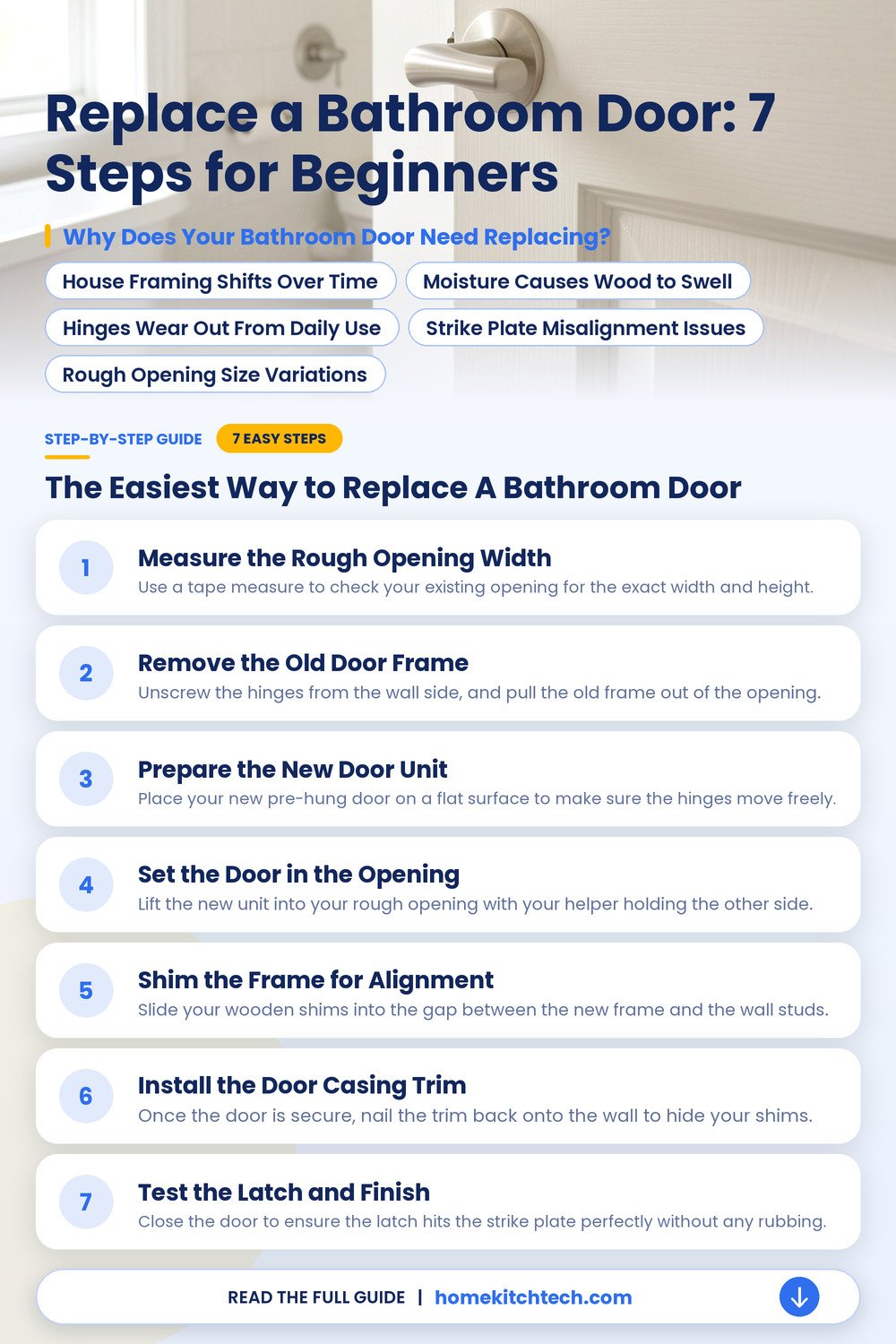
Why Does Your Bathroom Door Need Replacing?
You’ll often see the door rubbing against the floor, or the top of the frame. Wood swells, frames shift, and hardware wears out. Here is why this happens, and what you should look for before you start.
House Framing Shifts Over Time
The wooden frame inside your walls moves when the ground settles. You’ll notice the door rubs against the jamb, which makes it hard to close. This creates a gap that changes your door frame alignment, and prevents the latch from catching. You can’t stop this movement. Replacing the door gives you a fresh start.
Moisture Causes Wood to Swell
Bathrooms hold a lot of steam, which soaks into the wood. You’ll see the paint bubble, or the bottom edge start to rot. This severe moisture damage ruins the structural integrity. The hinges eventually pull away. You should replace the door because patching this rarely works for long.
Hinges Wear Out From Daily Use
Every time you open the door, the weight pulls on the screws. You’ll notice the screws spin in place, because the wood holes have become too wide. This loose hinge screw issue causes the door to sag. It forces you to lift the handle just to make it click shut. Wood gets tired, so it needs a replacement.
Strike Plate Misalignment Issues
Sometimes, the door is fine, but the latch simply misses the hole. You’ll see marks where the metal has been scraping the wood, instead of sliding into the slot. This happens when the house shifts. The door hinges often loosen slightly. Check if tightening the hinge screws fixes it before you decide to buy a whole new door.
Rough Opening Size Variations
Your door hangs inside a hole in the wall, which builders call a rough opening. Older homes rarely have perfectly square openings. This makes installing a new door a bit of a puzzle. Measure the width and height of the space, not the door itself, to get the right size. It’s the most important step to avoid extra work later.
The Easiest Way to Replace a Bathroom Door
You will spend about four hours on this project if you take your time and measure twice. Grab a helper to hold the heavy door steady, as this makes the job much safer and faster for you.
Measure the Rough Opening Width
Use a tape measure to check your existing opening for the exact width and height. Remove the old trim, which covers the gap between the frame and your wall. Use a pry bar to pull the wood molding off gently, so you don’t damage the drywall. Protect the wall, and use a putty knife to shield the surface.
Remove the Old Door Frame
Unscrew the hinges from the wall side, and pull the old frame out of the opening. You’ll see shims, which are thin wooden wedges, tucked behind the frame to keep it straight. Pull these out with your pliers, but watch for hidden nails that might still be holding the frame to the studs. Take a break if you feel tired, since it’s a bit of a workout.
Prepare the New Door Unit
Place your new pre-hung door on a flat surface to make sure the hinges move freely. Check that the door sits square in the frame, so you don’t have issues later. Open the door slightly to see if it stays in place, or if it swings on its own. Ensure the hinges are tight, and use a level to check the frame corners.
- Check the frame corners to ensure they are at ninety degrees.
- Remove the shipping blocks that keep the door closed for transport.
- Make sure the door swing matches your old one, like left or right.
- Verify the door width matches your opening measurement for a snug fit.
Set the Door in the Opening
Lift the new unit into your rough opening with your helper holding the other side. Use a level to make sure the hinge side is perfectly vertical, which is the most important part of the install. Keep the door shut while you work, and use a piece of painter’s tape to hold it in place. It’s much easier to work with a door that doesn’t swing open.
Shim the Frame for Alignment
Slide your wooden shims into the gap between the new frame and the wall studs. Place them near the hinges and the latch, to keep the frame from bowing. Use your level constantly, so the frame stays plumb. It should stand straight up and down, so take your time with every single shim.
Install the Door Casing Trim
Once the door is secure, nail the trim back onto the wall to hide your shims. Use a finish nailer or a hammer and thin nails to get the job done quickly. Make sure the trim sits flush against the wall and the door frame for a clean look. It’s the final step that makes your hard work look like it was done by a professional.
Test the Latch and Finish
Close the door to ensure the latch hits the strike plate perfectly without any rubbing. Check that the door doesn’t swing open on its own, which means it’s hanging level. If it sticks, adjust a shim slightly or sand a small spot on the edge. Give the door a final wipe down, and enjoy your new bathroom door installation.
Can You Fix a Stuck Bathroom Door Without Replacing It?
Sometimes, a stuck bathroom door is just a simple matter of paint buildup or a loose hinge screw. Grab a screwdriver. Tighten the plates. You might find that stops the problem. If the wood is rubbing in one spot, use a block plane to shave off a tiny amount of material.
Check your hinges first, because they often sag over time and drag the bottom corner against the floor. Place a small shim behind the hinge leaf, to nudge the door into a better position. This fix keeps the frame square, without the need for any major construction or new materials.
Don’t ignore the signs of a failing frame, since it could be hiding a bigger structural issue. Maybe the strike plate needs a slight adjustment to line up with the bolt. Try these small hinge adjustment tips, before you commit to the work of a full replacement. You’ll save time and money if they work.
- A sharp plane removes wood faster than you might think.
- Check the hinge screws for stripped threads that won’t hold.
- Tape off the surrounding paint to protect your finished walls.
- Use a level to check the frame is actually plumb.
What Does It Cost to Swap Out a Bathroom Door?
Buy a pre-hung unit, which usually costs about $150 to $400 depending on the quality of the wood. Save a lot of cash by doing the labor yourself, but you’ll need to rent or buy a few specific tools like a miter saw. Get three quotes from local pros, if you decide you’d rather have someone else handle the heavy lifting.
Most projects take an afternoon, if you have a helper to hold the new door unit in place. Spend a fair amount of time getting the frame leveled and shimmed correctly inside your wall. Once the frame is set, adding the trim and hardware goes much faster.
Don’t forget to account for the price of new handles and locks when you plan your budget. These items add $20 to $100 to your total, but they make your bathroom look clean and updated. Keep your receipts because local building offices might ask about materials if you pull a permit for major changes. You’ll find that home improvement costs vary by your city.
- Expect to pay more for solid wood over hollow core.
- Allow extra time for painting or staining the new wood.
- Check your local store for pre-hung units that fit well.
- Prices change based on your city and the door size.
How Do Materials Affect Your Bathroom Door Choice?
Solid wood doors feel heavy and block sound better than hollow ones, but they also react more to the steam in your bathroom. These heavy slabs require stronger hinges to prevent sagging over the years. Choose a composite door material, as it’s often more stable and less likely to warp when the humidity spikes.
Think about the finish you want, because paint hides joints while stain shows off the natural grain. Prime all sides of a wood door before you hang it. Stop moisture from getting into the fibers. This step prevents the warped door frame that plagues many older bathrooms. It protects your investment.
- Solid core doors offer more privacy and dampen noise.
- Painted finishes require a high quality moisture resistant primer.
- Hollow doors are lightweight and easy for one person.
- Check the manufacturer warranty for use in wet areas.
Why Does a Bathroom Door Start Binding?
Your house framing naturally settles as the foundation shifts, which pulls the door frame out of alignment. Notice the gap at the top becomes uneven, or the latch hits the strike plate too high. This happens in almost every home after a few years, so don’t feel like you missed a maintenance step.
Steam from your shower is another big factor, since it makes wood expand rapidly. If the door isn’t sealed well on the edges, it absorbs the moisture and grows just enough to rub against the stop. This constant swelling wood door eventually causes the finish to peel away.
Poorly installed hinges also cause binding, because they can’t support the weight of the door. You might see the top hinge pulling away from the wood, which puts extra stress on the bottom one. Check your screws, so they bite into solid wood instead of just the drywall or thin trim.
- Humidity changes happen most during the hot summer months.
- Foundation shifts occur slowly and rarely stop after construction.
- Weak hinges lead to uneven gaps around the door edge.
- Paint buildup creates a thick layer that stops closing.
When Should You Stop and Call a Pro?
If you find that the rough opening size isn’t standard, it’s usually best to reach out to a carpenter. Cut into your wall studs carefully, to make the new unit fit. That kind of work involves electrical lines or plumbing hidden in the wall, so be very careful.
Don’t try to force a door that doesn’t fit the space, because you’ll damage the surrounding drywall. A pro has the tools to cut the frame down, or build it up, without making a mess of your bathroom. They can check that the installation meets local code requirements.
Stop immediately if you suspect the wall framing has rotted, due to long term water leaks. Fix the source of the rot before you hang a new door, or the problem will just return. Call a builder to assess the wall, and get a plan to replace the damaged wall structure.
- Pros carry insurance for accidental damage to your home.
- Electrical wires inside walls require a professional touch.
- Custom door sizes often require specialized carpentry skills.
- Building codes might dictate specific door widths and heights.
Final Thoughts
Replace your door to make your room look fresh and well-cared for. Focus on getting the frame perfectly level and plumb before you nail the trim in place. If the door swings open or shut on its own, your hinges aren’t perfectly aligned. Take your time with the shims, and you’ll have a smooth result that lasts for years.
| Symptom | Likely Cause | Easy Fix |
|---|---|---|
| Door drags on floor | Loose hinge screws | Tighten hinge plates |
| Door won’t latch | Misaligned strike plate | Adjust strike plate |
| Door rubs frame | High humidity swelling | Plane down the edge |
| Hinge squeaks | Dry metal friction | Apply silicone spray |
| Door swings open | Frame not plumb | Shim the hinges |
| Gap is uneven | House settling | Reset the frame |
Frequently Asked Questions
Is It Hard to Replace a Pre-Hung Door?
It’s a moderate task that requires patience to get the frame level. You’ll need to shim the sides carefully, so the door opens and closes smoothly. If you have a helper to hold the door while you secure the frame, you’ll find it much easier.
Can I Use a Standard Door in a Bathroom?
You can, but choose a material that handles moisture well. You’ll want to seal all six sides with paint or polyurethane, to prevent the wood from swelling. Don’t skip the top and bottom edges, as these are the spots where moisture enters.
Are Hollow Core Doors Good for Bathrooms?
They are light and cheap, but they don’t block sound or steam very well. You’ll probably prefer a solid core door if you want more privacy. If you choose a hollow one, seal the edges perfectly to keep it from warping.
Do I Need a Permit to Replace a Door?
It depends on your city, so check with your local building office before you buy anything. You usually don’t need one for a simple swap, but you might if you change the size of the opening. Don’t guess, as they’ll give you the right answer for your area.
Does the Door Need a Special Lock?
Use a privacy lock that you can open from the outside in an emergency. It’s a simple safety feature, and you’ll appreciate it if the door locks accidentally. You can find these at any hardware store, and they install with just a screwdriver.
How Do I Know If My Frame is Rotten?
Press a screwdriver into the wood to see if it feels soft or spongy. If it crumbles, replace the wood so your new door has a solid base. Don’t try to screw into rot, as the door will just pull away.
