
As an Amazon Associate, I earn from qualifying purchases at no extra cost to you.
Janitor Won’t Clean the Bathroom? 5 Steps You Can Take

Since you spend your workday in the building, you expect the facilities to stay sanitary. When the restroom sits dirty for days, it feels like a service failure. You shouldn’t deal with a mess that makes your shift harder. Let’s look at why this happens. You can get it fixed.
The most common reason is a breakdown in communication between your office and the custodial team, so start by confirming you've logged a formal request. If the manager doesn’t know the room is in bad shape, they can’t adjust the schedule. Reach out to them today to get the ball rolling.
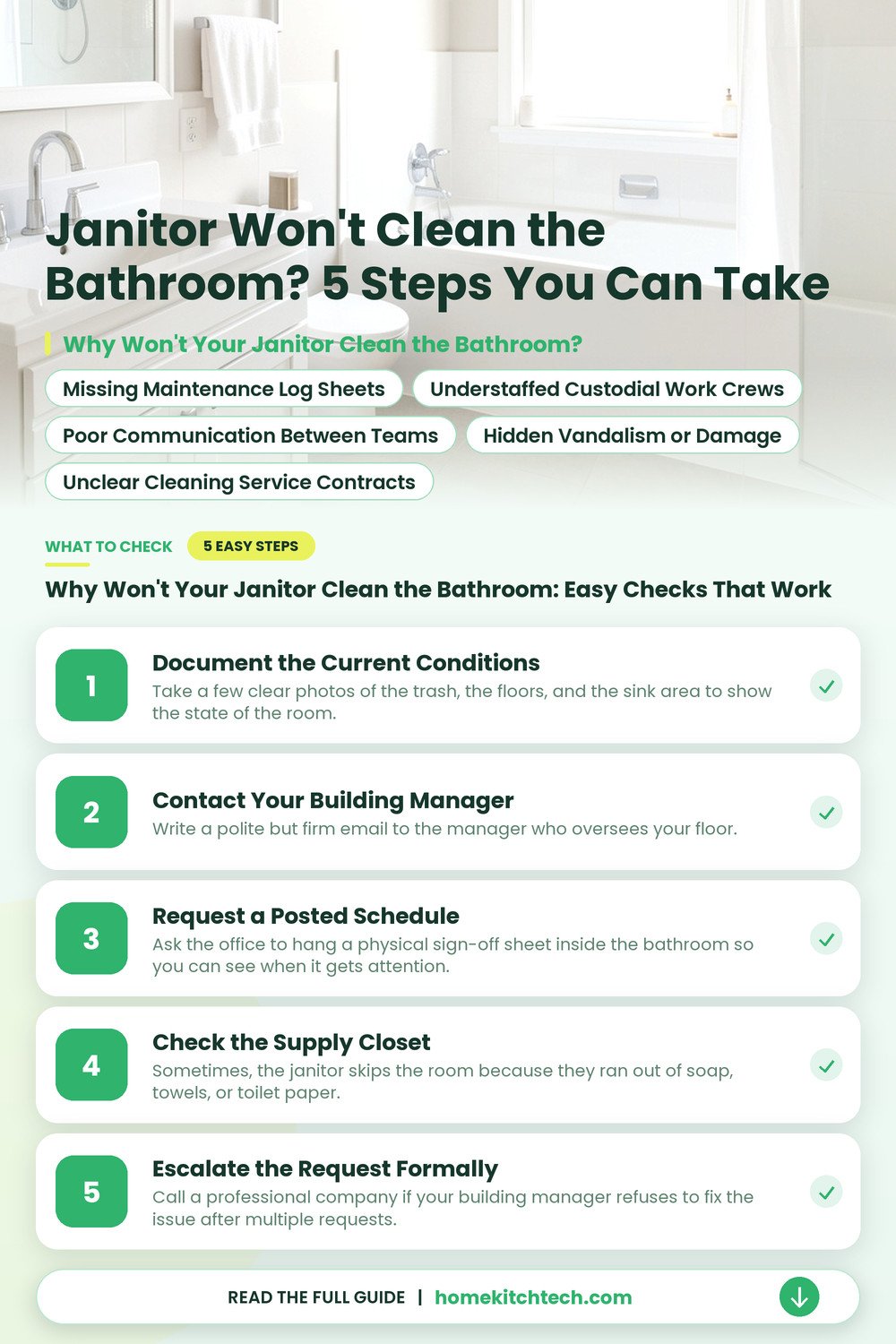
Why Won’t Your Janitor Clean the Bathroom?
Cleaning schedules rely on reports from people like you. If you haven’t told anyone that the space is falling behind, the team might assume it’s still in good shape. You’ll notice that once someone logs a specific maintenance service request, the office prioritizes the work.
Missing Maintenance Log Sheets
Custodians follow a list to track their progress, but you might notice the wall is blank. If you don’t see a signed sheet, the janitor lacks a clear record of their last visit. Check the back of the door for a schedule.
Understaffed Custodial Work Crews
Building owners sometimes cut the budget, which leaves the crew with too much ground to cover. You’ll see this when the trash stays full, and the floors don’t get mopped for weeks. They simply can’t reach every corner because they have less time than they used to have.
Poor Communication Between Teams
The building manager might think the janitor is handling the bathroom, while the janitor thinks a different crew is responsible. This mix-up leaves the room stuck in a middle ground. Point out the gap to your manager, so they can assign the task to one person.
Hidden Vandalism or Damage
A janitor might stop cleaning a specific room if they find broken plumbing fixtures that need a pro. They don’t want to touch damaged pipes, so they wait for a repair. You’ll see signs of this if the sink is taped off, or the water is turned off.
Unclear Cleaning Service Contracts
The company hired to clean your office might have a contract that excludes certain restrooms on your floor. Ask your office manager if the janitorial team is even required to enter your specific wing. If the contract doesn’t cover it, you’ll need to find a new way to handle the dirty restroom mess.
Why Won’t Your Janitor Clean the Bathroom: Easy Checks That Work
You need to move from frustration to a clear, written record of the issue. Spend about 10 minutes drafting a note that details exactly what you see when you walk in.
- Keep a log of dates when the room was visibly dirty.
- Send your concerns in an email to create a paper trail.
- Ask your office manager if there is a cleaning contract.
- Request a meeting to discuss the lack of basic supplies.
Document the Current Conditions
Take a few clear photos of the trash, the floors, and the sink area to show the state of the room. You’ll want evidence that the mess isn’t just a one-time thing, but a recurring problem. Keep these photos on your phone or computer, so you’re ready when you finally reach out to the office. This visual proof helps your manager understand why you’re upset about the health of the space. They might not realize how bad it has gotten.
Show them the documented office mess clearly. It helps them see the reality of your day. They have the power to change the service level if they see proof.
Contact Your Building Manager
Write a polite but firm email to the manager who oversees your floor. State that the lack of cleaning creates a poor work environment for your team. Mention the specific days you noticed the issues, so they can check their own records. It’s a simple step.
Wait for a reply before you assume they aren’t going to help you. If they don’t respond within two days, follow up with a quick phone call. This ensures they saw your message.
Request a Posted Schedule
Ask the office to hang a physical sign-off sheet inside the bathroom so you can see when it gets attention. You’ll find that having a place for the janitor to sign their name keeps them accountable for their daily work. It forces a clear check on the daily cleaning routine that you can verify every single day.
Check the Supply Closet
Sometimes, the janitor skips the room because they ran out of soap, towels, or toilet paper. You should see if the supply closet is empty, or if they just didn’t bring anything up to your floor. If they can’t restock, they often skip the deep cleaning to save time for other areas.
Offer to help track the inventory, if that’s what it takes to get them back on schedule. Make sure the office manager knows the supplies are the root cause of the delay.
Escalate the Request Formally
Call a professional company if your building manager refuses to fix the issue after multiple requests. Work with your own company's HR or facilities team, as they can put pressure on the landlord. They have the power to withhold rent or threaten to cancel the lease if the building isn’t kept up.
Don’t try to fix the pipes or deep clean the room yourself, as that isn’t your job. Let the people who get paid to manage the building take care of the heavy lifting.
Is Your Office Restroom a Health Hazard?
A dirty restroom creates a problem for your health, if you touch contaminated bathroom surfaces. You might see grime on the door handle or the faucet, which means germs are waiting for your hands. Don’t touch anything until you grab a paper towel to act as a barrier between your skin and the mess.
Report these conditions to your office manager immediately, so your concerns are on paper. You deserve a sanitary space, and your employer has a duty to provide one that is safe for your daily use. Keep a copy of your email, which serves as a record if the situation doesn’t improve quickly.
Stop waiting for someone else to act, but don’t try to deep clean the space yourself. Your office has a contract for these services, and taking over the work might create a liability for your company. Let the professionals handle the heavy cleaning duties while you focus on your own tasks.
Why Does the Toilet Keep Running Constantly?
Old internal parts often fail after years of use, so you’ll hear the water cycle through your tank all day. The flapper, which is a rubber seal at the bottom, stops holding a tight fit. You lose gallons of water every hour, and that sound can drive you crazy while you’re trying to work nearby.
Minerals from your water supply often build up on the edges of the valve, preventing it from closing fully. You’ll notice a white crust around the parts, or you might see the water level drop slowly. Check for worn toilet parts and report them to the manager to fix the leak.
- Replace the rubber flapper if it feels stiff or brittle to your touch.
- Check the chain length to see if it is pulling the seal open.
- Turn off the water supply valve if the tank starts to overflow suddenly.
- Call a professional plumber if you can’t stop the constant water flow today.
Can the Type of Flooring Change How You Clean?
Tile floors in your restroom usually need a different approach than vinyl, because the grout lines collect dirt. You’ll need to use a stiff brush to get into those small gaps, which hold bacteria if you just mop over them. Don’t use harsh chemicals that can eat away the floor tile finish on your floor.
Vinyl sheets are much smoother, so you’ll find that a simple mop works wonders. Avoid soaking these floors, as water can seep under the edges and cause the adhesive to lose its grip. Keep your mop damp instead of dripping wet to protect the baseboards.
Older floors might have cracks where moisture hides, creating a smell that you just can’t scrub away. Check for soft spots, or signs of rot, which indicate a leak under the floor. If you see those, stop cleaning and notify your maintenance team about the structural floor damage.
When Should You Call a Professional for Clogs?
Minor clogs usually clear up with a plunger, but stop if the water keeps rising toward the rim. You might be dealing with a blockage deep in your pipes, which requires a snake or a drain auger to reach. Don’t dump chemical cleaners into the bowl, as they can damage your pipes and won’t fix a physical drain obstruction.
Start by checking your main cleanout access, which is usually outside your building near the foundation. You’ll see a capped pipe that allows a pro to reach the line directly without going through your toilet. If you see water backing up there, you know the problem isn’t just in your room.
Professional plumbers have the right tools to clear your lines without causing damage to your delicate fixtures. You’ll save yourself a lot of frustration, and potential flooding, by calling them early. They can spot issues you might miss, like tree roots or collapsed pipe sections, before they become a major plumbing disaster.
- Use a flange plunger for the best seal on your toilet drain.
- Avoid using metal hangers to push clogs, as they scratch porcelain surfaces.
- Wear rubber gloves to protect your hands from waste and drain chemicals.
- Ask for a camera inspection if your pipes clog more than once monthly.
What Does a Professional Cleaning Service Cost?
Daily service for a small office restroom typically runs about $100 to $200 per month, so ask for a quote. You’ll pay more if you need deep cleaning, or extra supplies like soap and paper towels, included in the contract. Your building manager determines the budget, but you can always ask for a higher service level if yours is lacking.
Time spent on cleaning depends on the size of your facility, and how many people use it daily. A quick wipe down takes about 15 minutes, while a full scrub might take an hour. You shouldn’t expect a spotless room if your contract only allows for a quick pass through the space once a week.
You can’t do this job yourself, because you have your own work to finish during the day. It’s the responsibility of your employer to manage the janitorial service contract, so keep your focus on your own tasks. If you’re frustrated, just keep documenting the issues and sharing your feedback with the right person in charge.
Final Thoughts
A clean restroom is a basic need for your workday, so don’t settle for poor service that affects your health or comfort. Keep your communication professional and written, which helps you track the history of the issue. Ask your manager for a clear schedule, and you’ll have a better idea of when to expect the work to happen.
| Symptom | Likely Cause | Easy Fix |
|---|---|---|
| Smelly sink drain | Dry p-trap | Call maintenance |
| Slow toilet flush | Clogged rim holes | Use a wire brush |
| Faucet drips | Worn rubber washer | Report to manager |
| Foul odor near wall | Broken wax ring | Replace the seal |
| Water on floor | Loose supply line | Tighten the nut |
| Rust stains | Hard water buildup | Scrub with vinegar |
Frequently Asked Questions
Is It Safe to Use Bleach in a Shared Restroom?
It’s better not to use bleach, unless you know your building’s rules. You could accidentally mix it with other cleaners, which creates dangerous fumes that you don’t want to breathe in your office. Stick to mild soap if you need to wipe down your own desk or immediate area.
Can I Request a Specific Cleaning Time?
You can ask, but your building manager controls the schedule based on the contract. You’ll likely find that most crews work during off hours, so they don’t disturb you while you’re busy at your desk. It’s best to send your request in an email so they can check the current agreement.
Are Paper Towel Dispensers Usually Refilled Daily?
They should be if your office has a standard cleaning contract. If yours is always empty, you’ll need to report it to the front desk so they can add it to the daily checklist. You shouldn’t have to bring your own supplies to work.
Do I Need to Report a Leaky Faucet?
Yes, you should report any leaks immediately because they waste water and can cause damage to your floors. You’ll help your building save money, and prevent larger repairs later. Just send a quick note to your manager so they can call a plumber for you.
What Should I Do If the Soap Dispenser is Broken?
Tell your office manager right away so they can order a new part or fix the current one. Don’t try to force it open yourself, as you might break the plastic housing. Use a temporary bottle until they get it fixed.
Will a Sign Help Keep the Restroom Cleaner?
It might, but you should check with your manager before you tape anything to the wall. You’ll find that a polite note about keeping the space tidy can encourage others to do their part. It’s a simple way to influence the habits of your coworkers.
