
As an Amazon Associate, I earn from qualifying purchases at no extra cost to you.
Replace a Bathroom Mirror: 5 Steps From Old Glass to New

No one likes staring at black spots or fuzzy edges, but you're stuck with them when the silver backing fades. Mirrors in damp bathrooms eventually lose their finish, which leaves you with a view that looks aged, tired, and worn. It's a job you can handle, so grab your tools and get ready. Let's get that old glass off your wall and put up something fresh today.
You can replace your mirror by prying it off the wall after you've softened the adhesive with heat. You'll need a helper, a sturdy putty knife, and some patience to avoid breaking the glass. Once it's down, scrape the wall clean and prepare the surface for the new piece.
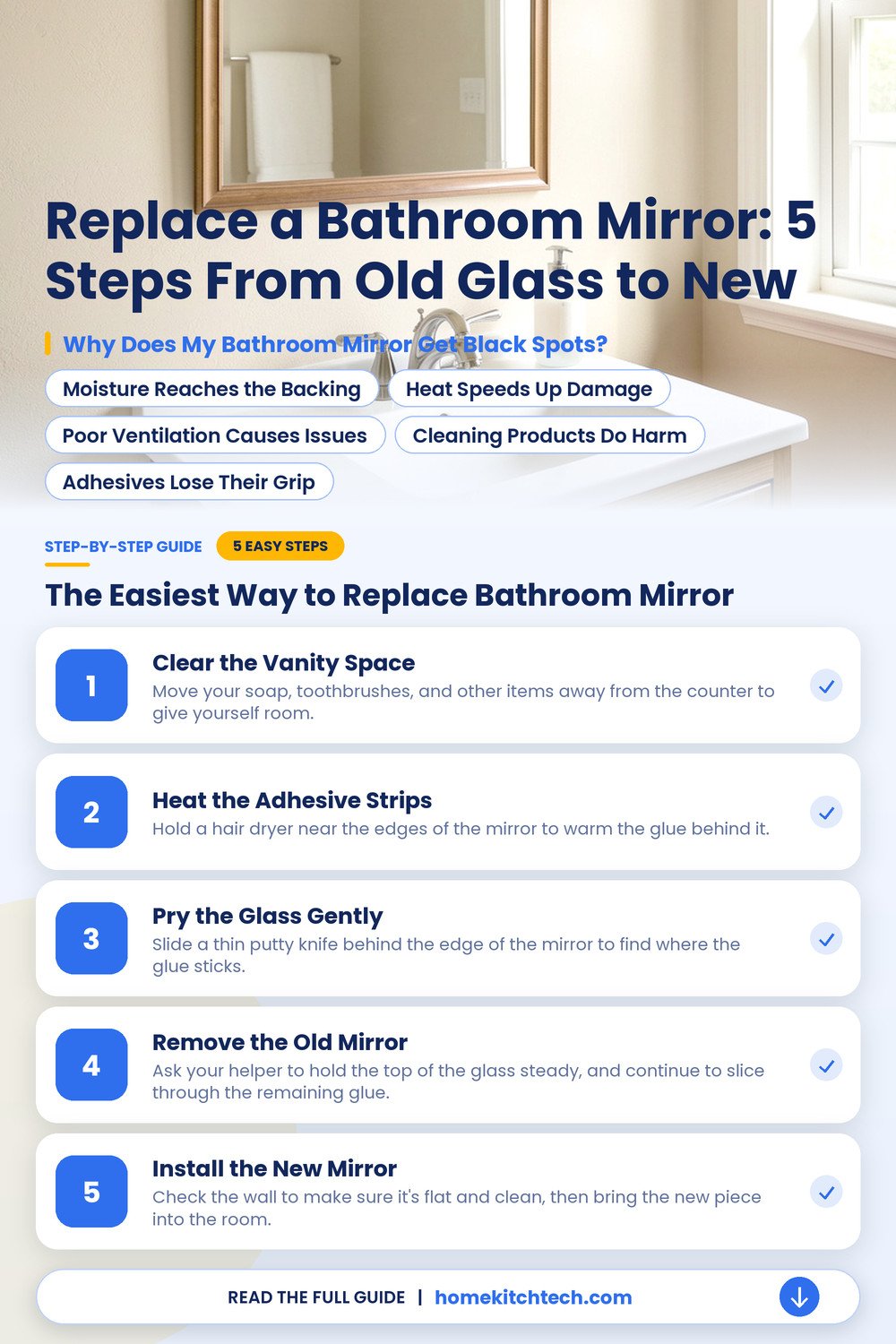
Why Does My Bathroom Mirror Get Black Spots?
Those dark edges appear because moisture seeps behind the glass, and it slowly eats away the silver backing breakdown. You'll see it start in corners or along the bottom edge where water sits the longest.
- Humidity in bathrooms causes the silver backing to oxidize and turn black.
- Expect to pay $100 to $500 for a new mirror, plus installation.
- Local building offices might require a permit if you're changing wall structures.
- Get two or three written quotes from local pros for accurate pricing.
Moisture Reaches the Backing
Your mirror relies on a thin layer of silver to create a reflection. If the sealant around the edge fails, water vapor gets trapped against the back. You’ll notice the black edge spots growing larger month by month. It’s almost always a sign that the seal has reached the end of its life.
The moisture stays trapped, so it causes the silver to flake away from the glass. You can’t reverse this damage, but you can prevent it. Replacement is the only way to get your clear view back, so don’t delay if the rot is spreading.
Heat Speeds Up Damage
Warm air holds more moisture than cold air, and that makes your bathroom a high-risk area. Every hot shower creates steam that pushes into tiny gaps behind your glass. Over time, this heat makes the silver backing breakdown happen much faster than it would in a dry hallway.
Poor Ventilation Causes Issues
Your exhaust fan is the main line of defense against mirror rot. If it doesn’t move enough air, steam lingers on the glass and runs down the back side. You’ll find that better airflow keeps your bathroom vanity area dry and protects the edges of your mirror from early decay.
Better fans pull the damp air out of the room before it settles. This keeps the wall behind the glass dry, and it stops the rot from starting in the first place. When the air stays moving, your mirror stays clear.
Cleaning Products Do Harm
Harsh chemicals can seep under the frame and dissolve the protective paint. Skip the spray cleaners that drip down the edge, as they act like a solvent on the backing. It’s better to wipe the glass with a cloth dampened by water instead, as this keeps the chemicals away from the edges.
Adhesives Lose Their Grip
Strong glues hold the mirror to the wall, but they can fail after years of temperature swings. If you see the mirror starting to pull away, it’s a sign the bond is weak. Don’t wait for it to fall and shatter on your counter.
The Easiest Way to Replace Bathroom Mirror
You'll need about two hours to pull down the old mirror and hang a new one. Grab a friend, because glass is heavy. A hair dryer helps you soften the glue, which makes the removal much smoother.
Clear the Vanity Space
Move your soap, toothbrushes, and other items away from the counter to give yourself room. Lay a thick blanket over the sink to catch any falling glass bits. If the mirror has a frame, unscrew it first so you can reach the glass edges. Clear everything off the counter, and you will have a safe place to work.
Heat the Adhesive Strips
Hold a hair dryer near the edges of the mirror to warm the glue behind it. Move the dryer back and forth for several minutes, and wait until the wall starts to feel warm to your touch. This heat makes the construction adhesive bond soft enough to let the mirror pull away from the wall. You need to be patient, or you might pull the drywall paper off.
Pry the Glass Gently
Slide a thin putty knife behind the edge of the mirror to find where the glue sticks. Work the knife slowly along the perimeter to break the seal one section at a time. It’s a fiddly job, so take your time and don’t force the glass, which could cause it to crack. Use a gentle touch, and keep your hands away from the sharp edges.
Remove the Old Mirror
Ask your helper to hold the top of the glass steady, and continue to slice through the remaining glue. Pull the mirror away from the wall slowly, as this keeps it from hitting the faucet. Set the old glass down on a flat surface or into a box immediately. Move the old glass out of the room, and you will prevent accidental cuts.
- Wear thick work gloves to protect your hands from sharp glass edges.
- Use a long wire saw to cut through stubborn glue behind the mirror.
- Scrape old glue off your wall with a flat razor blade scraper.
- Clean the wall surface well so the new adhesive sticks without fail.
Install the New Mirror
Check the wall to make sure it’s flat and clean, then bring the new piece into the room. Apply new mirror adhesive strips to the back in vertical lines, and leave space for air to move. Press the mirror firmly into place, and use painter’s tape to hold it while the glue sets. This tape keeps the glass from sliding down, so use plenty of it.
Can I Use a Wire to Slice Through Mirror Adhesive?
You can try using a length of fishing line or thin wire to cut behind the glass. Hold the ends with thick gloves, and use a sawing motion to work your way down the bathroom wall mirror. This trick works well if your glass is held by sticky pads rather than a metal frame.
Stop if the wire gets stuck, or if you feel the glass starting to flex. Too much pressure can cause the mirror to crack, which creates a sharp mess for you to clean up. Call a pro if the mirror is very large, or if it’s placed in a tight corner where you can’t reach the back.
Work with a partner whenever you handle large sheets of glass. One person holds the mirror steady, while the other cuts the sticky foam pads behind it. This keeps the weight off your arms, and it prevents the piece from falling forward unexpectedly. Always keep the glass surface area clean to maintain a good grip.
Are There Dangers to Removing a Heavy Mirror Alone?
Heavy glass is brittle, so it can shatter into dangerous shards if it hits your floor. You might injure your feet if you try to pull it down by yourself. Wear long sleeves, and use sturdy boots to protect your skin from sharp edges.
Focus on your vanity light fixture, and remove it before you touch the mirror. You’ll find it easier to see what you’re doing, and you won’t risk hitting the bulb or the base while you pull. Keep your floor clear of rugs that might make you trip, and you will stay safe while you’re holding a heavy load.
Watch out for hidden clips or screws that might be holding the heavy glass mirror to the wall. Some models have small metal brackets along the bottom, so you need to loosen them first. Check the edges of your frame for these small parts, and you won’t snap the glass while pulling.
What Are the Typical Costs and Time for This Job?
Plan for two to four hours of work, as this allows you to finish the project without rushing. You’ll spend most of that time cleaning the wall after the old glass comes down. Expect to pay anywhere from $100 to $500 for a new piece of custom cut glass, depending on the size and your local shop prices.
Get at least three written quotes from local shops before you buy your new mirror. Prices change by city, and they depend on the type of edge work you want on the glass. Ask if the price includes delivery, and check if they provide the hardware needed to hang it.
Look at your local building office to see if a permit is required for your project. Most basic swaps don’t need one, but your specific town might have rules about where you can mount heavy wall items. Keep your receipts, and save any paper copies of your quotes for your records.
- Rent a glass suction cup tool to grip the surface firmly.
- Use a putty knife to scrape away old foam tape bits.
- Apply a thin bead of mirror mastic to hold it straight.
- Clean your wall surface with rubbing alcohol before hanging new glass.
How Does the Age of the Mirror Change the Removal?
Older mirrors often have a metal backing that can stick to the wall paint, and this makes them hard to move. You’ll notice the glass feels like it’s fused to the drywall in some spots. Use a heat gun on a low setting to warm the area, and you’ll find it easier to pull away.
Newer mirrors might have a simple mounting system that clips into place. These are much easier to handle, because you don’t need to fight with strong adhesive glue. Lift the glass up and out of the clips, and you’ll clear the space for your new look.
Test a small corner first to see how much force you need to move the piece. If it doesn’t budge, don’t force it, or you’ll rip the drywall paper right off the wall. Take your time to peel the old wall mirror away slowly, and you’ll leave the wall in good shape.
- Older glass might have brittle edges that chip during removal.
- Check for hidden screws behind the decorative metal corner caps.
- Use a wide scraper tool to protect the drywall surface underneath.
- Wear safety goggles to stop small glass bits from hitting eyes.
Why Does the Mirror Silvering Deteriorate Over Time?
The reflective layer on the back of your mirror breaks down, and it happens when water gets behind the glass. You’ll see black edges or dark spots that grow slowly over the years. This happens because the seal along the side of the mirror failed, and it let damp air sit against the silver paint backing.
Heat from your bathroom lights can also speed up the damage to the backing. If your mirror sits directly above a hot light, the silver layer will flake off faster than in a cool room. You can’t fix these ugly black spots, so you’ll need to replace the glass once they start to bother you.
Keep your bathroom well-ventilated, as this helps the air stay dry after you shower. A good exhaust fan pulls out the humidity, and it stops moisture from settling on your mirror. This simple step keeps your clear glass reflection looking good for many years to come.
- Wipe the mirror edges dry after every hot morning shower.
- Avoid spraying glass cleaner directly onto the very bottom edge.
- Choose a mirror with a sealed edge to stop water entry.
- Check your ventilation fan to see if it pulls enough air.
Final Thoughts
You should replace your mirror to refresh your bathroom, as it doesn’t require a full remodel. Focus on safety first by wearing gloves, and have a friend help you move the glass. Take your time with the adhesive removal to keep your walls clean, and you will have a surface ready for the new piece. That small amount of extra effort makes the result look better, and it prevents unnecessary wall repairs.
| Symptom | Likely Cause | Easy Fix |
|---|---|---|
| Black spots | Moisture damage | Replace mirror |
| Stuck glass | Old adhesive | Heat gently |
| Loose clip | Worn screw | Tighten hardware |
| Dull surface | Hard water | Clean with vinegar |
| Cracks | Heavy impact | Replace glass |
| Foggy look | Poor ventilation | Run fan longer |
| Sticky residue | Foam tape | Use solvent |
| Edge chips | Rough handling | Sand edges |
| Won’t stick | Dirty wall | Clean wall |
| Gap at top | Uneven wall | Use shim |
Frequently Asked Questions
Can I Paint the Mirror Frame Instead of Replacing the Glass?
Yes, you can paint it if the frame is in good shape. Use a painters tape to cover the glass, and apply your paint carefully. You’ll get a fresh look without the cost of a new mirror.
Does the Mirror Need a Special Glue?
Yes, you should use mirror mastic to hang your glass. It’s designed to hold the weight without eating through the silver backing. Don’t use regular construction glue, or you’ll ruin the reflection.
Are There Different Types of Mirror Backings?
Yes, you’ll find safety-backed mirrors that stay in one piece if they break. These are a smart choice for your family bathroom, so check the label when you buy your new glass.
Can I Mount a Mirror Directly Onto Tile?
Yes, you can do this if you use the right drill bit for your tile. Use a diamond tip bit to avoid cracking the surface. You’ll need anchors that fit into the wall behind the tile.
Should I Remove the Old Caulk Before Hanging a New Mirror?
Yes, you should scrape away the old caulk to create a flush fit. Use a plastic scraper so you don’t scratch your wall finish. A clean surface helps the new mirror sit flat.
Will a Large Mirror Make My Small Bathroom Look Better?
Yes, a larger mirror will reflect more light and make your room feel bigger. You’ll notice a big change in how bright the space feels. Just make sure it fits your vanity area.
